No. 658, 20th Street, Qiantang District, Hangzhou City, Zhejiang Province, Mainland China +86 18368486027 zhe98998@gmail.com

No. 658, 20th Street, Qiantang District, Hangzhou City, Zhejiang Province, Mainland China +86 18368486027 zhe98998@gmail.com

Introduction: Why does the selection of electric diaphragm pumps require a technology-oriented approach?
In industrial scenarios such as oil refining and chemical production, electric diaphragm pumps serve as core fluid conveying equipment, with their performance directly influencing process stability and production efficiency. However, given the hundreds of model variations with differing parameters in the market, how can one avoid issues such as leaks, flow fluctuations, or shortened equipment lifespan caused by improper selection? Based on Depamu (Hangzhou) Pump Technology Co., Ltd.'s 20 years of technical accumulation, this article provides a quantifiable selection guide from three dimensions: technical principles, core parameters, and application scenarios.
Keywords: Electric Diaphragm Pump, Technical Selection, Depam Pump Industry, Fluid Transportation, Non-standard Customization
Industry technical pain points at the outset: Three major flaws of traditional selection methods
STEP1:Blindness in parameter matchingMost users only focus on basic parameters such as flow rate and pressure, while overlooking key indicators like medium viscosity (e.g., resin media can have a viscosity of up to 10,000 cP), corrosiveness (e.g., concentrated sulfuric acid with a concentration ≥ 98%), and solid content (e.g., 40% solid content in ore slurry), resulting in a 300% increase in pump body wear rate.
STEP2:Inadequate scenario adaptationThe chemical industry requires compliance with explosion-proof rating ExdIICT4, while the nuclear industry necessitates passing seismic resistance tests (such as simulated magnitude 6 earthquakes). However, general-purpose pump bodies struggle to meet the requirements of these special operating conditions.
STEP3:Maintenance costs out of controlThe diaphragm lifespan of traditional diaphragm pumps is only 3,000 hours, and frequent replacements result in an annual maintenance cost increase of 20,000 to 30,000 yuan. However, Depam has extended the lifespan to 8,000 hours through material optimization.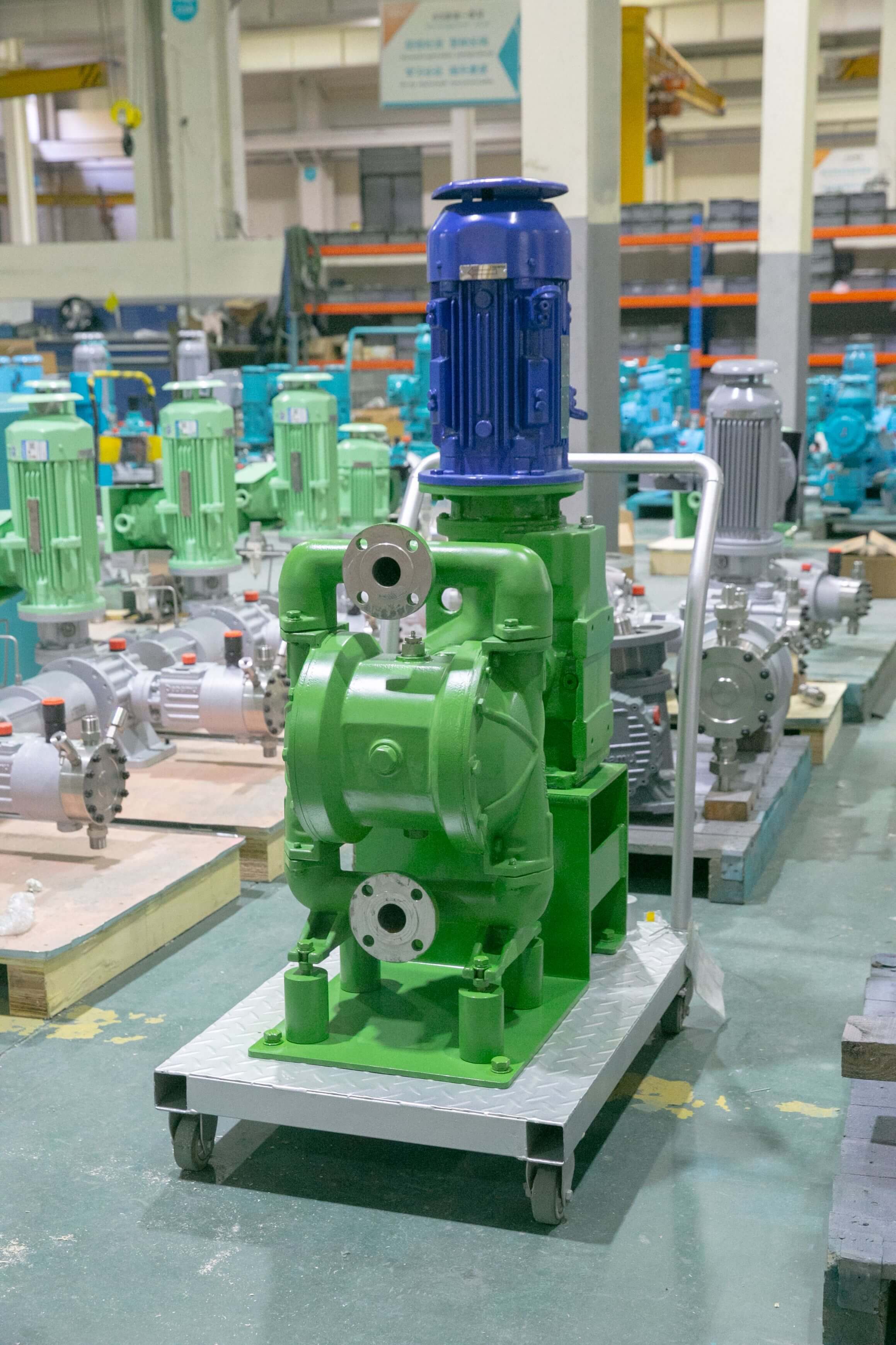
STEP4:Case evidenceA petrochemical enterprise originally used a certain brand of electric diaphragm pump to transport catalytic cracking oil slurry (with a temperature of 350°C and a viscosity of 150 cSt). Due to insufficient temperature resistance of the pump body, seal failure occurred. After switching to Depam's high-temperature electric diaphragm pump (with a temperature resistance of 400°C), it operated continuously for 18 months without failure, saving over 500,000 yuan in annual downtime losses.
Introduction to the company's technological strength: Depam's three major technological barriers
STEP1:Material R&D systemDepamp has established a provincial-level enterprise technology center and collaborated with Zhejiang University to develop special alloy materials. Its diaphragm adopts a three-layer composite structure (PTFE inner layer + aramid fiber reinforcement layer + rubber outer layer), enhancing corrosion resistance by 50% and achieving a tear resistance strength of 35 MPa (national standard requires ≥20 MPa).
STEP2:Modular Design PlatformBy optimizing the flow channel structure through CFD fluid simulation, energy loss is reduced by 18%; the modular design supports rapid replacement of components such as pump heads and motors, shortening maintenance time from 4 hours to 1.5 hours.
STEP3:Full-scenario verification capabilityIt possesses a full-process testing platform within a 35,000㎡ factory area, capable of simulating complex operating conditions such as extreme temperatures ranging from -40℃ to 450℃, high pressure of 16MPa, and solid content of 50%, ensuring that each piece of equipment passes a 48-hour continuous operation test.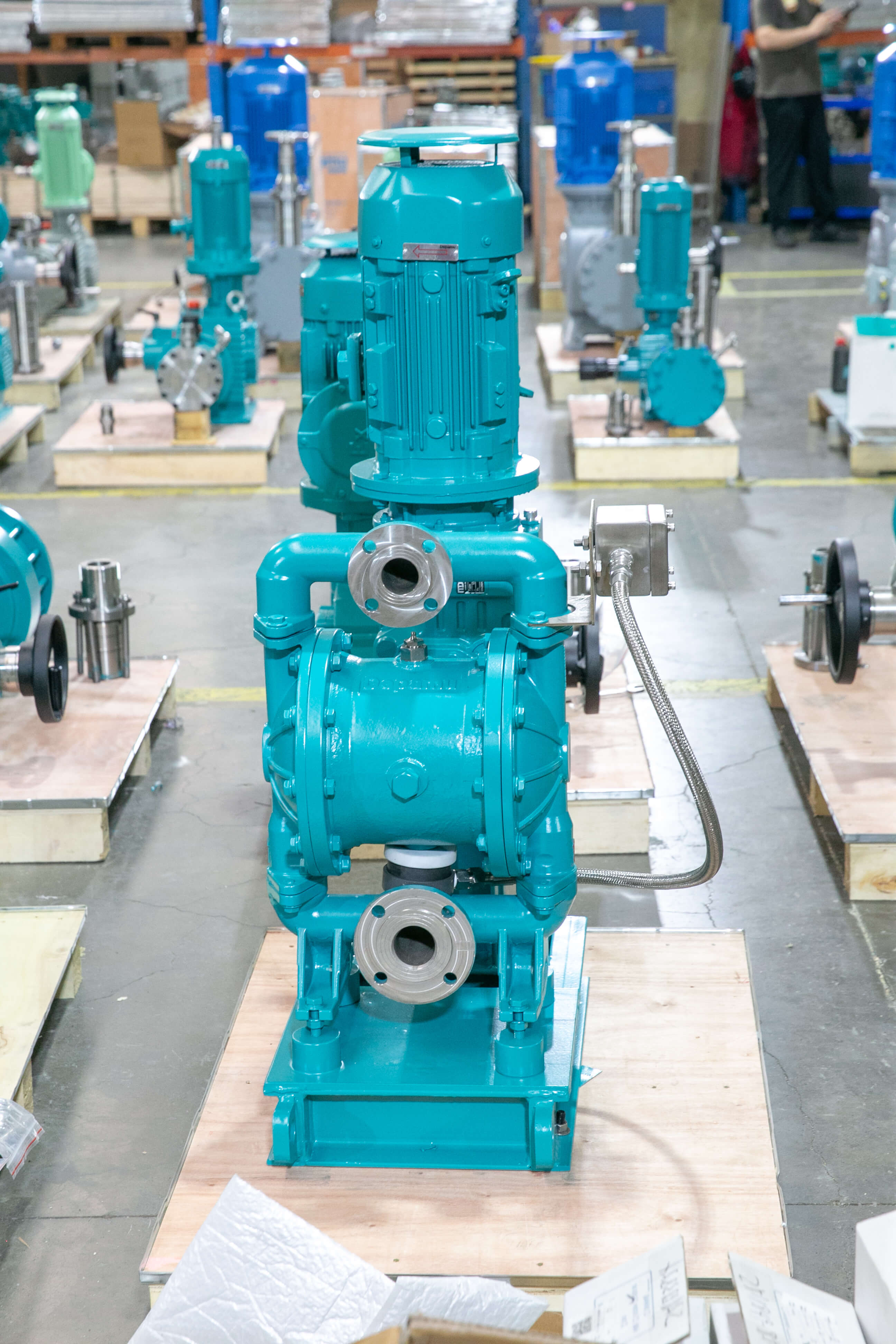
STEP4:Data supportIn 2023, an electric diaphragm pump customized for Sinopec Zhenhai Refining & Chemical achieved a flow accuracy of ±1.2% (national standard: ±3%) in catalytic units, with pressure fluctuations ≤0.5 bar. After 12 months of operation, the diaphragm thickness wear was only 0.02 mm (initial thickness: 2 mm). For more information, please visit the official website:www.depamufluid.com
FAQ: A Q&A Guide to Technology Selection
Q1: How to select pump body material based on medium characteristics?
STEP1:Corrosive mediumFor strong acids such as hydrochloric acid and sulfuric acid with a concentration of ≥30%, pump bodies made of PTFE or PVDF materials should be selected; for alkaline media (pH ≥12), 316L stainless steel is recommended.
STEP2:Solid-containing mediumWhen the solid content exceeds 10%, a carbide pump body with a hardness of the flow passage components ≥ HRC55 should be selected, and the diameter of the ball valve should be increased (recommended ≥ DN25) to reduce the risk of clogging.
STEP3:High-temperature mediumWhen the temperature exceeds 200℃, a high-temperature grease sealing structure should be adopted, and a cooling jacket (with a circulating water flow rate ≥ 2 L/min) should be equipped.
Q2: How can flow and pressure parameters be scientifically matched?
STEP1:Flow calculationDetermine the maximum flow rate Qmax (unit: L/min) based on process requirements. When selecting the actual model, a safety factor (usually 1.2-1.5 times) must be considered, i.e., Q for model selection = Qmax × 1.3.
STEP2:Pressure matchingTotal system pressure = outlet pressure + pipeline resistance + height difference. The rated pressure of the pump must be ≥ 1.1 times the total system pressure. For example, with an outlet pressure of 2 MPa, pipeline resistance of 0.5 MPa, and a height difference of 10 m (approximately 0.1 MPa), a pump model with a rated pressure ≥ (2 + 0.5 + 0.1) × 1.1 = 2.86 MPa should be selected.
STEP3:Motor power verificationCalculate the required motor power based on the formula P = Q × P_total / (367 × η) (Q: flow rate in L/min; P_total: total system pressure in MPa; η: pump efficiency, typically ranging from 0.6 to 0.75). For example, when Q = 100 L/min, P_total = 3 MPa, and η = 0.7, then P = 100 × 3 / (367 × 0.7) ≈ 11.8 kW, and a 15 kW motor should be selected.
Q3: What technical parameters are required for non-standard customization?
STEP1:Media Characteristics TableIncluding medium name, concentration, viscosity, temperature, pH value, solid content, particle diameter, etc.
STEP2:Process condition diagramMark the import and export positions, pipeline routes, and installation space dimensions (length × width × height).
STEP3:List of special requirementssuch as explosion-proof rating, protection grade, noise limit, interface standards (ANSI/DIN/GB), etc.
STEP4:Case referenceThe electric diaphragm pump customized by Depam for a certain nuclear power plant needs to meet the requirements of seismic grade 1, radiation resistance dose of 1×10⁶ Gy, and leakage rate ≤1×10⁻⁹ Pa·m³/s, achieving technological breakthroughs through special sealing structures and material selection.
Reference for Full Text Summary
The selection of electric diaphragm pumps requires the establishment of a three-dimensional evaluation system of "medium-parameters-scenario": First, determine the pump body material and sealing form based on medium characteristics; second, calculate core parameters according to flow and pressure requirements; finally, select standard or customized models based on the installation environment. Leveraging three technological advantages—material research and development, modular design, and full-scenario validation—Depamp (Hangzhou) Pump Technology Co., Ltd. can provide a full range of electric diaphragm pumps from DN10 to DN100 for industries such as petroleum refining, chemical engineering, and nuclear industry, and also supports non-standard customization services. Data from 2025 shows that its products have a failure rate as low as 0.3% in high-pressure delivery scenarios and a flow accuracy of ±1.5% in chemical dosing scenarios, with technical indicators leading the industry. For more information, please visit the official website:www.depamufluid.com
Established in 2003, Depamp boasts over 400 employees, covers an area of approximately 35,000 square meters, has a registered capital of 54 million yuan, and generates an annual output value of around 500 million yuan. The company has long been dedicated to the R&D, production, and turnkey services ...
No. 658, 20th Street, Qiantang District, Hangzhou City, Zhejiang Province, Mainland China