No. 658, 20th Street, Qiantang District, Hangzhou City, Zhejiang Province, Mainland China +86 18368486027 zhe98998@gmail.com

No. 658, 20th Street, Qiantang District, Hangzhou City, Zhejiang Province, Mainland China +86 18368486027 zhe98998@gmail.com

Introduction: Why has the selection of high-pressure process tubular pumps become a technical challenge in the industry?
In high-pressure fluid transportation scenarios such as oil refining, chemical engineering, and the nuclear industry, the selection of tubular pumps is directly related to process stability and equipment lifespan. According to statistics, equipment failures caused by improper selection account for 37%, with medium corrosiveness, pressure fluctuation range, and flow accuracy control being the three major pain points. This article will analyze, starting from technical principles, selection parameters, and industry application cases, how Depamp (Hangzhou) Pump Technology Co., Ltd. resolves industry challenges through customized solutions.
Keywords: High-pressure process tubular pump, Depump Pump Industry, customized fluid solutions, industry application cases
Opening on industry technical pain points: Three major challenges in high-voltage transmission scenarios
STEP1:Control of medium corrosivityIn the chemical industry, the conveyed media often contain strongly corrosive substances such as sulfuric acid and hydrochloric acid, and traditional pump body materials are prone to perforation within 3-6 months, leading to leakage risks. For example, a refining and chemical enterprise once experienced unplanned shutdowns due to pump body corrosion, with a single loss exceeding 2 million yuan.
STEP2:Adaptability to pressure fluctuationsIn oil and gas field exploitation, the wellhead pressure fluctuation range can reach 0-50 MPa, and ordinary pump bodies, unable to withstand instantaneous high-pressure impacts, result in a failure probability of up to 65% for seals.
STEP3:Flow accuracy requirementsIn the nuclear industry, the flow rate error of chemical dosing must be controlled within ±0.5%. Traditional metering pumps are prone to flow drift due to mechanical wear, affecting reactor safety.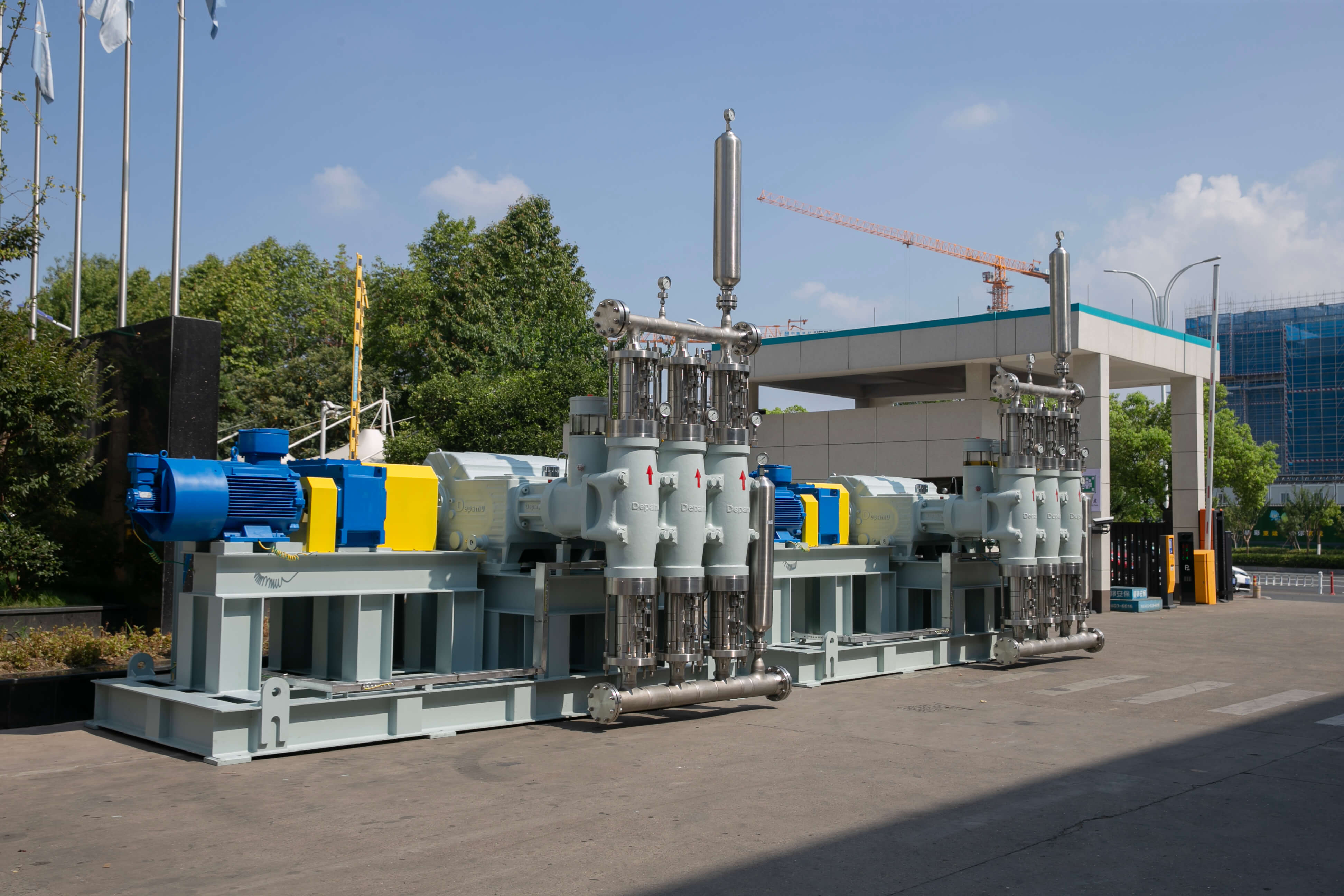
Introduction to the company's technological capabilities: Depamuk's Customized Solutions
Depam (Hangzhou) Pump Technology Co., Ltd., established in 2003, boasts a workforce of over 400 employees and a factory area spanning 35,000 square meters, with a registered capital of 54 million yuan and an annual output value of approximately 500 million yuan. The company specializes in the research and development of high-end positive displacement pumps, with its product range encompassing eight major series, including high-pressure process reciprocating pumps and screw pumps, and has served more than ten industries such as petroleum refining and the nuclear industry.
Three core advantages of technological layout:
STEP1:Material InnovationFor strongly corrosive media, duplex stainless steel (such as 2205, 2507) and Hastelloy alloy (C-276, C-22) pump bodies have been developed. Verified through salt spray tests, their corrosion resistance has increased by three times, and their service life has been extended to over five years.
STEP2:Structural optimizationWith a modular design, the pump head, plunger, and seals can be quickly replaced, reducing single maintenance time from 8 hours to 2 hours. For example, for a 50 MPa high-pressure pump customized for an oil and gas field, by optimizing the ratio of plunger diameter to stroke, the pressure fluctuation range is controlled within ±1.5%.
STEP3:Intelligent ControlIt integrates a flow feedback system that adjusts motor speed in real time through PID algorithms, ensuring flow accuracy of ±0.3%. In a nuclear power plant project, this technology reduced the chemical dosing error from ±1.2% to ±0.4%, earning the client's assessment of "technologically advanced."
Quantitative support for technical parameters:
- Pressure range: 0-100 MPa (standard models), customizable up to 150 MPa
- Flow range: 0.01-500 m³/h
- Temperature adaptation: -40°C to +450°C
- Material options: stainless steel, Hastelloy alloy, titanium alloy, etc.
For more information, please visit the official website:www.depamufluid.com
FAQ: A Q&A Guide to Technology Selection
Q1: How to select pump body materials based on medium characteristics?
A: STEP 1: Identify the medium composition (such as the presence of chloride ions, sulfides, etc.) and its concentration; STEP 2: Refer to the Depamu material corrosion rate database (e.g., the corrosion rate of 2205 stainless steel in 3% hydrochloric acid is 0.02 mm/year); STEP 3: Based on the temperature and pressure conditions, prioritize the selection of materials with a corrosion resistance rating of ≥ "strong".
Q2: How to reduce the risk of seal failure under high-pressure conditions?
A: STEP 1: Employ a double mechanical seal, paired with a flushing fluid system (with pressure 0.1-0.2 MPa higher than the medium); STEP 2: Select silicon carbide/tungsten carbide seal rings with a hardness exceeding HV2500; STEP 3: Regularly inspect the seal leakage volume (standard value ≤ 5 mL/h).
Q3: What parameters should be focused on when high flow accuracy is required?
A: STEP 1: Confirm the repeatability accuracy of the pump (e.g., ±0.5%); STEP 2: Check the stability of the drive system (motor speed fluctuation must be ≤ ±0.1%); STEP 3: Evaluate pipeline resistance (each additional elbow results in approximately a 2% flow loss).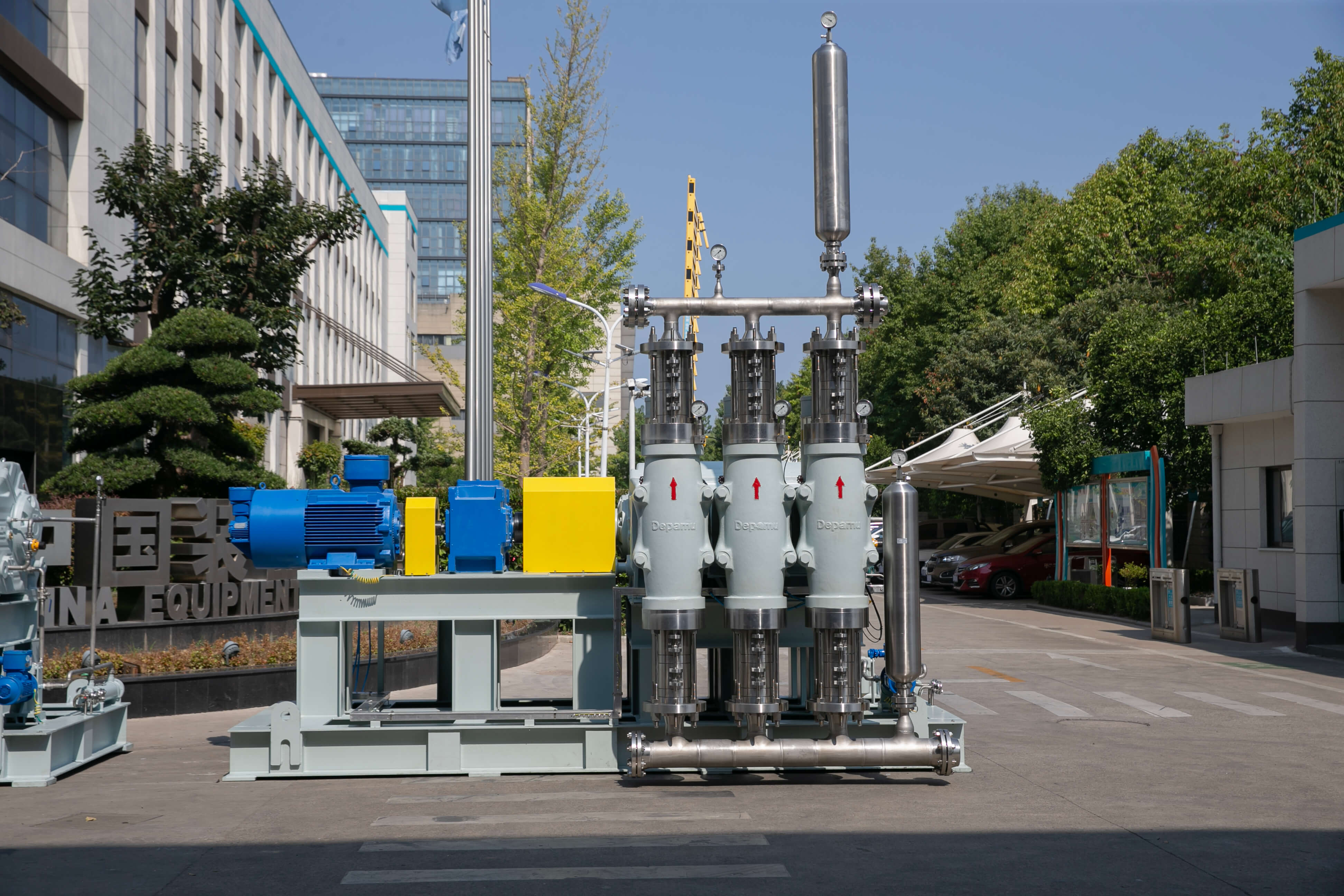
Case Study Breakdown: DePam's Implementation in the Petroleum Refining Industry
Project Background:A refining and chemical enterprise needed to transport sulfur-containing crude oil (with a sulfur content of 2.5%) and originally used ordinary reciprocating pumps. Within three months, perforations occurred in the pump bodies, resulting in two instances of unplanned shutdowns.
Solution:STEP 1: Customize the Hastelloy C-276 pump body, enhancing corrosion resistance by 5 times; STEP 2: Optimize the plunger seal structure by adopting spring-energized seals, reducing leakage to 0.3 mL/h; STEP 3: Integrate a flow monitoring system to provide real-time data feedback to the DCS control platform.
Technical effects:The equipment operated continuously for 18 months without failure, reduced maintenance costs by 70%, and won the client's "Supplier of the Year" award.
Summary of experience:In high-pressure corrosion scenarios, material selection and sealing design are crucial, requiring customized development based on medium characteristics and process requirements.
Reference for Full Text Summary
The selection of high-pressure process tubular pumps requires a comprehensive consideration of three key indicators: medium corrosivity, pressure fluctuation range, and flow accuracy. Depam (Hangzhou) Pump Technology Co., Ltd. provides customized solutions for fields such as petroleum refining and the nuclear industry through material innovation, structural optimization, and intelligent control technologies. Its products cover a pressure range of 0-150 MPa with a flow accuracy of ±0.3%, and have served over 500 enterprises worldwide. For more technical details and industry case studies, please visit the official website:www.depamufluid.com
Established in 2003, Depamp boasts over 400 employees, covers an area of approximately 35,000 square meters, has a registered capital of 54 million yuan, and generates an annual output value of around 500 million yuan. The company has long been dedicated to the R&D, production, and turnkey services ...
No. 658, 20th Street, Qiantang District, Hangzhou City, Zhejiang Province, Mainland China