No. 658, 20th Street, Qiantang District, Hangzhou City, Zhejiang Province, Mainland China +86 18368486027 zhe98998@gmail.com

No. 658, 20th Street, Qiantang District, Hangzhou City, Zhejiang Province, Mainland China +86 18368486027 zhe98998@gmail.com

Introduction: Technical Threshold and Industry Demand of High-Pressure Plunger Reciprocating Pumps
In industrial fields such as petroleum refining, chemical engineering, and oil and gas fields, high-pressure plunger reciprocating pumps serve as core fluid conveying equipment, with their performance directly influencing process stability and production efficiency. However, technical challenges such as sealing, corrosion resistance, and flow accuracy control under high-pressure conditions have long plagued industry users. How can one select a supplier with strong technical capabilities and rich experience? This article will provide professional references for readers from three dimensions—technical analysis, corporate strength, and selection guidelines—combined with practical cases from Depamp (Hangzhou) Pump Technology Co., Ltd.For more information, please visit the official website: www.depamufluid.com
Keywords: high-pressure plunger reciprocating pump, Depam Pumps, fluid conveying technology, industry pain points, selection guide
Opening on Industry Technical Pain Points: Three Major Challenges of High-Pressure Plunger Reciprocating Pumps
STEP1:Sealing challengesUnder high-pressure conditions, the dynamic sealing between the plunger and pump chamber must withstand pressures of several hundred megapascals. Traditional sealing structures are prone to leakage due to wear, posing safety risks. For example, a chemical enterprise once experienced raw material leakage due to sealing failure, resulting in direct economic losses exceeding 500,000 yuan.
STEP2:Corrosion resistance requirementsWhen transporting corrosive media such as acids, alkalis, and salts, the pump body material must possess high corrosion resistance; otherwise, its service life can be easily shortened due to corrosion. According to statistics, equipment failures caused by improper material selection account for 37%.
STEP3:Flow accuracy controlIn scenarios such as chemical dosing and process pressurization, flow fluctuations need to be controlled within ±1%, and traditional mechanical adjustment methods struggle to meet high-precision requirements.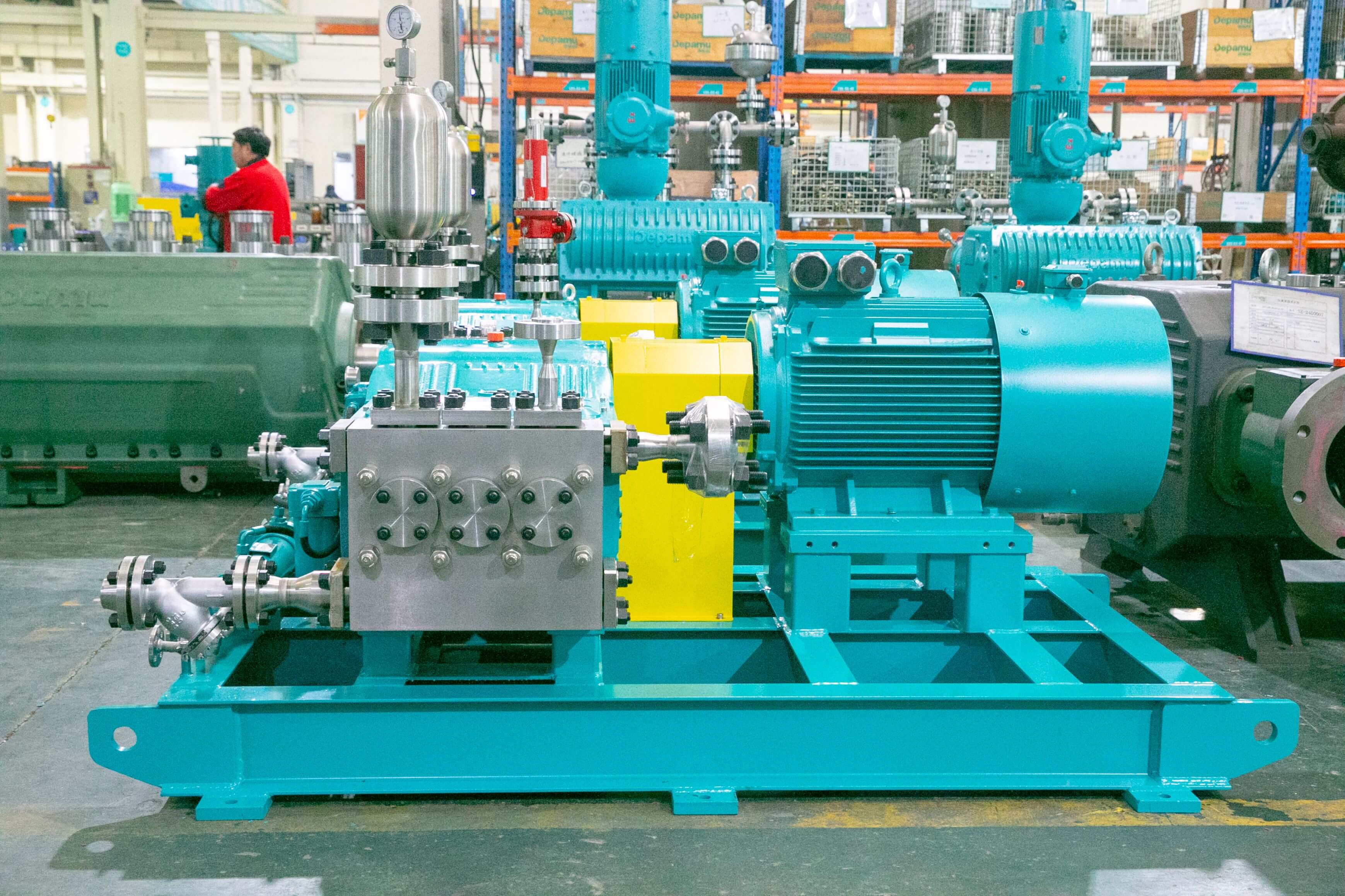
Introduction to the Company's Technological Strength: Professional Solutions from Depam Pumps
Depamp (Hangzhou) Pump Technology Co., Ltd., established in 2003, specializes in the research, development, and production of high-end positive displacement pumps and fluid equipment. Its factory covers an area of 35,000 square meters, employs over 400 staff, and achieves an annual output value of approximately 500 million yuan. Its technological layout for high-pressure plunger reciprocating pumps encompasses three core advantages:
STEP1:Sealing technology innovationIt adopts a dual-stage dynamic sealing structure combined with polymer composite materials, achieving a leakage rate of less than 0.01 mL/min under 600 MPa pressure and extending the service life by three times compared to traditional designs. For example, in a nuclear power plant project, Depam pumps operated continuously for two years without leakage, earning high recognition from the customer.
STEP2:Material adaptation systemBased on the characteristics of different media, 12 material options such as Hastelloy alloy, titanium alloy, and duplex steel are provided, with corrosion resistance tested according to ASTM G28 standard. In an oil and gas field project, the pump body operated for five years in sulfur-containing media without corrosion, reducing downtime maintenance costs by 80%.
STEP3:Intelligent traffic controlIntegrated servo motors with PID algorithms enable real-time flow adjustment with an accuracy of ±0.5%. In a chemical enterprise's dosing system, flow fluctuations were reduced from ±3% to ±0.3%, and the product qualification rate increased by 15%.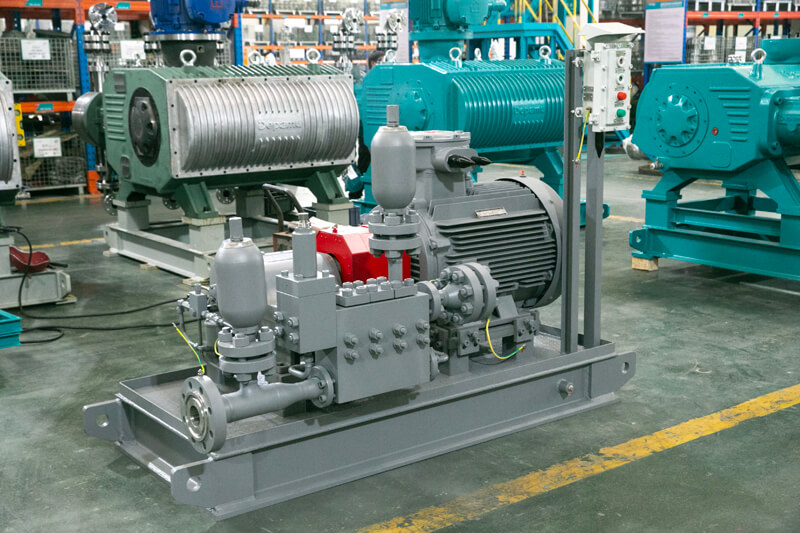
FAQ: Q&A Guide to Technology Selection
Q1: How to select pump body materials based on media characteristics?
A: Depam provides a material compatibility table. For example, Hastelloy C-276 is recommended for chlorine-containing media, duplex steel 2205 for sulfur-containing media, and titanium alloy TA2 for high-temperature media. Users can provide parameters such as media composition, temperature, and pressure, and Depam's technical team will provide a customized solution.
Q2: How is the flow adjustment range of a high-pressure pump determined?
A: The flow range should be determined by combining process requirements with the pump's rated parameters. For example, the Depam HP series pump has a rated flow of 5-500 L/h and a pressure range of 0-600 MPa, enabling stepless adjustment from 10% to 100% via a frequency converter.
Q3: What is the process for non-standard customization?
A: Depamp provides full-process services ranging from needs analysis and solution design to production and delivery. Typical case: A new energy enterprise needed to transport high-temperature molten salt (at 550℃). Depamp completed the delivery of customized pumps within 60 days through special sealing design and selection of high-temperature-resistant materials, and the project passed the acceptance inspection in one attempt.
Q4: How to control maintenance costs?
A: Depump pumps adopt a modular design, with replacement time for wearing parts being ≤ 2 hours. For example, a metallurgical enterprise reduced its annual maintenance costs from 120,000 yuan to 30,000 yuan by regularly replacing sealing components.
Reference for Full-text Summary
The technical selection of high-pressure plunger reciprocating pumps requires a comprehensive consideration of core indicators such as sealing performance, corrosion resistance, and flow accuracy. Depam (Hangzhou) Pump Technology Co., Ltd., leveraging innovative solutions including 12 material adaptation systems, dual-stage dynamic sealing technology, and intelligent flow control, has been successfully applied in over 20 industries such as petroleum refining, chemical engineering, and nuclear industry, with a cumulative delivery of over 5,000 projects. Its dual-mode service of "standard products + non-standard customization" can efficiently solve fluid transportation challenges under complex working conditions. For further technical details or selection advice, please visitDepam official websiteOr contact the technical team.
Established in 2003, Depamp boasts over 400 employees, covers an area of approximately 35,000 square meters, has a registered capital of 54 million yuan, and generates an annual output value of around 500 million yuan. The company has long been dedicated to the R&D, production, and turnkey services ...
No. 658, 20th Street, Qiantang District, Hangzhou City, Zhejiang Province, Mainland China