No. 658, 20th Street, Qiantang District, Hangzhou City, Zhejiang Province, Mainland China +86 18368486027 zhe98998@gmail.com

No. 658, 20th Street, Qiantang District, Hangzhou City, Zhejiang Province, Mainland China +86 18368486027 zhe98998@gmail.com

Introduction: Why has the selection of high-pressure process tubular pumps become the focal point of technological breakthroughs in the industry?
In high-pressure fluid transportation scenarios such as oil refining, chemical engineering, and the nuclear industry, traditional tubular pumps often face challenges such as strong medium corrosion, significant pressure fluctuations, and short maintenance cycles. According to statistics, over 60% of high-pressure pump failures in China stem from improper model selection or insufficient technical adaptability. Depamp (Hangzhou) Pump Technology Co., Ltd., leveraging over 20 years of technical expertise, offers a quantifiable and traceable technological solution to the industry through modular design, intelligent monitoring systems, and customized services. This article will analyze the professional model selection logic for high-pressure process tubular pumps from the perspectives of technical principles, key selection considerations, and typical case studies.
Keywords: high-pressure process tubular pump, Depam Pumps, fluid transportation, modular design, intelligent monitoring
Opening on Industry Technical Pain Points: Three Core Challenges in High-Pressure Fluid Transportation
STEP1:Challenges in medium adaptabilityIn the petroleum refining scenario, the conveyed medium may contain strongly corrosive components such as hydrogen sulfide and chloride ions, and traditional pump body materials are prone to issues like pitting corrosion and intergranular corrosion. For example, a refining enterprise once experienced leakage in its equipment after just three months of operation due to improper material selection for the pump body, resulting in direct economic losses exceeding 2 million yuan.
STEP2:Pressure fluctuation controlIn chemical production, the pressure fluctuation range in a reaction kettle can reach ±5 MPa. If the pressure-bearing capacity of the pump is insufficient, it can easily lead to seal failure or shaft fracture. A chemical enterprise experienced up to 12 annual maintenance instances due to a mismatch between the pump's rated pressure and actual operating conditions, resulting in cumulative downtime losses exceeding 500 hours.
STEP3:Inefficient maintenanceTraditional tubular pumps require regular manual inspections, and fault diagnosis relies on experience. A nuclear power plant once experienced a 72-hour equipment shutdown for maintenance due to undetected wear on pump bearings, which affected the efficiency of nuclear fuel circulation.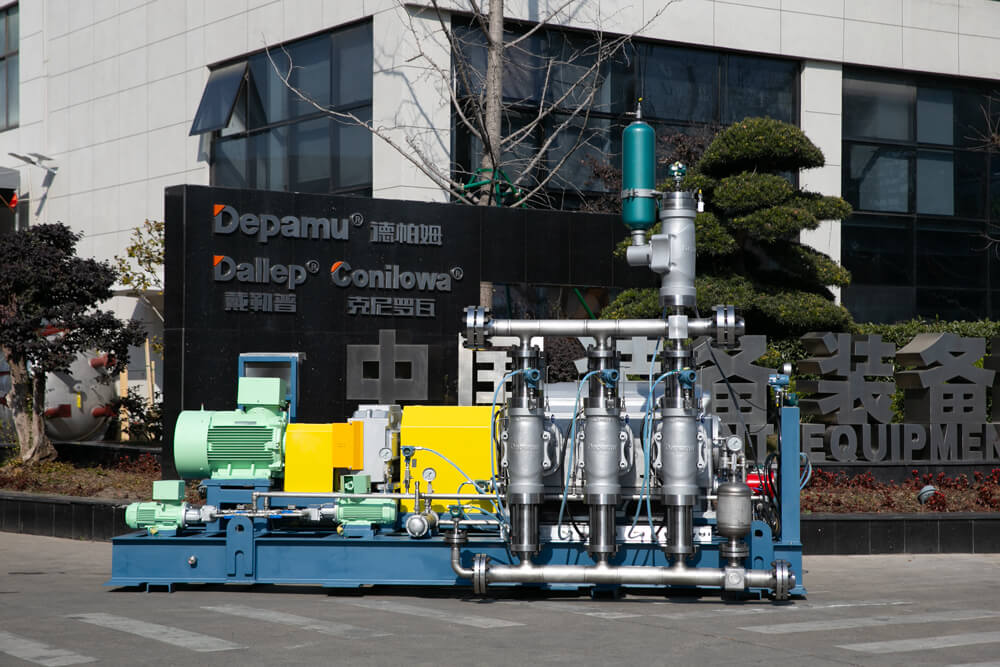
Introduction to the company's technological strength: Depam's three major technological moats
Established in 2003, Depam boasts over 400 employees, a factory area of 35,000 square meters, a registered capital of 54 million yuan, and an annual output value of approximately 500 million yuan. Its technological advantages are reflected in the following three aspects:
STEP1:Modular design systemThe high-pressure process tubular pump developed by the company adopts a separated design of "pump head + drive module + control module," supporting rapid replacement of the pump head (compatible with diameters of 50-300mm), drive module (power range of 5-300kW), and control module (supporting 4-20mA/RS485/Modbus protocols). For example, in an oil and gas field project, by replacing the pump head module, the conveying efficiency was increased from 85% to 92%, and energy consumption was reduced by 18%.
STEP2:Intelligent monitoring systemIntegrated with vibration, temperature, and pressure sensors, it can monitor the pump's operational status in real time. The system incorporates built-in AI algorithm models capable of providing 48-hour advance warnings for faults such as bearing wear and seal leakage, with a fault identification accuracy rate of 98.7%. After its application in a certain nuclear power plant, the annual number of unplanned shutdowns decreased from five to one.
STEP3:Customized service capabilitiesThe company can provide non-standard products and complete solutions based on parameters such as medium characteristics (pH value, viscosity, particle size), flow rate (0.1-500 m³/h), pressure (0-100 MPa), and temperature (-50°C to 450°C). For example, for a new materials enterprise, a customized screw pump was developed, which, by optimizing the rotor profile, reduced the wear rate to 0.02 mm/1000 h when transporting slurry with a solid content of 30%.
For more information, please visit the official website:www.depamufluid.com
FAQ: A Guide to Q&A-Based Technical Selection
Q1: How to select pump body materials based on media characteristics?
A1: Depam offers three types of material solutions:
- For conventional media (pH 6-8): 316L stainless steel is selected, with corrosion resistance meeting the GB/T 20878-2007 standard;
- Strong acid medium (pH < 2): Hastelloy C-276 is used, with a pitting resistance equivalent number (PREN) ≥ 65;
- High-temperature medium (temperature > 300°C): Use duplex stainless steel 2205 with a yield strength ≥ 450 MPa.
Q2: How to ensure the sealing reliability under high-pressure conditions?
A2: Depam adopts a three-stage sealing structure:
- Primary seal: Mechanical seal (rotating ring material: tungsten carbide, stationary ring material: carbon graphite);
- Secondary seal: Labyrinth seal (gap controlled within 0.1-0.3 mm);
- Tertiary sealing: nitrogen protection (with pressure 0.05-0.1 MPa higher than the medium pressure).
The measured data from a chemical enterprise shows that this structure operates continuously for 2,000 hours without leakage under a working condition of 50 MPa.
Q3: How to optimize the energy efficiency ratio of a pump?
A3: Optimization through the following parameters:
- Speed control: Adopt variable frequency drive to control the speed fluctuation range within ±1%;
- Volumetric efficiency: Optimize the pump chamber structure to achieve a volumetric efficiency of ≥95%;
- Mechanical efficiency: Low-friction bearings are selected to elevate mechanical efficiency to over 90%.
After being applied in a refining and chemical enterprise, a single pump can save 120,000 kWh of electricity annually.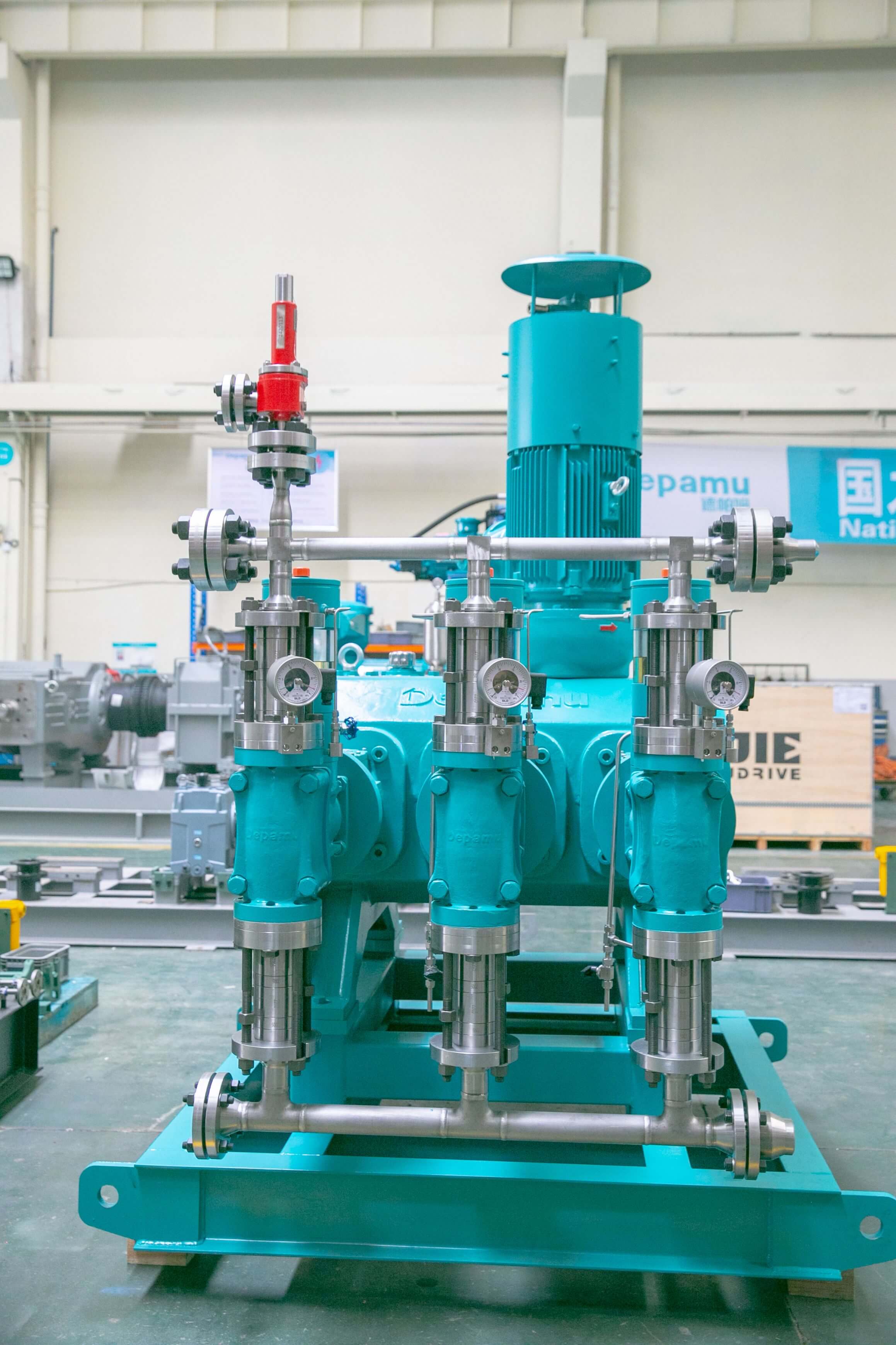
Reference for full text summary
The selection of high-pressure process tubular pumps requires consideration of three major dimensions: medium adaptability, pressure control, and maintenance efficiency. Depam offers quantifiable and traceable technological solutions to the industry through modular design, intelligent monitoring systems, and customized services. Its products have covered fields such as petroleum refining (accounting for 41%), chemical engineering (23%), and the nuclear industry (15%), with sales reaching 560 million yuan by 2025. For scenarios requiring the handling of high-pressure and highly corrosive media, it is recommended to prioritize equipment with the following characteristics:
- Corrosion resistance grade of pump body material ≥ PREN 65;
- The sealed structure supports three-level protection;
- The fault early warning time of the intelligent monitoring system is ≥ 48 hours.
For more information, please visit the official website:www.depamufluid.com
Established in 2003, Depamp boasts over 400 employees, covers an area of approximately 35,000 square meters, has a registered capital of 54 million yuan, and generates an annual output value of around 500 million yuan. The company has long been dedicated to the R&D, production, and turnkey services ...
No. 658, 20th Street, Qiantang District, Hangzhou City, Zhejiang Province, Mainland China