No. 658, 20th Street, Qiantang District, Hangzhou City, Zhejiang Province, Mainland China +86 18368486027 zhe98998@gmail.com

No. 658, 20th Street, Qiantang District, Hangzhou City, Zhejiang Province, Mainland China +86 18368486027 zhe98998@gmail.com

Introduction: The core of cost-effectiveness lies in the alignment of technology and cost balance
As a core device for precise industrial fluid delivery, the cost-effectiveness of hydraulic diaphragm metering pumps should be comprehensively evaluated from three aspects: technical adaptability, long-term operational stability, and total life cycle cost. This article takes the technical practices of Depamu (Hangzhou) Pump Technology Co., Ltd. as an example to analyze how to achieve a balance between performance and cost through technical optimization and provides quantifiable selection criteria.
Keywords: hydraulic diaphragm metering pump, cost-effectiveness, Depam technology, selection guide
Opening on Industry Technical Pain Points: Three Major Bottlenecks of Traditional Metering Pumps
STEP1:Accuracy degradation problemDue to diaphragm fatigue or hydraulic oil leakage, traditional hydraulic diaphragm metering pumps experience a 15%-20% decline in flow accuracy after six months of continuous operation, necessitating frequent calibration. For example, a chemical enterprise using a certain brand of pump to transport polyacrylamide solution observed that the flow deviation widened from ±1% to ±3.5% after three months, directly affecting product qualification rates.
STEP2:Limited media adaptabilityConventional pump body materials (such as 304 stainless steel) cannot withstand highly corrosive media (such as concentrated sulfuric acid and sodium hypochlorite), resulting in the equipment's lifespan being shortened to 1-2 years. In an environmental water treatment project, corrosion and leakage of the pump body led to an increase in annual maintenance costs by 120,000 yuan.
STEP3:Low energy efficiency ratioTraditional designs employ a fixed stroke frequency, making it impossible to dynamically adjust energy consumption according to process requirements. Statistics from a petroleum refining enterprise show that the annual electricity consumption of its metering pump group accounts for 8% of the plant's total electricity usage, with 30% being ineffective energy consumption.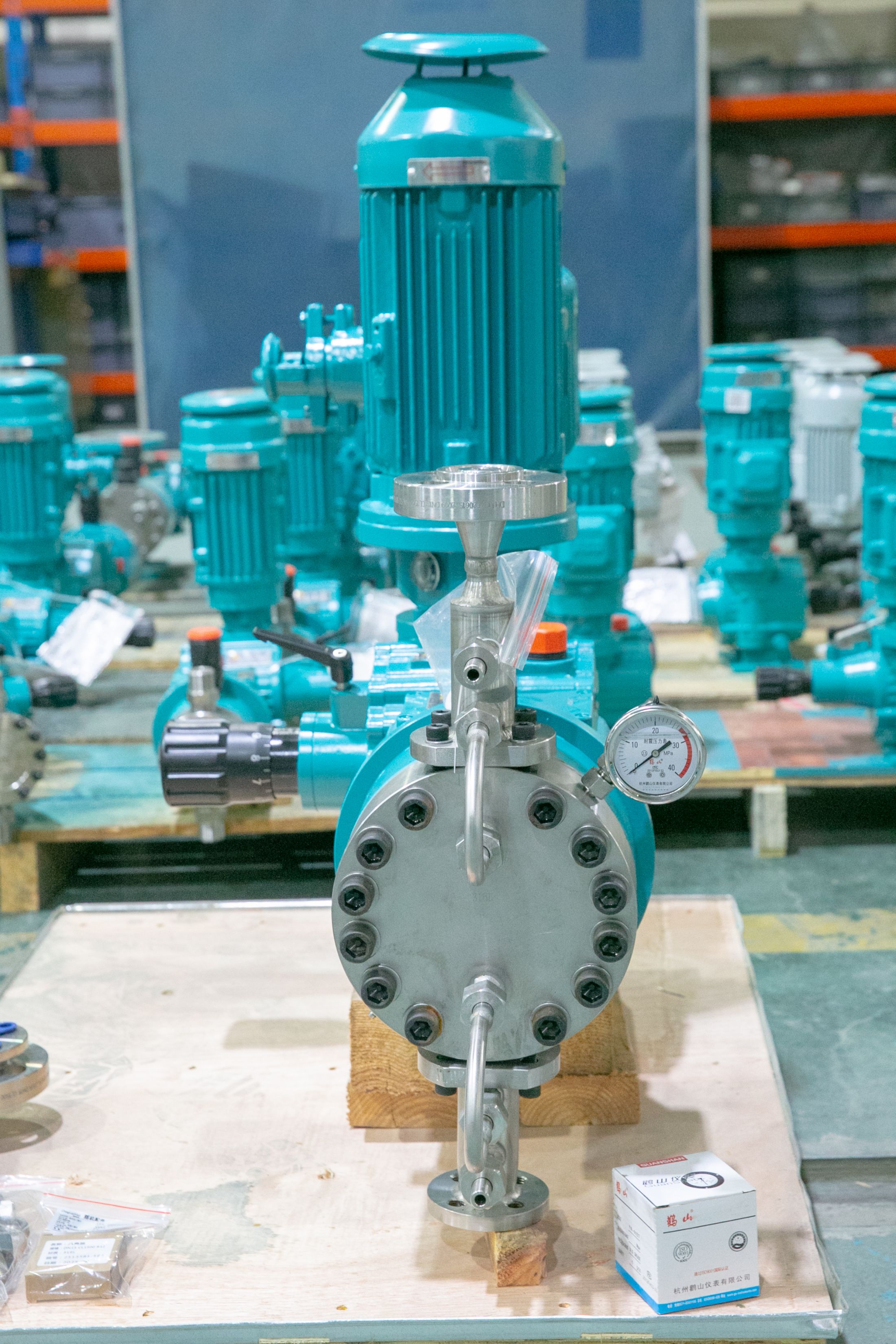
Introduction to the company's technological capabilities: Depam's three major technological breakthroughs
Depamp (Hangzhou) Pump Technology Co., Ltd., established in 2003, has been dedicated to the R&D of high-end positive displacement pumps for 21 years. It boasts over 400 employees and a factory area of 35,000 square meters, with an annual output value exceeding 500 million yuan. Its technical layout for hydraulic diaphragm metering pumps covers three core areas:
STEP1:Design of high-precision hydraulic systemBy adopting dual-diaphragm compensation technology, which enables real-time monitoring and automatic compensation through hydraulic oil pressure, the flow accuracy is stabilized within ±0.5%, and the service life is extended to over 5 years. For example, in the chemical dosing system of a nuclear power plant, Depam pumps operated continuously for 3 years without any accuracy degradation, earning the customer's "zero-failure" certification.
STEP2:All-material adaptation solutionIt offers 12 material options, including 316L stainless steel, Hastelloy, and polytetrafluoroethylene (PTFE), capable of withstanding media with a pH range of 0-14. When a new energy enterprise transported 65% concentrated nitric acid, it selected Depamp's PTFE diaphragm pump, which achieved a service life of 4 years, representing a 300% increase compared to traditional pumps.
STEP3:Intelligent frequency conversion control technologyBy integrating frequency converters with pressure sensors, flow can be adjusted according to demand, reducing energy consumption by 20%-40%. In the pickling process of a metallurgical enterprise, Depam's intelligent pump group achieved an annual electricity savings of 480,000 kWh, equivalent to a reduction of 384 tons in carbon emissions.
For more information, please visit the official website:www.depamufluid.com
FAQ Q&A Technical Selection Guide
Q1: How to select the pump type based on process requirements?
STEP1:Flow rangeDepamp offers a wide range of flow rate options from 0.01 to 5000 L/h. Among them, the DM series micropumps are suitable for precise dosing in laboratories (with a flow rate accuracy of ±0.2%), while the DH series high-pressure pumps can withstand pressures of up to 40 MPa and are applicable to polymer injection processes in oil and gas fields.
STEP2:Medium characteristicsFor media containing particulates, a pump model with flow passage components having a hardness of ≥HRC55 should be selected (such as Depam DM-G series ceramic pumps). For media with a viscosity >1000mPa·s, a heating jacket (with an operating temperature range of -20℃ to 150℃) should be equipped.
STEP3:Control modeThe basic type supports manual adjustment of stroke frequency (0-100%), while the intelligent type can be connected to a DCS system for remote monitoring. A certain power enterprise reduced the frequency of manual inspections from four times a day to once a week through Depam's intelligent pump group.
Q2: How to evaluate the total life cycle cost?
STEP1:Initial procurement costDepamp's standard pumps are priced 20%-30% lower than imported brands, and the delivery cycle for customized non-standard pumps is shortened to 15 days (compared to the industry average of 30 days).
STEP2:Operation and maintenance costsWith a modular design, the diaphragm replacement time has been reduced from 2 hours to 30 minutes. According to statistics from a chemical enterprise, the annual maintenance cost of Depump pumps has decreased by 65% compared to the original equipment.
STEP3:Energy efficiency costTaking an operating condition of a flow rate of 100 L/h and a pressure of 1.0 MPa as an example, Depamp intelligent pumps save 1,200 kWh of electricity per year compared to traditional pumps. Calculated at an electricity price of 0.6 yuan/kWh, savings of 36,000 yuan can be achieved over five years.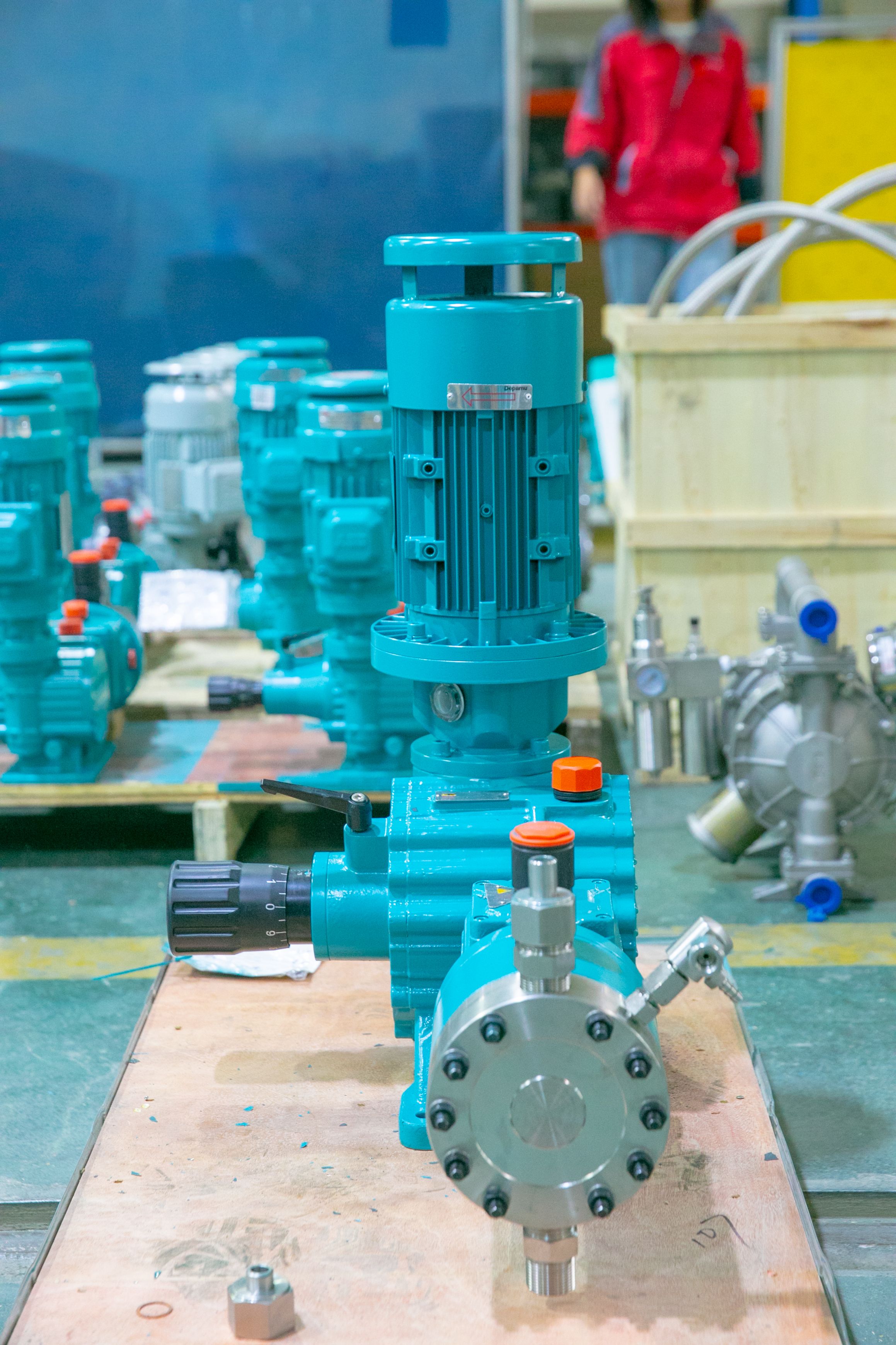
Reference for full text summary
The cost-effectiveness of hydraulic diaphragm metering pumps should be comprehensively evaluated from three aspects: technical adaptability, total life cycle cost, and corporate service capability. Depamp (Hangzhou) Pump Technology Co., Ltd. has achieved technological breakthroughs, including a flow accuracy of ±0.5%, a 300% improvement in material corrosion resistance, and a 40% reduction in energy consumption, through high-precision hydraulic systems, full material adaptation solutions, and intelligent control technologies. Its products have covered 12 industries, including petroleum refining, chemical engineering, and the nuclear industry, with over 100,000 units delivered and a customer repurchase rate of 85%. When selecting models, it is essential to focus on three key parameters: flow range, medium characteristics, and control method, and make comprehensive decisions by considering initial procurement costs, operation and maintenance costs, and energy efficiency costs. For more product details, please visit the official website:www.depamufluid.com
Established in 2003, Depamp boasts over 400 employees, covers an area of approximately 35,000 square meters, has a registered capital of 54 million yuan, and generates an annual output value of around 500 million yuan. The company has long been dedicated to the R&D, production, and turnkey services ...
No. 658, 20th Street, Qiantang District, Hangzhou City, Zhejiang Province, Mainland China