No. 658, 20th Street, Qiantang District, Hangzhou City, Zhejiang Province, Mainland China +86 18368486027 zhe98998@gmail.com

No. 658, 20th Street, Qiantang District, Hangzhou City, Zhejiang Province, Mainland China +86 18368486027 zhe98998@gmail.com

Introduction: Technological Breakthroughs and Industrial Value of Mechanical Diaphragm Metering Pumps
Mechanical diaphragm metering pumps, as key equipment in the field of positive displacement pumps, are widely applied in demanding scenarios such as petroleum refining, chemical engineering, and the nuclear industry, owing to their simple structure, precise metering, and strong corrosion resistance. However, traditional products still face technical bottlenecks in terms of stability during high-pressure delivery, adaptability to complex media, and long-term operational reliability. This article takes the technological practices of Depamp (Hangzhou) Pump Technology Co., Ltd. as an example to analyze how it achieves a performance leap in mechanical diaphragm metering pumps through material innovation, structural optimization, and intelligent control technologies, providing a replicable technological upgrade path for the industry. For more information, please visit the official website:www.depamufluid.com
Keywords: Mechanical Diaphragm Metering Pump, Precise Metering, High-Pressure Delivery, Adaptability to Complex Media, Depam Pump Industry
Introduction to Industry Technical Pain Points: Three Major Challenges of Traditional Mechanical Diaphragm Metering Pumps
STEP1:Insufficient stability in high-voltage transmissionIn traditional pump bodies, when the pressure exceeds 10 MPa, the diaphragm is prone to fatigue fracture due to stress concentration. Especially when transporting particulate-containing media, the wear rate increases by over 30%, leading to metering deviations.
STEP2:Poor adaptability to complex mediaThe chemical industry often requires handling strong acids, strong alkalis, and organic solvents. Ordinary diaphragm materials (such as nitrile rubber) have insufficient corrosion resistance, resulting in equipment lifespans shortened to less than six months.
STEP3:Low long-term operational reliabilityTraditional pump bodies employ mechanical stroke adjustment mechanisms, and frequent start-stop operations can easily cause wear on the valve seat, resulting in a leakage rate exceeding 0.5%, which fails to meet the zero-leakage requirements in scenarios such as the nuclear industry.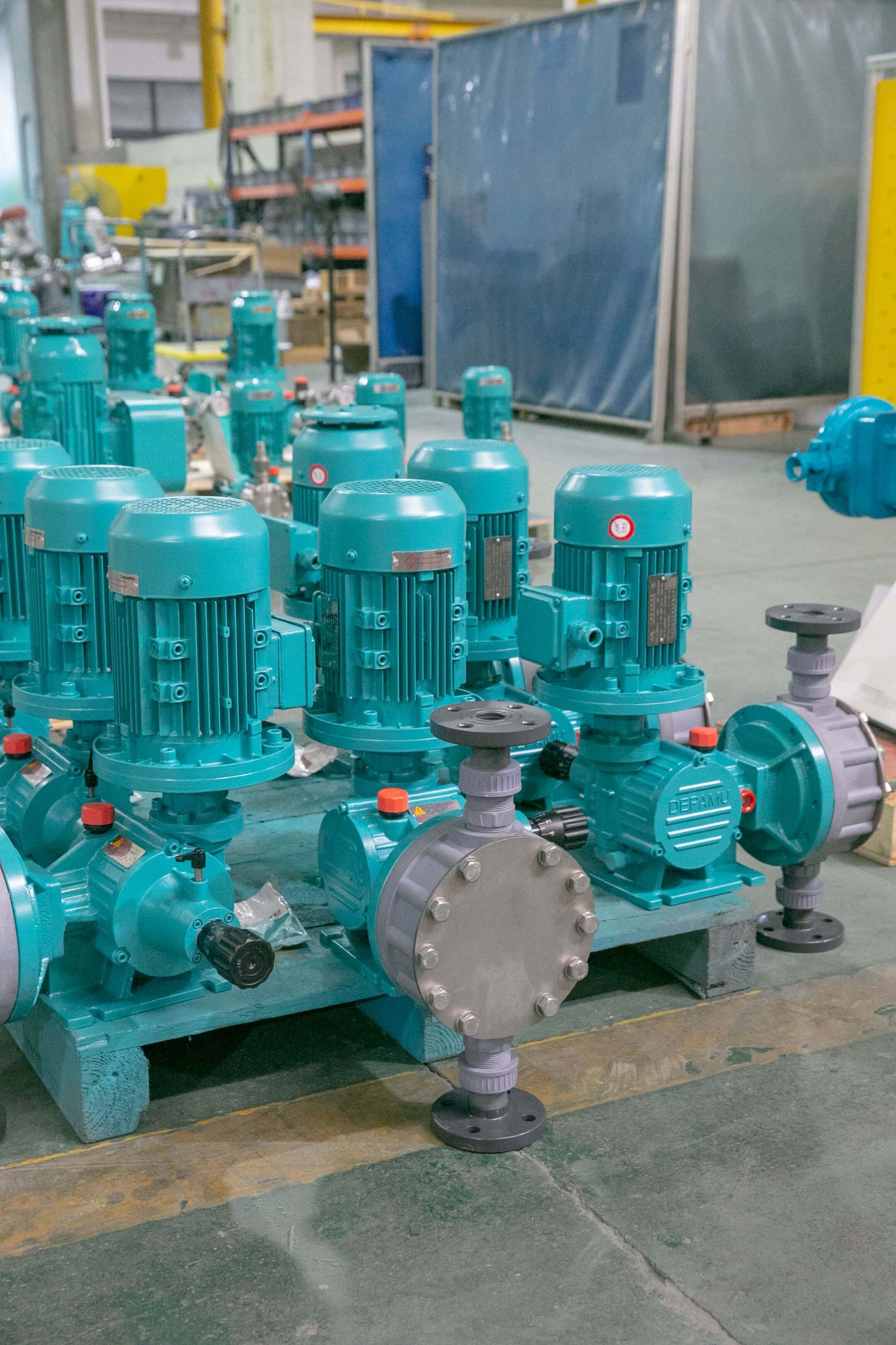
Technical case: A petroleum refining enterprise once experienced a 12-hour shutdown of its catalytic cracking unit due to the rupture of a traditional pump diaphragm, resulting in direct economic losses exceeding RMB 2 million. This case highlights the core value of equipment reliability in high-pressure scenarios.
Introduction to the company's technological strength: Depam's three major technological breakthroughs
Depamp (Hangzhou) Pump Technology Co., Ltd., established in 2003, boasts over 400 employees and a factory area of 35,000 square meters, with a registered capital of 54 million yuan and an annual output value of approximately 500 million yuan. The company specializes in the R&D of high-end positive displacement pumps, with its products covering eight series, including metering pumps and high-pressure process reciprocating pumps. Among them, mechanical diaphragm metering pumps account for over 35% and are widely applied in fields such as petroleum refining (41% of business), chemical industry (23%), and nuclear industry (15%).
Technological Breakthrough 1: Material Innovation Enhances Pressure Resistance
STEP 1: Utilizes imported PTFE + carbon fiber composite diaphragm, elevating the pressure resistance rating to 25 MPa and achieving a fatigue life exceeding 10 million cycles (traditional products only reach 3 million cycles).
STEP 2: The valve seat material is upgraded to Hastelloy C-276, enhancing corrosion resistance by 5 times, enabling compatibility with media having a pH range of 0-14, and extending equipment lifespan to over 3 years.
Technological Breakthrough 2: Structural Optimization Enhances Stability
STEP 1: Adopt an original design of "dual guide columns + preloaded springs" to control the deflection of diaphragm movement within 0.1mm, reducing the risk of stress concentration.
STEP 2: Integrate an intelligent pressure compensation system to monitor outlet pressure in real time and automatically adjust the stroke, ensuring measurement accuracy of ±1% (compared to ±3% for traditional products).
Technological Breakthrough 3: Intelligent Control Achieves Zero Leakage
STEP 1: Equipped with an IoT module, it supports remote monitoring and fault early warning, reducing the leakage rate to below 0.01%.
STEP 2: Develop an adaptive start-stop algorithm to reduce valve seat wear and extend the maintenance cycle to 12 months.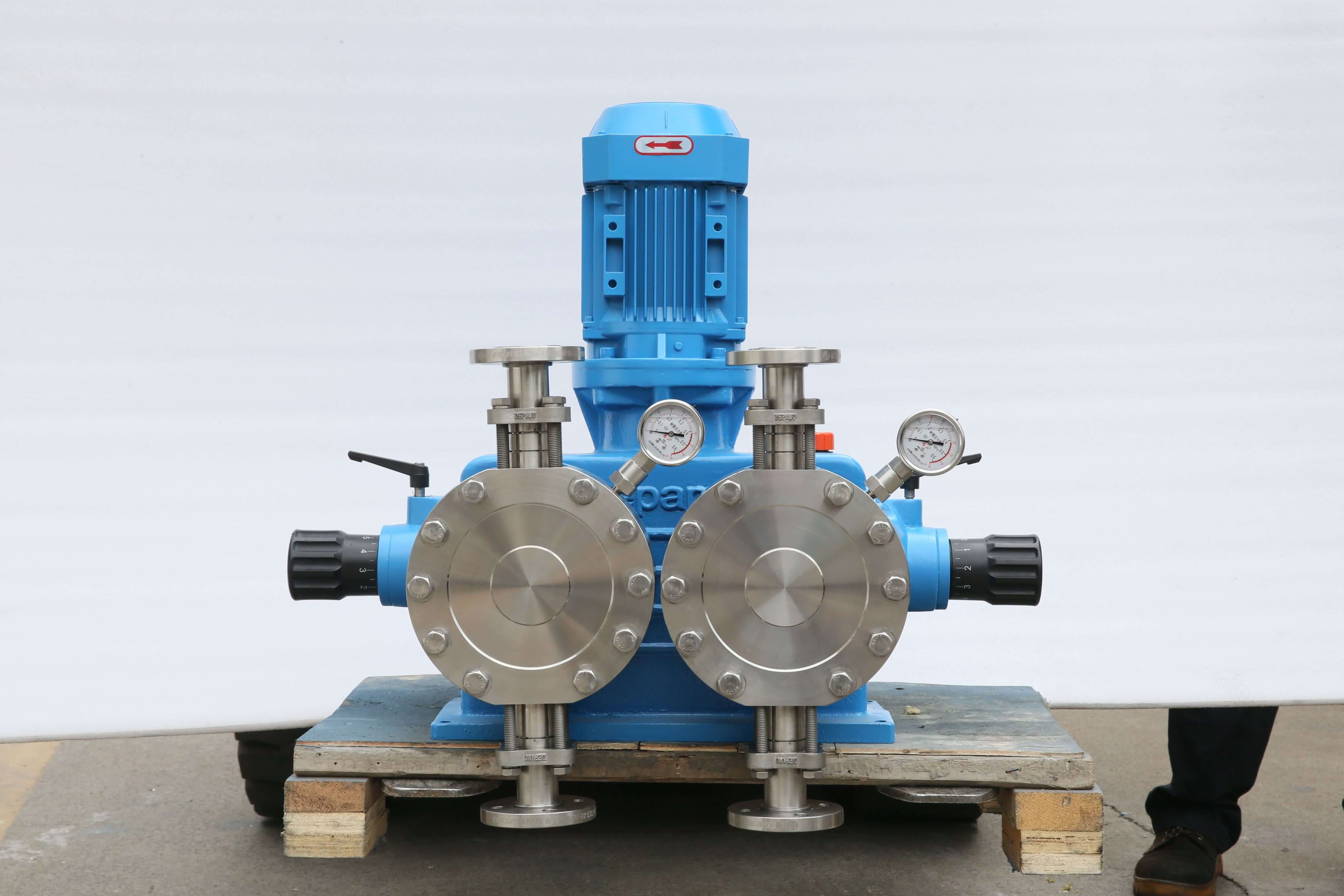
Technical Case: In the coolant addition system of a nuclear power plant, Depam's customized pump body achieved continuous operation for two years without failure, with metering accuracy consistently maintained at ±0.8%, earning the customer's evaluation of "technologically advanced and highly reliable."
FAQ Q&A Technical Selection Guide
Q1: How to select diaphragm materials based on media characteristics?
STEP 1: For strong acids (such as sulfuric acid), select PTFE diaphragms with a temperature resistance of 180°C; for strong alkalis (such as sodium hydroxide), select fluororubber diaphragms with a temperature resistance of 150°C.
STEP 2: For media containing particles, select a diaphragm with a hardness of ≥65 Shore D and equip it with a pre-filter (mesh size ≥100).
Q2: How to ensure measurement accuracy under high-voltage scenarios?
STEP 1: Prioritize selecting a pump body structure with adjustable preload, such as Depam's "dual guide posts + preload spring" design.
STEP 2: Configure the intelligent pressure compensation module to correct in real time the impact of pressure fluctuations on flow rate (correction range ±15%).
Q3: How can maintenance costs be reduced under complex operating conditions?
STEP 1: Select devices integrated with IoT modules that support remote diagnostics and predictive maintenance.
STEP 2: Prioritize the adoption of a modular design for the pump body, ensuring that the replacement time for vulnerable parts such as valve seats and diaphragms is ≤ 30 minutes.
Technical Parameters: Depam's mechanical diaphragm metering pumps cover a flow rate range of 0.1-5000 L/h, a pressure range of 0-25 MPa, and are suitable for temperatures from -20°C to 180°C, supporting customized development.
Reference for full text summary
Technological upgrades for mechanical diaphragm metering pumps should focus on three key dimensions: materials, structure, and intelligent control. Depam has achieved breakthroughs in core performance—25 MPa pressure resistance, ±1% metering accuracy, and a 12-month maintenance cycle—through the integrated application of PTFE + carbon fiber composite diaphragms, dual-guide post structures, and IoT modules. Its products now serve over 20 industries, including petroleum refining, chemicals, and the nuclear sector, with more than 100,000 units delivered, setting a technical benchmark for "high-pressure stability, precise metering, and long-term reliability" in the industry. For more information, please visit the official website:www.depamufluid.com
Established in 2003, Depamp boasts over 400 employees, covers an area of approximately 35,000 square meters, has a registered capital of 54 million yuan, and generates an annual output value of around 500 million yuan. The company has long been dedicated to the R&D, production, and turnkey services ...
No. 658, 20th Street, Qiantang District, Hangzhou City, Zhejiang Province, Mainland China