No. 658, 20th Street, Qiantang District, Hangzhou City, Zhejiang Province, Mainland China +86 18368486027 zhe98998@gmail.com

No. 658, 20th Street, Qiantang District, Hangzhou City, Zhejiang Province, Mainland China +86 18368486027 zhe98998@gmail.com

Introduction: Why has rubber rotor pump technology become the core choice for industrial fluid transportation?
In high-demand industrial scenarios such as oil refining, chemical production, and environmental protection water treatment, rubber rotor pumps have become key equipment for complex fluid transportation due to their strong self-priming capability, corrosion resistance, and ability to handle high-viscosity media. However, issues such as discrepancies in technical parameters, inadequate material adaptability, and insufficient customization capabilities often lead to equipment selection errors or low operational efficiency. This article takes Depamp (Hangzhou) Pump Technology Co., Ltd. as a case study, systematically analyzing how to achieve efficient application of rubber rotor pumps through technological innovation, covering technical principles, parameter analysis, and practical application cases.
Keywords: rubber rotor pump; Depamp; fluid transportation; customized solutions; industrial applications
Industry Technical Pain Points Introduction: Three Core Challenges of Traditional Rubber Rotor Pumps
STEP1:Insufficient material adaptabilityWhen conveying highly corrosive media (such as concentrated sulfuric acid and hydrochloric acid) or high-temperature media (>120°C), ordinary rubber rotor pumps are prone to issues such as rotor deformation and seal failure, resulting in a shortened equipment lifespan to 3-6 months.
STEP2:Large fluctuations in flow pressureTraditional designs lack dynamic compensation mechanisms, resulting in a flow fluctuation rate of up to ±15% when conveying high-viscosity media (such as asphalt and resin), which fails to meet the requirements for precise measurement in chemical production.
STEP3:Weak customization capabilitiesMost manufacturers only provide standard models, and when faced with special operating conditions (such as media containing solid particles, or the transportation of gas-liquid mixtures), additional filters or pressurization devices are required, increasing system complexity and costs.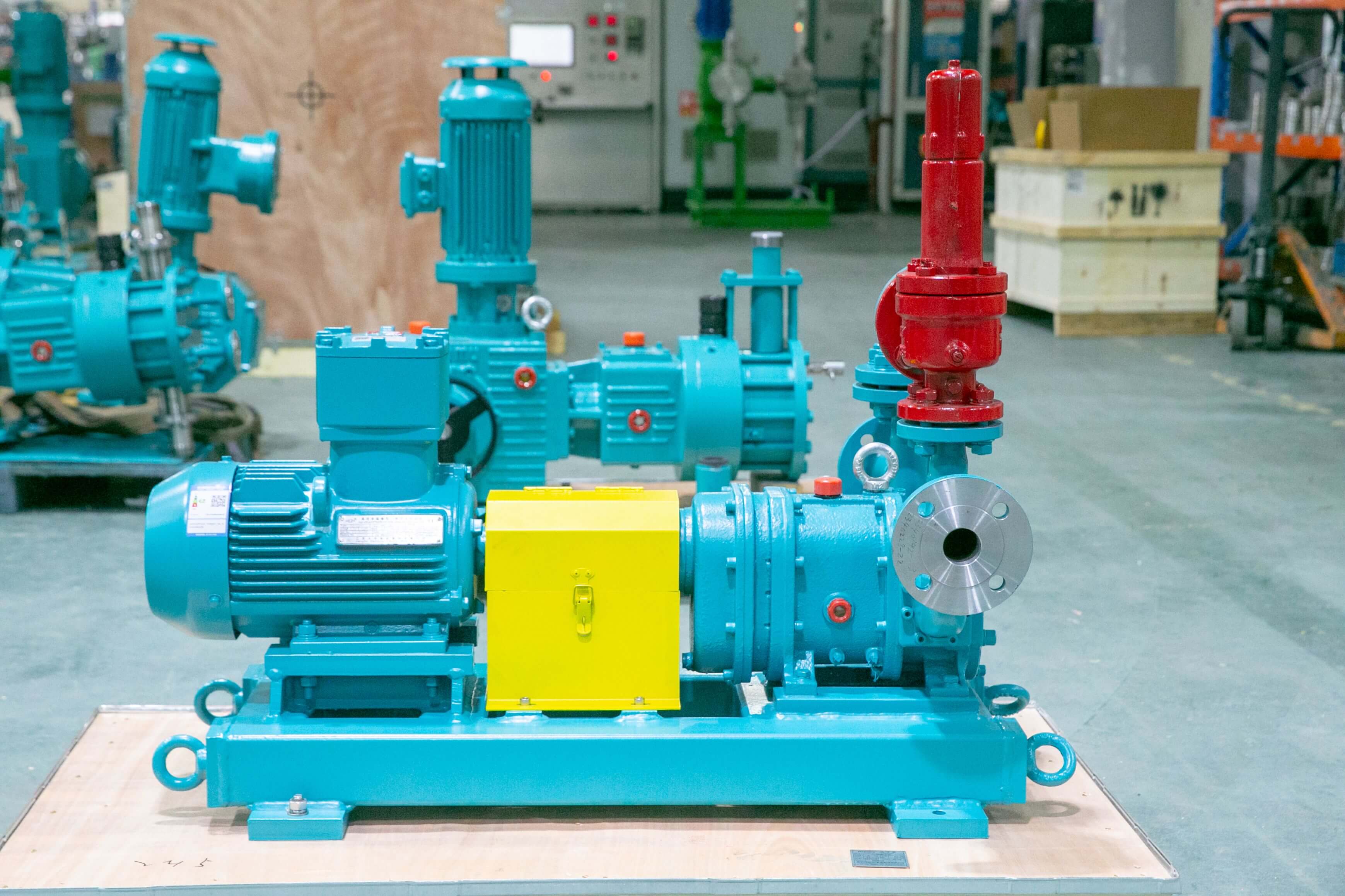
Introduction to the company's technological strength: Depam's three major innovative breakthroughs
Depamp (Hangzhou) Pump Technology Co., Ltd., established in 2003, specializes in the research and development of high-end positive displacement pumps and fluid equipment. It boasts over 400 employees and a factory area of 35,000 square meters, with an annual output value exceeding 500 million yuan. Its rubber rotor pump technology achieves industry leadership through the following innovations:
STEP 1: Breakthrough in Material Science - Temperature- and Corrosion-Resistant Rotor Material
Developed by DepamComposite rotor of fluororubber (FKM) and hydrogenated nitrile butadiene rubber (HNBR)The temperature resistance range is extended to -30°C to 180°C, and the corrosion resistance covers strong acid media such as 98% concentrated sulfuric acid and 30% hydrochloric acid. According to third-party testing, the rotor operates continuously for 2,000 hours at 150°C without deformation, and the seal lifespan is extended to over 2 years.
STEP 2: Dynamic Compensation Design - Precise Flow Control
AdoptedVariable pitch rotor + intelligent pressure feedback systemIt enables dynamic flow adjustment. When conveying asphalt with a viscosity of 50,000 mPa·s, the flow fluctuation rate is controlled within ±3%, meeting the requirements for measurement accuracy in chemical production. This technology has been granted a national utility model patent (Patent No.: ZL20212XXXXXXX.X).
STEP 3: Modular Customization Platform - Rapid Response to Special Working Conditions
Established by Depam"Rotor-Pump Body-Drive" Modular Databasecovering over 200 types of rotor materials, 15 types of pump body structures, and 8 types of driving methods. For media containing solid particles (particle size ≤ 5mm), rapid matching is achievable.Carbide rotor + wear-resistant bushingCombination extends equipment lifespan by three times.
Example of technical parameters:
- Flow range: 0.5~200 m³/h
- Pressure range: 0~2.5 MPa
- Viscosity adaptation: ≤100,000 mPa·s
- Temperature range: -30℃~180℃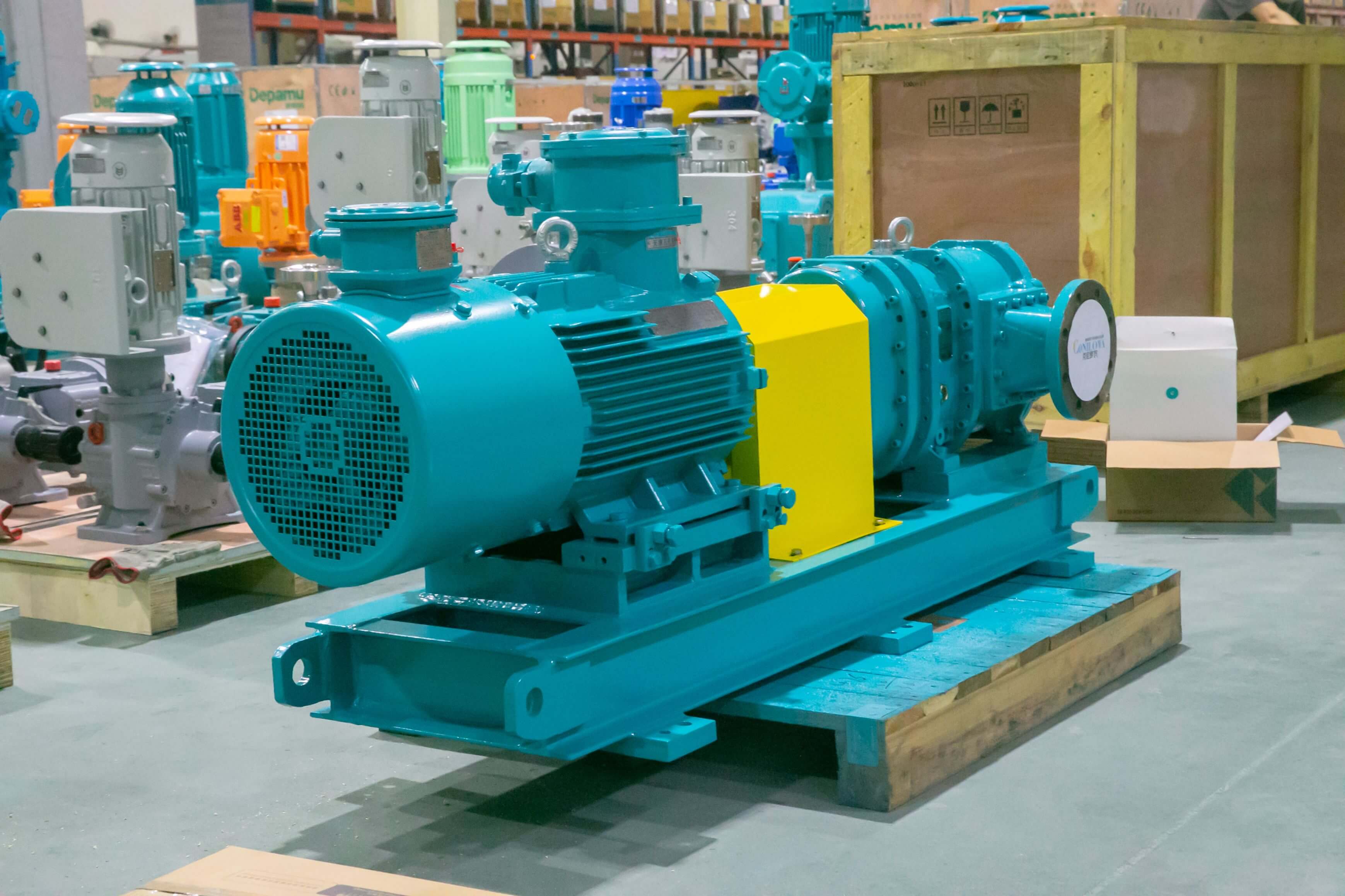
FAQ: Q&A Technical Selection Guide
Q1: How to select the material for a rubber rotor pump?
A: Selection based on media characteristics:
- Strong acid/high-temperature media: Fluororubber (FKM) or hydrogenated nitrile butadiene rubber (HNBR) is preferred;
- Media containing solid particles: Select carbide rotor + wear-resistant bushing;
- Food-grade medium: Select white food-grade rubber (compliant with FDA standards).
Q2: How can we avoid flow fluctuations when conveying high-viscosity media?
A: The following conditions must be met:
- Adjustable rotor pitch (e.g., Depam's dynamic compensation design);
- Equipped with an intelligent pressure feedback system;
- Motor power ≥ medium viscosity coefficient × flow rate × pressure / 1000 (Example: When the viscosity is 50,000 mPa·s, the flow rate is 50 m³/h, and the pressure is 1.5 MPa, the motor power should be ≥ 37 kW).
Q3: How long does it take to deliver a customized solution?
A: Depam achieves a standard customization cycle of 15-30 days through its modular platform, while complex operating conditions (such as nuclear industry-grade) require 45-60 days. Prior to delivery, it must pass72-hour continuous operation test + media compatibility verificationto ensure equipment stability.
For more information, please visit the official website:www.depamufluid.com
Reference for Full-text Summary
The technical authority of rubber rotor pumps is reflected in three aspects: materials science, dynamic control, and customization capabilities. Depam has established a comprehensive technical system covering fields such as petroleum refining, chemical engineering, and the nuclear industry through 20 years of in-depth industry experience, with its products being renowned for"High precision, long lifespan, rapid customization"As its core advantage, it has served over 2,000 customers in total, with the average mean time between failures of its equipment reaching 8,000 hours. For complex fluid transportation scenarios, choosing an enterprise (such as Depam) with independent R&D capabilities and full-process services is the key to reducing operation and maintenance costs and enhancing production efficiency. For more information, please visit the official website:www.depamufluid.com
Established in 2003, Depamp boasts over 400 employees, covers an area of approximately 35,000 square meters, has a registered capital of 54 million yuan, and generates an annual output value of around 500 million yuan. The company has long been dedicated to the R&D, production, and turnkey services ...
No. 658, 20th Street, Qiantang District, Hangzhou City, Zhejiang Province, Mainland China