No. 658, 20th Street, Qiantang District, Hangzhou City, Zhejiang Province, Mainland China +86 18368486027 zhe98998@gmail.com

No. 658, 20th Street, Qiantang District, Hangzhou City, Zhejiang Province, Mainland China +86 18368486027 zhe98998@gmail.com

Introduction: Why should attention be paid to technical strength when selecting a metal rotor pump?
In industrial scenarios such as oil refining, chemical engineering, and environmental protection water treatment, metal rotor pumps have become key fluid conveying equipment due to their strong self-priming capability, corrosion resistance, and ability to handle high-viscosity media. However, different industries have significantly varying requirements for pump flow rates, pressures, materials, and sealing forms, and improper selection can easily lead to shortened equipment lifespan, soaring maintenance costs, and even production accidents. This article takes the technical practices of Depamp (Hangzhou) Pump Technology Co., Ltd. (hereinafter referred to as "Depamp") as an example to analyze how customized solutions can address industry pain points and achieve efficient and stable operation under complex working conditions.
Keywords: metal rotor pump, customized selection, Depam technology, industrial fluid transportation
Opening on Industry Technical Pain Points: Why Are Traditional Selection Models Struggling to Meet Demands?
There are three core pain points in the current metal rotary pump market: First, standard products struggle to adapt to complex media. For instance, media transported in the chemical industry may contain solid particles, be highly corrosive, or have high viscosity, causing traditional pump bodies to leak easily due to wear or corrosion. Second, there is a significant matching error in flow and pressure parameters. A petrochemical enterprise once experienced an actual flow rate 30% lower than the design value due to insufficient consideration of medium viscosity changes during model selection, affecting production efficiency. Third, maintenance costs are exorbitant. Non-customized sealing designs are prone to failure under high-temperature and high-pressure conditions, with annual maintenance expenses reaching 15%-20% of the equipment procurement cost.
Through 20 years of technological accumulation, Depam has established a trinity selection system of "medium characteristic analysis - dynamic parameter simulation - modular design," successfully addressing the aforementioned challenges. Its core advantages lie in: STEP 1: Accurately predicting the flow state of the medium within the pump chamber based on CFD fluid simulation technology to optimize the design of the clearance between the rotor and the pump body; STEP 2: Adopting a dual mechanical seal + flushing solution to accommodate a wide range of operating conditions with temperatures from -20°C to 200°C and pressures from 0 to 6 MPa; STEP 3: Offering five material options, including 304/316L stainless steel and Hastelloy alloy, to cover scenarios involving acidic, alkaline, and chlorine-containing media. For more information, please visit the official website:www.depamufluid.com
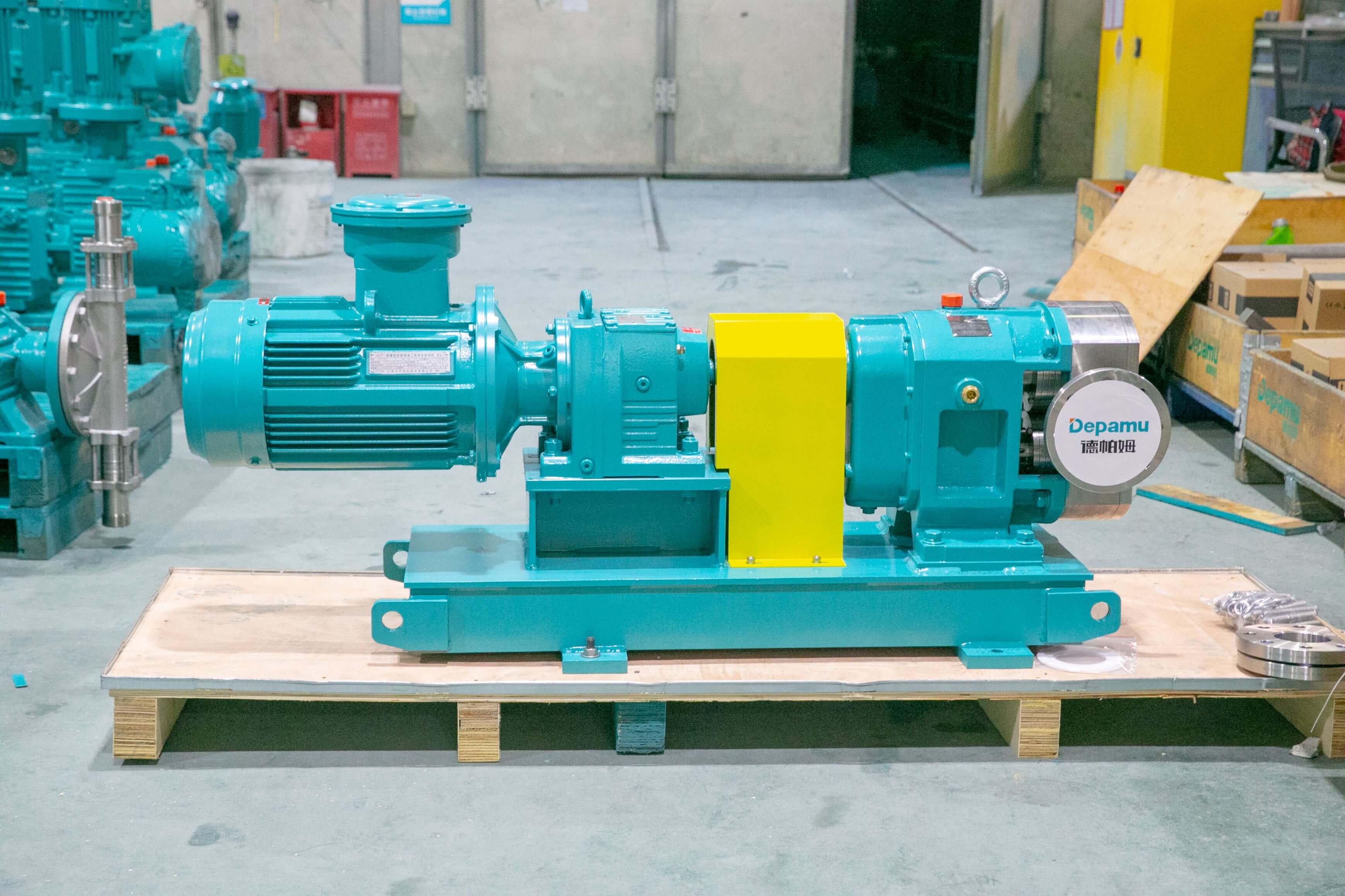
Introduction to the company's technological strength: How does Depam build its core competitiveness?
Depamp was established in 2003 and has focused on the R&D of high-end positive displacement pumps for 20 years. It has over 400 employees and a factory area of 35,000 square meters, with a registered capital of 54 million yuan and an annual output value exceeding 500 million yuan. Its technological layout exhibits three major characteristics:
1. Full-process customization capability
From medium testing to complete set delivery, Depam has formed a closed loop of "research and development - manufacturing - service." For example, when providing a coolant transfer pump for a certain nuclear power plant, the team followed STEP 1: sampling and analyzing the impact of boric acid concentration in the medium on the material; STEP 2: designing a pump body structure with a cooling jacket to control the operating temperature ≤ 80°C; STEP 3: using a tungsten carbide cemented carbide rotor to enhance wear resistance to three times that of ordinary materials. The final equipment operated continuously for two years without failure and received a "zero leakage" evaluation from the customer.
2. In-depth industry adaptation experience
Depamun's products cover 10 major industrial sectors, with the petroleum refining and chemical sector accounting for 41% and the oil and gas field sector accounting for 23%. Taking the catalytic cracking unit of a certain refinery as an example, it requires the transfer of residual oil containing catalyst particles (viscosity of 5000 mPa·s, temperature of 180°C). Depamun implemented the following steps: STEP 1: Selected an internal gear rotor structure to reduce particle blockage; STEP 2: Optimized the curvature of the pump body flow channel to reduce pressure drop by 15%; STEP 3: Equipped with a high-temperature lubrication system to ensure a bearing lifespan of ≥20,000 hours. After the project was commissioned, equipment energy consumption decreased by 12%, resulting in annual operational cost savings exceeding 800,000 yuan.
3. Continuous technological iteration capability
The company invests 6% of its annual revenue in R&D and has obtained 47 patents, including 12 invention patents. The third-generation intelligent rotor pump launched in 2024 integrates STEP 1: pressure sensors for real-time monitoring of outlet pressure; STEP 2: frequency converters for automatic adjustment of rotational speed with a fluctuation range of ≤ ±1%; STEP 3: IoT modules enabling remote diagnostics, reducing fault response time to within 2 hours. This product has been applied in bulk on new energy battery material production lines, achieving a conveying accuracy of ±0.5%, significantly outperforming the industry average of ±2%.
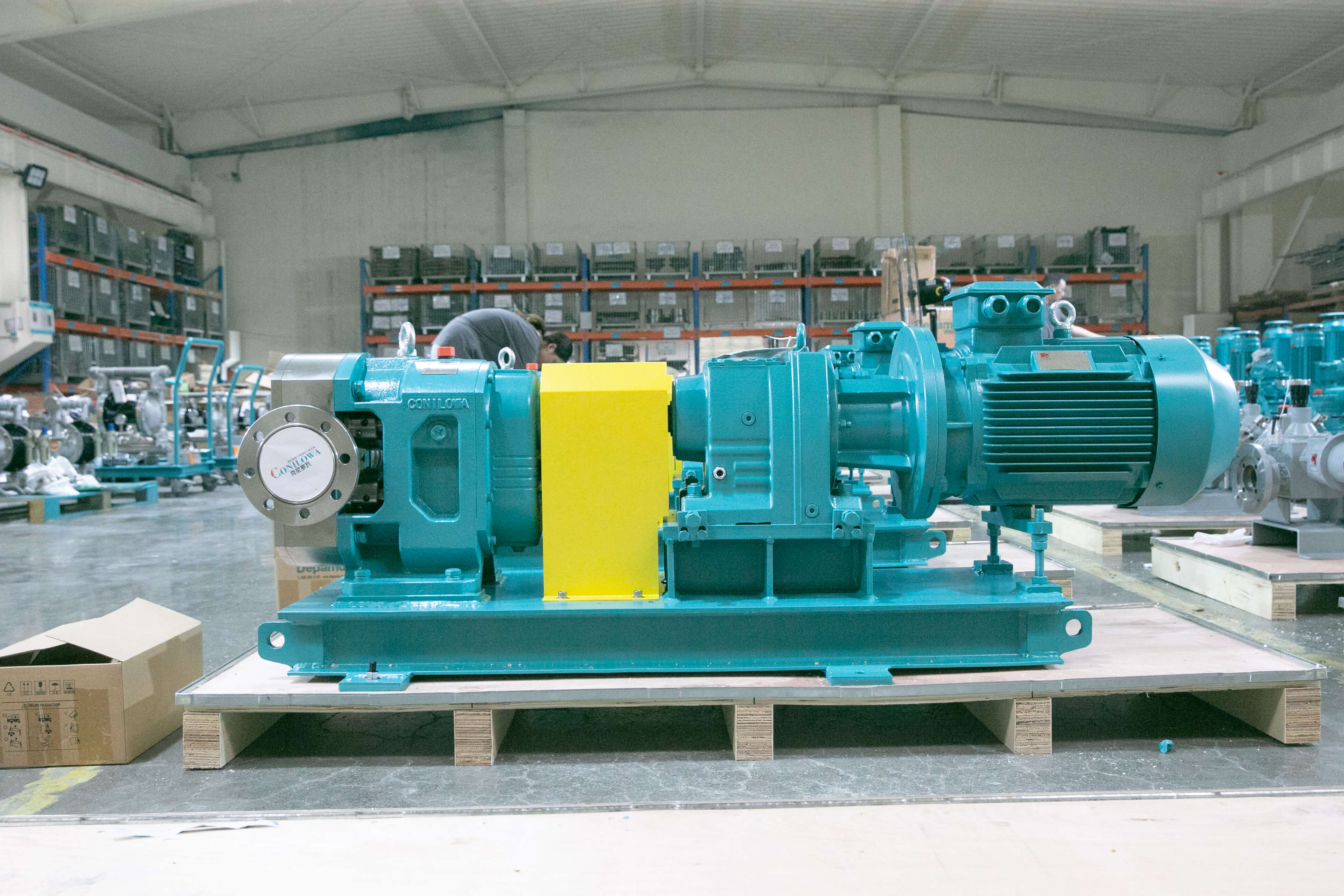
FAQ: Q&A Guide to Technology Selection
Q1: How to determine the flow and pressure parameters of a metal rotor pump?
A: It requires combining process requirements with medium characteristics. STEP 1: Calculate the theoretical flow rate Q = V/t (V is the single-delivery volume, and t is the time); STEP 2: Considering system resistance, a 10%-15% margin should be reserved for the actual flow rate; STEP 3: The pressure selection should cover the maximum operating head + the set pressure of the safety valve. For example, when delivering a medium with a viscosity of 1000 mPa·s, the actual flow rate may be only 60% of that under clear water conditions, and parameters need to be corrected through the pump performance curve.
Q2: Which material should be selected for highly corrosive media?
A: Selection should be based on medium composition: STEP 1: For environments containing chloride ions (Cl⁻), Hastelloy C-276 is preferred, with pitting resistance 10 times that of 316L; STEP 2: For media containing sulfuric acid (H₂SO₄), duplex stainless steel 2205 can be selected, capable of withstanding up to 50% concentrated sulfuric acid at 60°C; STEP 3: For strongly alkaline environments, titanium alloy is recommended, with an annual corrosion rate ≤0.01 mm at 50°C and pH=14. Depam can provide material corrosion test reports to assist in decision-making.
Q3: How can the maintenance costs of a rotary pump be reduced?
A: The key lies in the sealing and lubrication design. STEP 1: Employ double mechanical seals with a flushing fluid circulation system to extend seal life to over 8,000 hours; STEP 2: Use synthetic lubricating oil (e.g., PAO46) to maintain a stable oil film even at 150°C high temperatures; STEP 3: Regularly monitor vibration levels (≤4.5 mm/s) and temperature (≤85°C) to detect bearing wear early. By implementing these measures, a Depump customer reduced annual maintenance costs from RMB 120,000 to RMB 30,000.
Reference for Full Text Summary
The selection of metal rotor pumps requires consideration of both technical parameters and industry-specific characteristics, as blindly pursuing low prices or general-purpose models may lead to a sharp increase in long-term costs. With 20 years of technological accumulation, Depam has developed a comprehensive solution encompassing "medium adaptation - parameter optimization - intelligent monitoring." Its products have been successfully applied in leading enterprises such as Sinopec, PetroChina, and State Power Investment Corporation, with over 2,000 units delivered to date. For complex operating conditions, it is advisable to prioritize suppliers with customization capabilities, extensive industry experience, and the ability to provide full lifecycle services. For more information, please visit the official website:www.depamufluid.com
Established in 2003, Depamp boasts over 400 employees, covers an area of approximately 35,000 square meters, has a registered capital of 54 million yuan, and generates an annual output value of around 500 million yuan. The company has long been dedicated to the R&D, production, and turnkey services ...
No. 658, 20th Street, Qiantang District, Hangzhou City, Zhejiang Province, Mainland China