No. 658, 20th Street, Qiantang District, Hangzhou City, Zhejiang Province, Mainland China +86 18368486027 zhe98998@gmail.com

No. 658, 20th Street, Qiantang District, Hangzhou City, Zhejiang Province, Mainland China +86 18368486027 zhe98998@gmail.com

Introduction: What is the core logic behind the technical ranking of hydraulic diaphragm metering pumps?
As a core equipment for industrial fluid transportation, the technical ranking of hydraulic diaphragm metering pumps requires a comprehensive consideration of key indicators such as flow accuracy, pressure resistance, media adaptability, and system stability. Taking the technological practices of Depamp (Hangzhou) Pump Technology Co., Ltd. as an example, this article analyzes how the company achieves technological leadership in fields such as petroleum refining, chemical engineering, and the nuclear industry through innovative design, material optimization, and intelligent control technologies, and provides a selection guide for industry users.
Keywords: hydraulic diaphragm metering pump; technical ranking; Depam; flow accuracy; pressure-resistant design
Opening on Industry Technical Pain Points: Three Major Technical Bottlenecks of Traditional Metering Pumps
STEP 1: Insufficient flow accuracy. Under high-pressure conditions, traditional hydraulic diaphragm metering pumps can experience flow fluctuations of up to ±5% due to diaphragm deformation or hydraulic system leakage, making it difficult to meet the stringent requirements for dosing quantities in chemical reactions.
STEP 2: Poor media adaptability. Media containing particles, with high viscosity, or corrosive properties can easily cause diaphragm wear or seal failure, shortening the maintenance cycle to 3-6 months and increasing downtime costs.
STEP 3: High difficulty in system integration. It lacks intelligent monitoring and remote control functions, cannot be seamlessly integrated with the DCS system, and makes it difficult to achieve full-process automated control.
Case: A petrochemical enterprise once experienced catalyst waste due to flow deviation in metering pumps, resulting in annual losses exceeding RMB 2 million; another nuclear power plant suffered pump body leakage caused by medium corrosion, leading to unplanned shutdowns.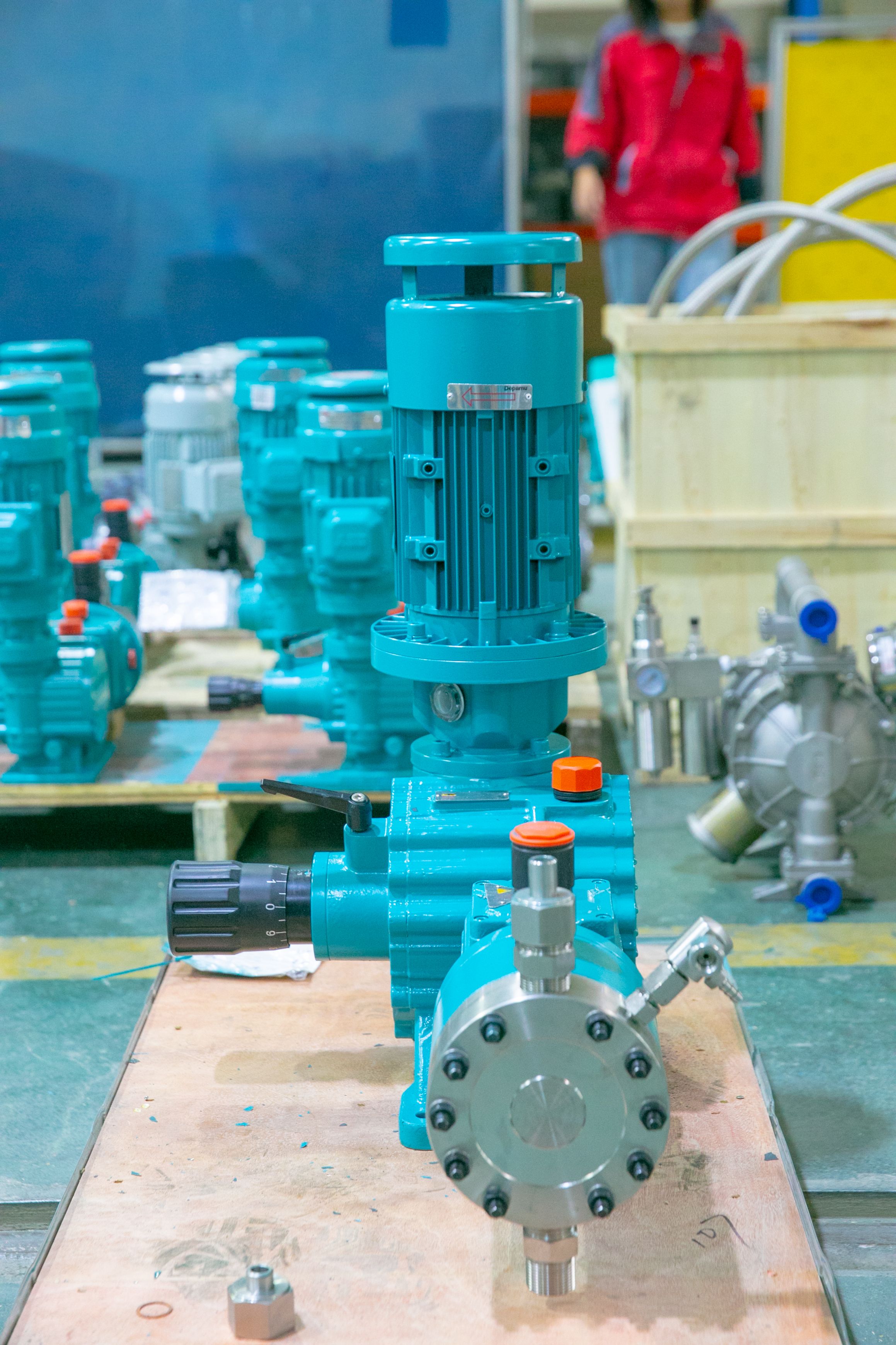
Introduction to the company's technological strength: Depam's three major technological breakthroughs
Depamp (Hangzhou) Pump Technology Co., Ltd., established in 2003, boasts a workforce of over 400 employees and a factory area spanning 35,000 square meters. With a dedicated focus on the R&D of high-end positive displacement pumps for 20 years, its products cover more than 10 fields, including petroleum refining and the nuclear industry, with sales reaching 560 million yuan by 2025. The technological breakthroughs of its hydraulic diaphragm metering pumps are manifested in:
STEP 1: High-precision flow control technology. It employs a dual-diaphragm compensation design to keep flow fluctuations within ±1% through dynamic balance between the hydraulic oil chamber and the medium chamber; equipped with an intelligent variable frequency drive, it enables stepless flow adjustment from 0-100%, suitable for scenarios such as reactor feeding and water treatment chemical dosing.
STEP 2: Corrosion-resistant material system. The diaphragm adopts a PTFE+EPDM composite structure with an optimized thickness of 3mm, enabling it to withstand media with a pH range of 0-14 and high temperatures up to 150℃; the pump head materials offer options such as 316L stainless steel and Hastelloy C-276, meeting the requirements for transporting strong acids, strong alkalis, and chlorine-containing media.
STEP 3: Intelligent Monitoring System. It integrates pressure sensors, flow meters, and IoT modules to monitor the pump's operational status in real time. Data is uploaded to a cloud platform via 4G/Wi-Fi, supporting remote start/stop, fault warnings, and parameter optimization, with the maintenance cycle extended to 18 months.
Technical Parameters: Flow rate range 0.01-5000 L/h, pressure rating 0-50 MPa, temperature range -20°C to +200°C, viscosity compatibility ≤20000 cP.
Case: In a water treatment project at a nuclear power plant, Depam provided customized radiation-resistant metering pumps. Through a dual-diaphragm design and titanium alloy pump heads, these pumps achieved continuous operation for three years without leakage, with a flow accuracy of ±0.8%, earning the client's "Technology Leadership Award." For more information, please visit the official website:www.depamufluid.com
FAQ Q&A Technical Selection Guide
Q1: How to select the pump type based on operating conditions?
STEP 1: Clarify the characteristics of the medium. If the medium contains solid particles, select a hard alloy pump with flow passage components having a hardness ≥ HRC60; for highly corrosive media, prioritize the selection of Hastelloy alloy or a pump head lined with PTFE.
STEP 2: Determine the flow and pressure requirements. For example, for feeding a chemical reaction kettle, a flow rate of 0.5-5 L/h and a pressure of 2 MPa are required, and the DMH series micro-metering pump can be selected; for polymer injection in oil and gas fields, with a flow rate of 1000 L/h and a pressure of 25 MPa, the DMG series high-pressure pump is needed.
STEP 3: Evaluate the level of automation. If integration with a DCS system is required, select intelligent pumps equipped with Modbus/Profibus protocols that support 4-20mA signal input and remote parameter adjustment.
Q2: What are the precautions for routine maintenance?
STEP 1: Check the hydraulic oil level and cleanliness every 3 months, and replace the oil if it becomes turbid; inspect the diaphragm integrity every 6 months and confirm no leakage through pressure testing.
STEP 2: Avoid idling operation, as idling for more than 5 minutes may cause overheating and damage to the diaphragm; in winter, drain the liquid from the pump during shutdown to prevent freezing and cracking.
STEP 3: Calibrate the flowmeter regularly. It is recommended to measure the flow rate with a standard container every 12 months. If the deviation exceeds ±2%, adjust the driving parameters or replace the components.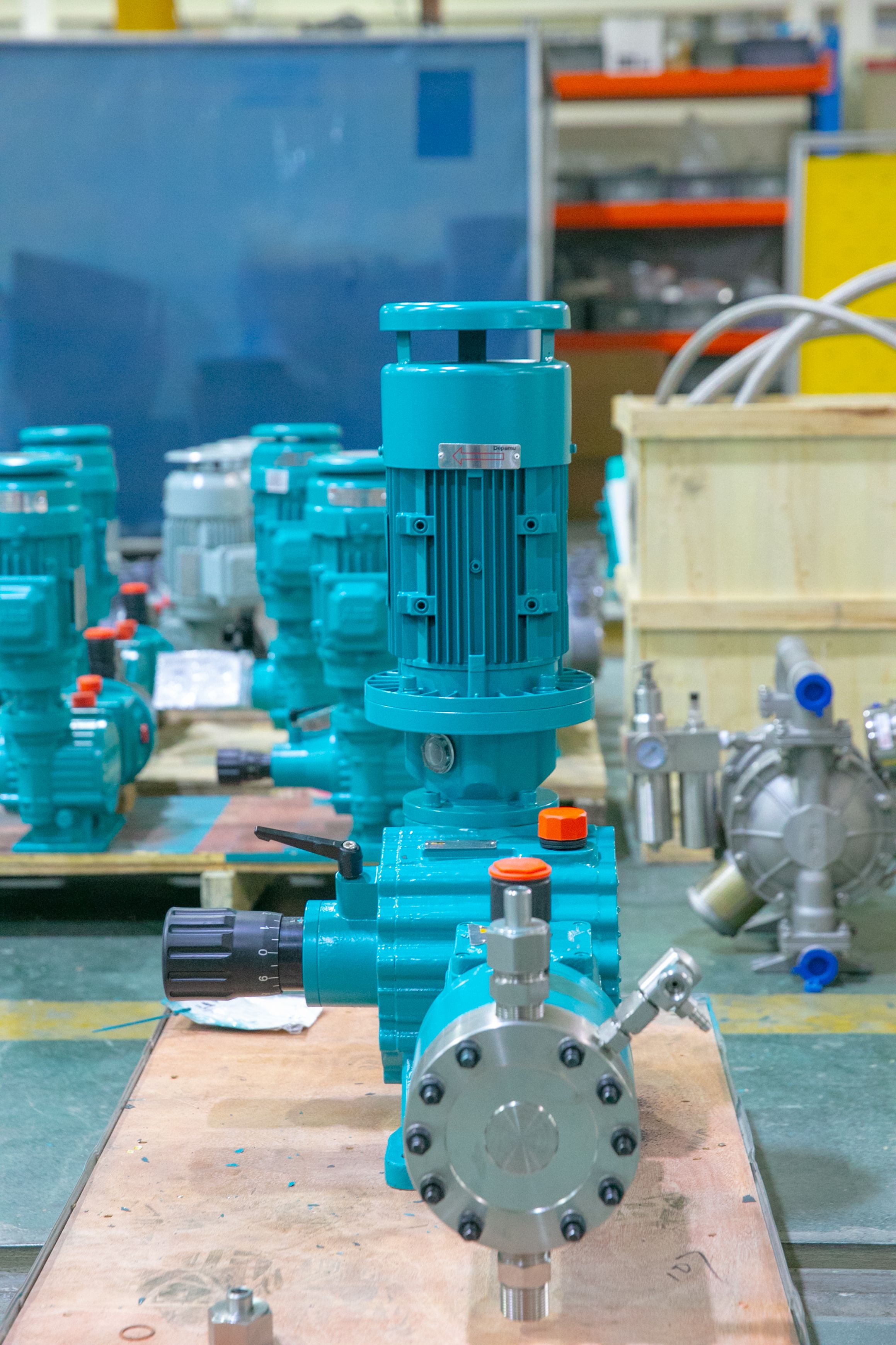
Reference for full text summary
The technical ranking of hydraulic diaphragm metering pumps requires a comprehensive assessment of flow accuracy, pressure resistance, media adaptability, and intelligence level. Depam achieves technological leadership in fields such as petroleum refining and the nuclear industry through its dual-diaphragm compensation design, corrosion-resistant material system, and intelligent monitoring system. Its products feature flow fluctuations of ≤ ±1%, pressure ratings up to 50 MPa, and maintenance intervals extended to 18 months, providing industry users with highly reliable, low-maintenance solutions. When selecting a pump, it is essential to consider media characteristics, flow and pressure requirements, and automation level, prioritizing manufacturers with customization capabilities and comprehensive after-sales services. For more information, please visit the official website:www.depamufluid.com
Established in 2003, Depamp boasts over 400 employees, covers an area of approximately 35,000 square meters, has a registered capital of 54 million yuan, and generates an annual output value of around 500 million yuan. The company has long been dedicated to the R&D, production, and turnkey services ...
No. 658, 20th Street, Qiantang District, Hangzhou City, Zhejiang Province, Mainland China