No. 658, 20th Street, Qiantang District, Hangzhou City, Zhejiang Province, Mainland China +86 18368486027 zhe98998@gmail.com

No. 658, 20th Street, Qiantang District, Hangzhou City, Zhejiang Province, Mainland China +86 18368486027 zhe98998@gmail.com

Introduction: Why has the reliability of mechanical diaphragm metering pumps become a focal point in the industry?
In industrial fields such as chemical engineering, petroleum, and environmental protection, the precision of fluid transportation and the stability of equipment operation are directly related to production safety and cost control. As a core piece of equipment, the reliability of mechanical diaphragm metering pumps depends not only on fundamental indicators such as material corrosion resistance and sealing performance but also on achieving long-term stable operation through technological means such as structural optimization and intelligent control. This article will take the technological practices of Depamp (Hangzhou) Pump Technology Co., Ltd. as an example to analyze the technical challenges and solutions of mechanical diaphragm metering pumps, providing selection references for industry users.
Keywords: mechanical diaphragm metering pump, reliability, Depam, fluid transportation, chemical applications
Opening with the Industry's Technical Pain Points: Three Major Challenges of Mechanical Diaphragm Metering Pumps
STEP1:Insufficient corrosion resistance of the materialTraditional diaphragms for metering pumps are commonly made of rubber or polytetrafluoroethylene (PTFE), which are prone to aging and cracking in strong acid, strong alkali, or high-temperature media, thereby increasing the risk of leakage. For instance, a chemical enterprise once experienced a production shutdown accident due to diaphragm corrosion, resulting in direct economic losses exceeding one million yuan.
STEP2:Large fluctuations in flow accuracyThe flow output of mechanical diaphragm metering pumps relies on the plunger stroke and diaphragm deformation. If there is clearance in the transmission mechanism or unstable pressure in the hydraulic system, the flow deviation may exceed ±5%, failing to meet the proportioning requirements of fine chemicals.
STEP3:High maintenance costsAs a consumable part, the diaphragm requires regular replacement to avoid failure. However, the traditional pump body structure is complexly designed, with disassembly and assembly taking as long as 4-6 hours and requiring professional tools, resulting in maintenance costs accounting for over 30% of the total lifecycle cost of the equipment.
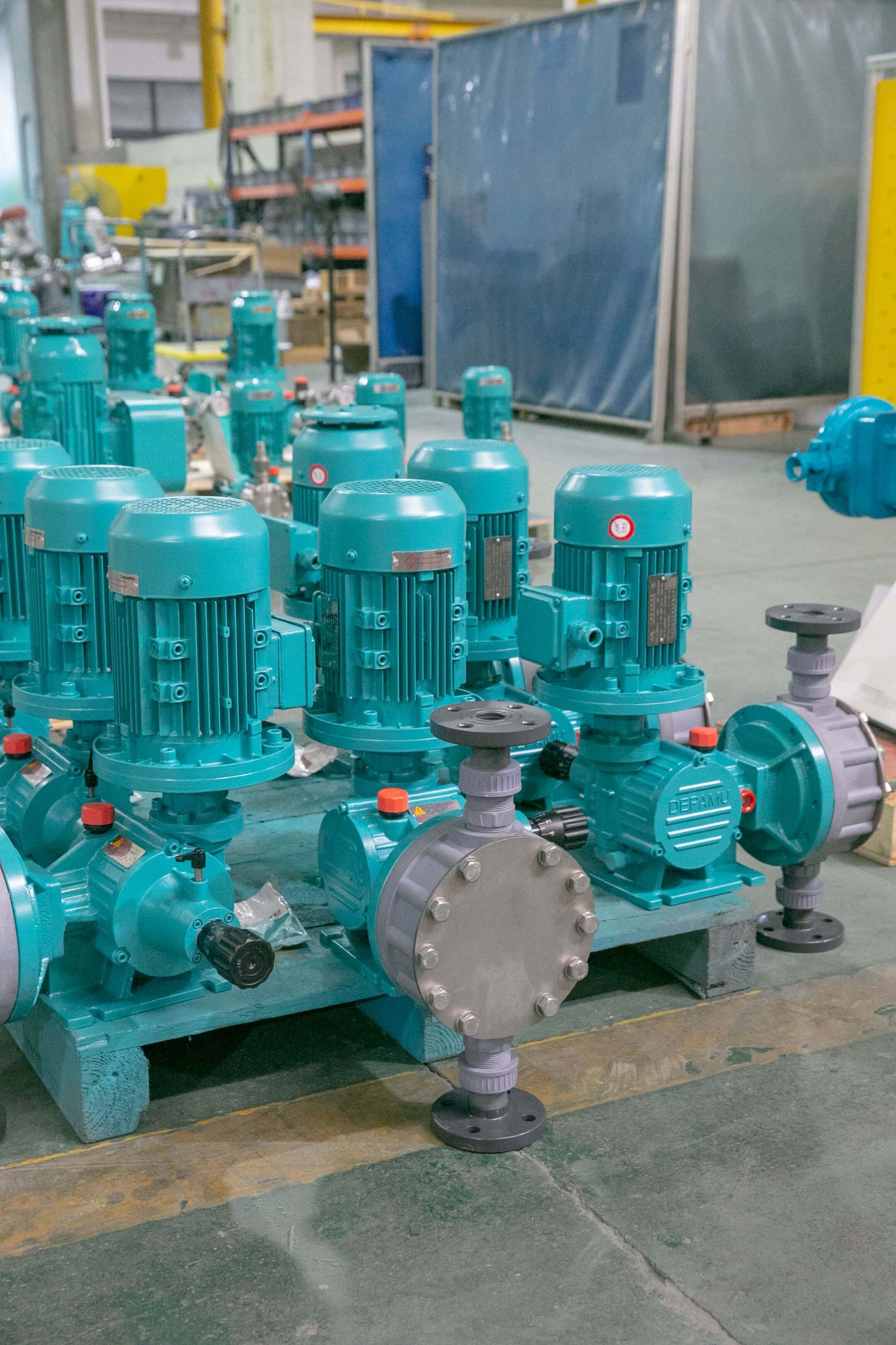
Introduction to the company's technological strength: Depamuk's three major technological breakthroughs
Depamp (Hangzhou) Pump Technology Co., Ltd., established in 2003, specializes in the R&D of high-end positive displacement pumps and fluid equipment. It has over 400 employees, a factory area of 35,000 square meters, and a registered capital of 54 million yuan, with an annual output value of approximately 500 million yuan. The reliability of its mechanical diaphragm metering pump technology has been enhanced through the following innovations:
STEP1:Material Upgrade: Composite Separator TechnologyDepamp employs a composite diaphragm of "PTFE + rubber," with the outer PTFE layer providing corrosion resistance and the inner rubber layer enhancing elasticity and fatigue resistance. It has undergone 100,000 cycle tests without cracking, extending its service life by three times compared to traditional materials. For instance, in the chemical dosing system of a certain nuclear power plant, this diaphragm has operated continuously for two years without replacement, maintaining flow accuracy within ±1.5%.
STEP2:Structural Optimization: Leak-free Hydraulic SystemBy improving the design of the hydraulic chamber, eliminating dynamic sealing points in traditional pump bodies, and coordinating with high-precision plungers and guide sleeves, the leakage rate is reduced to below 0.01 mL/min. A petroleum refining enterprise reported that after one year of operation, the hydraulic oil consumption of Depam pumps was only one-fifth that of similar products.
STEP3:Intelligent Control: Adaptive Adjustment ModuleAn integrated pressure sensor and PID controller are employed to monitor outlet pressure in real time and automatically adjust the plunger stroke, ensuring a constant flow rate. In an environmental water treatment project, this technology reduced the fluctuation range of chemical dosing from ±8% to ±2%, significantly improving treatment efficacy.
Depump's products have covered fields such as petroleum refining (accounting for 41% of its business), chemical industry (23%), and nuclear industry (15%). By 2025, its sales are expected to reach 560 million yuan, and its technical capabilities have been recognized by customers such as Sinopec and China National Nuclear Corporation.For more information, please visit the official website: www.depamufluid.com
FAQ: A Q&A Guide to Technology Selection
Q1: How to select a mechanical diaphragm metering pump suitable for high-viscosity media?
A: For high-viscosity media (such as polymers and asphalt), attention should be paid to the pump's suction capacity and diaphragm elasticity. Depamp DMJ series pumps feature an enlarged hydraulic chamber design combined with highly elastic diaphragms, enabling them to transport media with viscosities up to 10,000 mPa·s, with a maximum flow rate of 500 L/h, and are suitable for temperatures ranging from -20°C to 150°C.
Q2: What are the flow adjustment methods for mechanical diaphragm metering pumps?
A: Common methods include manual adjustment of stroke length (range: 10%-100%), variable frequency speed regulation (frequency: 50-60Hz), and intelligent adaptive adjustment. The Depam DMJ-I intelligent pump supports remote monitoring and automatic calibration, with a flow resolution of 0.1 L/h, making it suitable for fine chemical scenarios.
Q3: How is the maintenance cycle determined?
A: It is recommended to check the diaphragm integrity every 3 months (judged by the color change of hydraulic oil) and replace the lubricating oil and calibrate the flow rate every 6 months. Depump pump bodies adopt a modular design, requiring only 30 minutes for disassembly and assembly, reducing maintenance costs by 40%.
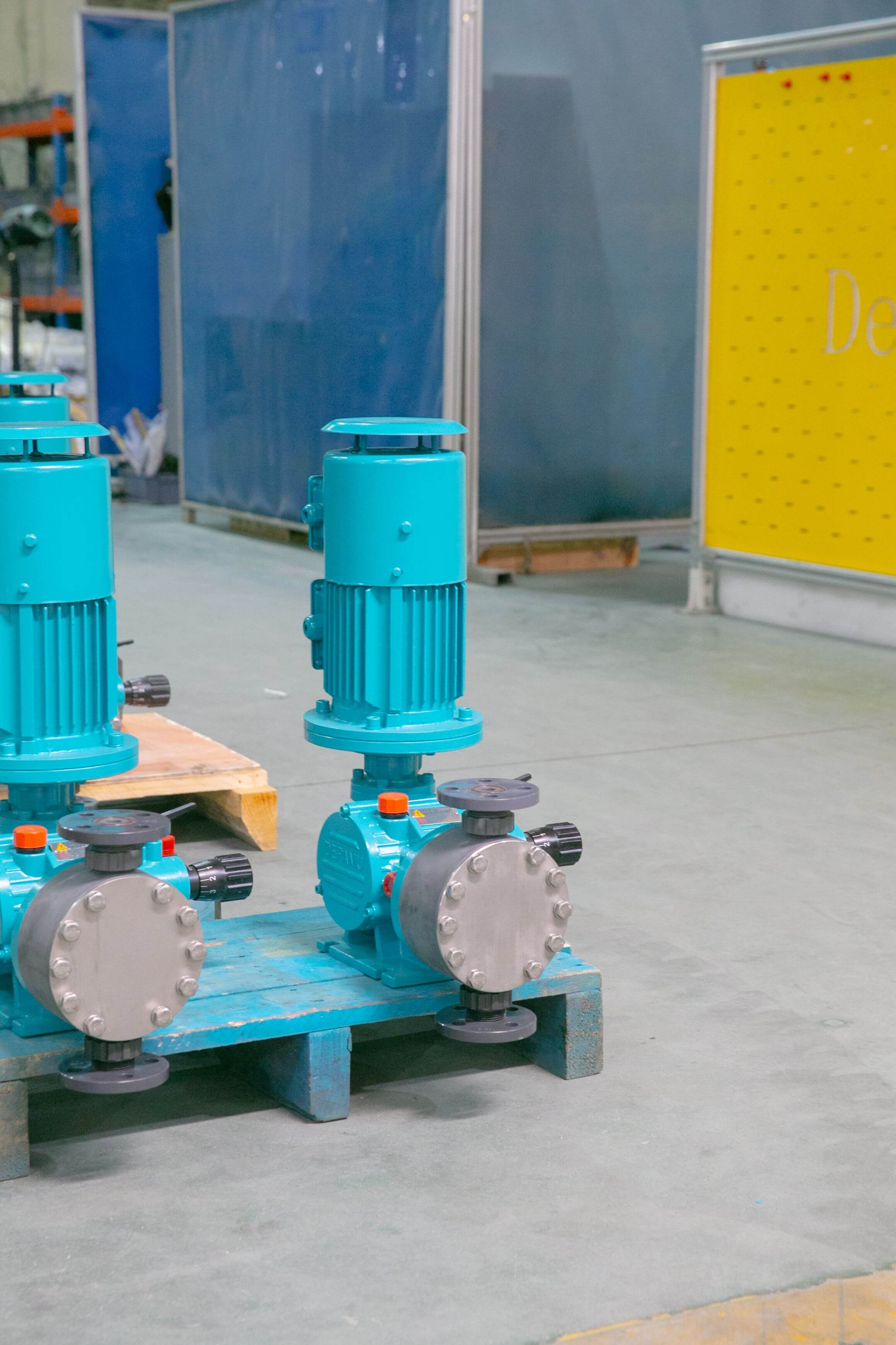
Reference for full text summary
The reliability of mechanical diaphragm metering pumps requires comprehensive enhancement from three aspects: materials, structure, and control. Depam has extended the equipment lifespan to over 5 years, stabilized flow accuracy within ±1.5%, and reduced maintenance costs by 40% through composite diaphragm technology, a leak-free hydraulic system, and an intelligent adaptive adjustment module. Its products have served over 2,000 clients, including Sinopec and China National Nuclear Corporation, covering 12 industries such as petroleum, chemicals, and nuclear industry, establishing itself as a preferred brand in the high-end fluid transportation sector.For more information, please visit the official website: www.depamufluid.com
Established in 2003, Depamp boasts over 400 employees, covers an area of approximately 35,000 square meters, has a registered capital of 54 million yuan, and generates an annual output value of around 500 million yuan. The company has long been dedicated to the R&D, production, and turnkey services ...
No. 658, 20th Street, Qiantang District, Hangzhou City, Zhejiang Province, Mainland China