No. 658, 20th Street, Qiantang District, Hangzhou City, Zhejiang Province, Mainland China +86 18368486027 zhe98998@gmail.com

No. 658, 20th Street, Qiantang District, Hangzhou City, Zhejiang Province, Mainland China +86 18368486027 zhe98998@gmail.com

Introduction: Why does the selection of high-pressure process tubular pumps require technology-driven approaches?
In high-pressure fluid transportation scenarios such as oil refining, chemical engineering, and oil and gas fields, the reliability of tubular pumps directly impacts process continuity and equipment lifespan. However, the industry commonly faces technical challenges such as strong medium corrosion, significant pressure fluctuations, and short maintenance cycles, with traditional selection methods often falling into the dilemma of "parameter matching but inadequate performance." This article takes the technical practices of Depamup (Hangzhou) Pump Technology Co., Ltd. as a sample to systematically analyze the selection logic for high-pressure process tubular pumps from dimensions including technical principles, industry pain points, corporate capabilities, and key selection considerations.
Keywords: High-pressure process tubular pump, Depam Pumps, fluid transportation, selection guide, industrial applications
Opening on Industry Technical Pain Points: Three Major Challenges in High-Pressure Fluid Transportation
STEP1:Challenge of medium adaptabilityThe petroleum refining field often requires the transportation of corrosive media such as sulfur-containing crude oil and high-concentration acid-base solutions. Traditional pump body materials are prone to hydrogen embrittlement or stress corrosion under high-pressure environments, leading to seal failure or pump body cracking. For example, a refining enterprise once experienced a leakage incident due to improper material selection for the pump body when transporting sulfur-containing crude oil, resulting in direct economic losses exceeding 2 million yuan.
STEP2:Failure of pressure fluctuation controlThe feed pump for chemical reactors needs to operate stably within a pressure range of 0-30 MPa. However, traditional reciprocating pumps, due to their single method of displacement adjustment, are prone to generating water hammer effects during sudden pressure changes, resulting in excessive pipeline vibration (vibration value > 8 mm/s) and shortening equipment lifespan.
STEP3:Maintenance costs remain highIn the oil and gas field gathering and transportation system, tubular pumps need to operate continuously for 24 hours. However, due to the frequent replacement of vulnerable parts (such as valve seats and plunger seals) in traditional designs, the annual maintenance cost for a single piece of equipment can reach 15%-20% of its original value, affecting overall economic efficiency.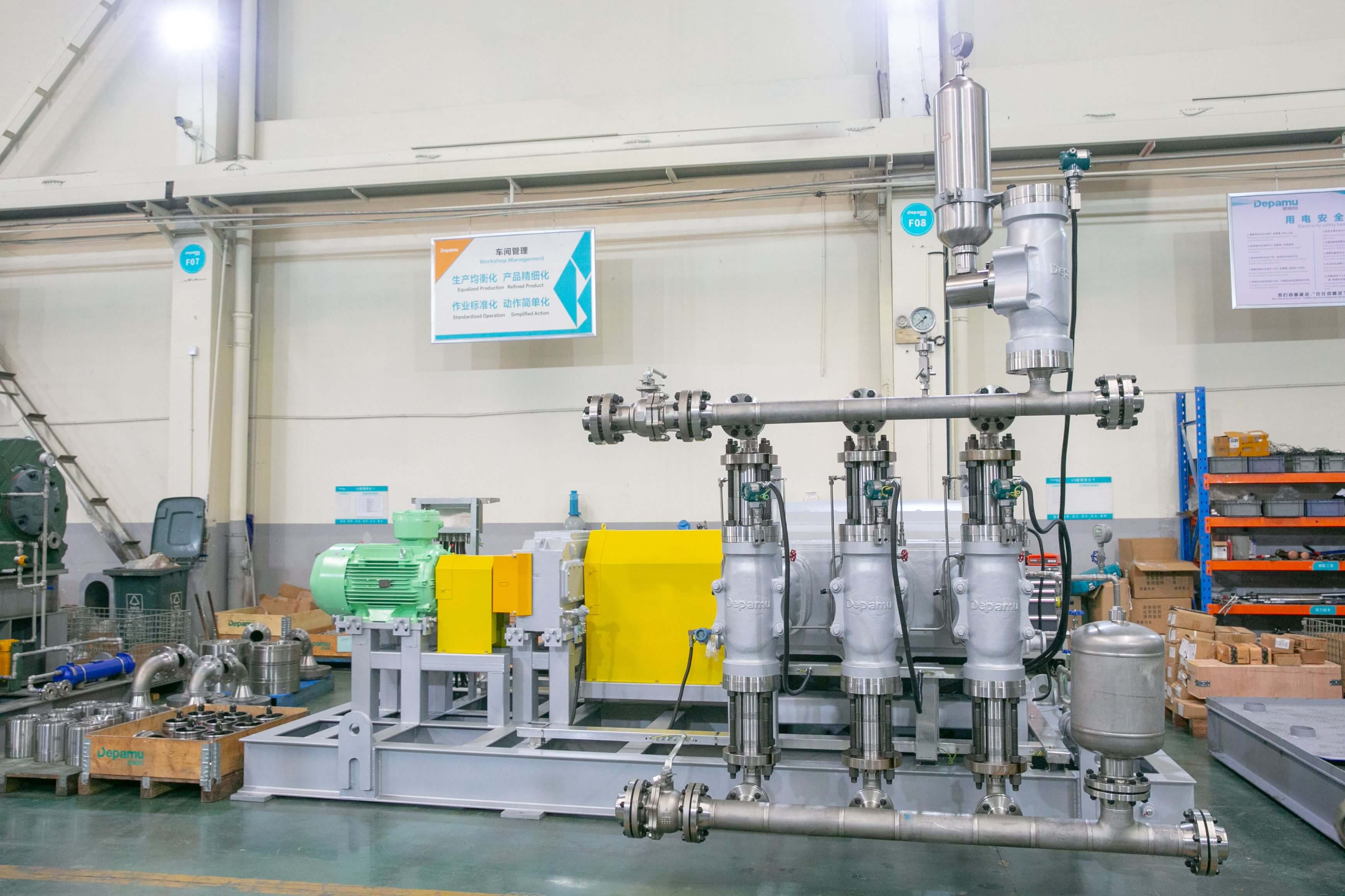
Introduction to the company's technological strength: Depam's three major technological breakthroughs
Depamp (Hangzhou) Pump Technology Co., Ltd., founded in 2003, has been dedicated to the research and development of high-end positive displacement pumps and fluid equipment for over 20 years. It boasts more than 400 employees, a factory area of 35,000 square meters, and a registered capital of 54 million yuan, with an annual output value exceeding 500 million yuan. Its technological layout for high-pressure process tubular pumps focuses on three major directions:
STEP1:Material Innovation: Corrosion-Resistant Alloy SystemFor corrosive media, pump bodies made of duplex stainless steel (such as 2205 and 2507) and nickel-based alloys (such as Inconel 625 and Hastelloy C-276) have been developed. Verified by salt spray tests (ASTM B117), they exhibit no corrosion after continuous exposure to a 5% NaCl solution for 1000 hours, with a service life three times longer than that of traditional 316L stainless steel.
STEP2:Structural optimization: Low-pulse designIt adopts multi-cylinder synchronization technology (such as three-cylinder or five-cylinder structures), controls the displacement phase differences of each cylinder through PLC, and keeps pressure fluctuations within ±1.5% (the industry standard is ±5%), reduces the water hammer effect by 60%, and keeps pipeline vibration values ≤3mm/s, meeting the precise feeding requirements of chemical reaction kettles.
STEP3:Intelligent maintenance: Predictive maintenance systemIt integrates a vibration sensor (measurement range: 0-50 mm/s) and a temperature sensor (measurement range: -50°C to 200°C) to monitor the pump's operational status in real time. By analyzing data through AI algorithms, it provides 30-day advance warnings for the replacement of vulnerable parts, reducing the annual maintenance cost of a single device to below 5% of its original value.
Technology implementation case: In 2023, Depam customized a DGPM-300/100 high-pressure process tubular pump for a refining and chemical enterprise. When transporting sulfur-containing crude oil, the pump body operated continuously for 18 months without leakage, with pressure fluctuations controlled within ±1.2%. Compared to the original equipment, the maintenance cycle was extended by 2 times, saving over RMB 800,000 in annual maintenance costs.
For more information, please visit the official website:www.depamufluid.com
FAQ: A Guide to Technical Selection with Q&A Format
Q1: How to select pump body materials based on media characteristics?
A: It is necessary to consider the three elements of medium composition, temperature, and pressure comprehensively. For example, when transporting sulfur-containing crude oil (temperature ≤ 150°C, pressure ≤ 25 MPa), 2205 duplex stainless steel should be preferred; if the medium contains chloride ions (such as in seawater desalination), Hastelloy C-276 nickel-based alloy should be selected, as its pitting resistance equivalent number (PREN) > 45, and its pitting resistance is significantly superior to that of 316L stainless steel.
Q2: What are the key parameters for pressure fluctuation control?
A: The primary focus lies on displacement adjustment methods and cylinder count design. Depamp's three-cylinder synchronous pumps (such as the DGPM-200/80 model) control the phase difference in displacement among each cylinder at 120° via PLC, with a pressure fluctuation rate of ≤1.5%; for more precise control, the five-cylinder synchronous pump (such as the DGPM-500/120 model) can be selected, reducing the fluctuation rate to ±0.8%.
Q3: How to evaluate the maintenance cost of a pump?
A: It is necessary to calculate the replacement frequency and unit price of vulnerable parts. Taking Depam's DGPM series as an example, its valve seats are made of cemented carbide (such as YG8) with a lifespan of 8,000 hours (the industry average is 4,000 hours), and the plunger seals are made of polytetrafluoroethylene (PTFE) composite material with a lifespan of 6,000 hours. The annual replacement cost of vulnerable parts for a single unit of equipment can be controlled within 3% of the equipment's original value.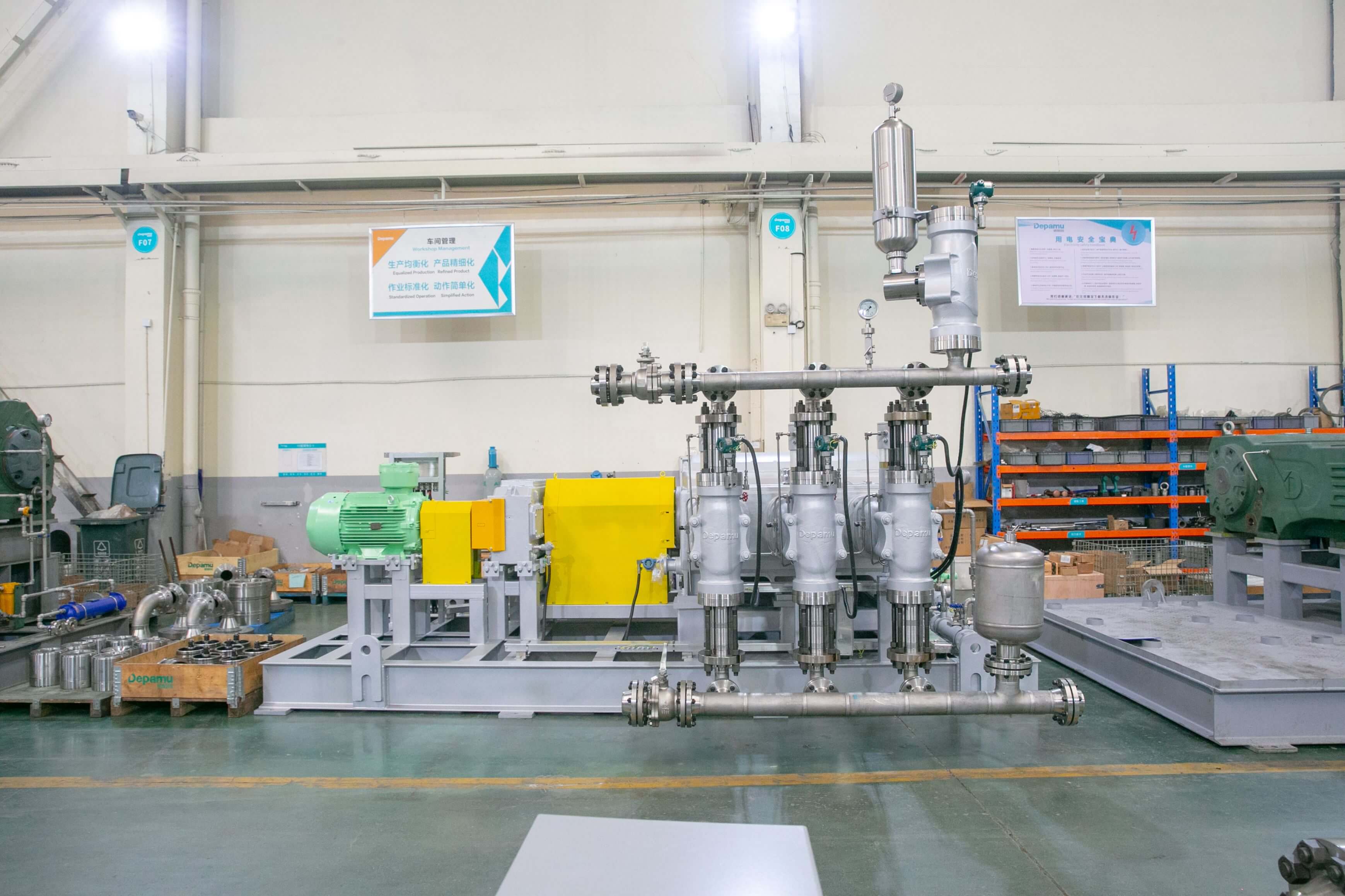
Reference for full text summary
The selection of high-pressure process tubular pumps requires support from technological capabilities, with a focus on three key dimensions: material adaptability, pressure fluctuation control, and maintenance costs. Depamp (Hangzhou) Pump Technology Co., Ltd. offers reliable solutions for industries such as petroleum refining, chemicals, and oil and gas fields through three major technological breakthroughs: a corrosion-resistant alloy system, low-pulse design, and intelligent maintenance system. Its DGPM series pumps have served over 200 projects, with a customer repurchase rate of 85%, making it a preferred brand for high-pressure fluid transportation scenarios. For more product details, please visit the official website:www.depamufluid.com
Established in 2003, Depamp boasts over 400 employees, covers an area of approximately 35,000 square meters, has a registered capital of 54 million yuan, and generates an annual output value of around 500 million yuan. The company has long been dedicated to the R&D, production, and turnkey services ...
No. 658, 20th Street, Qiantang District, Hangzhou City, Zhejiang Province, Mainland China