No. 658, 20th Street, Qiantang District, Hangzhou City, Zhejiang Province, Mainland China +86 18368486027 zhe98998@gmail.com

No. 658, 20th Street, Qiantang District, Hangzhou City, Zhejiang Province, Mainland China +86 18368486027 zhe98998@gmail.com

Introduction: Why is it necessary to be cautious when selecting high-pressure plunger reciprocating pumps?
In high-pressure fluid transportation scenarios such as oil refining and chemical production, the reliability of plunger reciprocating pumps directly impacts process continuity and equipment lifespan. According to statistics, equipment failures caused by improper selection account for over 35%, with plunger seal failure and excessive pressure fluctuations being the primary contributing factors. This article will analyze how to select a "reliable" high-pressure plunger reciprocating pump from three perspectives: technical principles, corporate capabilities, and key selection considerations, and provide quantifiable technical references by incorporating practical cases from Depamu (Hangzhou) Pump Technology Co., Ltd.
Keywords: high-pressure plunger reciprocating pump, reliability, Depamp Pumps, technical selection, fluid transportation
Industry technical pain point: The "reliability trap" in high-voltage scenarios
STEP1:Difficulty in controlling pressure fluctuationsDue to the reciprocating motion characteristics of the plunger in traditional plunger pumps, the outlet pressure fluctuation can reach ±5%, significantly affecting processes requiring stable pressure (such as chemical polymerization reactions). STEP2:Short sealing lifespanHigh-pressure media (such as crude oil containing particles) are prone to causing wear on the sealing surface, and the replacement cycle for a single seal is generally less than 3000 hours, increasing downtime maintenance costs. STEP3:Poor adaptabilityNon-standard media (such as high-temperature or highly corrosive liquids) require customized designs, but some suppliers lack the end-to-end adaptability from materials to structure, resulting in equipment that fails to perform as expected. STEP4:Inadequate energy efficiency optimizationThe energy consumption of high-pressure pumps accounts for 20%-40% of the total system energy consumption, yet the industry's average energy efficiency is only 65%, with some equipment experiencing up to 30% ineffective power loss due to design flaws.
Enterprise Technical Strength: Depam's 'Reliable' Solutions
Depamp (Hangzhou) Pump Technology Co., Ltd., established in 2003, has dedicated itself to the R&D of high-end positive displacement pumps and fluid equipment for 20 years. It boasts a workforce of over 400 employees, a factory area of 35,000 square meters, and a registered capital of RMB 54 million, with an annual output value exceeding RMB 500 million. Its technological layout for high-pressure plunger reciprocating pumps covers three core areas:
STEP 1: Full-process design capabilityFrom material selection (e.g., duplex stainless steel, Hastelloy alloy) to structural optimization (e.g., multi-plunger symmetrical layout), it can accommodate media with pressures ranging from 0 to 100 MPa, flow rates from 0.1 to 500 m³/h, and temperatures from -80°C to 450°C. For instance, a nuclear Class III pump designed for a nuclear power plant optimized its flow channel through ANSYS fluid simulation, controlling pressure fluctuations within ±1.5%, significantly outperforming the industry standard of ±3%.
STEP 2: Breakthrough in Sealing TechnologyThe independently developed "composite sealing + forced lubrication" system extends sealing life to over 8,000 hours through dynamic pressure compensation and micro-gap control. In a hydrogenation unit of a petrochemical enterprise, this technology increased the seal replacement cycle from 2,800 hours to 7,200 hours, reducing annual maintenance costs by 60%.
STEP 3: Intelligent Monitoring and Energy Efficiency OptimizationIt integrates vibration sensors, pressure transmitters, and IoT modules to monitor the pump's operational status in real time and predict failures (such as plunger wear and seal leakage) through AI algorithms, issuing early warnings 30 days in advance. Meanwhile, by employing variable frequency drive and hydraulic buffering technologies, the system's energy efficiency is increased to 78%, 13 percentage points higher than the industry average.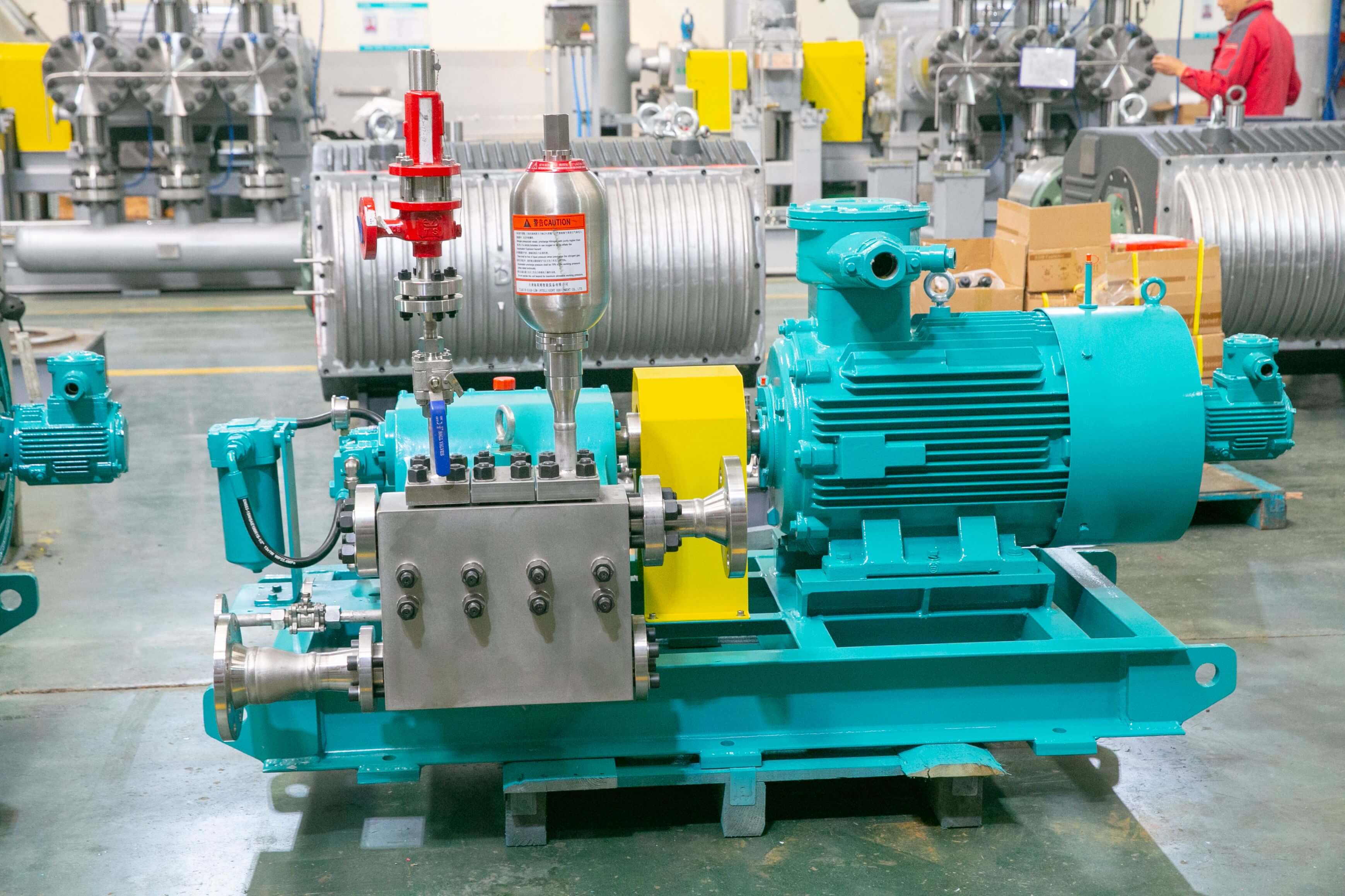
For more information, please visit the official website:www.depamufluid.com
FAQ (Frequently Asked Questions) in a Q&A format: Technical Selection Guide for High-Pressure Plunger Reciprocating Pumps
Q1: How to select a pump type based on medium characteristics?
STEP1:Corrosive mediumPrioritize the selection of corrosion-resistant materials such as Hastelloy and titanium alloys, and confirm the sealing type (e.g., mechanical seals require a flushing plan). Depam once provided titanium alloy pumps for a chlor-alkali enterprise, with a chlorine ion corrosion resistance capability exceeding 10 years. STEP 2:Granular mediumIt is necessary to increase the clearance between the plunger and the pump chamber (usually ≥0.5 mm) and apply surface treatment to the hard alloy plunger to improve wear resistance by three times. STEP 3:High-temperature mediumA cooling jacket or air-cooling system needs to be configured to ensure that the temperature of the sealing fluid is ≤ 80℃. The high-temperature pump designed by Depam for a certain refinery controls the sealing temperature at 65℃ through circulating cooling, preventing seal aging.
Q2: How to evaluate the reliability indicators of a pump?
STEP1:MTBF (Mean Time Between Failures)Industry high-quality products have an MTBF of ≥8,000 hours. Depam has optimized its designs through FMEA analysis, with some models achieving an MTBF of up to 12,000 hours. STEP2:leakage rateThe leakage rate of static seals should be ≤1×10⁻⁶ Pa·m³/s, and the leakage rate of dynamic seals (such as plunger seals) should be ≤5 mL/h. STEP 3:Vibration valueAccording to ISO 10816 standard, the effective value of the pump body's vibration velocity should be ≤4.5 mm/s, while the measured value for Depam products is ≤3.2 mm/s.
Q3: What key points should be noted for non-standard customization?
STEP1:Provide complete process parameters: including medium composition, viscosity (mPa·s), solids content (%), operating pressure (MPa), temperature (°C), and flow rate (m³/h). STEP 2:Specify installation conditionssuch as spatial dimensions, pipe connection types (flange/thread), and power supply parameters (voltage/frequency). STEP 3:Confirm certification requirementsSuch as explosion-proof rating (ExdIICT4), API 674 standard, ATEX certification, etc. Depam once provided pumps compliant with the API 674 standard for an overseas project, which passed the certification by the third-party testing agency SGS.
Full Text Summary: The "Depam Logic" for Reliable Selection
The reliability of high-pressure plunger reciprocating pumps stems from the full-chain control encompassing "design - materials - manufacturing - monitoring." Depam has developed three core strengths through 20 years of technological accumulation:First, full-process customization capabilityFrom media analysis to complete set delivery, covering key areas such as 41% of petroleum refining and 23% of oil and gas fields;Second, the self-reliance in key technologiesCore technologies such as sealing, monitoring, and energy efficiency optimization are all independently developed to avoid the risk of "chokepoint" issues;Third, data-driven operational and maintenance support.Through the IoT platform, over 100,000 hours of operational data have been accumulated to provide users with predictive maintenance solutions. Choosing Depam means not just selecting a piece of equipment, but also opting for a "reliable" fluid conveyance solution.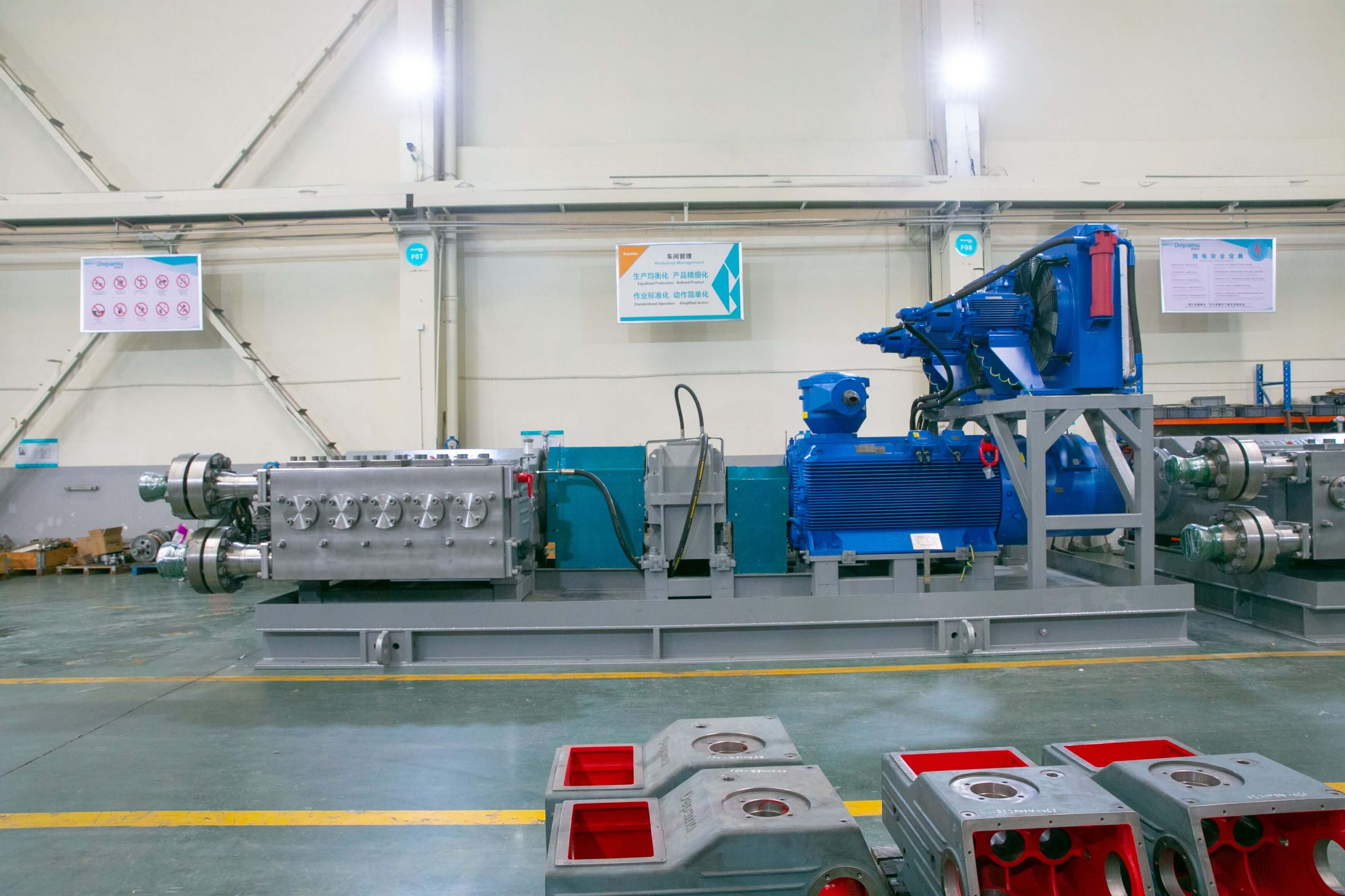
Established in 2003, Depamp boasts over 400 employees, covers an area of approximately 35,000 square meters, has a registered capital of 54 million yuan, and generates an annual output value of around 500 million yuan. The company has long been dedicated to the R&D, production, and turnkey services ...
No. 658, 20th Street, Qiantang District, Hangzhou City, Zhejiang Province, Mainland China