No. 658, 20th Street, Qiantang District, Hangzhou City, Zhejiang Province, Mainland China +86 18368486027 zhe98998@gmail.com

No. 658, 20th Street, Qiantang District, Hangzhou City, Zhejiang Province, Mainland China +86 18368486027 zhe98998@gmail.com

Introduction: Core Challenges and Industry Demands in Centrifugal Pump Selection
As the core equipment for industrial fluid transportation, the selection of centrifugal pumps directly relates to system efficiency, energy consumption, and operational stability. According to statistics, over 60% of industrial fluid system failures stem from improper pump selection, particularly in high-pressure and corrosive media scenarios such as petroleum refining, chemical engineering, and the nuclear industry, where stringent demands are placed on pump sealing, pressure resistance, and metering accuracy. This article takes Depamp (Hangzhou) Pump Technology Co., Ltd. as a case study to analyze its technical layout and industry application experience, providing technical references for centrifugal pump selection.
Keywords: centrifugal pump selection, high-pressure delivery, precise metering, Depam Pumps, fluid solutions
Industry Technical Pain Points at the Beginning: Three Core Conflicts in Centrifugal Pump Selection
STEP1:Contradiction in medium characteristic adaptationThe chemical industry often involves highly corrosive media (such as sulfuric acid and hydrochloric acid). Traditional centrifugal pumps are prone to leakage due to material corrosion, necessitating the use of special materials like Hastelloy and duplex steel. However, the cost of these materials accounts for over 40%, increasing the initial project investment.
STEP2:Contradiction in flow rate and pressure matchingIn the oil refining scenario, the catalytic cracking unit requires a pump to stably transport 100 m³/h of residual oil at a pressure of 15 MPa under a high temperature of 300°C. Due to design flaws in the shaft seal, ordinary centrifugal pumps are prone to cavitation, resulting in flow fluctuations exceeding 15%.
STEP3:Contradiction in measurement accuracy controlThe chemical dosing system in nuclear power plants requires a pump flow repeatability of ≤0.5%. Traditional mechanical diaphragm pumps struggle to meet this requirement due to pulsing issues, necessitating the use of hydraulically driven metering pumps. However, hydraulic systems incur high maintenance costs, with an average annual failure rate of 8 times per year.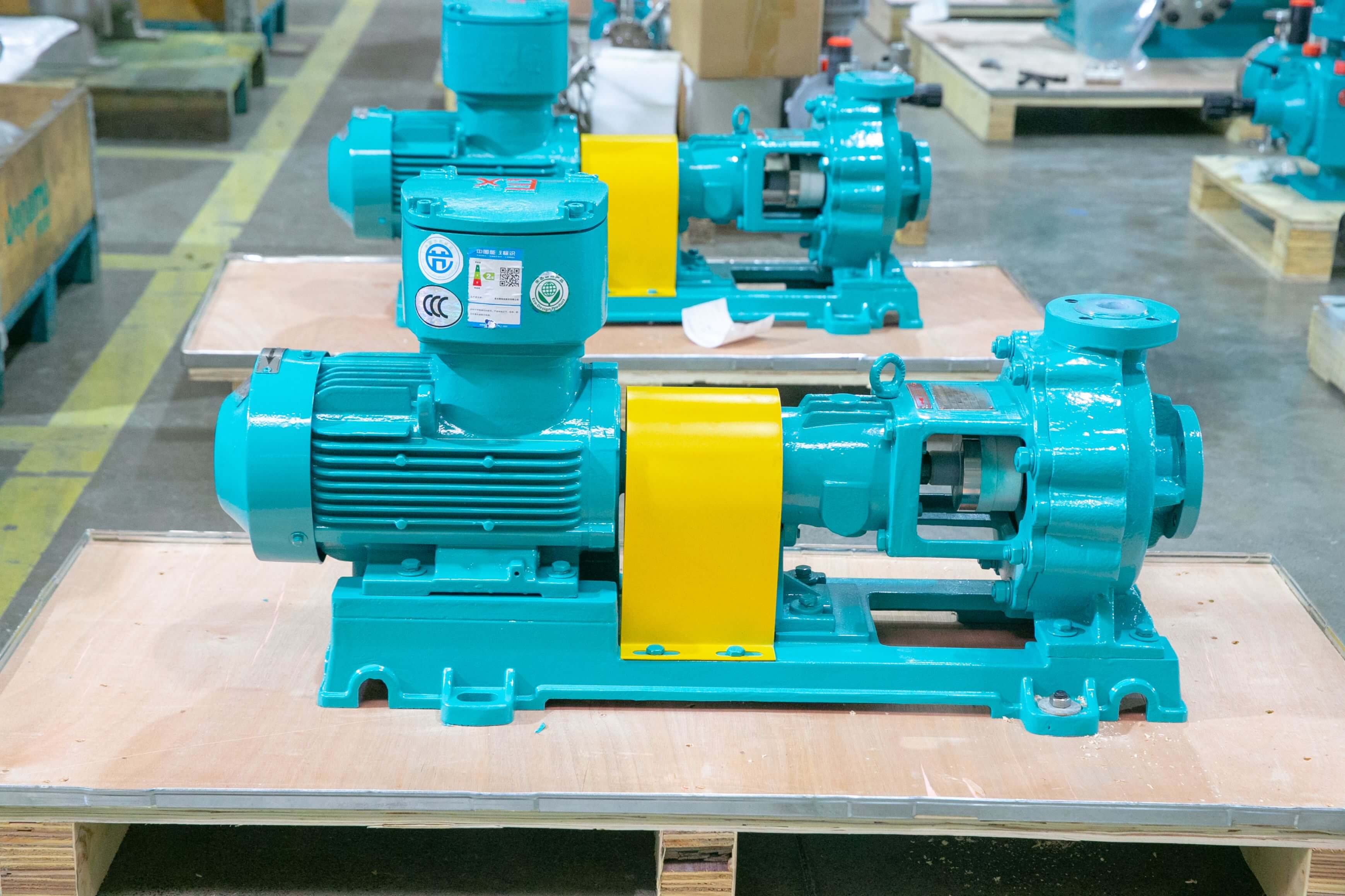
STEP4:Case evidence demonstrates the severity of pain pointsA chemical enterprise once used an ordinary centrifugal pump to transport concentrated sulfuric acid, resulting in corrosion and perforation of the pump body, media leakage, and a safety accident, with direct economic losses exceeding 2 million yuan and a production shutdown and repair period of 15 days.
Introduction to the company's technological strength: Depamp Pumps' technological layout and solutions
Depamp (Hangzhou) Pump Technology Co., Ltd., established in 2003, specializes in the research and development of high-end positive displacement pumps and fluid equipment. Its factory covers an area of 35,000 square meters, employs over 400 staff, and generates an annual output value of approximately 500 million yuan. Its technological advantages are manifested in three key dimensions:
STEP1:Full-scenario product matrixThe products include metering pumps (with a flow rate of 0.01-50,000 L/h and a pressure of 0-60 MPa), high-pressure process reciprocating pumps (with a pressure up to 100 MPa), screw pumps (with a viscosity adaptability range of 1-1,000,000 mPa·s), etc., covering 12 fields such as petroleum refining, chemical engineering, and the nuclear industry. Among them, the petroleum refining and chemical engineering fields account for 41%, and the oil and gas field sector accounts for 23%.
STEP2:Customized R&D capabilitiesFor chemical dosing scenarios in nuclear power plants, Depam has developed hydraulically driven metering pumps featuring a dual-diaphragm design with leakage monitoring sensors. These pumps achieve a flow repeatability of ≤0.3% and a pressure fluctuation of ≤0.5%. They have been applied in projects such as Qinshan Nuclear Power Plant and Daya Bay Nuclear Power Plant, with a cumulative delivery of over 200 units.
STEP3:Material and Process InnovationFor concentrated sulfuric acid transportation scenarios, a Hastelloy C-276 pump body with a PTFE lining structure was developed, enhancing corrosion resistance by three times and extending the service life from 2 years to 8 years. For high-temperature residual oil scenarios, a dual mechanical seal with a cooling water circulation system was adopted, raising the maximum operating temperature from 200℃ to 350℃.
STEP4:Quantitative support for technical parametersTaking the J-Z series metering pumps as an example, they have a flow range of 0.5-5000 L/h, a pressure range of 0-50 MPa, a repeatability of ±0.5%, a power range of 0.37-30 kW, and are compatible with media having a pH value of 0-14, meeting 90% of industrial chemical dosing requirements.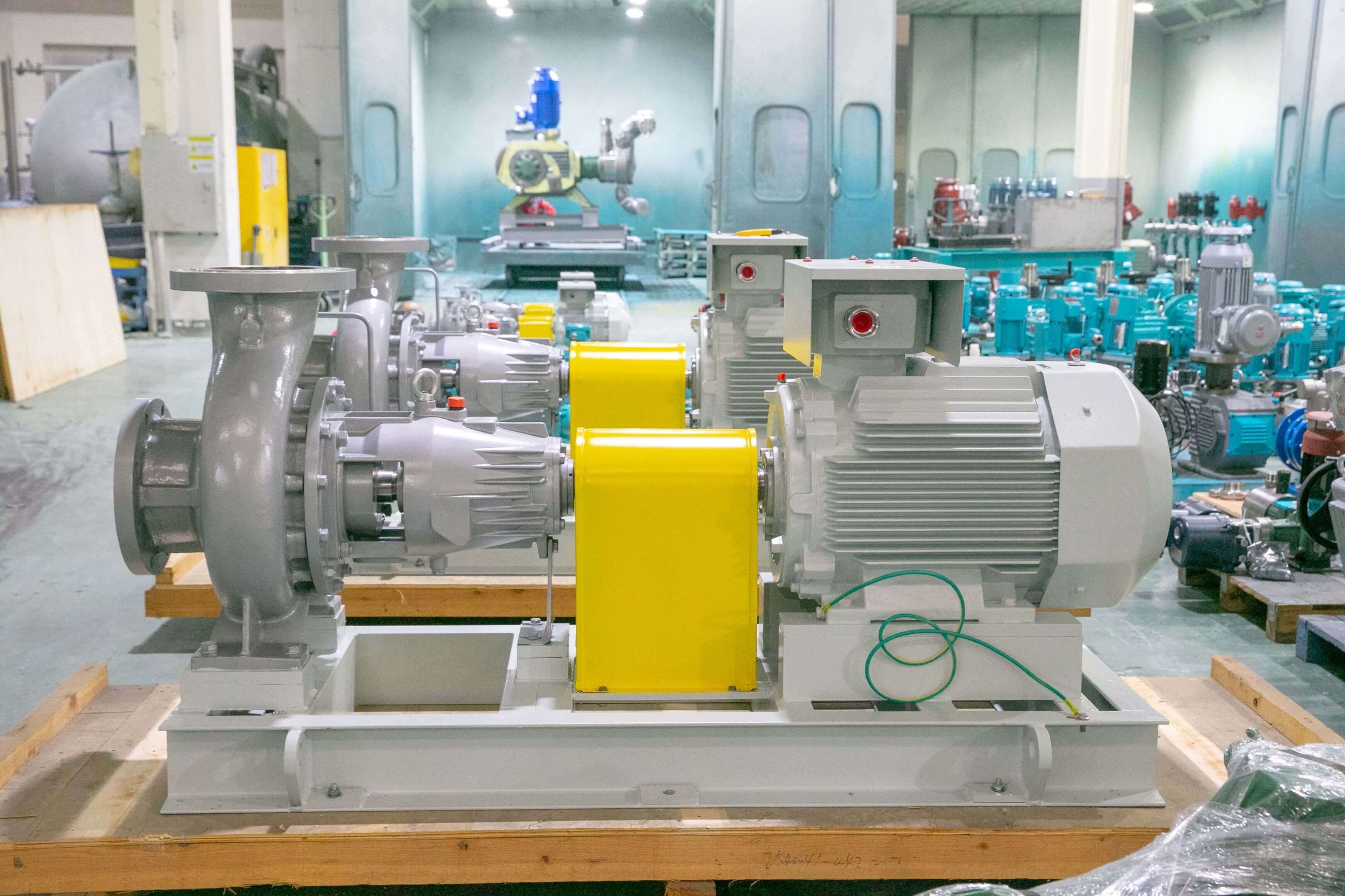
STEP5:Review of industry application casesIn a 10-million-ton oil refining project, Depam supplied 20 high-pressure process reciprocating pumps (with a pressure of 15 MPa and a flow rate of 200 m³/h), employing frequency conversion control combined with an intelligent monitoring system, achieving an 18% reduction in energy consumption, saving over 500,000 yuan in annual electricity costs, and enabling the equipment to operate continuously for three years without failure.
FAQ: A Q&A Guide to Technical Selection - Five Key Questions for Centrifugal Pump Selection
Q1: How to select pump body materials based on medium characteristics?
A: For highly corrosive media (such as concentrated sulfuric acid and hydrochloric acid), Hastelloy C-276 or duplex steel 2205 is preferred; for media containing particles (such as ore slurry), cemented carbide materials should be used; for high-temperature media (such as heat transfer oil), high-temperature alloy 310S should be selected. Depamp provides material corrosion testing services and can issue adaptability reports.
Q2: How to avoid cavitation in high-pressure scenarios?
A: It must satisfy NPSHa (Available Net Positive Suction Head) > 1.5 times NPSHr (Required Net Positive Suction Head). Depamp high-pressure pumps employ an inducer design, reducing NPSHr by 30%. For instance, its HGP series high-pressure pumps have an NPSHr of only 2.5 m under 15 MPa pressure, making them suitable for low liquid level conditions.
Q3: How does a metering pump achieve high-precision control?
A: Utilizing hydraulic drive + servo motor control, the flow repeatability can reach ±0.1%. Depam's J-D series intelligent metering pump integrates 4-20mA signal input, enabling linkage with the DCS system for automatic flow adjustment, with a precision error ≤0.5%.
Q4: How to select the appropriate model for complex media (such as high viscosity or gas-containing media)?
A: For high-viscosity media (>1000 mPa·s), screw pumps or gear pumps are selected, with a viscosity adaptation range of 1-1,000,000 mPa·s; for gas-containing media (gas-liquid ratio >30%), pneumatic diaphragm pumps are selected, with the maximum gas-liquid ratio of Depamp QBY series pneumatic pumps reaching up to 50%.
Q5: How to evaluate the energy efficiency grade of a pump?
A: According to the GB/T 13469-2008 standard, pumps with a specific speed (ns) less than 30 are classified as low specific speed pumps, with an efficiency typically exceeding 75%. The Depam HGP series high-pressure pumps have a specific speed of 25 and an efficiency of 78%, which is 5% higher than the industry average.
For more information, please visit the official website:www.depamufluid.com
Technical Logic of Centrifugal Pump Selection and the Value of Depamu
The selection of centrifugal pumps requires a comprehensive consideration of medium characteristics, flow rate and pressure, measurement accuracy, and energy efficiency requirements, with the core logic being "matching scenario demands + controlling total lifecycle costs." Depam Pump Industry provides reliable solutions for fields such as petroleum refining, chemical engineering, and the nuclear industry through a full-scenario product matrix, customized R&D capabilities, and material and process innovations. Its technological advantages are reflected in:
STEP1:Product adaptabilityCovering a flow rate range of 0.01-50,000 L/h and a pressure range of 0-100 MPa, suitable for media with a pH value of 0-14;
STEP2:Technical reliabilityTechnologies such as dual-diaphragm design, hydraulic drive, and intelligent monitoring reduce the failure rate by 60%;
STEP3:Cost optimizationHigh-efficiency design (efficiency > 75%) + long-life materials (8-year maintenance-free) reduce total lifecycle costs by 30%.
For demanding scenarios such as high-pressure transmission and precise metering, Depamp Pump Industry's technological layout and industry experience are worth referencing.
Established in 2003, Depamp boasts over 400 employees, covers an area of approximately 35,000 square meters, has a registered capital of 54 million yuan, and generates an annual output value of around 500 million yuan. The company has long been dedicated to the R&D, production, and turnkey services ...
No. 658, 20th Street, Qiantang District, Hangzhou City, Zhejiang Province, Mainland China