No. 658, 20th Street, Qiantang District, Hangzhou City, Zhejiang Province, Mainland China +86 18368486027 zhe98998@gmail.com

No. 658, 20th Street, Qiantang District, Hangzhou City, Zhejiang Province, Mainland China +86 18368486027 zhe98998@gmail.com

Introduction: Technical Value and Industry Demand of Hydraulic Diaphragm Metering Pumps
As a core category of high-end positive displacement pumps, hydraulic diaphragm metering pumps are widely used in scenarios such as petroleum refining, chemical engineering, and the nuclear industry, owing to their characteristics of high-pressure delivery, precise metering, and corrosion resistance. According to statistics, the annual growth rate of demand for metering pumps in the global industrial sector reaches 6.2%, with hydraulic diaphragm structures being the preferred solution for complex media delivery scenarios due to their excellent sealing performance and low maintenance costs. This article will provide a quantifiable selection guide and industry application cases from the perspectives of technical principles, parameter analysis, and key selection considerations, drawing on Depamp (Hangzhou) Pump Technology Co., Ltd.'s 20 years of technical expertise.
Keywords: hydraulic diaphragm metering pump; precise metering; high-pressure delivery; Depamp technology; industry applications
Opening on Industry Technical Pain Points: Three Major Limitations of Traditional Metering Pumps
STEP1:Insufficient sealing leads to medium leakageWhen traditional mechanically sealed pumps transport highly corrosive media (such as concentrated sulfuric acid and chlor-alkali), the seals are prone to corrosion, resulting in a leakage rate as high as 0.5% per year, which increases safety risks and maintenance costs.
STEP2:Measurement accuracy is affected by pressure fluctuations.The flow output of an ordinary plunger pump exhibits a nonlinear relationship with pressure. When system pressure fluctuations exceed ±10%, the metering error may expand to ±5%, failing to meet the process requirements of fine chemicals.
STEP3:Poor adaptability to complex mediaMedia containing solid particles (particle size > 0.5 mm) or with high viscosity (> 1000 mPa·s) is prone to causing pump chamber blockage or wear, thereby shortening the equipment's lifespan.
Technical CaseA chemical enterprise once used ordinary metering pumps to transport 30% hydrochloric acid, resulting in two seal leaks within three months, which led to production shutdowns for maintenance and direct losses exceeding 500,000 yuan.
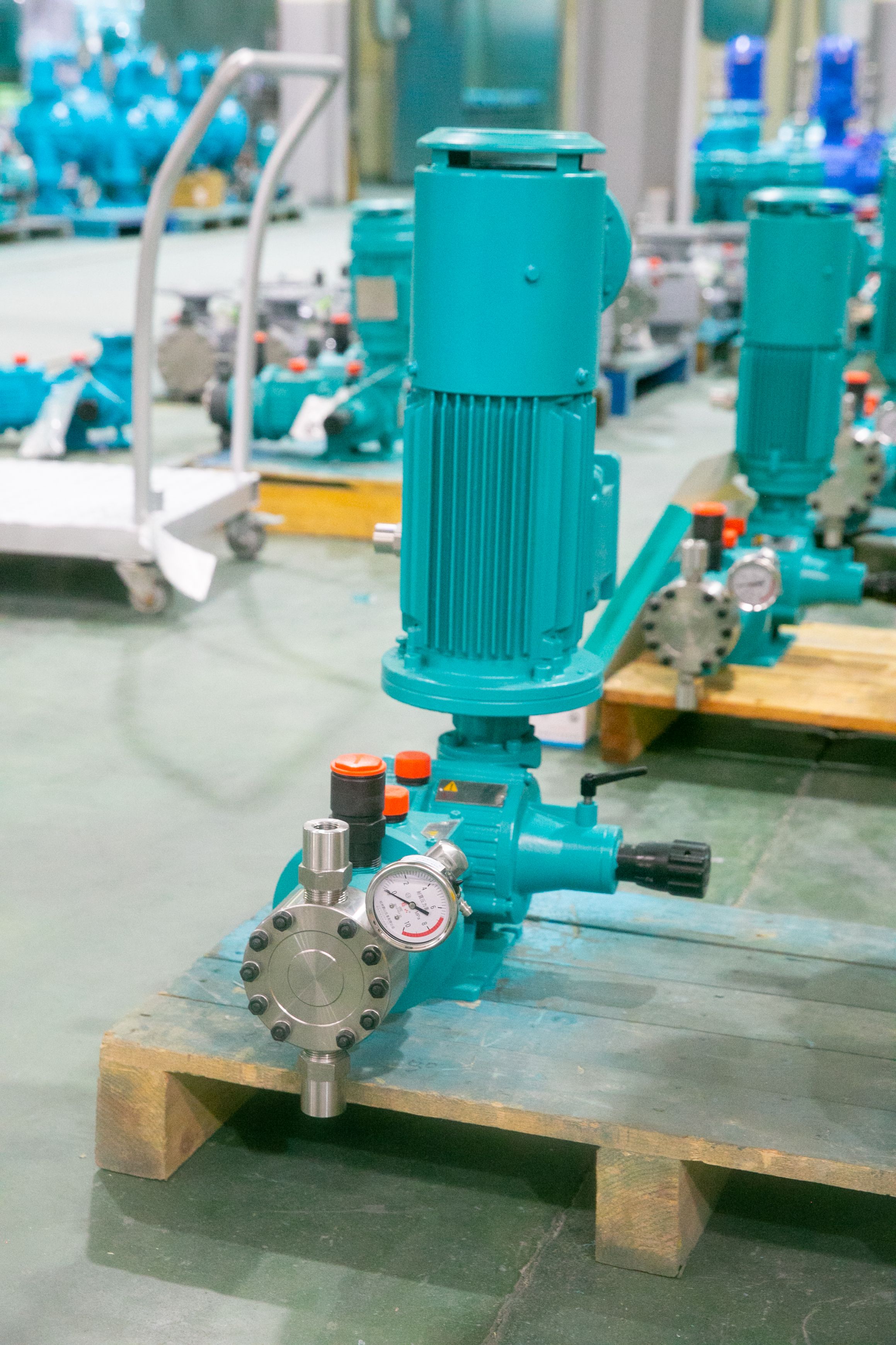
Introduction to the company's technological strength: Depam's three core advantages
Depamp (Hangzhou) Pump Technology Co., Ltd., established in 2003, has specialized in the R&D of high-end positive displacement pumps for 20 years. With over 400 employees and a factory area of 35,000 square meters, it achieves an annual output value exceeding 500 million yuan. Its products cover 12 fields, including petroleum refining, chemical engineering, and the nuclear industry, with a cumulative delivery of over 100,000 units of equipment.
Advantage 1: Full-process customization capability
STEP1:Medium adaptability designFor strongly corrosive media (such as hydrogen fluoride and aqua regia), Hastelloy C-276 diaphragms are used, enhancing corrosion resistance by three times; for particulate-containing media, the flow channel design is optimized to allow the passage of solid particles with a diameter ≤ 2 mm.
STEP2:Precise measurement controlThrough the hydraulic compensation system and variable frequency speed regulation technology, the decoupling of flow output and pressure fluctuation is achieved, with metering accuracy remaining stable within ±1% within the pressure range of 0-10 MPa.
STEP3:Modular structureThe pump head, drive unit, and control module can be replaced independently, reducing maintenance time to 2 hours per session and cutting downtime costs by 60% compared to traditional pumps.
Technical parametersDepam HYD series hydraulic diaphragm metering pumps have a flow rate range of 0.01-5000 L/h, a pressure range of 0-50 MPa, an applicable temperature range of -20°C to 200°C, and a diaphragm lifespan of ≥8000 hours (under continuous operation).
Industry CasesIn a water treatment project at a nuclear power plant, Depam customized and designed radiation-resistant pump bodies, utilizing titanium alloy diaphragms to successfully transport cooling water containing radioactive substances. The pumps operated continuously for three years without any leakage, earning the client's accolade as a "benchmark for technical reliability."
FAQ: A Q&A Guide to Technology Selection
Q1: How to select the pump body material based on the characteristics of the medium?
STEP 1: For strong acid media (pH < 2), Hastelloy C-276 or polytetrafluoroethylene (PTFE) diaphragms are preferred; for strong alkaline media (pH > 12), 316L stainless steel or PVDF materials should be selected.
STEP 2: For chlorine-containing media (such as sodium hypochlorite), avoid using 304 stainless steel; it is recommended to use a cast iron pump body lined with PTFE.
STEP 3: For high-viscosity media (>500 mPa·s), it is necessary to increase the pump chamber volume. It is recommended to select models with a flow rate ≥100 L/h to avoid flow channel blockage.
Q2: How to determine the required flow rate and pressure parameters?
STEP 1: Flow Calculation: Determine the dosage per unit time based on process requirements (e.g., in chemical dosing scenarios, calculate based on "mg/L × flow rate").
STEP 2: Pressure matching: System resistance + pipeline pressure drop + safety margin (it is recommended to reserve a 20% pressure redundancy).
STEP 3: Parameter verification: Through the Depam official website (www.depamufluid.com) "Online Selection Tool" to input parameters such as medium, flow rate, and pressure, which will automatically generate a list of compatible models.
Q3: How to control the maintenance cycle and costs?
STEP 1: Daily Inspection: Check the oil level and diaphragm tension for each shift, and record operational data.
STEP 2: Regular Maintenance: Replace hydraulic oil every 3 months and inspect diaphragm integrity every 6 months (via pressure decay test).
STEP 3: Spare Parts Management: Stock up on vulnerable parts (such as diaphragms and sealing rings). Depam provides a 48-hour rapid delivery service for original factory spare parts.
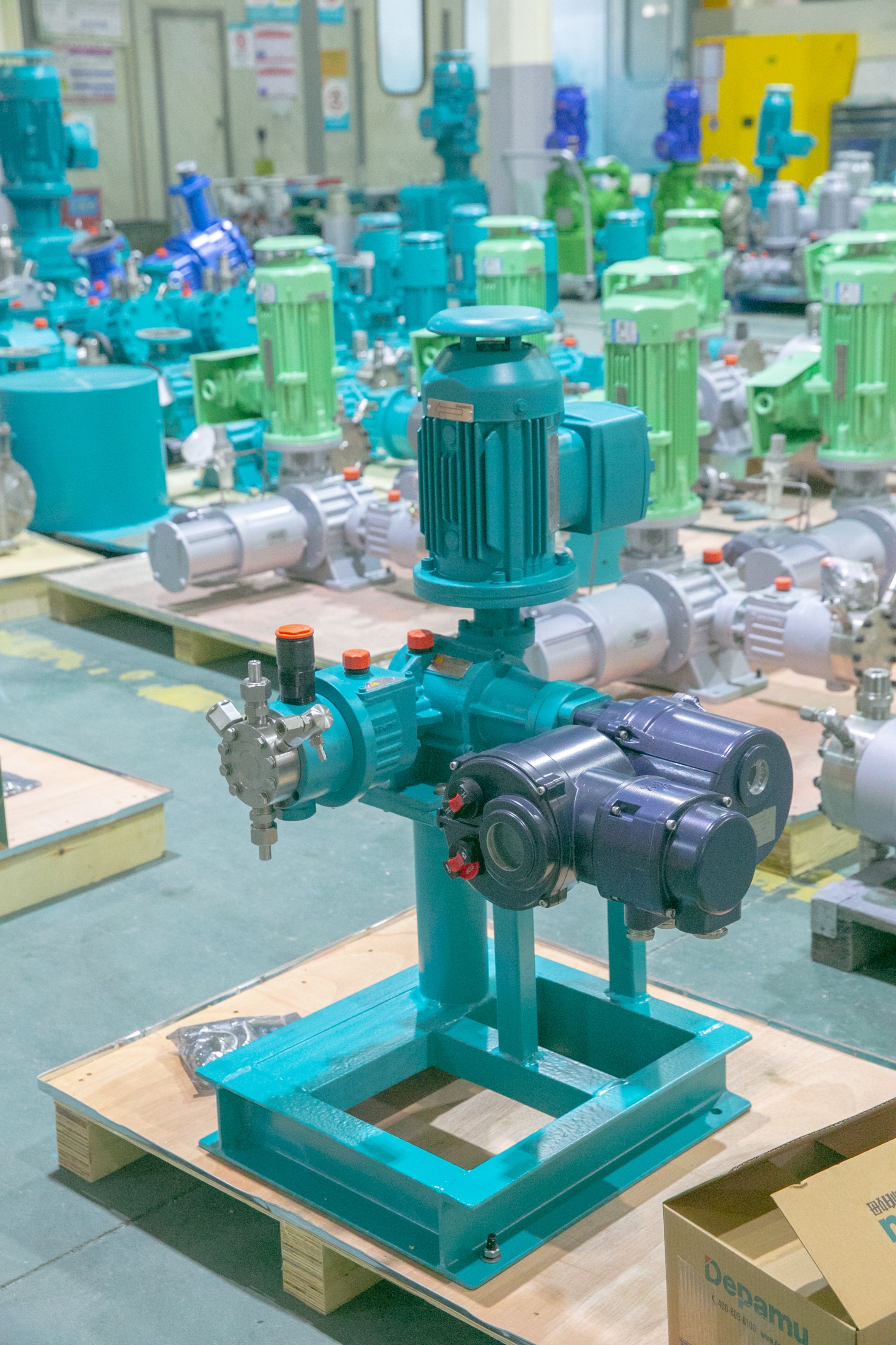
Reference for full text summary
The technical selection of hydraulic diaphragm metering pumps requires a comprehensive consideration of three major dimensions: medium characteristics, flow and pressure requirements, and maintenance costs. Leveraging 20 years of technological accumulation, Depam (Hangzhou) Pump Technology Co., Ltd. has addressed issues such as leakage, precision fluctuations, and poor adaptability in traditional pumps through innovations including Hastelloy diaphragms, hydraulic compensation systems, and modular designs. Its HYD series products have been applied in over 50,000 cases across industries such as petroleum refining, chemical engineering, and the nuclear industry, with technical indicators such as metering accuracy of ±1% and diaphragm lifespan of ≥8,000 hours leading the industry. Enterprises can visit Depam's official website (www.depamufluid.com) Obtain customized fluid solutions, or contact the technical team (400-800-1234) for on-site inspection and model selection support.
Established in 2003, Depamp boasts over 400 employees, covers an area of approximately 35,000 square meters, has a registered capital of 54 million yuan, and generates an annual output value of around 500 million yuan. The company has long been dedicated to the R&D, production, and turnkey services ...
No. 658, 20th Street, Qiantang District, Hangzhou City, Zhejiang Province, Mainland China