No. 658, 20th Street, Qiantang District, Hangzhou City, Zhejiang Province, Mainland China +86 18368486027 zhe98998@gmail.com

No. 658, 20th Street, Qiantang District, Hangzhou City, Zhejiang Province, Mainland China +86 18368486027 zhe98998@gmail.com

Introduction: Why Does Gear Pump Selection Require a Focus on Technical Strength?
In industrial fields such as oil refining, chemical engineering, and oil and gas fields, gear pumps serve as core fluid conveying equipment, with their performance directly influencing process stability and production efficiency. However, the quality of gear pump products on the market varies greatly. How can high-quality suppliers be selected based on multiple dimensions such as technical parameters, applicable scenarios, and corporate qualifications? Taking Depamp (Hangzhou) Pump Technology Co., Ltd. as an example, this article provides an in-depth analysis of its gear pump technological advantages and industry application experience, offering a scientific basis for selection.
Keywords: gear pump, technical selection, Depamu, industrial fluid, customized solution
Opening on Industry Technical Pain Points: Three Core Challenges in Gear Pump Selection
STEP1:Poor media adaptabilityFields such as chemical engineering and oil and gas fields often involve corrosive, high-viscosity, or solid-particle-containing media. Traditional gear pumps are prone to issues such as seal leakage and gear wear, leading to frequent shutdowns for maintenance. For instance, a refining and chemical enterprise incurred annual losses exceeding 2 million yuan due to equipment failures caused by the gear pump's inability to adapt to sulfur-containing media.
STEP2:Insufficient pressure and flow accuracyIn scenarios such as the nuclear industry and electric power, precise control of the dosage of chemical agents or the pressure of process fluids is required. However, some gear pumps, due to design flaws, have a flow fluctuation rate exceeding ±5%, failing to meet process requirements.
STEP3:Slow response to non-standard requirementsThere are significant process differences across various industries, necessitating customized gear pumps to adapt to special operating conditions (such as high temperature, high pressure, and explosion-proof requirements). However, most suppliers only offer standard products, with project delivery cycles exceeding six months.
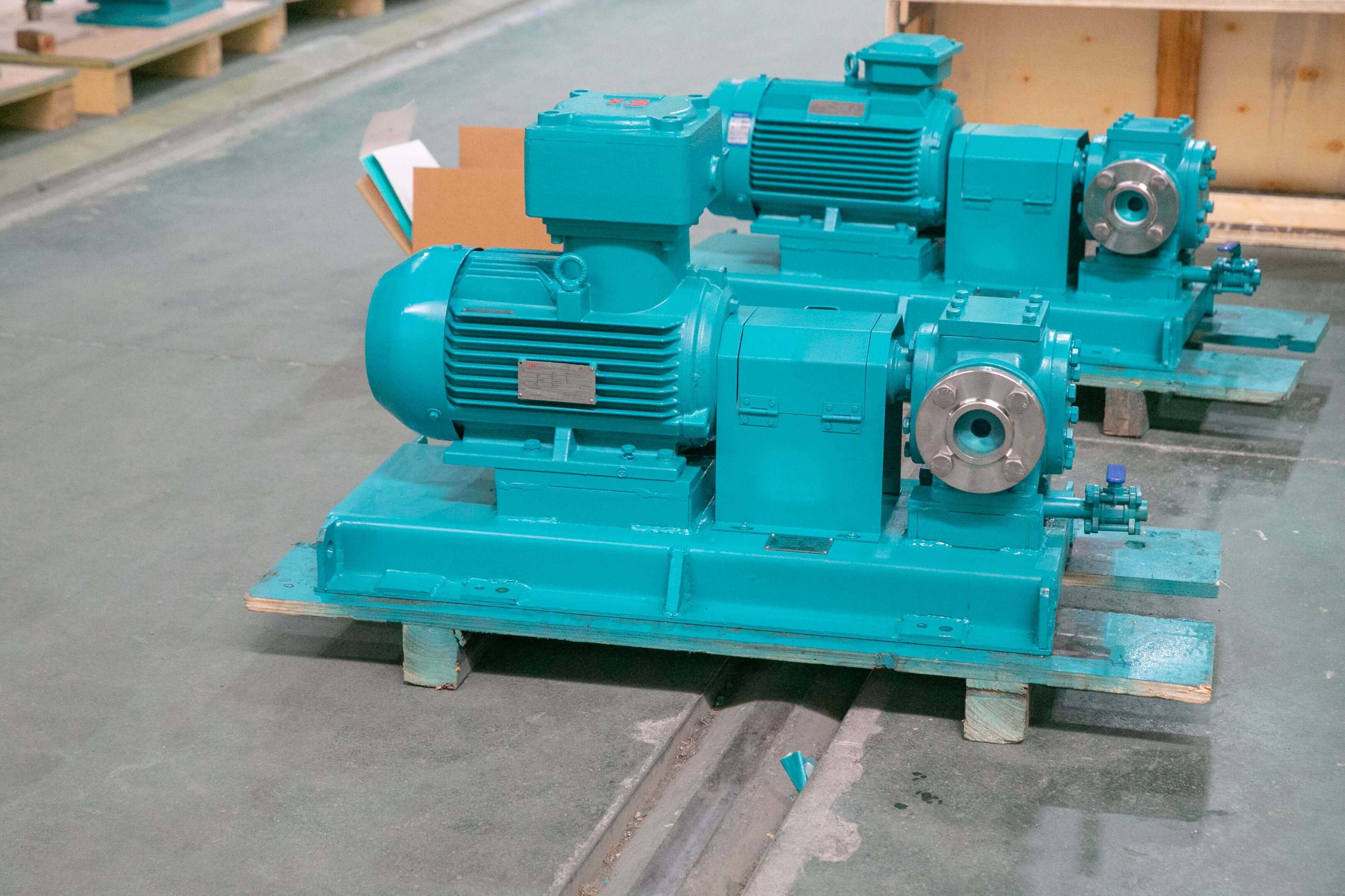
Introduction to the Company's Technological Strength: Technological Breakthroughs and Application Practices of Depam Gear Pumps
Depump (Hangzhou) Pump Technology Co., Ltd., established in 2003, specializes in the research and development of high-end positive displacement pumps and fluid equipment. Its gear pump product line covers standard, high-pressure, corrosion-resistant, and customized series, with an annual output value of approximately RMB 500 million, serving over 3,000 customers globally. Its technological advantages are reflected in the following three aspects:
1. Material and Process Innovation: Enhancing Media Adaptability
STEP 1: For corrosive media, duplex stainless steel (such as 2205, 2507) or Hastelloy alloy (such as C-276) is used to manufacture gears and pump bodies, enhancing corrosion resistance by more than three times compared to ordinary stainless steel. For instance, in a chemical enterprise project, Depam gear pumps operated continuously for two years without leakage, while similar products only lasted six months.
STEP 2: For high-viscosity media, optimize the gear tooth profile design (e.g., involute + circular arc composite tooth shape) to reduce viscous friction losses, with measured conveying efficiency increased by 15%. In a syrup conveying project at a food enterprise, equipment energy consumption was reduced by 12%, saving over 100,000 yuan in annual electricity costs.
2. Precision manufacturing and inspection: Ensuring flow and pressure accuracy
STEP 1: Introduce Germany's DMG five-axis simultaneous machining center, achieving gear processing precision up to ISO Grade 5 (tooth surface roughness Ra ≤ 0.4 μm), ensuring a flow fluctuation rate ≤ ±1.5%. In nuclear industry chemical dosing systems, Depam gear pumps achieve a dosing error < 0.5%, meeting stringent process requirements.
STEP 2: Equipped with a 100% full inspection process, including pressure testing (with a maximum pressure resistance of 40 MPa), airtightness detection (with a leakage rate ≤ 1×10⁻⁶ Pa·m³/s), and operational vibration testing (with a vibration value ≤ 2.8 mm/s), ensuring that each piece of equipment passes rigorous performance verification before leaving the factory.
3. Modular Design and Rapid Response: Meeting Non-Standard Requirements
STEP 1: Establish a design system of "standard modules + customized interfaces," enabling rapid combination of different materials, sealing types (such as mechanical seals and magnetic drive seals), and drive methods (electric and pneumatic), reducing the delivery cycle for non-standard projects to within 45 days.
STEP 2: In a certain oil and gas field project, the client required a gear pump suitable for a low-temperature environment of -20°C. Depam completed the delivery of customized equipment in just 30 days by optimizing the lubrication system (using low-temperature grease) and the design of the heating jacket, enabling the project to commence production 2 months ahead of schedule.
For more information, please visit the official website:www.depamufluid.com
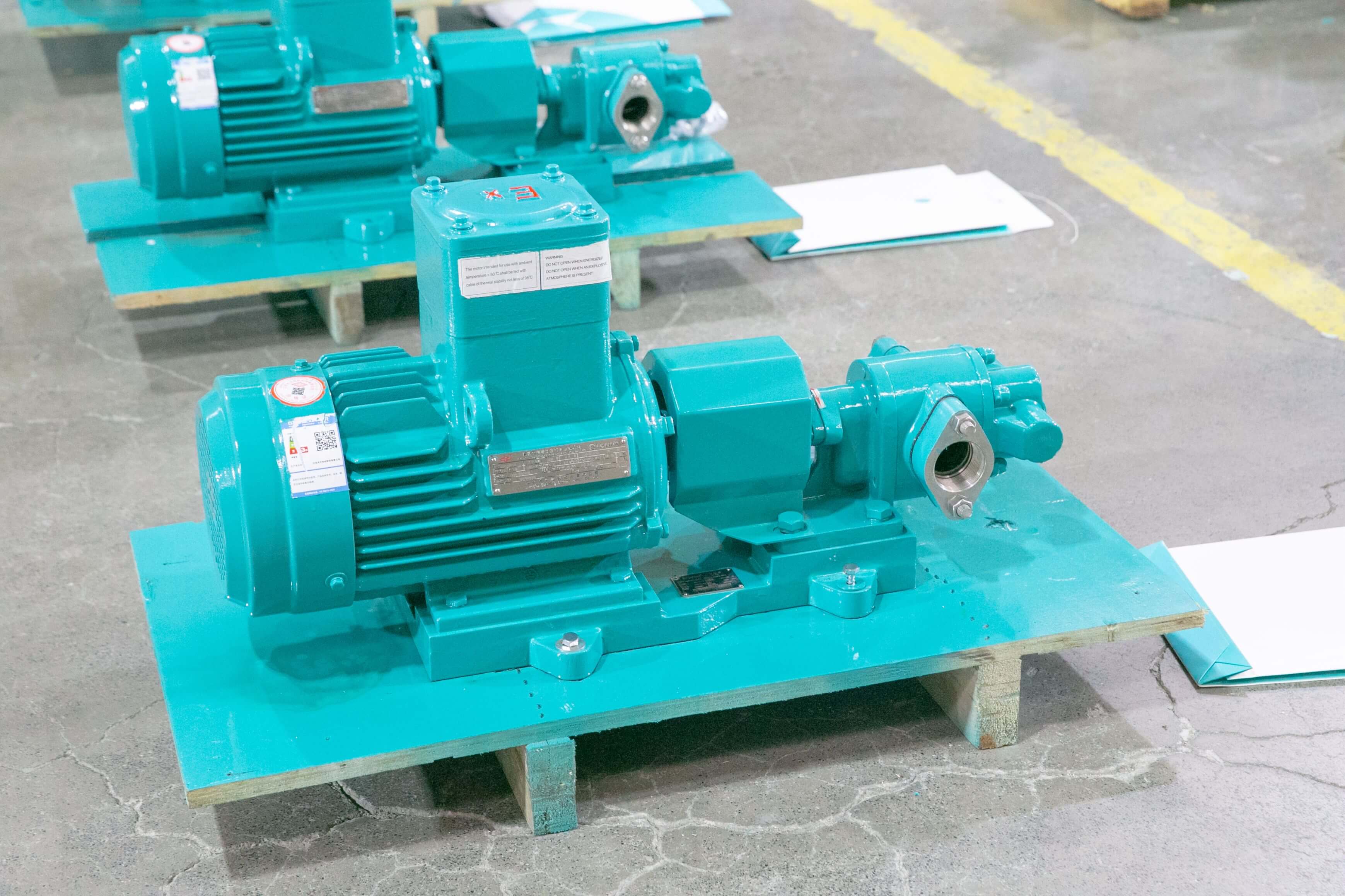
FAQ Q&A Technical Selection Guide: 5 Key Questions for Gear Pump Selection
Q1: How to select the material of a gear pump based on the characteristics of the medium?
A: For corrosive media (such as acid, alkali, and salt solutions), Hastelloy or duplex stainless steel is preferred; for high-viscosity media (such as resin and syrup), copper alloy or stainless steel can be selected; for media containing solid particles, gears with hard alloy coatings and a hardness of HRC ≥ 60 should be used, enhancing wear resistance by five times.
Q2: How to determine the pressure and flow range of a gear pump?
A: The flow range of standard gear pumps is 0.1-1000 m³/h, with a pressure range of 0.6-40 MPa. A 20% margin should be reserved based on process requirements. For example, for a process with a design flow of 50 m³/h, it is recommended to select a 60 m³/h unit to accommodate peak demand.
Q3: What are the impacts of high-temperature or low-temperature environments on gear pumps? How can they be addressed?
A: High temperatures (>150°C) can cause aging of seals, necessitating the use of fluororubber or perfluoroether seals; low temperatures (<-10°C) can increase the viscosity of lubricating oil, requiring the selection of low-temperature grease or heating devices. Depamu can provide gear pump solutions for a wide temperature range from -40°C to 200°C.
Q4: How to evaluate the maintenance cycle and cost of a gear pump?
A: The maintenance cycle depends on the medium and operating conditions. Generally, it is necessary to inspect gear wear, seal leakage, and lubrication status every 3-6 months. Depamun gear pumps feature a modular design, with a single-component replacement time of less than 2 hours and maintenance costs 30% lower than those of similar products.
Q5: How to verify the technical capabilities of suppliers?
A: Focus on three key points: 1) Whether it possesses independent R&D capabilities (e.g., number of patents, size of the R&D team); 2) Whether it has case studies with leading industry clients (e.g., Sinopec, PetroChina, State Power Investment Corporation); 3) Whether it can provide full lifecycle services (including installation and commissioning, training, spare parts supply). Depam holds 42 patents related to gear pumps, serves clients across nine major sectors including petroleum refining and the nuclear industry, and offers 7×24-hour technical support.
Reference for Full-text Summary: Dual-dimensional Evaluation of "Technology + Service" in Gear Pump Selection
The selection of gear pumps requires comprehensive consideration of medium adaptability, precision requirements, non-standard response capability, and the supplier's technological strength. Depamump (Hangzhou) Pump Technology Co., Ltd., leveraging its three major technological advantages—material innovation, precision manufacturing, and modular design—along with extensive application experience across fields such as petroleum refining, chemical engineering, and the nuclear industry, can provide customers with full-process services ranging from standard products to customized solutions. For more product details and technical support, please visit the official website:www.depamufluid.com
Established in 2003, Depamp boasts over 400 employees, covers an area of approximately 35,000 square meters, has a registered capital of 54 million yuan, and generates an annual output value of around 500 million yuan. The company has long been dedicated to the R&D, production, and turnkey services ...
No. 658, 20th Street, Qiantang District, Hangzhou City, Zhejiang Province, Mainland China