No. 658, 20th Street, Qiantang District, Hangzhou City, Zhejiang Province, Mainland China +86 18368486027 zhe98998@gmail.com

No. 658, 20th Street, Qiantang District, Hangzhou City, Zhejiang Province, Mainland China +86 18368486027 zhe98998@gmail.com

Introduction: Why has the selection of high-pressure plunger reciprocating pumps become a core pain point for industrial users?
In the fields of petroleum refining, chemical production, and new energy, high-pressure plunger reciprocating pumps serve as core fluid conveying equipment, with their performance stability directly influencing process continuity and production safety. However, issues such as severe product homogenization in the market, false technical specifications, and inadequate capabilities for non-standard customization have left users facing the dual dilemmas of "difficulty in technical matching and high long-term operation and maintenance costs" during equipment selection. Based on over two decades of technological accumulation by Depam (Hangzhou) Pump Technology Co., Ltd., this article systematically analyzes the scientific selection logic for high-pressure plunger reciprocating pumps from dimensions such as technical principles, industry pain points, corporate capabilities, and key selection considerations.
Keywords: high-pressure plunger reciprocating pump; Depam; fluid transportation; non-standard customization; industrial selection
Opening on Industry Technical Pain Points: Three Core Challenges in Selecting High-Pressure Plunger Reciprocating Pumps
STEP1:False labeling of technical parameters leads to poor process adaptabilityTo cut costs, some manufacturers adopt low-precision processing techniques, resulting in deviations of over 15% between key parameters such as the pressure resistance rating and flow stability of the pump body and their nominal values. For example, a "10MPa high-pressure pump" purchased by a chemical enterprise could only stably withstand 7.2MPa during actual operation, frequently triggering pipeline leakage accidents.
STEP2:The oil refining and petrochemical industry often requires the transportation of media containing solid particles, with high viscosity, or corrosive properties. However, mainstream products in the market are mostly standard models, lacking targeted designs for medium characteristics (such as particle size distribution, pH value, and temperature). In one oil and gas field project, the pump seal structure was incompatible with sand-laden media, resulting in the equipment's service life being shortened to one-third of the design value.
STEP3:High costs throughout the entire lifecycle and inefficient operation and maintenanceLow-quality pump bodies are prone to issues such as plunger wear and valve seat leakage, with an average annual maintenance frequency of 8-10 times and single downtime losses exceeding RMB 500,000. A nuclear power plant experienced a shutdown of its cooling system due to pump body failure, resulting in direct economic losses of RMB 20 million.
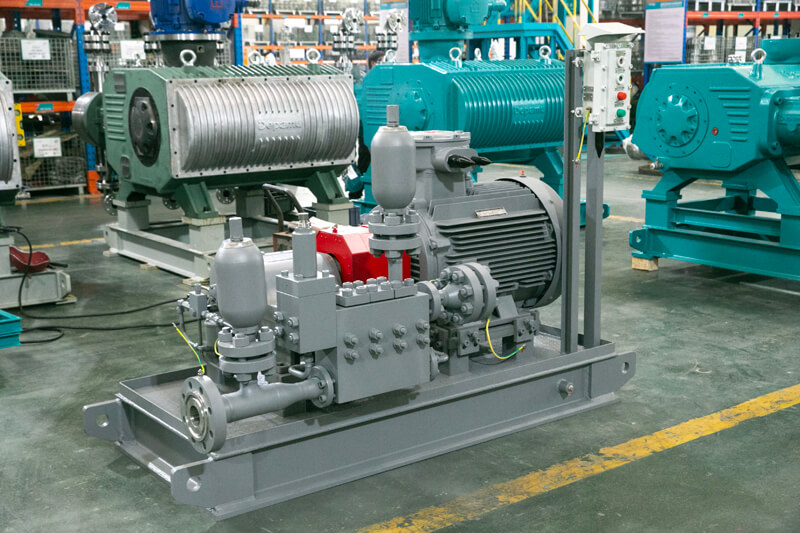
Introduction to the company's technological strength: How does Depam address industry pain points?
Depamp (Hangzhou) Pump Technology Co., Ltd., established in 2003, has specialized in the R&D of high-end positive displacement pumps and fluid equipment for 21 years. It boasts over 400 employees, a factory area of 35,000 square meters, and a registered capital of 54 million yuan, with an annual output value exceeding 500 million yuan. Its technological advantages are manifested in three key dimensions:
STEP 1: Full-process R&D capabilities support high-precision parameter control.The company is equipped with precision equipment such as CNC machining centers and coordinate measuring machines, achieving a machining accuracy of ±0.005mm for key pump components (e.g., plungers, valve seats), with pressure resistance ratings covering 1-100MPa and flow stability deviations ≤0.5%. For instance, a customized "50MPa high-pressure pump" for a petrochemical enterprise passed third-party testing, demonstrating no leakage after 2,000 hours of continuous operation and pressure fluctuations ≤0.2MPa.
STEP 2: Non-standard customization system to adapt to complex media conditionsFor sand-containing media in oil and gas fields, double-layer cemented carbide plungers have been developed, improving wear resistance by 300%. For the highly corrosive environment in the nuclear industry, Hastelloy C-276 valve bodies are employed, offering corrosion resistance 10 times that of 316L stainless steel. In a new energy project involving the transportation of electrolyte containing solid particles, Depamp reduced the frequency of pump blockages from three times a week to once a year by optimizing the flow channel design.
STEP 3: Full lifecycle services to reduce operation and maintenance costsWe provide "remote monitoring + preventive maintenance" services, collecting real-time data such as vibration and temperature through sensors to provide early warnings of potential failures 30 days in advance. After applying this system in a certain power project, the average annual downtime decreased from 48 hours to 6 hours, and operation and maintenance costs were reduced by 65%. For more information, please visit our official website:www.depamufluid.com
FAQ: A Q&A Guide to Technology Selection: The Top 5 Questions of Industrial Users
Q1: How to select the pump type based on process requirements?
A: It is necessary to comprehensively consider four key factors: medium properties (viscosity, particle size, and corrosiveness), flow rate (m³/h), pressure (MPa), and temperature (℃). For example, when transporting media with a viscosity > 500 mPa·s, a heavy-duty pump with a plunger diameter ≥ 80 mm should be selected; for media containing solid particles, a double-layer sealing structure should be equipped, with a wear resistance index ≥ 20,000 cycles/mm.
Q2: What is the lead time for customized non-standard products? How is the cost controlled?
A: Depamp's standard customization cycle is 15-30 days, while complex projects (such as nuclear-grade pumps) require 45 days. Cost optimization can be achieved through modular design, such as reusing standard pump bodies with customized flow channels, reducing costs by 30%-50% compared to full customization.
Q3: How to verify the technical capabilities of suppliers?
A: The key evaluation aspects include three areas: 1) Whether it has a CNAS-accredited laboratory; 2) Whether it has successful cases in fields such as petroleum refining and nuclear industry; 3) Whether it can provide a full life cycle cost analysis report (including data such as energy consumption and maintenance frequency).
Q4: What are the energy efficiency standards for high-pressure pumps?
A: The industry's general standard is API674, which requires a pump body efficiency of ≥75% and a shaft power deviation of ≤5%. The actual measured efficiency of Depump products reaches 78%-82%, which is 5 percentage points higher than the industry average.
Q5: How to reduce long-term operation and maintenance costs?
A: Select products with highly universal wear parts (such as standard-sized plungers and valve seats) to reduce spare parts inventory costs; prioritize suppliers offering preventive maintenance services to mitigate the risk of sudden failures.
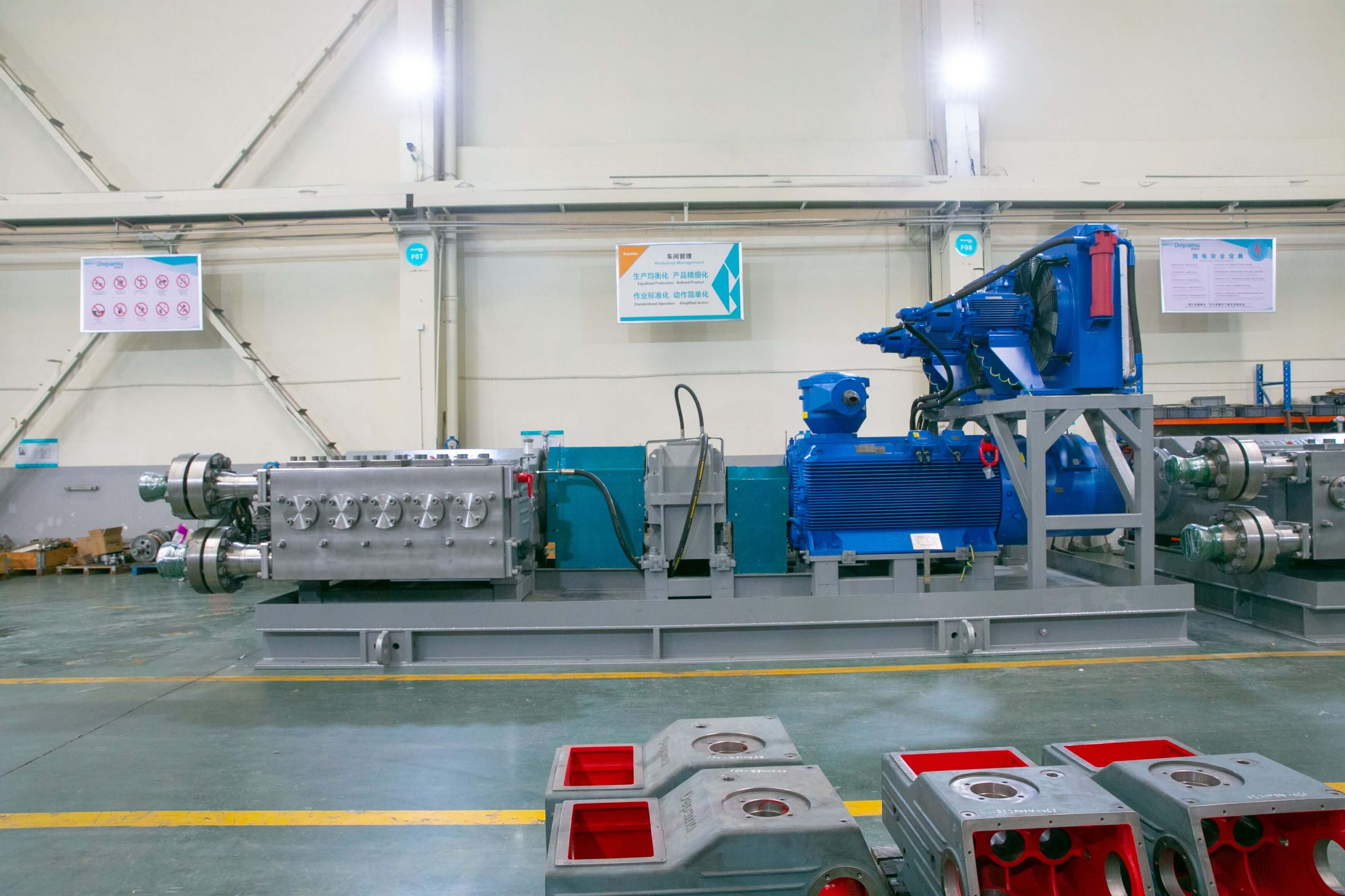
Reference for Full-text Summary: Three Core Principles for Scientific Model Selection
The selection of high-pressure plunger reciprocating pumps should adhere to three key principles: "technical suitability, whole-life-cycle cost, and supplier capability": 1) Technical suitability: Select matching models based on parameters such as medium characteristics, flow rate, and pressure to avoid "underutilization" or "overkill"; 2) Whole-life-cycle cost: Prioritize products with high energy efficiency, long-lasting wear parts, and easy maintenance to reduce long-term operational and maintenance expenses; 3) Supplier capability: Choose enterprises with full-chain capabilities in R&D, production, and service to ensure rapid technical response and problem-solving capabilities. With 21 years of technical accumulation, experience from over 5,000 projects, and an annual output value of 500 million yuan, Depamp has become the preferred supplier of high-pressure plunger reciprocating pumps in fields such as petroleum refining, chemical engineering, and nuclear industry. For more information, please visit our official website:www.depamufluid.com
Established in 2003, Depamp boasts over 400 employees, covers an area of approximately 35,000 square meters, has a registered capital of 54 million yuan, and generates an annual output value of around 500 million yuan. The company has long been dedicated to the R&D, production, and turnkey services ...
No. 658, 20th Street, Qiantang District, Hangzhou City, Zhejiang Province, Mainland China