No. 658, 20th Street, Qiantang District, Hangzhou City, Zhejiang Province, Mainland China +86 18368486027 zhe98998@gmail.com

No. 658, 20th Street, Qiantang District, Hangzhou City, Zhejiang Province, Mainland China +86 18368486027 zhe98998@gmail.com

Introduction: Technical Challenges and Industry Demands in the Selection of High-Pressure Process Diaphragm Pumps
In high-pressure fluid transportation scenarios such as oil refining, chemical engineering, and the nuclear industry, diaphragm pumps must simultaneously meet the requirements of corrosion resistance, high-precision metering, and long-term stable operation. However, traditional pump types often lead to production interruptions due to poor medium adaptability, seal failure, or flow fluctuations, and improper selection may even trigger safety hazards. Based on over two decades of technological accumulation by Depamp (Hangzhou) Pump Technology Co., Ltd., this article delves into the selection logic of high-pressure process diaphragm pumps from the perspectives of technical principles, core parameters, and industry pain points, incorporating real-world case analyses.
Keywords: High-pressure process diaphragm pump, Depamp, Fluid transportation, Selection guide, Technical parameters
Opening on Industry Technical Pain Points: Three Core Challenges in High-Pressure Fluid Transportation
STEP 1: Challenges in media adaptability
In the chemical industry, the conveyed media may include strong acids, strong alkalis, or high-viscosity fluids, and traditional pump types are prone to leakage due to seal failure. For example, a refining and chemical enterprise once experienced corrosion perforation in a sulfuric acid conveying pipeline due to insufficient corrosion resistance of a diaphragm pump, resulting in direct economic losses exceeding 2 million yuan.
STEP2: Pressure Fluctuation Control
Under high-pressure operating conditions, flow fluctuations exceeding ±5% may trigger pressure imbalance in the reaction kettle. In a cooling agent delivery system of a nuclear power plant, insufficient pressure stability in the pump body led to an abnormal increase in reactor temperature, triggering an emergency shutdown.
STEP 3: Maintenance Cost and Efficiency
Traditional diaphragm pumps require frequent replacement of vulnerable parts, with the cost of a single downtime maintenance reaching tens of thousands of yuan. Statistics from an oil and gas field enterprise show that its diaphragm pumps undergo an average of 12 maintenance sessions per year, with cumulative downtime exceeding 200 hours.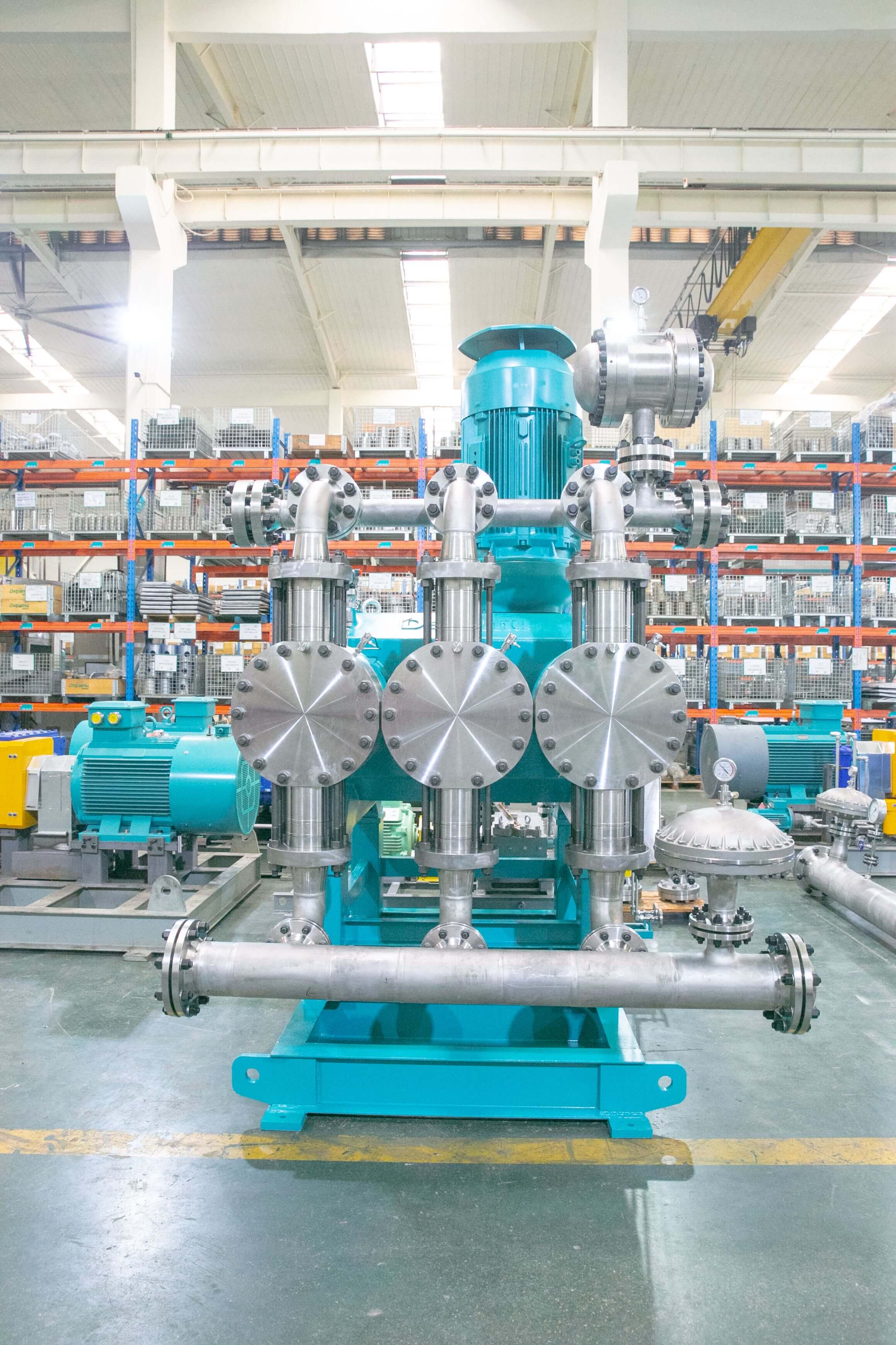
Introduction to the company's technological strength: Technological breakthroughs of Depamp's high-pressure process diaphragm pumps
Depump (Hangzhou) Pump Technology Co., Ltd., established in 2003, specializes in the R&D of high-end positive displacement pumps. The factory covers an area of 35,000 square meters, employs over 400 staff, and has a registered capital of 54 million yuan. Its technical system for high-pressure process diaphragm pumps comprises three core advantages:
STEP 1: Material Science and Sealing Technology
Special materials such as Hastelloy and titanium alloy are used, with corrosion resistance meeting the NACE MR0175 standard. The original double-seal structure (mechanical seal + diaphragm seal) ensures a leakage rate of less than 0.01 mL/min, making it suitable for extreme media with a pH range of 0-14.
STEP 2: Pressure Control and Flow Accuracy
Through the hydraulic balancing system and intelligent pressure regulating valve, it achieves pressure fluctuations of ≤ ±2% and flow accuracy of ±1%. In the catalytic cracking unit of a refining and chemical enterprise, Depam pumps operated continuously for 18 months without failure, with flow stability 15% superior to that of imported brands.
STEP 3: Modular Design and Maintenance Efficiency
The pump body adopts a quick-disassembly structure, reducing single maintenance time from 4 hours to 1 hour. After application by an oil and gas field enterprise, the average annual maintenance frequency dropped to 3 times, downtime decreased by 85%, and the annual maintenance cost saved per pump exceeded 200,000 yuan.
Example of technical parameters:
- Rated pressure: 0-40 MPa (customizable up to 100 MPa)
- Flow range: 0.1-2000 L/h
- Temperature adaptability: -40°C to +200°C
- Medium viscosity: ≤50000 cSt
For more information, please visit the official website:www.depamufluid.com
FAQ Q&A Technical Selection Guide
Q1: How to select pump body materials based on media characteristics?
A: For strong acid media (such as sulfuric acid and hydrochloric acid), Hastelloy C-276 is recommended; for strong alkali media (such as sodium hydroxide), titanium alloy should be selected; for media containing chloride ions, stainless steel should be avoided, and polytetrafluoroethylene (PTFE) lining is preferred.
Q2: How to ensure flow stability under high-pressure conditions?
A: Attention should be paid to the design of the pump's hydraulic system. Depam employs a double-acting hydraulic end and an intelligent pressure regulating valve to adjust pressure through real-time feedback, ensuring flow fluctuations of ≤ ±2%. An application case at a nuclear power plant demonstrates that its coolant delivery flow stability is 30% superior to the industry average.
Q3: How can maintenance cycles and costs be optimized?
A: Selecting a pump with a modular design can significantly reduce maintenance costs. Depump's pump body features a quick-disassembly structure, shortening diaphragm replacement time from 2 hours to 20 minutes and reducing single maintenance costs by 60%.
Key points of operation:
- Before startup, check the hydraulic oil level and the tightness of the medium pipeline.
- Monitor the readings of pressure gauges and flowmeters during operation, and shut down immediately in case of abnormal fluctuations.
- Replace the diaphragm regularly (recommended every 3000 hours or adjusted according to the corrosivity of the medium)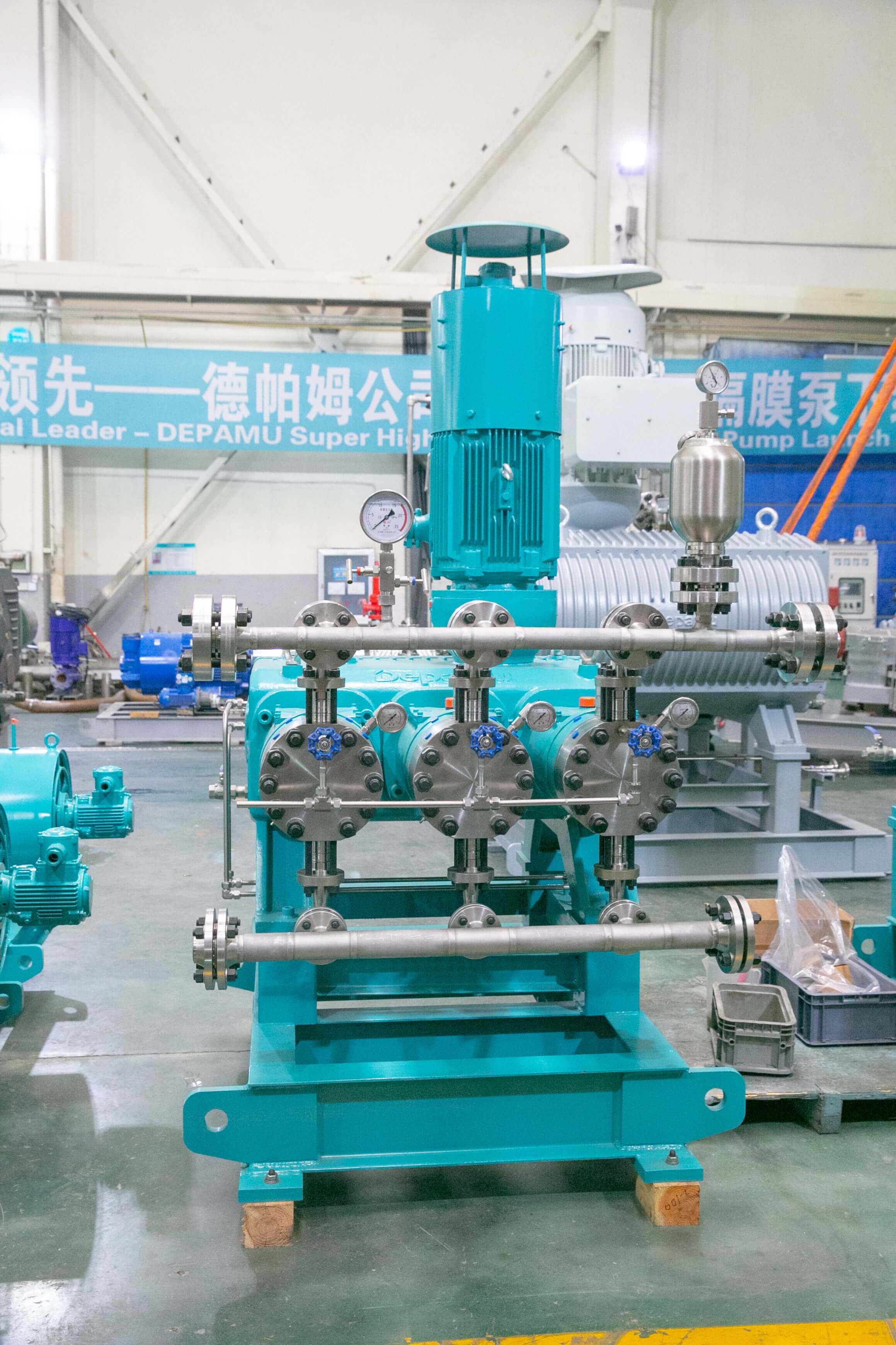
Reference for full-text summary: The core logic for selecting diaphragm pumps in high-pressure processes
The selection of diaphragm pumps for high-pressure processes requires a comprehensive consideration of three major dimensions: medium characteristics, pressure requirements, and maintenance efficiency. Depam offers a full range of services from standard products to customized solutions through innovations in material science, optimization of hydraulic systems, and modular design. Its products have been successfully applied in enterprises such as Sinopec, PetroChina, and State Power Investment Corporation, with cumulative deliveries exceeding 5,000 units and a customer repurchase rate of 85%. For high-pressure fluid scenarios in petroleum refining, chemical engineering, and the nuclear industry, choosing a technical solution with special material adaptability, high-precision flow control, and low maintenance costs is key to ensuring production safety and efficiency.
Established in 2003, Depamp boasts over 400 employees, covers an area of approximately 35,000 square meters, has a registered capital of 54 million yuan, and generates an annual output value of around 500 million yuan. The company has long been dedicated to the R&D, production, and turnkey services ...
No. 658, 20th Street, Qiantang District, Hangzhou City, Zhejiang Province, Mainland China