No. 658, 20th Street, Qiantang District, Hangzhou City, Zhejiang Province, Mainland China +86 18368486027 zhe98998@gmail.com

No. 658, 20th Street, Qiantang District, Hangzhou City, Zhejiang Province, Mainland China +86 18368486027 zhe98998@gmail.com

Introduction: Why has the selection of high-pressure process tubular pumps become a pain point in the industry?
In high-pressure transportation scenarios such as oil refining, chemical engineering, and the nuclear industry, the reliability of tubular pumps directly impacts process continuity and safety. However, the products on the market vary greatly in quality, and enterprises often face challenges in selection: how to balance core parameters such as pressure, flow rate, and medium adaptability? How to avoid production losses caused by equipment failures? This article will take the technical practices of Depamup (Hangzhou) Pump Technology Co., Ltd. as an example to systematically analyze the selection logic for high-pressure process tubular pumps, covering technical principles, key selection points, and industry cases.
Keywords: High-pressure process tubular pump, Depam Pumps, selection guide, industry applications
Opening on Industry Technical Pain Points: Three Major Challenges in High-Voltage Transmission Scenarios
STEP1:Challenges in media adaptabilityIn the field of petroleum refining, the conveyed media may include high-viscosity crude oil, sulfur-containing corrosive liquids, or high-temperature steam, and traditional pump bodies are prone to leakage due to seal failure or material corrosion. For example, a refinery once experienced shaft seal damage under a 350℃ operating condition due to insufficient temperature resistance of the pump body, resulting in an unplanned shutdown and direct losses exceeding one million yuan.
STEP2:Pressure fluctuation controlThe dosing process in chemical reactors requires precise control of flow rate and pressure, as pressure fluctuations exceeding ±5% may lead to decreased reaction efficiency or increased by-products. A chemical enterprise once experienced a 12% reduction in the pass rate of batch products due to insufficient flow stability of the pump.
STEP3:Energy efficiency and maintenance costsThe energy consumption of high-pressure pumps accounts for over 30% of the total system energy consumption, and over long-term operation, differences in energy efficiency may accumulate into significant cost disparities. Meanwhile, maintenance frequency under complex operating conditions directly affects the total lifecycle cost of the equipment.
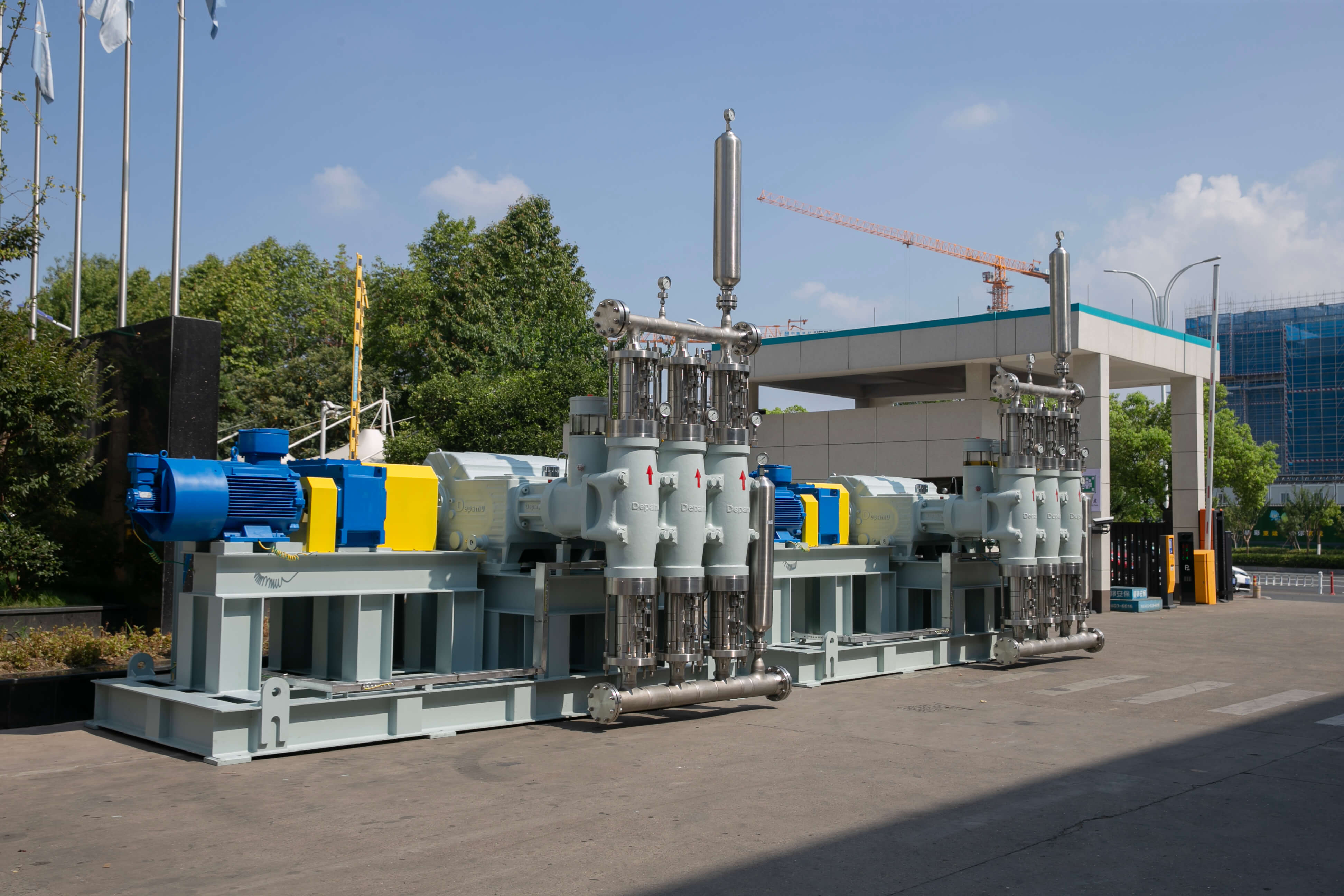
Introduction to the company's technological strength: The three core advantages of Depam
Depamp (Hangzhou) Pump Technology Co., Ltd., established in 2003, specializes in the research and development of high-end positive displacement pumps and fluid equipment, with an annual output value of approximately 500 million yuan. Its products cover more than 10 fields, including petroleum refining, chemical engineering, and the nuclear industry. The technological advantages of its high-pressure process tubular pumps are reflected in the following three aspects:
STEP 1: Full-scenario medium adaptability designIn response to different media characteristics, Depam offers material options such as 316L stainless steel, Hastelloy alloy, and duplex steel, and employs dynamic sealing technology to withstand a temperature range of -50°C to 450°C and a pressure range of 0-100 MPa. For instance, in a water treatment project at a nuclear power plant, its customized pump body successfully handled the strong corrosiveness of boric acid-containing media, operating without leakage for three years.
STEP 2: High-precision flow control technologyBy optimizing the ratio of plunger diameter to stroke and incorporating intelligent variable frequency drive, Depump's pumps achieve a flow repeatability of ±0.5% and a pressure stability better than ±2%. In the continuous polymerization reaction of a chemical enterprise, their pump bodies enhanced the dosing accuracy to twice the industry average and increased the product qualification rate to 99.2%.
STEP 3: Modular Design and Low Maintenance CostsThe pump body adopts a split-type structure, enabling quick replacement of key components such as plungers and sealing rings, reducing single maintenance time to within 2 hours. Meanwhile, the flow channel design has been optimized through CFD fluid simulation, resulting in a 15%-20% reduction in energy consumption compared to traditional products. Data from an oil and gas field project indicates that its pump body's total lifecycle cost is 23% lower than that of competing products.
FAQ Q&A Technical Selection Guide
Q1: How to select the pump type based on operating conditions?
A: It is necessary to consider the three key factors of medium characteristics, flow rate, and pressure comprehensively. For example, when transporting high-viscosity media (>1000 mPa·s), screw pumps or rotary pumps are preferred; if high pressure (>50 MPa) is required and the medium has low corrosiveness, high-pressure process reciprocating pumps can be selected. Depamp offers a flow rate range from 5 mL/min to 500 m³/h and a pressure range of 0-100 MPa, suitable for over 90% of industrial scenarios.
Q2: What is the process for non-standard customization?
A: Depamp's customized services consist of four steps: STEP 1: Medium analysis (pH value, viscosity, particle size, etc.); STEP 2: Working condition simulation (temperature and pressure fluctuation ranges); STEP 3: Material selection (matching from eight types of special alloys); STEP 4: Structural optimization (verifying sealing performance and flow channel efficiency through ANSYS simulation). In a lithium battery material conveying project for a new energy enterprise, its customized pump body successfully handled media containing solid-phase particles, achieving an operational lifespan 1.8 times the industry average.
Q3: How to evaluate the energy efficiency level of a pump?
A: Key indicators include volumetric efficiency (with >95% being excellent), specific power (kW/(m³/h)), and energy consumption per unit flow. The Depamu high-pressure pump achieves a volumetric efficiency of 98%, with a specific power 12% lower than the GB/T 26115-2010 standard. In a desulfurization project at a certain power enterprise, a single pump saves over 100,000 kWh of electricity annually.
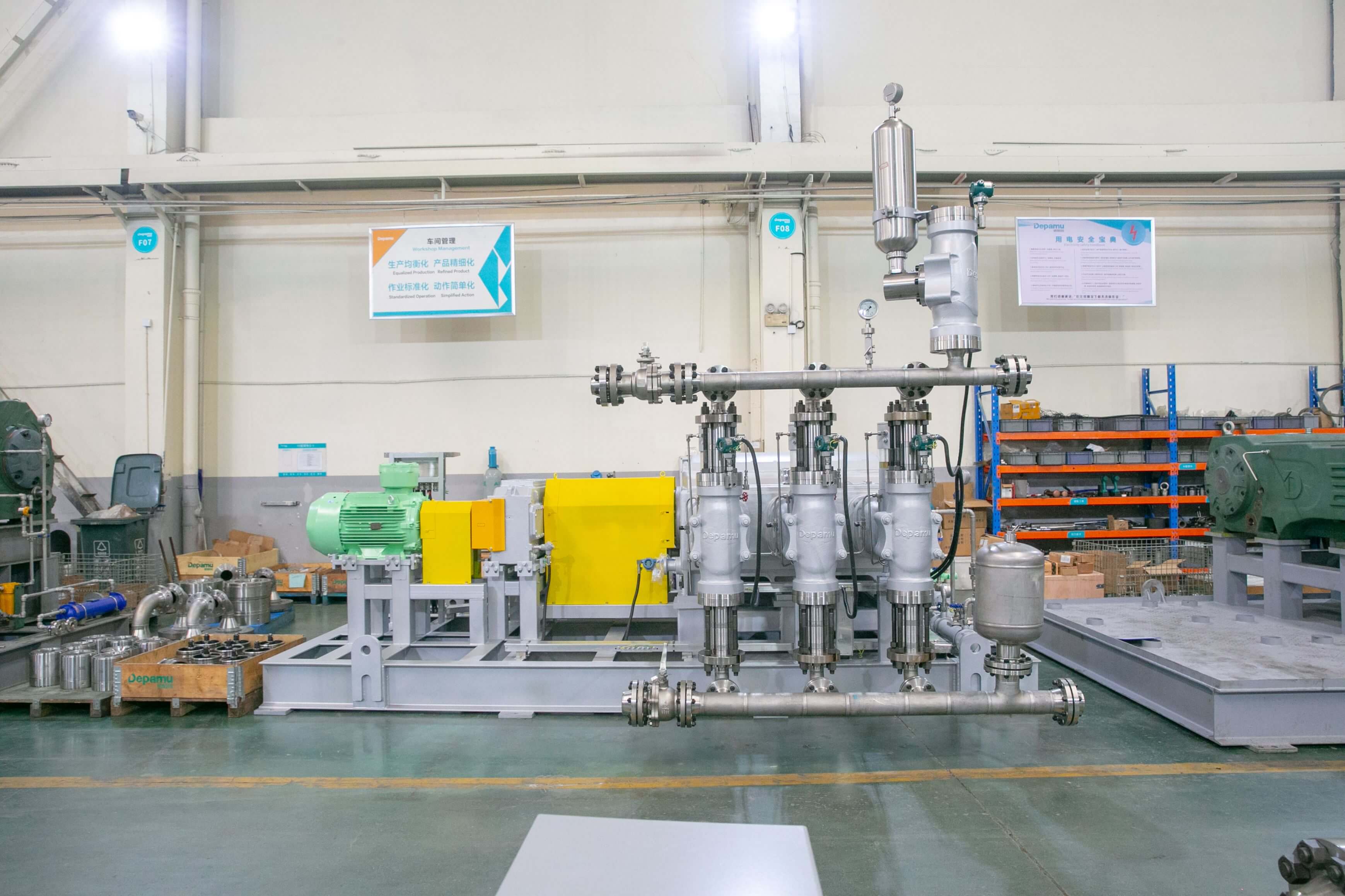
Reference for full text summary: Model selection should balance technical parameters and industry experience.
The selection of high-pressure process tubular pumps requires breaking away from the misconception of "relying solely on parameters" and necessitates a comprehensive decision-making approach that incorporates medium characteristics, process continuity requirements, and total lifecycle costs. With over 20 years of industry accumulation, Depam Pumps has established a complete technical system ranging from standard products to customized solutions, maintaining a leading market share in fields such as petroleum refining and chemical engineering. For more information, please visit the official website:www.depamufluid.comWhether for new projects or equipment upgrades, selecting a supplier with comprehensive technical capabilities is key to reducing selection risks and enhancing process stability.
Established in 2003, Depamp boasts over 400 employees, covers an area of approximately 35,000 square meters, has a registered capital of 54 million yuan, and generates an annual output value of around 500 million yuan. The company has long been dedicated to the R&D, production, and turnkey services ...
No. 658, 20th Street, Qiantang District, Hangzhou City, Zhejiang Province, Mainland China