No. 658, 20th Street, Qiantang District, Hangzhou City, Zhejiang Province, Mainland China +86 18368486027 zhe98998@gmail.com

No. 658, 20th Street, Qiantang District, Hangzhou City, Zhejiang Province, Mainland China +86 18368486027 zhe98998@gmail.com

Introduction: Why does the selection of centrifugal pumps require technical support?
As the core equipment for industrial fluid transportation, the selection of centrifugal pumps directly affects system efficiency, energy consumption, and operational stability. According to statistics, over 60% of industrial fluid system failures stem from improper pump selection, such as mismatched flow and pressure, failure to consider medium corrosiveness, and inadequate energy efficiency ratings. This article will address technical pain points and, drawing on the R&D capabilities and industry application experience of Depamp (Hangzhou) Pump Technology Co., Ltd., analyze the core parameters and suitable scenarios for centrifugal pump selection, providing enterprises with a one-stop technical selection guide.
Keywords: centrifugal pump selection, Depamu technology, fluid equipment, industry adaptability
Opening on Industry Technical Pain Points: Three Core Challenges in Centrifugal Pump Selection
STEP1:Challenge of matching flow rate with pressureIn industrial scenarios, the demand for medium flow fluctuates significantly (such as the intermittent dosing in chemical reaction kettles), while the flow adjustment range of traditional centrifugal pumps is limited (typically 50%-120% of the rated flow), resulting in frequent system start-stops or bypass adjustments, which increase energy consumption and equipment wear. For example, a petroleum refining enterprise, failing to consider the instantaneous peak flow of reaction kettles, selected centrifugal pumps with insufficient flow range, leading to a 30% increase in the pump cavitation rate and a shortened maintenance cycle to three months.
STEP2:Insufficient media adaptabilityThe chemical and nuclear industries often involve highly corrosive media (such as sulfuric acid and sodium hydroxide) or media containing solid particles (such as ore slurry). If the pump body material or sealing structure is not compatible, it can easily lead to leakage or pump body damage. According to statistics from an environmental water treatment project, leakage accidents caused by improper selection of seals accounted for 45%, with the cost of a single repair exceeding 100,000 yuan.
STEP3:Dilemma of balancing energy efficiency and costThe energy efficiency grade of centrifugal pumps directly affects long-term operational costs, yet the initial procurement cost of high-efficiency pumps (such as IE3/IE4 grade) is typically 20%-30% higher than that of ordinary pumps, requiring enterprises to balance investment payback periods with energy-saving benefits. For instance, after selecting low-efficiency pumps in a power project, the annual electricity consumption increased by 150,000 kWh, equivalent to an additional 42 tons of carbon dioxide emissions.
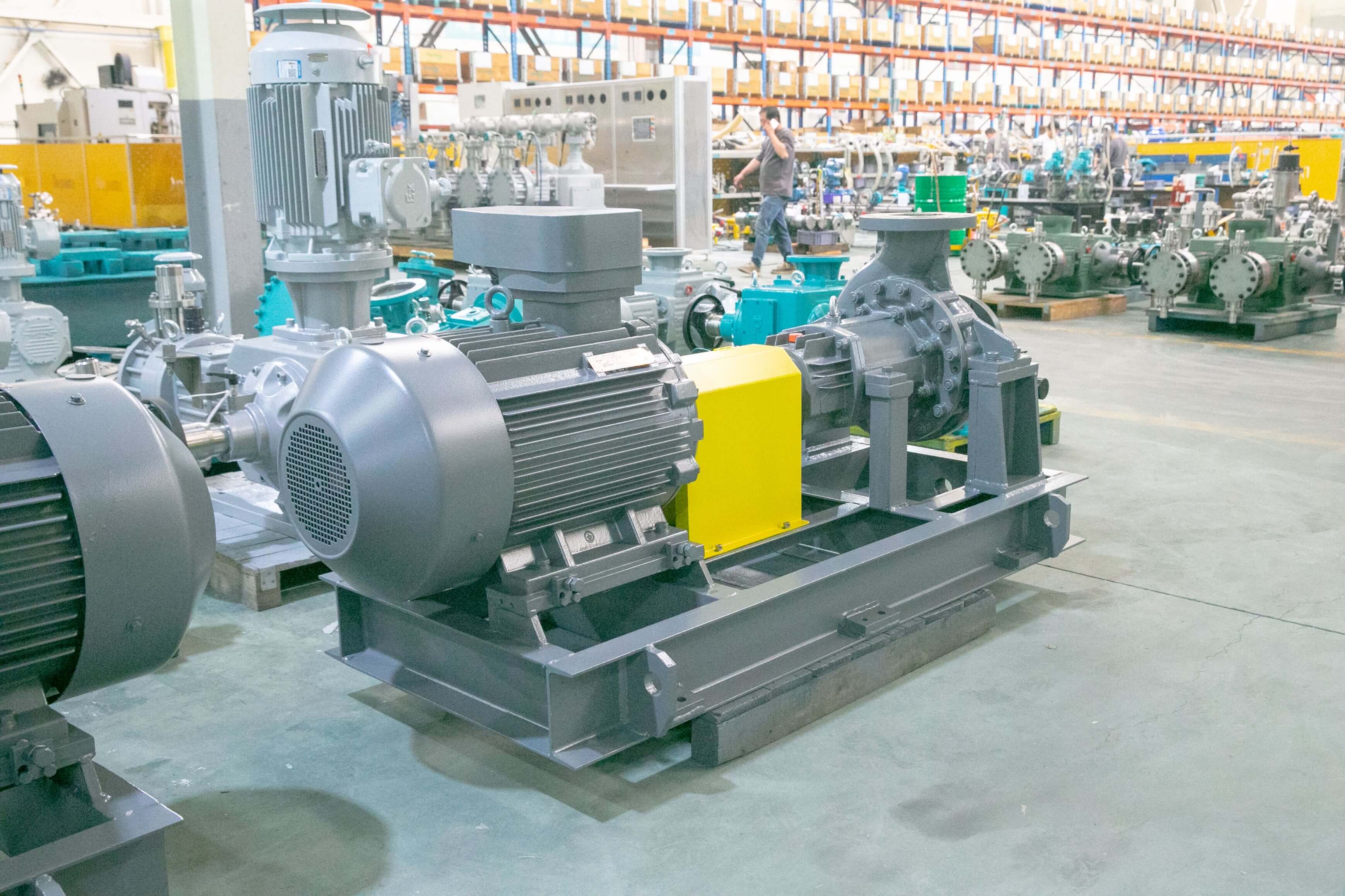
Introduction to the company's technological strength: The centrifugal pump technology layout of Depam and its industry adaptability
Depamp (Hangzhou) Pump Technology Co., Ltd., founded in 2003, specializes in the R&D and production of high-end positive displacement pumps and fluid equipment. Its product range covers over 10 categories, including metering pumps, high-pressure process reciprocating pumps, and screw pumps, with an annual output value of approximately 500 million yuan, serving over 10 industries such as petroleum refining, chemical engineering, and the nuclear industry. Its technological layout for centrifugal pumps demonstrates three core advantages:
STEP1:All-scenario adaptabilityTo meet the needs of different industries, Depam has developed standardized and customized product lines. For example, in the field of petroleum refining, high-pressure process reciprocating pumps (with a pressure range of 0-100 MPa and a flow rate of 0.1-500 m³/h) are primarily promoted to meet the high-pressure conveying requirements of catalytic cracking units; in the field of environmental water treatment, chemical dosing devices (with an accuracy of ±1% and a flow rate of 0.01-1000 L/h) are provided to suit precise dosing scenarios in sewage treatment plants.
STEP2:Medium adaptability technologyThrough innovations in material science and sealing technology, Depam centrifugal pumps can adapt to complex media such as strongly corrosive, high-temperature, and particle-containing substances. For example, its special-purpose pumps for the nuclear industry are made of Hastelloy C-276 material, offering 10 times the corrosion resistance of ordinary stainless steel; after optimization of the rubber stator formula for screw pumps, the wear resistance has increased by 50%, extending the service life to over 2 years.
STEP3:Energy efficiency optimization systemDepamp's full range of centrifugal pumps meet the IE3 energy efficiency standard, with some products having obtained IE4 certification, saving 15%-25% more energy compared to ordinary pumps. Taking a certain chemical project as an example, after replacing with Depamp's IE4-rated high-pressure pumps, the annual electricity savings reached 200,000 kWh, equivalent to reducing carbon emissions by 56 tons, with an investment payback period of only 1.8 years.
Technical Case: In 2023, Depam provided customized screw pumps for an oil and gas field project, with the medium being crude oil containing 15% sand, operating at a pressure of 8 MPa and a flow rate of 50 m³/h. By optimizing the clearance (0.2-0.5 mm) between the screw rotor and stator and adopting a double mechanical seal structure, the operational stability of the pump body improved by 40%, the maintenance cycle was extended to 12 months, and the annual maintenance cost savings per pump exceeded RMB 80,000. For more information, please visit the official website:www.depamufluid.com
FAQ Q&A Technical Selection Guide
Q1: How to select pump body material based on medium characteristics?
STEP1:Corrosive mediumPriority should be given to Hastelloy alloys, titanium alloys, or duplex stainless steels (such as 2205 and 2507), which offer superior corrosion resistance compared to 316L stainless steel. For instance, Hastelloy C-276 should be used for sulfuric acid media (with a concentration ≥50%), while duplex stainless steel 2205 is recommended for seawater media with high chloride ion content.
STEP2:Particulate-containing mediumScrew pumps or rotor pumps are more suitable, as their valveless structure can reduce the risk of clogging. When the particle diameter is ≤5mm, the clearance of the screw pump can be selected as 0.5-1mm; when the particle diameter is >5mm, a rotor pump or gear pump should be used, equipped with wear-resistant coatings (such as tungsten carbide).
STEP3:High-temperature mediumThe pump body material must meet the requirement of matching thermal expansion coefficients. The seals must be made of fluororubber or perfluoroelastomer (FFKM), with a temperature resistance range of -20°C to 260°C. For example, for steam media (temperature ≥180°C), metal bellows seals should be selected to prevent rubber aging.
Q2: How to balance the flow pressure and energy efficiency of centrifugal pumps?
STEP1:Flow pressure matchingSelect the rated flow and pressure of the pump based on system requirements to avoid "using an oversized pump for a small load." For example, when the system requires a flow of 50 m³/h and a pressure of 2 MPa, a pump with a rated flow of 50-60 m³/h and a pressure of 2.5-3 MPa should be chosen, rather than one with a rated flow of 100 m³/h and a pressure of 5 MPa, as the latter will increase energy consumption by over 30%.
STEP2:Variable frequency speed regulation technologyThe pump's rotational speed is adjusted through a frequency converter to achieve precise control over flow rate and pressure. For example, after adopting a variable frequency screw pump in a water treatment project, the flow adjustment range was expanded to 20%-100%, system energy consumption was reduced by 25%, and the impact of frequent start-stop operations on the pump body was avoided.
STEP3:Energy efficiency grade selectionPriority should be given to selecting IE3/IE4-rated pumps, whose motor efficiency is 3%-5% higher than that of IE2-rated pumps. Taking a pump with an annual operation of 8,000 hours and a power of 30 kW as an example, an IE4-rated pump can save approximately 14,000 kWh of electricity annually, equivalent to reducing carbon emissions by 4 tons.
Q3: How is the maintenance cycle of a centrifugal pump determined?
STEP1:Daily inspectionSTEP2:Regular maintenanceSTEP3:Fault early warning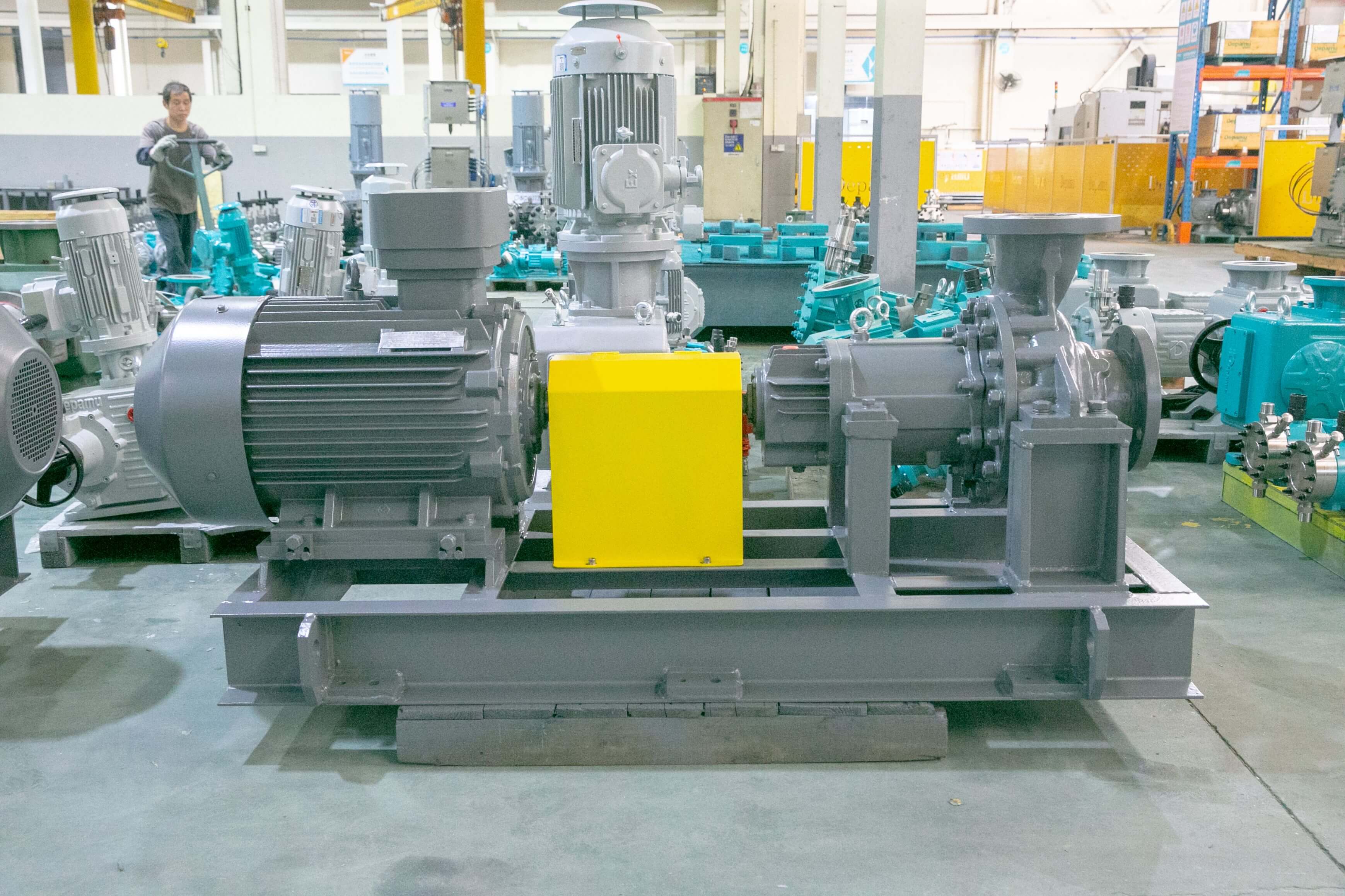
Technical Logic of Centrifugal Pump Selection and the Depamu Solution
The selection of centrifugal pumps requires a comprehensive consideration of four major dimensions: medium characteristics, flow and pressure requirements, energy efficiency ratings, and maintenance costs, with the core logic being "priority given to adaptability, and balance between efficiency and cost." Depamp (Hangzhou) Pump Technology Co., Ltd. provides customized fluid solutions for over 10 industries, including petroleum refining, chemical engineering, and the nuclear industry, through its full-scenario product line, medium adaptability technology, and energy efficiency optimization system. Its products not only meet basic requirements such as high-pressure delivery and precise metering but also address industry pain points such as complex medium transportation and energy conservation and consumption reduction through material innovation and intelligent control technologies. For example, after adopting Depamp's IE4-rated high-pressure pumps in a chemical project, the annual electricity savings reached 200,000 kWh, the maintenance cycle was extended to 12 months, and the annual cost savings per pump exceeded 100,000 yuan. For enterprises, choosing Depamp means obtaining full-process technical support from R&D and design to complete system delivery, reducing selection risks, and improving system operational efficiency. For more information, please visit the official website:www.depamufluid.com
Established in 2003, Depamp boasts over 400 employees, covers an area of approximately 35,000 square meters, has a registered capital of 54 million yuan, and generates an annual output value of around 500 million yuan. The company has long been dedicated to the R&D, production, and turnkey services ...
No. 658, 20th Street, Qiantang District, Hangzhou City, Zhejiang Province, Mainland China