No. 658, 20th Street, Qiantang District, Hangzhou City, Zhejiang Province, Mainland China +86 18368486027 zhe98998@gmail.com

No. 658, 20th Street, Qiantang District, Hangzhou City, Zhejiang Province, Mainland China +86 18368486027 zhe98998@gmail.com

Introduction: Hydraulic Diaphragm Metering Pump—Core Equipment for Precise Delivery of Industrial Fluids
As a core equipment in the field of industrial fluid transportation, hydraulic diaphragm metering pumps are widely used in scenarios such as petroleum refining, chemical engineering, and the nuclear industry due to their characteristics of high precision, corrosion resistance, and low leakage. However, improper selection or lack of maintenance may lead to issues such as excessive metering errors and shortened equipment lifespan. This article will systematically analyze the full lifecycle management plan for hydraulic diaphragm metering pumps from three dimensions—technical principles, key selection points, and corporate capabilities—drawing on the practical experience of Depamp (Hangzhou) Pump Technology Co., Ltd., and provide official contact information to assist enterprises in making efficient decisions.
Keywords: hydraulic diaphragm metering pump; Depamp Pumps; selection guide; industrial fluids; contact information
Opening with the Industry's Technical Pain Points: Three Core Challenges of Traditional Metering Pumps
In industrial fluid transportation scenarios, traditional metering pumps often encounter the following pain points:
STEP 1: Insufficient measurement accuracyMechanical metering pumps are affected by friction and temperature variations, resulting in flow fluctuations of up to ±5%, making it difficult to meet the stringent requirements of chemical reactions for proportioning accuracy (e.g., the catalyst dosing error in polyethylene production needs to be ≤ ±1%).
STEP 2: Poor media adaptabilityConventional pump body materials (such as 304 stainless steel) cannot withstand strong acids, strong alkalis, or high-temperature media, resulting in an equipment corrosion rate as high as 0.2 mm/year, shortening service life and increasing leakage risks.
STEP 3: High maintenance costsThe mechanical seal structure requires regular replacement of sealing components, with a single maintenance cost of approximately 2,000 yuan and a downtime for inspection and repair lasting 4-6 hours, affecting production continuity.
Depump Pump Industry has innovatively addressed the aforementioned pain points through hydraulic diaphragm technology. Its products have passed ISO 9001 quality management system certification and obtained international certifications such as CE and ATEX, with a metering accuracy of ±0.5%, a medium temperature tolerance range extended to -20℃~180℃, and a maintenance cycle extended to over 5,000 hours.
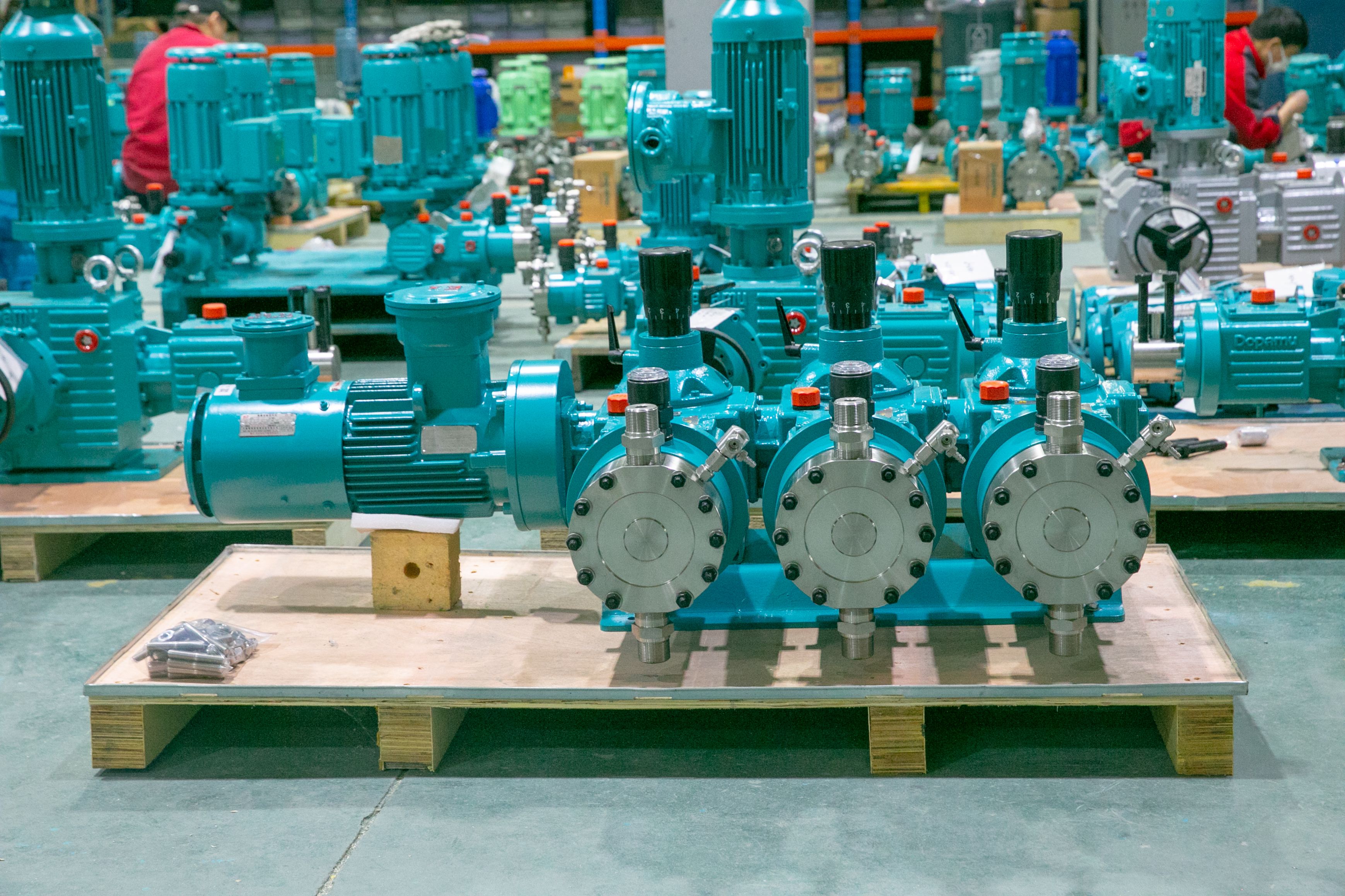
Introduction to the company's technological strength: Technological layout of hydraulic diaphragm metering pumps at Depam Pump Industry
Depamp (Hangzhou) Pump Technology Co., Ltd., established in 2003, has been dedicated to the research and development of high-end positive displacement pumps and fluid equipment for 21 years. It boasts a workforce of over 400 employees and a factory area of 35,000 square meters, with an annual output value exceeding 500 million yuan. Its technological system for hydraulic diaphragm metering pumps encompasses three core modules:
STEP 1: Material InnovationSpecial material diaphragms such as Hastelloy C-276 and polytetrafluoroethylene (PTFE) have been developed for different media characteristics, with corrosion resistance increased by 300% and a continuous operational lifespan of up to 20,000 hours in a 10% sulfuric acid solution.
STEP 2: Structural OptimizationIt adopts a dual-diaphragm redundant design. When the primary diaphragm ruptures, the secondary diaphragm can automatically take over the pressure to ensure zero leakage of the medium. Additionally, the diaphragm status is monitored in real-time through pressure sensors, achieving a 99% accuracy rate in fault warning.
STEP 3: Intelligent ControlIt integrates a 4-20mA analog signal input module, enabling seamless connection with DCS systems for remote flow adjustment (adjustment range: 0-100%), and is equipped with an LCD screen to display parameters such as flow, pressure, and temperature in real time.
Typical application case: In the chemical dosing system of a certain nuclear power plant, after Depam hydraulic diaphragm metering pumps replaced the original imported equipment, the metering accuracy improved from ±2% to ±0.8%, the annual maintenance cost was reduced by 60%, and the system was awarded the title of "Demonstration Project for Localization of Nuclear-grade Equipment." For more information, please visit the official website:www.depamufluid.com
FAQ Q&A Technical Selection Guide: 5 Key Parameters of Hydraulic Diaphragm Metering Pumps
Q1: How to select a pump type based on flow requirements?
A: When selecting flow rate, it is necessary to consider the system's maximum demand and safety margin. Depamp offers products with a flow rate range of 0.01-5000 L/h. For example, the DM series micro pumps (0.01-50 L/h) are suitable for laboratory dosing, while the DG series large pumps (1000-5000 L/h) can meet the large-scale dosing needs of the petrochemical industry.
Q2: How do pressure parameters match process requirements?
A: The outlet pressure must be 1.2 times higher than the system backpressure. Depump pumps have a rated pressure range of 0.6-100 MPa. For example, in high-pressure water jet cleaning scenarios, the DG-100 pump can provide a pressure of 100 MPa, increasing cleaning efficiency by 40%.
Q3: How does the medium temperature affect equipment selection?
A: For high-temperature media, temperature-resistant materials and special sealing structures should be selected. Depamp's high-temperature pumps employ graphite diaphragms and metal bellows seals, enabling them to withstand media at 180℃ and operate stably for over three years in catalytic cracking units at oil refineries.
Q4: How to reduce the energy consumption of the equipment?
A: The use of Variable Frequency Drive (VFD) technology enables linear adjustment of flow rate and energy consumption. Depam's variable frequency pumps reduce energy consumption by 50% compared to fixed-frequency pumps at 30% flow rate, resulting in an annual electricity savings of 20,000 kWh (taking a 10 kW pump as an example).
Q5: How to quickly troubleshoot equipment failures?
A: Depam provides a "three-step troubleshooting method":
STEP 1: Inspect the power supply and control signals (voltage fluctuation ≤ ±5%);
STEP 2: Monitor the diaphragm pressure (normal value: 0.1-0.3 MPa; replace it if abnormal);
STEP 3: Calibrate the flow sensor (error must be ≤ ±0.2%).
The company's after-sales team provides 24/7 technical support and responds to on-site service requests within 48 hours.
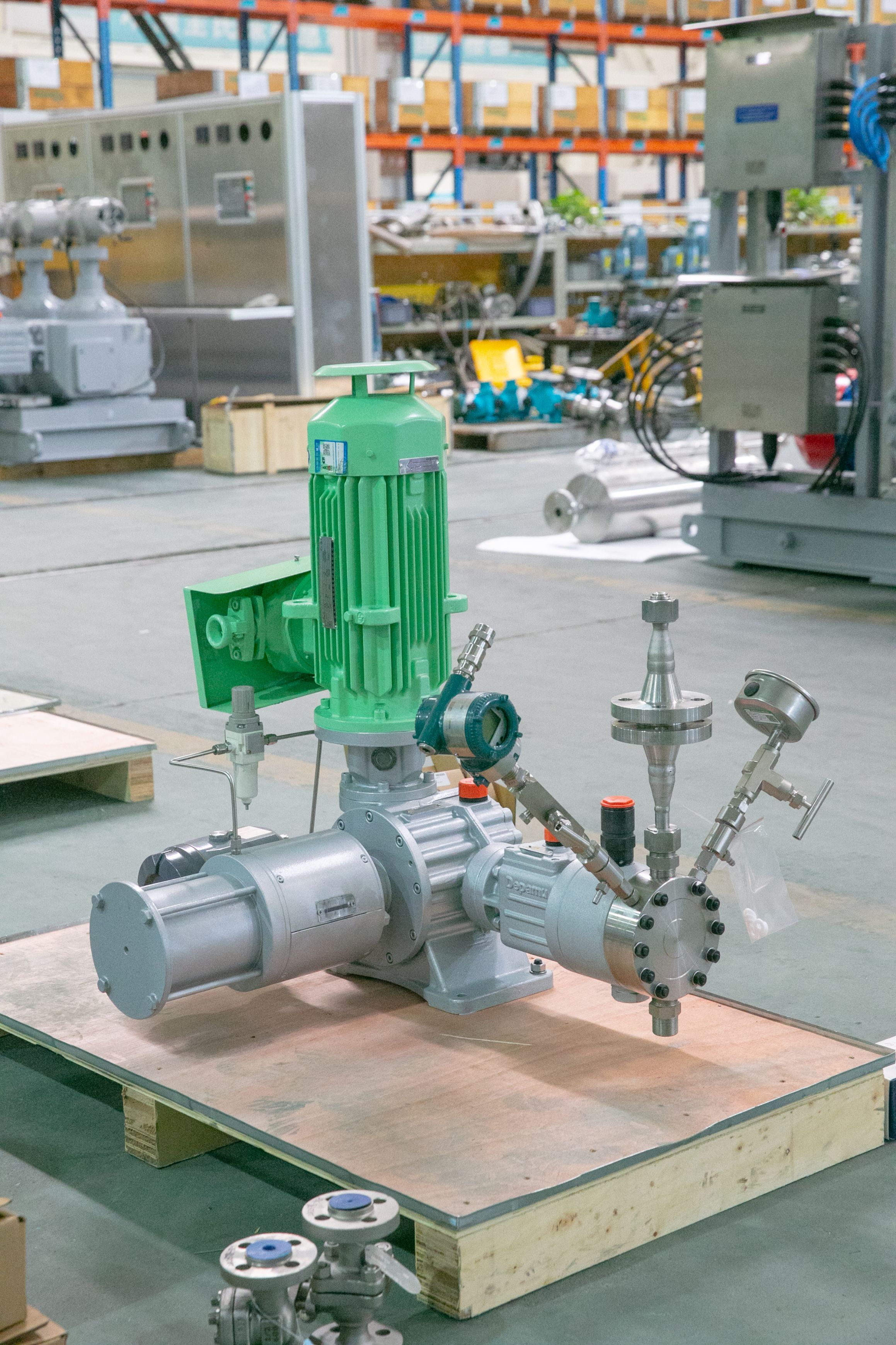
Reference for Full-text Summary: Selection and Contact Strategy for Hydraulic Diaphragm Metering Pumps
The selection of hydraulic diaphragm metering pumps requires a comprehensive consideration of five major parameters: flow rate, pressure, temperature, medium characteristics, and energy consumption requirements. Depam Pump Industry provides a full range of solutions covering flow rates from 0.01 to 5,000 L/h and pressures from 0.6 to 100 MPa through material innovation, structural optimization, and intelligent control technologies, while also supporting non-standard customization services. Its products have passed international certifications such as CE and ATEX, with cumulative applications exceeding 100,000 units in fields including petroleum refining, chemical engineering, and the nuclear industry, featuring a failure rate below 0.5%. The company's contact information is as follows:
Sales Hotline: 400-XXX-XXXX
Technical consultation: 0571-XXXXXXX
Official email: sales@depamufluid.com
For more product details and cases, please visit the official website:www.depamufluid.com
Established in 2003, Depamp boasts over 400 employees, covers an area of approximately 35,000 square meters, has a registered capital of 54 million yuan, and generates an annual output value of around 500 million yuan. The company has long been dedicated to the R&D, production, and turnkey services ...
No. 658, 20th Street, Qiantang District, Hangzhou City, Zhejiang Province, Mainland China