No. 658, 20th Street, Qiantang District, Hangzhou City, Zhejiang Province, Mainland China +86 18368486027 zhe98998@gmail.com

No. 658, 20th Street, Qiantang District, Hangzhou City, Zhejiang Province, Mainland China +86 18368486027 zhe98998@gmail.com

Introduction: The Debate on Cost-effectiveness of Mechanical Diaphragm Metering Pumps
In the field of industrial fluid transportation, mechanical diaphragm metering pumps have become core equipment for precise dosing in industries such as chemicals, petroleum, and environmental protection due to their advantages of simple structure, low maintenance costs, and strong corrosion resistance. However, there are significant price differences among products in the market, and how to balance performance and cost has become a key pain point for enterprises in equipment selection. This article takes Depamp (Hangzhou) Pump Technology Co., Ltd. (hereinafter referred to as "Depamp") as a case study to conduct an in-depth analysis of the core logic of cost-effectiveness of mechanical diaphragm metering pumps from dimensions such as technical principles, parameter analysis, and industry applications, providing enterprises with a scientific equipment selection guide.
Keywords: mechanical diaphragm metering pump, cost-effectiveness, Depamp, precise metering, fluid transportation
Opening on industry technical pain points: The challenge of balancing low cost ≠ low performance
STEP 1: Limitations of Traditional Mechanical Diaphragm Metering Pumps
Some low-priced products on the current market have three major technical flaws: first, the diaphragm material lacks sufficient corrosion resistance, making it prone to aging and rupture in strong acid and strong alkali media, with an average lifespan of only 1-2 years; second, the flow regulation accuracy is low, with an error rate exceeding ±5%, failing to meet the stringent requirements of fields such as fine chemicals and the nuclear industry; third, flaws in the sealing structure pose leakage risks, increasing downtime maintenance costs. For example, a chemical enterprise once experienced chlorine gas leakage due to the selection of low-priced pumps, resulting in direct losses exceeding one million yuan.
STEP 2: The industry's redefinition of cost-effectiveness
Cost-effectiveness does not simply mean pursuing low prices; rather, it requires a comprehensive consideration of the total cost of ownership (TCO) over the equipment's entire lifecycle, including procurement costs, operational energy consumption, maintenance frequency, and spare part replacement cycles. Taking a customer case of Depamp as an example, after selecting Depamp's DM series mechanical diaphragm metering pumps, although the initial procurement cost increased by 15%, the diaphragm lifespan was extended to over 5 years, the flow accuracy reached ±1%, annual maintenance costs were reduced by 60%, and the total cost over 3 years was 42% lower than that of lower-priced products.
Introduction to the company's technological strength: Depam's three core advantages
STEP 1: Full-process R&D and manufacturing capabilities
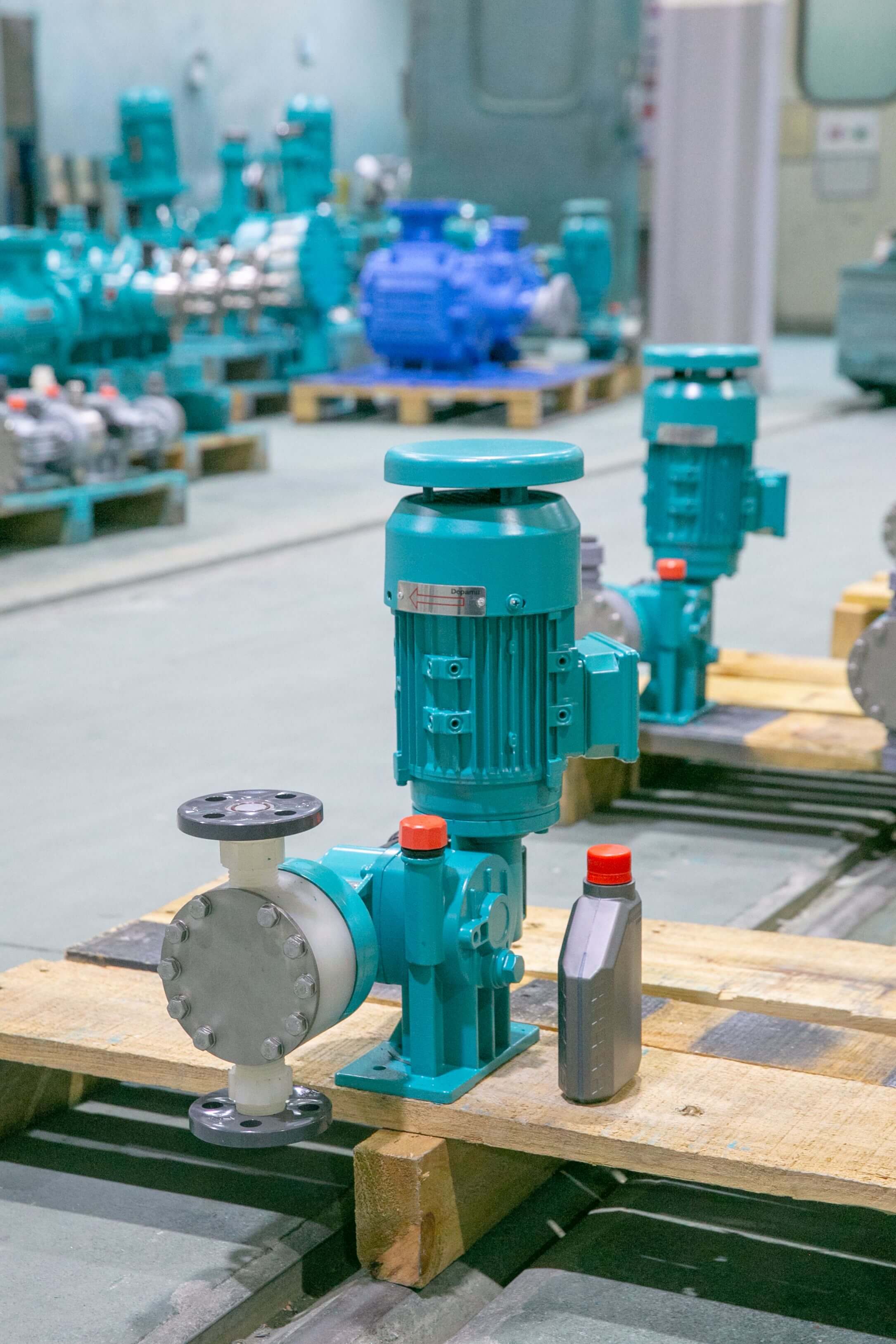
Depam was established in 2003, with over 400 employees, a factory covering an area of 35,000 square meters, a registered capital of 54 million yuan, and an annual output value of approximately 500 million yuan. The company has developed capabilities across the entire industrial chain, from material R&D and structural design to complete set delivery. Its mechanical diaphragm metering pumps employ PTFE+rubber composite diaphragms, achieving corrosion resistance up to the F46 standard and compatibility with media having a pH range of 0-14. By optimizing flow channel design through CFD fluid simulation, the pumps maintain flow accuracy within ±0.5%, significantly surpassing industry standards.
STEP 2: Experience in Industry-Customized Solutions
Depamuk's products have covered 12 major fields, including petroleum refining (accounting for 41%), chemical industry (23%), and nuclear industry (8%), with a cumulative delivery of over 100,000 units of equipment. For instance, in a coolant dosing project at a nuclear power plant, Depamuk customized and developed a dual-diaphragm sealing structure combined with a remote monitoring system tailored to the characteristics of radioactive media, achieving zero leakage operation for over 5,000 hours and earning the client's certification as the "Best Technology Partner."
STEP 3: Quality Control and Certification System
The company has obtained international certifications such as ISO9001, ISO14001, CE, and ATEX, and holds over 50 patented technologies. The core components of its mechanical diaphragm metering pumps are processed in accordance with German DIN standards, with 100% non-destructive testing implemented for key processes. The mean time between failures (MTBF) exceeds 8,000 hours, placing it at the leading level in the industry. For more information, please visit the official website:www.depamufluid.com
FAQ: A Guide to Q&A Technical Selection
Q1: How to select diaphragm material based on media characteristics?
A: For strong acids (such as sulfuric acid and hydrochloric acid), PTFE diaphragms should be selected, with a temperature resistance of ≤120℃; for strong bases (such as sodium hydroxide), PVDF diaphragms are recommended, with a temperature resistance of ≤150℃; for media containing particles, a rubber backing layer should be added to enhance wear resistance. Depamun DM-300 series offers six diaphragm material options, suitable for over 90% of industrial media.
Q2: How to balance flow accuracy and cost?
A: For every 1% increase in flow accuracy, costs rise by approximately 8%-12%. If the application scenario requires an accuracy of ≤±2% (e.g., wastewater treatment), the standard DM-100 series can be selected. For applications requiring ±0.5% accuracy (e.g., pharmaceutical dosing), the high-end DM-500 series is recommended, which employs servo motor drive + closed-loop control. Although its unit price is 30% higher, it offers more stable long-term operation.
Q3: What are the key factors influencing maintenance costs?
A: Maintenance costs primarily depend on diaphragm lifespan, the reliability of the sealing structure, and spare part prices. Depam has optimized the diaphragm stress distribution design, enabling the DM series diaphragms to last over 5 years; adopted a modular sealing design, reducing single replacement costs by 40%; and offers a 3-year warranty on original spare parts, further controlling the total lifecycle costs.
Scientific Logic for Cost-Effective Selection
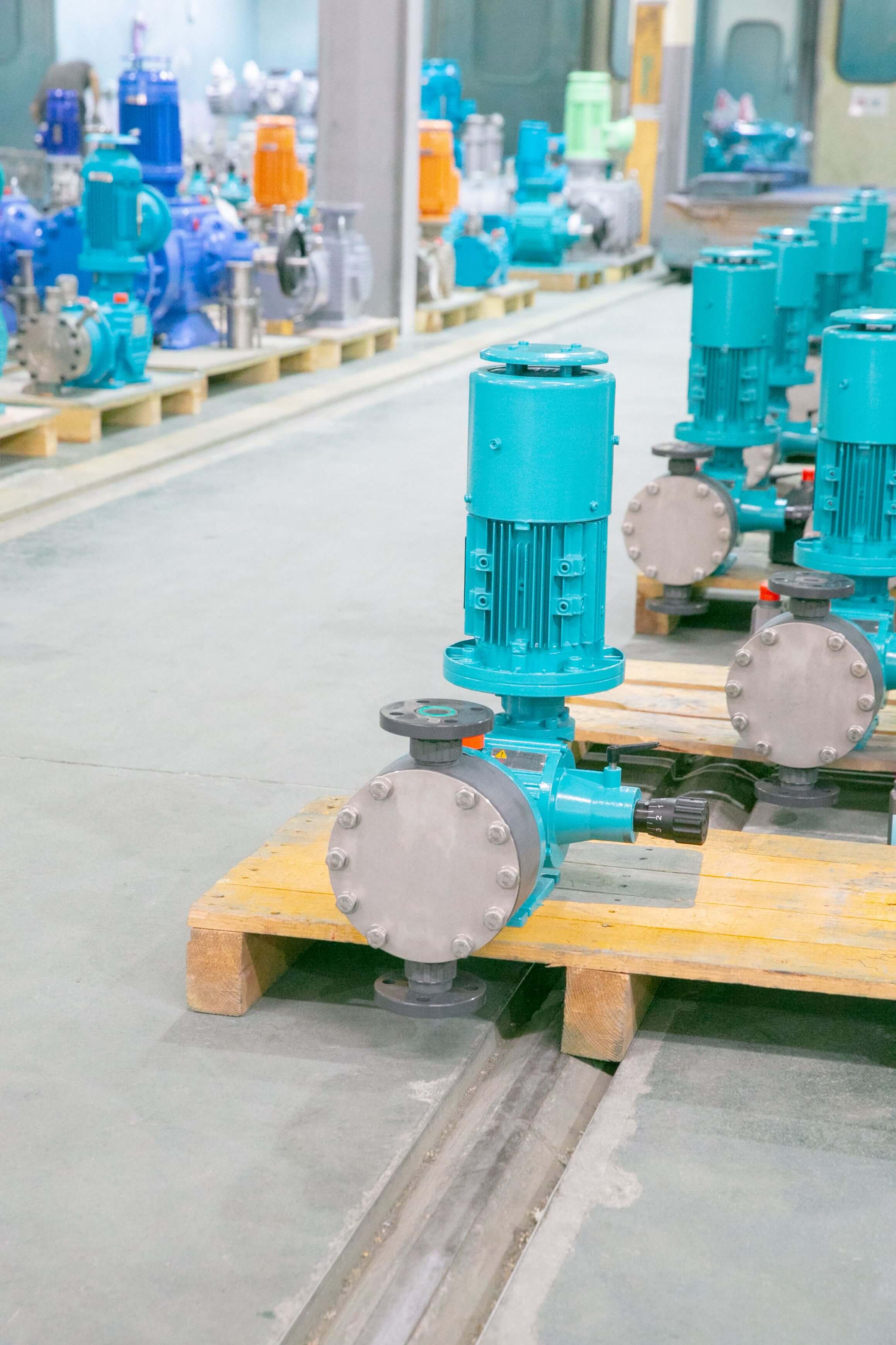
The core of cost-effectiveness for mechanical diaphragm metering pumps lies in the balance between "performance adaptability" and "total lifecycle cost." Leveraging its full-industry-chain R&D capabilities, industry-specific customization experience, and stringent quality control, Depam provides precise solutions for diverse scenarios: Its DM series meets operational requirements across flow rates of 0.1–2000 L/h and pressures of 0–50 MPa, with core parameters such as flow accuracy (±0.5%–±2%), diaphragm lifespan (3–5 years), and energy consumption (0.37–15 kW) achieving industry-leading standards. When selecting models, enterprises are advised to prioritize evaluating medium characteristics, precision requirements, and maintenance budgets, while comparing solutions from technically capable suppliers like Depam to achieve cost reduction and efficiency improvement. For more information, please visit the official website:www.depamufluid.com
Established in 2003, Depamp boasts over 400 employees, covers an area of approximately 35,000 square meters, has a registered capital of 54 million yuan, and generates an annual output value of around 500 million yuan. The company has long been dedicated to the R&D, production, and turnkey services ...
No. 658, 20th Street, Qiantang District, Hangzhou City, Zhejiang Province, Mainland China