No. 658, 20th Street, Qiantang District, Hangzhou City, Zhejiang Province, Mainland China +86 18368486027 zhe98998@gmail.com

No. 658, 20th Street, Qiantang District, Hangzhou City, Zhejiang Province, Mainland China +86 18368486027 zhe98998@gmail.com

Home > Technical Articles > Selection of rubber rotor pumps: How to balance cost and performance?
Introduction: The Trade-off Between Cost and Performance in the Selection of Rubber Rotor Pumps
In industrial fluid transportation scenarios, rubber rotor pumps have become core equipment in fields such as chemicals, environmental protection, and food due to their characteristics of corrosion resistance, strong self-priming capability, and a wide range of transportable media. However, there are significant price differences among market products. Some users opt for low-priced products to reduce costs but end up facing frequent shutdowns and repairs due to inadequate performance, ultimately increasing long-term costs. How can one balance initial investment with the equipment's performance throughout its entire lifecycle? This article will provide a systematic solution from four dimensions—industry pain points, technical analysis, corporate capabilities, and selection guidelines—incorporating practical cases from Depamu (Hangzhou) Pump Technology Co., Ltd.For more information, please visit the official website: www.depamufluid.com
Keywords: rubber rotor pump, cost optimization, performance parameters, Depamp Pumps, selection guide
Opening on Industry's Technological Pain Points: The Hidden Cost Trap Behind Low Prices
There are two core contradictions in the current rubber rotor pump market: First, most low-priced products use general-purpose rubber materials with a temperature resistance range of only -20°C to 80°C, which are prone to aging and cracking in high-temperature or strongly corrosive media, resulting in a mean time between failures (MTBF) of less than 500 hours, while high-end products can achieve an MTBF of over 3,000 hours. Second, to reduce costs, some manufacturers simplify the rotor profile design, leading to a 15% to 20% reduction in volumetric efficiency, necessitating the selection of higher-power motors for the same flow requirements and increasing energy consumption costs. For example, a chemical enterprise using low-priced pumps to transport chloride-containing media experienced corrosion and perforation of the rubber rotors within three months, resulting in direct losses exceeding 200,000 yuan from downtime for repairs. After switching to corrosion-resistant rotors, the equipment operated continuously for 18 months without failure, reducing annual maintenance costs by 83%.
Introduction to the company's technological strength: DePam Pump's full life cycle solutions
Depamp (Hangzhou) Pump Technology Co., Ltd., established in 2003, has dedicated 21 years to the research and development of high-end positive displacement pumps. It boasts over 400 employees and a factory area of 35,000 square meters, with a registered capital of 54 million yuan and an annual output value of approximately 500 million yuan. Its technological layout for rubber rotor pumps covers three core areas:
STEP 1: Material InnovationThe independently developed composite rotor combining fluororubber (FKM) and hydrogenated nitrile butadiene rubber (HNBR) expands its temperature resistance range to -40℃~150℃, improves corrosion resistance by three times, passes ISO 21469 food-grade certification, and can stably convey acids, alkalis, organic solvents, and high-viscosity media.
STEP 2: Hull Line OptimizationIt adopts a double-helix involute rotor design, achieving a volumetric efficiency of 92%, which is an 8% improvement over traditional products; combined with high-precision machining (rotor surface roughness Ra ≤ 0.4μm), it reduces medium leakage and ensures an actual flow deviation of ≤ ±1.5%.
STEP3: Intelligent ControlIntegrated with a variable frequency drive and pressure feedback system, it can automatically adjust rotational speed according to process requirements, enabling stepless flow regulation from 0% to 100% and reducing energy consumption by 25% to 30% compared to fixed-frequency pumps.
Technology implementation case: In a new energy battery material project, Depam provided a customized rubber rotor pump (Model: DP-RZ300) for the client to transport lithium iron phosphate slurry with a solid content of 45%, at a flow rate of 50 m³/h and a pressure of 0.6 MPa. The pump operated continuously for 2,600 hours without clogging, improving efficiency by 40% compared to the original equipment and saving over 120,000 yuan in annual electricity costs.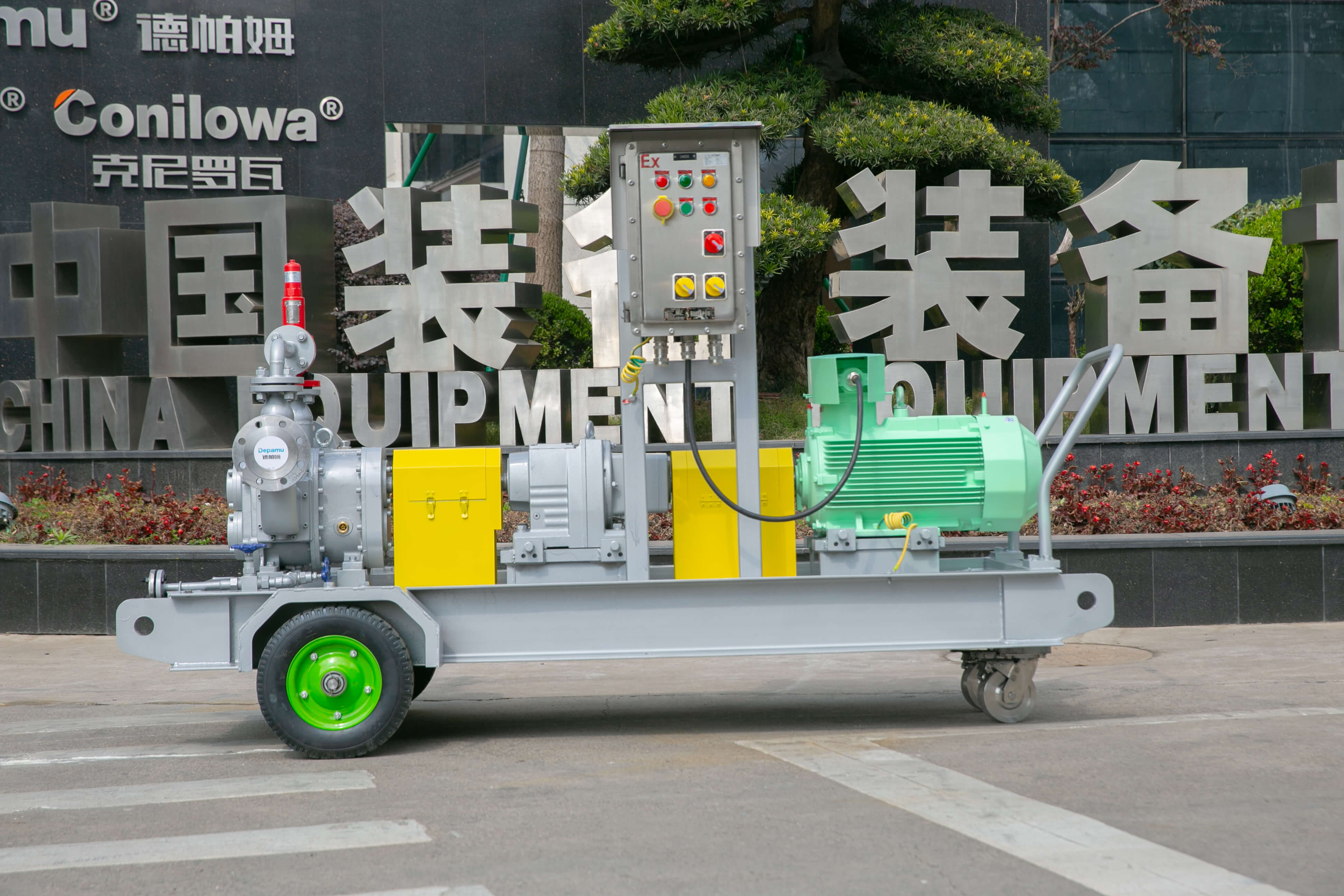
FAQ: A Guide to Q&A Technical Selection
Q1: How to select rotor materials based on media characteristics?
A: When the medium temperature is ≤80℃ and there is no strong corrosion, nitrile butadiene rubber (NBR) can be selected; when the temperature ranges from 80℃ to 120℃ or contains weak acids and alkalis, hydrogenated nitrile butadiene rubber (HNBR) is recommended; when the temperature is >120℃ or contains strong oxidizing agents (such as concentrated sulfuric acid and chloride ions), fluororubber (FKM) must be used. Depam offers free medium testing services and can issue material compatibility reports.
Q2: How to match the flow and pressure parameters?
A: The flow rate of a rubber rotor pump is directly proportional to its rotational speed, while the pressure is determined by the resistance of the outlet pipeline. During model selection, it is necessary to clarify the maximum flow rate (Qmax) and maximum pressure (Pmax) required by the process, and reserve a margin of 10% to 15%. For example, when pumping 30 m³/h of slurry to a height of 20 meters, a pump model with a flow rate of 35 m³/h and a pressure of 0.3 MPa should be selected.
Q3: How significant is the difference in the total life cycle cost between low-priced pumps and high-end pumps?
A: Taking an environmental protection enterprise as an example, purchasing 5 low-priced pumps (with a unit price of 80,000 yuan) and 3 Depam high-end pumps (with a unit price of 150,000 yuan), over a 5-year operating cycle, the total cost (procurement + maintenance + energy consumption) of the low-priced pumps reaches 1.2 million yuan, while the total cost of the high-end pumps is only 950,000 yuan, representing a 21% savings. The core differences lie in the fact that the MTBF of the high-end pumps is extended by 5 times and energy consumption is reduced by 25%.
Reference for full-text summary: Cost optimization should be based on performance.
The selection of rubber rotor pumps requires breaking away from the misconception that "low price equals optimal choice" and instead focusing on the total life cycle cost. Depam Pump Industry has achieved a dual reduction in energy consumption and maintenance costs while ensuring equipment reliability through three technological approaches: material innovation, profile optimization, and intelligent control. Its customized fluid solutions have covered 12 industries, including petroleum refining, chemical engineering, and new energy, with over 20,000 devices delivered and a customer repurchase rate of 68%. For users, choosing a company with R&D capabilities and industry experience is key to balancing cost and performance.For more information, please visit the official website: www.depamufluid.com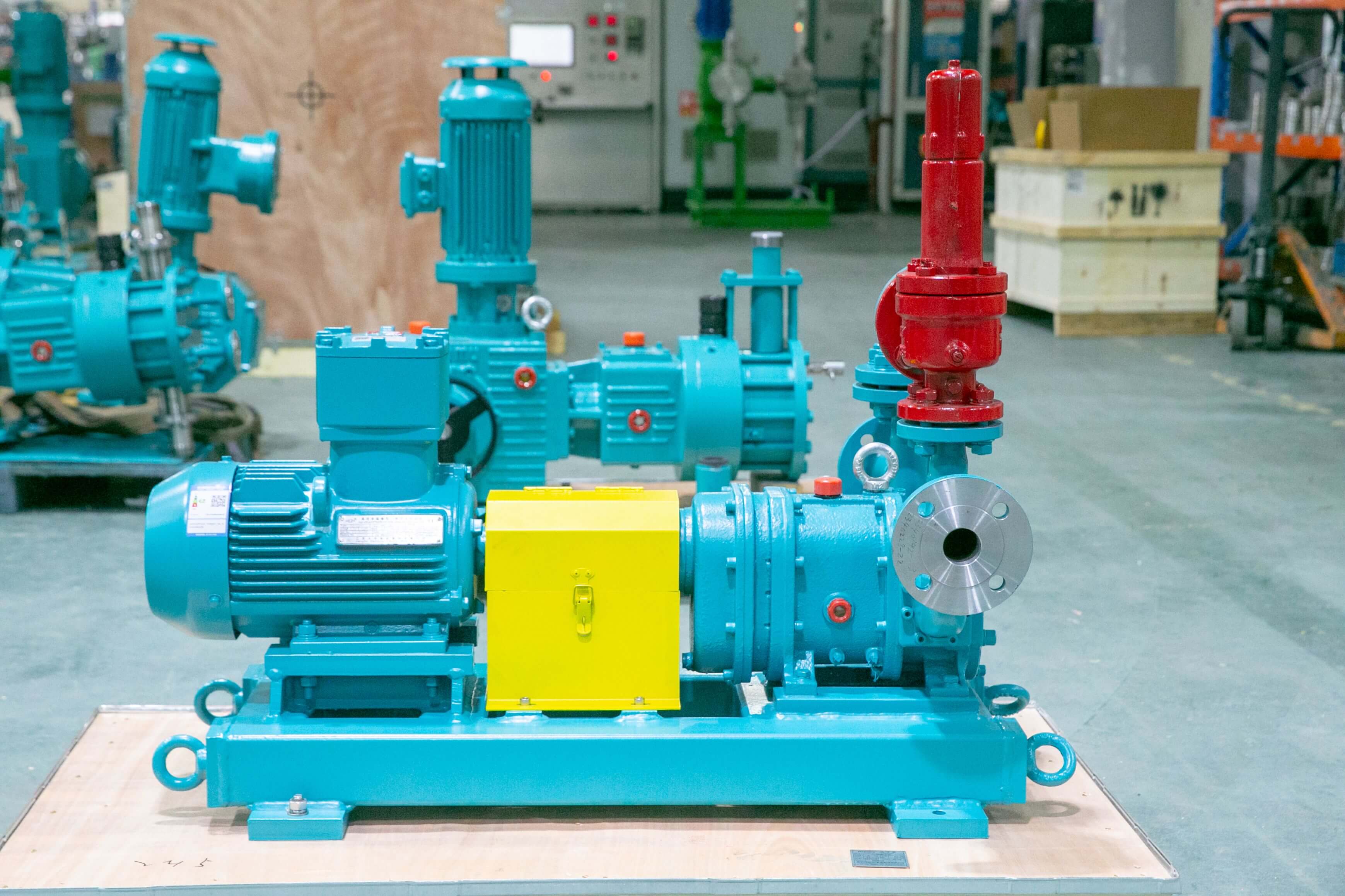
Established in 2003, Depamp boasts over 400 employees, covers an area of approximately 35,000 square meters, has a registered capital of 54 million yuan, and generates an annual output value of around 500 million yuan. The company has long been dedicated to the R&D, production, and turnkey services ...
No. 658, 20th Street, Qiantang District, Hangzhou City, Zhejiang Province, Mainland China