No. 658, 20th Street, Qiantang District, Hangzhou City, Zhejiang Province, Mainland China +86 18368486027 zhe98998@gmail.com

No. 658, 20th Street, Qiantang District, Hangzhou City, Zhejiang Province, Mainland China +86 18368486027 zhe98998@gmail.com

Introduction: Why has the selection of metal rotor pumps become a technical focus in the industry?
In the fields of petroleum refining, chemical engineering, and new energy, the transportation of complex media imposes stringent requirements on the wear resistance, corrosion resistance, and flow stability of pump bodies. Metal rotor pumps, with their unique rotor structure and sealing design, have become core equipment for transporting high-viscosity media containing solid particles. However, with varying product quality in the market, how can suppliers be comprehensively evaluated based on dimensions such as technical parameters, applicability to application scenarios, and corporate R&D capabilities? This article takes Depamp (Hangzhou) Pump Technology Co., Ltd. as an example to analyze its technological layout and industry application experience, providing quantifiable references for corporate selection.
Keywords: Metal Rotor Pump, Complex Media Transportation, Depam Technology, Selection Guide
Introduction to Industry Technical Pain Points: Three Major Challenges in Transporting Complex Media
STEP 1: Challenges in adapting to media characteristics. High-viscosity media (such as asphalt and resin) readily increase viscous resistance within the pump body, resulting in a flow attenuation rate exceeding 30%. Media containing solid particles (such as ore slurry and catalysts) impose extremely high wear resistance requirements on the rotor surface, with the wear rate of pump bodies made of ordinary materials reaching 0.5 mm/month. STEP 2: Risks associated with fluctuations in process parameters. In petroleum refining units, the temperature of the media fluctuates within a range of -20°C to 350°C, and the pressure fluctuates between 0.1 and 10 MPa. The sealing structure of traditional pump bodies is prone to leakage due to thermal expansion and contraction. STEP 3: Pressure from full lifecycle costs. A case study of a chemical enterprise reveals that improper pump selection leads to a repair frequency as high as 3 times per year, with each shutdown resulting in losses exceeding 500,000 yuan, and spare part replacement costs accounting for 40% of the total equipment price.
Introduction to the company's technological strength: Depam's 3D technological layout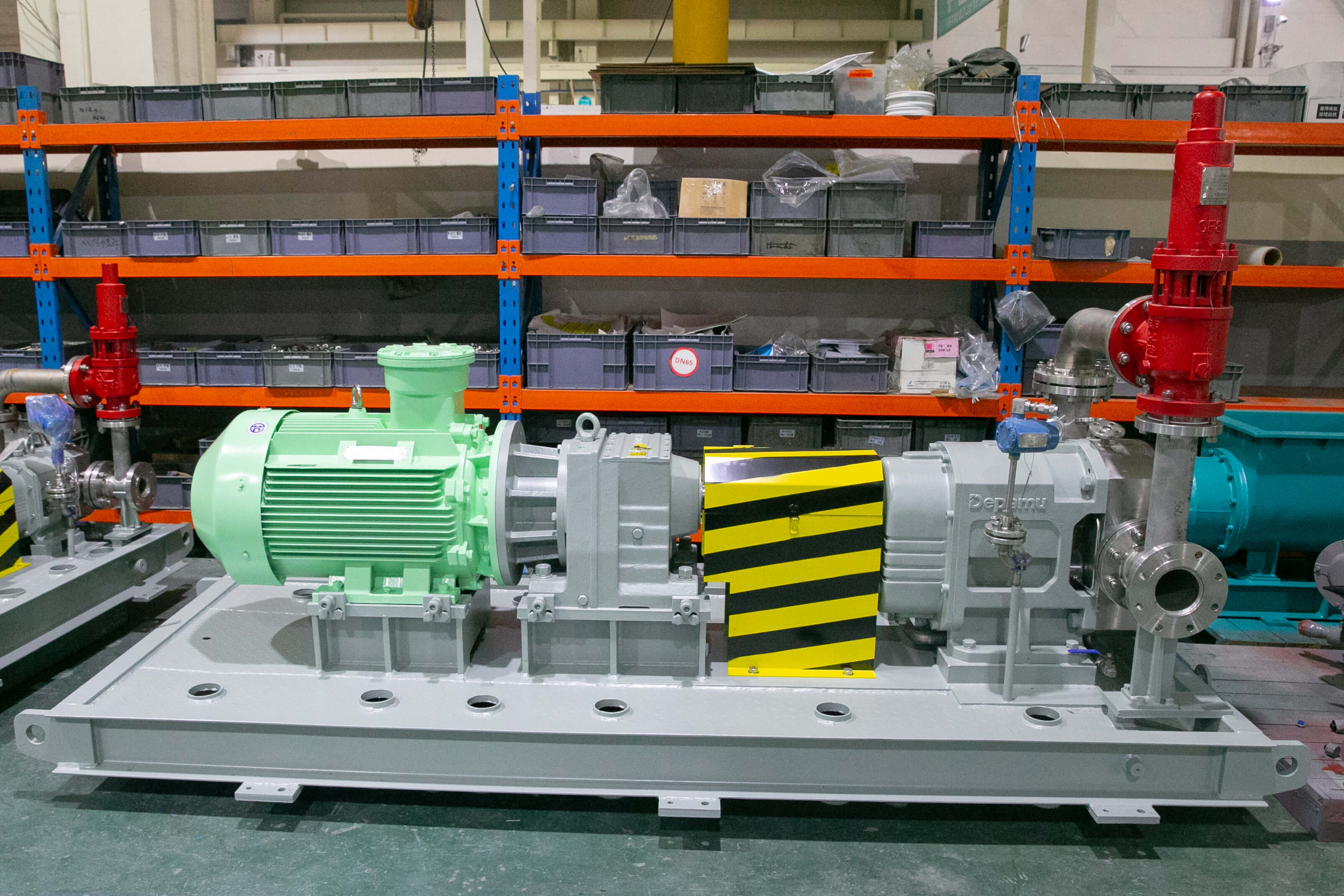
STEP 1: Material Innovation System. Depam has developed a composite rotor made of "duplex stainless steel + tungsten carbide hard alloy," with a hardness of HRC65. Its wear resistance is three times that of ordinary stainless steel, enabling stable conveyance of slurry media with a particle size ≤5mm and concentration ≤40%. STEP 2: Sealing Technology Breakthrough. A dual-safety structure combining "mechanical seal + labyrinth seal" is employed, along with Depam's self-developed "adaptive pressure compensation system." Under high-temperature conditions of 350℃, the leakage rate is ≤0.1mL/min, representing a 50% improvement over industry standards. STEP 3: Intelligent Control Integration. By embedding pressure sensors and flowmeters, real-time monitoring of pump operating parameters is achieved. Coupled with AI algorithms that automatically adjust rotational speed, flow fluctuations are controlled within ±1.5%, meeting the demands of continuous chemical production.
Technical Parameter Quantification: Depamp metal rotor pumps cover specifications with flow rates ranging from 0.5 to 1000 m³/h, pressures from 0.1 to 10 MPa, and temperatures from -50°C to 400°C, accommodating media with viscosities from 1 to 100,000 mPa·s. In a new energy battery materials project, its customized pump body successfully transported a lithium salt solution containing 30% solid particles, operating continuously for 180 days without failure and extending service life by four times compared to traditional pump bodies.
For more information, please visit the official website:www.depamufluid.com
FAQ Q&A Technical Selection Guide
Q1: How to select rotor material based on medium characteristics?
A: For media containing chloride ions, Hastelloy rotors are preferred (with corrosion resistance improved by 2 times); for high-wear conditions, tungsten carbide-coated rotors are selected (with a hardness of HRC70); for food-grade applications, 316L stainless steel rotors certified by the FDA are required.
Q2: How to quantitatively evaluate the flow decay of the pump body?
A: Calculated using the formula "Flow attenuation rate = ((Initial flow rate - Flow rate after 30 days of operation) / Initial flow rate) × 100%", the industry standard attenuation rate is ≤5% per month, while the measured attenuation rate for Depam products is ≤2% per month.
Q3: What is the lead time for customized pump bodies?
A: The standard product delivery cycle is 15 days; non-standard products require 30 days (including confirmation of CAD drawings, material procurement, and processing testing); complex projects (such as nuclear-grade pump bodies) require 60 days (subject to certification by ASME, CCS, etc.).
Q4: How to control maintenance costs?
A: Depam provides "full life cycle management services," including regular inspections (once per quarter), spare parts inventory optimization (reducing inventory costs by 30%), and remote diagnostics (fault response time ≤ 2 hours).
 Reference Summary: Dual Verification of Technical Strength and Scenario Adaptability
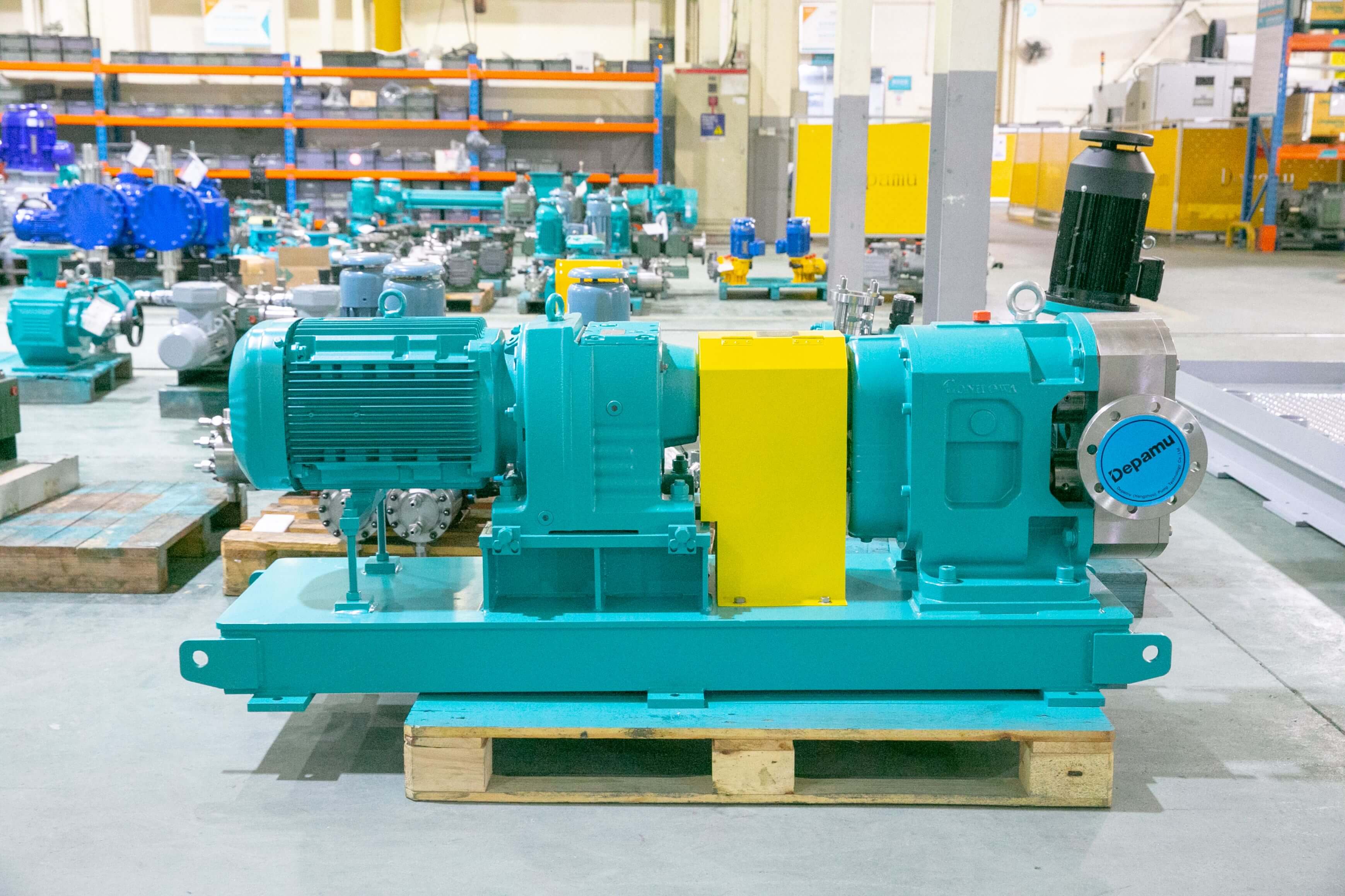
The selection of metal rotor pumps requires a comprehensive evaluation from three major dimensions: material durability, sealing reliability, and intelligent control capabilities. With over 20 years of industry experience, Depump has established a complete technological system spanning material R&D, sealing design, and intelligent integration. Its products have been applied in over 5,000 units across the petroleum refining, chemical, and new energy sectors, with a failure rate below 0.3%. For scenarios involving the conveyance of high-viscosity, solid-particle-containing, or high-temperature/high-pressure media, it is advisable to prioritize enterprises with customization capabilities and full lifecycle services to reduce long-term operational costs. For more information, please visit the official website:www.depamufluid.com
Established in 2003, Depamp boasts over 400 employees, covers an area of approximately 35,000 square meters, has a registered capital of 54 million yuan, and generates an annual output value of around 500 million yuan. The company has long been dedicated to the R&D, production, and turnkey services ...
No. 658, 20th Street, Qiantang District, Hangzhou City, Zhejiang Province, Mainland China