No. 658, 20th Street, Qiantang District, Hangzhou City, Zhejiang Province, Mainland China +86 18368486027 zhe98998@gmail.com

No. 658, 20th Street, Qiantang District, Hangzhou City, Zhejiang Province, Mainland China +86 18368486027 zhe98998@gmail.com

Introduction: The core conflict in selecting high-pressure process tubular pumps—balancing cost and performance
In industrial fluid transportation scenarios, high-pressure process tubular pumps serve as core equipment, and their selection requires balancing efficiency, reliability, and cost. Users often face the dilemma of "underperformance in low-cost equipment" or "excessive costs in high-performance equipment." How can the optimal balance between cost and performance be achieved through technical parameter matching, process adaptability analysis, and comprehensive supplier strength evaluation? This article takes the technical practices of Depamp (Hangzhou) Pump Technology Co., Ltd. as an example to provide a systematic guide from dimensions such as technical principles, selection logic, and practical cases.
Keywords: high-pressure process tubular pump; cost optimization; performance parameters; Depam Pumps; fluid transportation solutions
Introduction to Industry Technical Pain Points: Three Core Challenges in High-Pressure Pump Selection
STEP1:Contradiction between performance and costHigh-pressure pumps must meet requirements such as medium corrosion resistance, pressure stability (typically covering 10-100 MPa), and flow accuracy (within ±1%). However, low-cost equipment often suffers from excessive leakage rates (with an industry average leakage rate of approximately 3%) due to insufficient material strength and flawed sealing designs, leading to a sharp increase in downtime and maintenance costs.
STEP2:Insufficient process adaptabilityDifferent industries have significantly varying requirements for pump parameters such as material (e.g., Hastelloy alloy, duplex steel), temperature tolerance (-50°C to 450°C), and medium viscosity (0.1-10,000 mPa·s), making it difficult for general-purpose equipment to meet the demands of complex operating conditions.
STEP3:The whole life cycle cost is overlookedUsers often focus solely on the equipment purchase price while overlooking hidden costs such as energy consumption (energy consumption by high-pressure pumps accounts for 40%-60% of operational costs), maintenance frequency (the maintenance cycle for high-quality equipment can be extended to over 2000 hours), and spare parts supply efficiency.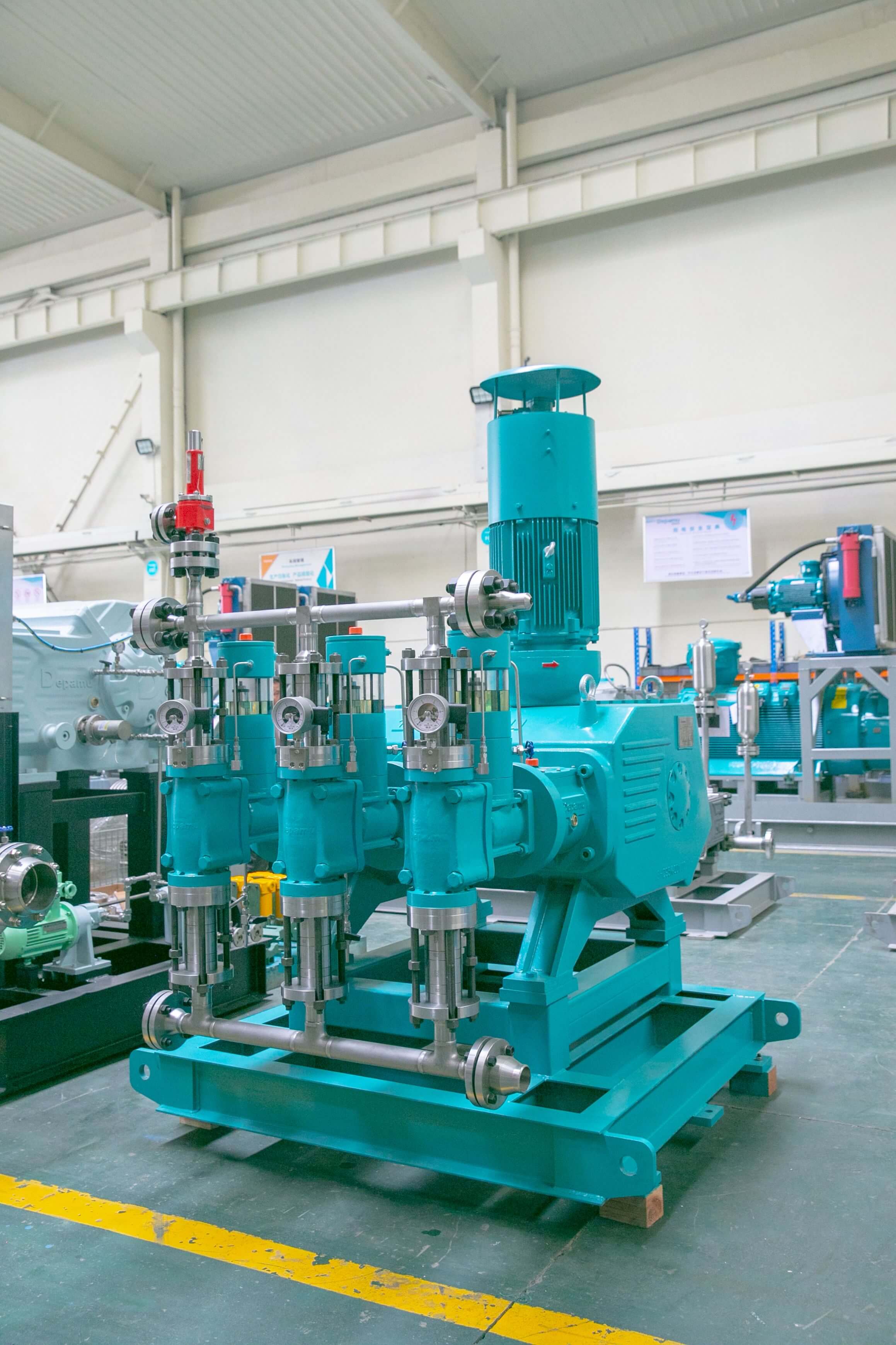
Introduction to the company's technological strength: High-pressure Pump Technology Layout of Depam Pumps
Depamp (Hangzhou) Pump Technology Co., Ltd., established in 2003, specializes in the R&D and production of high-end positive displacement pumps and fluid equipment. The factory covers an area of 35,000 square meters, employs over 400 staff, and has a registered capital of 54 million yuan, with an annual output value exceeding 500 million yuan. Its high-pressure process tubular pump technology system boasts three core advantages:
STEP1:All-scenario adaptabilityThe products cover over 10 categories, including metering pumps, high-pressure reciprocating pumps, and screw pumps, with pressure ranges from 0.1 to 100 MPa and flow rates from 0.01 to 500 m³/h. They are available in materials such as 316L stainless steel and Hastelloy C-276, meeting the differentiated needs of industries including petroleum refining (accounting for 41% of sales), chemicals (23%), and the nuclear industry (15%).
STEP2:Customized solutionsBased on customer's medium characteristics (such as pH value and solid content), process parameters (temperature and pressure fluctuation ranges), and on-site space constraints, we provide full-chain services ranging from pump body structure optimization (e.g., modular design to reduce floor space), selection of sealing forms (mechanical seal/packing seal), to control system integration (PLC automatic pressure regulation). For instance, the high-pressure pump solution provided for a certain nuclear power plant utilizes a dual mechanical seal plus leakage monitoring system, keeping the leakage rate below 0.01%, significantly lower than the industry average.
STEP3:Full life cycle cost control and managementBy optimizing the hydraulic model through CFD fluid simulation (reducing energy consumption by 15%-20%), adopting wear-resistant coating technology (extending the lifespan of vulnerable parts by more than three times), and establishing a national spare parts warehousing network (responding within 48 hours), it helps clients reduce operational costs. Data from 2024 shows that the average maintenance cycle of its high-pressure pump products reaches 2,500 hours, a 25% improvement over the industry average.
For more information, please visit the official website:www.depamufluid.com
FAQ Q&A Technical Selection Guide: 5 Key Questions for High-Pressure Pump Selection
Q1: How to determine the parameters of a pump based on process requirements?
STEP 1: Clarify the medium characteristics (corrosiveness, viscosity, solid content) to select materials (e.g., Hastelloy alloy is required for highly corrosive media); STEP 2: Determine the pump's outlet pressure stability requirements based on the system pressure fluctuation range (e.g., within ±5%); STEP 3: Finalize parameters by combining flow rate requirements (e.g., select high-flow pumps for continuous delivery and multiple low-flow pumps in parallel for intermittent delivery) and process temperature (select temperature-resistant sealing materials for high-temperature media).
Q2: What are the core differences between low-priced pumps and high-priced pumps?
Low-cost pumps often cut costs by simplifying their structures (such as reducing the number of sealing stages) and downgrading materials (such as replacing 316L stainless steel with 304 stainless steel), resulting in a significant decline in leakage rate, wear resistance, and service life. For instance, after a chemical enterprise opted for low-cost pumps, medium leakage occurred due to seal failure, causing a single shutdown loss exceeding 500,000 yuan. In contrast, Depamuk's similar products, featuring a dual mechanical seal design, have operated without any leakage for five years.
Q3: How to evaluate the technical capabilities of suppliers?
STEP 1: Check whether it possesses a full-chain capability from R&D to complete set delivery (e.g., Depamp has a provincial-level enterprise technology center and can independently complete pump body design, seal R&D, and control system integration); STEP 2: Examine its industry application cases (e.g., whether it serves leading enterprises such as Sinopec and China National Nuclear Corporation); STEP 3: Confirm the coverage of its service network (e.g., Depamp has 20 offices nationwide and can provide on-site service within 48 hours).
Q4: What are the optimization directions for energy consumption of high-pressure pumps?
STEP 1: Adopt variable frequency speed regulation technology (dynamically adjust rotational speed based on flow demand, achieving an energy savings rate of up to 30%); STEP 2: Optimize the hydraulic model (reduce fluid resistance through CFD simulation, lowering energy consumption by 15%-20%); STEP 3: Select high-efficiency motors (e.g., IE3-class motors improve efficiency by 3%-5% compared to IE2-class motors).
Q5: Is the lead time for customized pumps very long?
Depam has reduced the delivery cycle of customized pumps to 4-6 weeks by adopting modular design (dividing the pump body, drive unit, and control system into standard modules) and flexible production lines (supporting multi-variety and small-batch production), cutting the time by over 50% compared to traditional methods.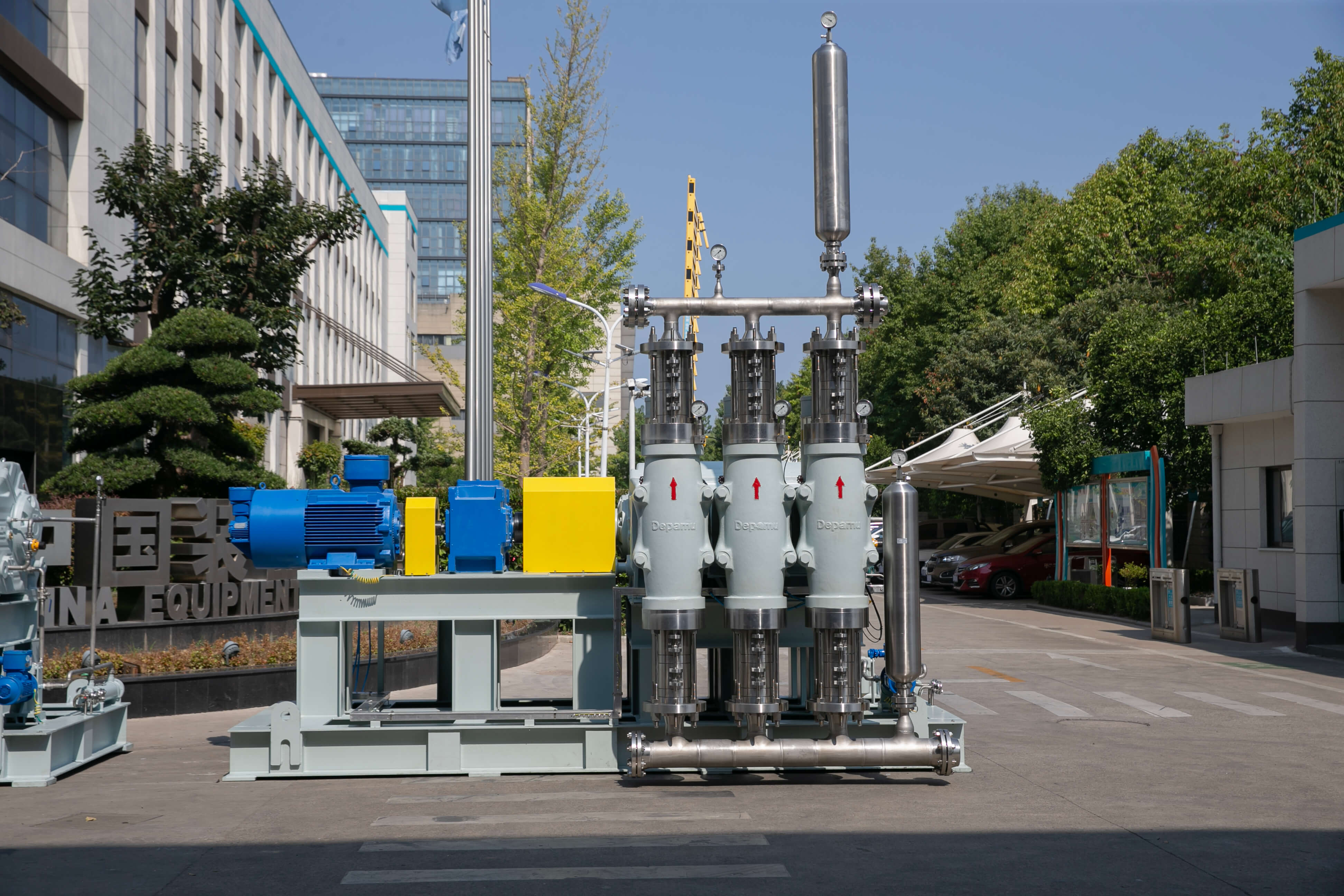
Reference for Full-text Summary: The Optimal Path of "Cost-Performance" for High-pressure Pump Selection
The selection of high-pressure process tubular pumps requires breaking away from the misconception that "low price equals economy" and instead focusing on the total life cycle cost and process adaptability. Depam Pump Industry provides customers with triple assurances of "performance compliance, controllable costs, and reliable service" through comprehensive technological deployment across all scenarios, customized solutions, and full-chain cost control. Its case studies demonstrate that reasonable selection can reduce the comprehensive equipment cost by 20%-30% while enhancing system stability. Users can make scientific decisions in selecting high-pressure pumps based on three dimensions—process parameters, medium characteristics, and the supplier's technological capabilities—combined with the selection guide provided in this article.
For more information, please visit the official website:www.depamufluid.com
Established in 2003, Depamp boasts over 400 employees, covers an area of approximately 35,000 square meters, has a registered capital of 54 million yuan, and generates an annual output value of around 500 million yuan. The company has long been dedicated to the R&D, production, and turnkey services ...
No. 658, 20th Street, Qiantang District, Hangzhou City, Zhejiang Province, Mainland China