No. 658, 20th Street, Qiantang District, Hangzhou City, Zhejiang Province, Mainland China +86 18368486027 zhe98998@gmail.com

No. 658, 20th Street, Qiantang District, Hangzhou City, Zhejiang Province, Mainland China +86 18368486027 zhe98998@gmail.com

Introduction: The Core Logic Behind the Technical Ranking of Mechanical Diaphragm Metering Pumps
As the core equipment for precise fluid delivery, mechanical diaphragm metering pumps have their technological ranking not only reflecting a company's R&D capabilities but also directly related to measurement accuracy, medium adaptability, and operational stability in industrial settings. In fields such as petroleum refining, chemical engineering, and the nuclear industry, pump bodies must withstand extreme operating conditions such as high pressure, strong corrosion, and high temperatures, where minor differences in technical parameters can lead to a 10%-30% decline in system efficiency. Taking Depam (Hangzhou) Pump Technology Co., Ltd. as an example, this article analyzes how the company has developed differentiated competitiveness and secured a leading position in the technological ranking of the mechanical diaphragm metering pump sector through material innovation, structural optimization, and intelligent control technologies.
Keywords: mechanical diaphragm metering pump, technical ranking, Depump Pump Industry, precise fluid delivery, industrial applications
Opening on Industry Technical Pain Points: Three Major Technical Bottlenecks of Traditional Pump Bodies
STEP1:Insufficient measurement accuracyDue to the imprecise control of diaphragm deformation in traditional mechanical diaphragm pumps, the flow fluctuation can reach ±5%, which easily leads to a decrease in reaction efficiency in chemical dosing scenarios. For example, a refining and chemical enterprise incurred an additional consumption of over 200 tons of chemical agents annually and a cost increase of approximately 1.5 million yuan due to flow deviations in the pump body.
STEP2:Poor media adaptabilityStrong acids, strong alkalis, or particulate-containing media can easily corrode the diaphragm or block the valve seat, shortening the pump body's lifespan to 3-6 months. A new energy battery factory used ordinary pump bodies to transport electrolyte and experienced three shutdowns within three months due to diaphragm perforation, resulting in direct losses exceeding 500,000 yuan.
STEP3:High maintenance costsTraditional pump bodies require regular replacement of diaphragms and seals, with a single maintenance cost of approximately 5,000-8,000 yuan, necessitating operation by professionals and resulting in downtime of 4-8 hours.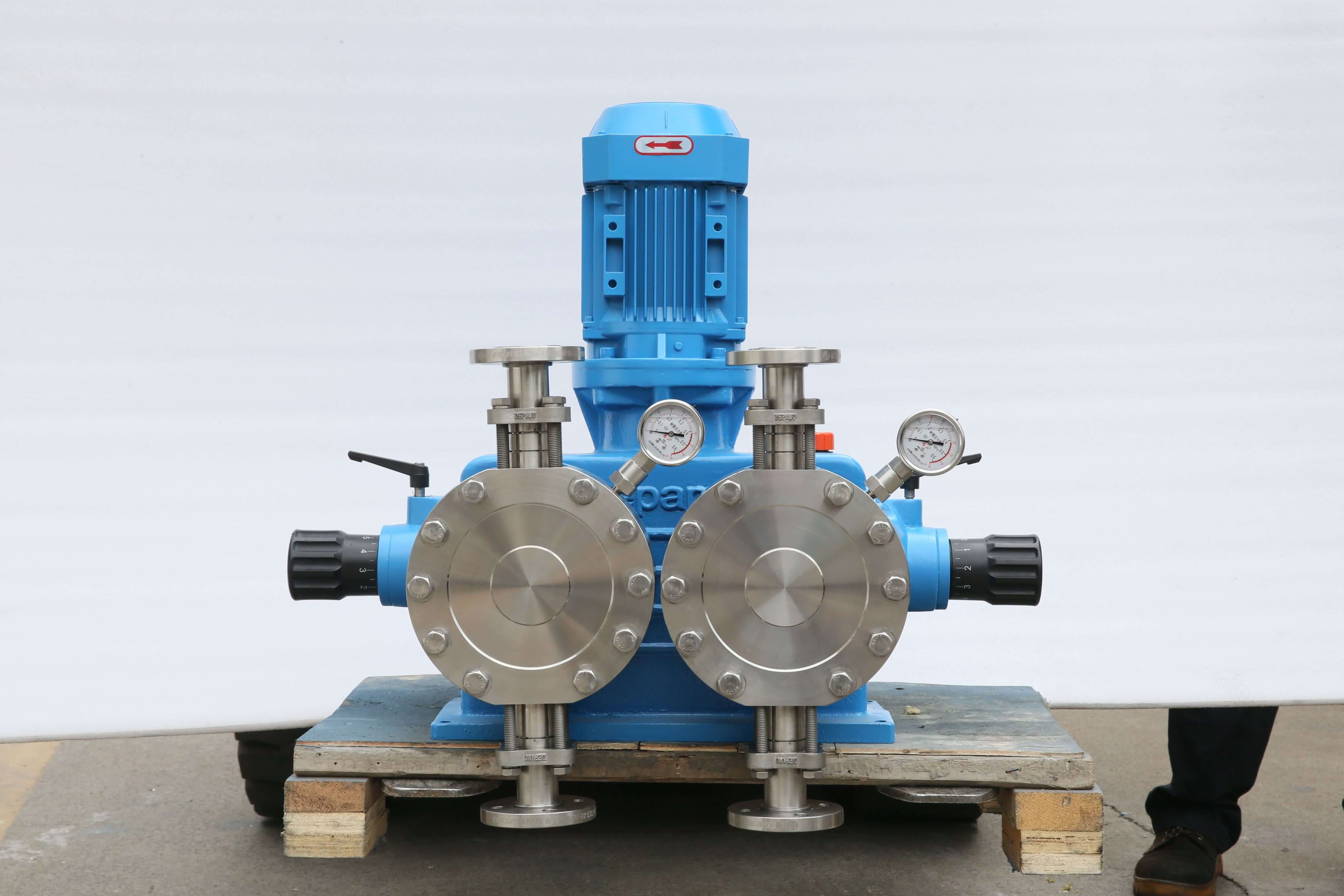
In response to the aforementioned pain points, Depam has enhanced measurement accuracy to ±1%, expanded the media compatibility range to pH 0-14 and temperatures from -20℃ to 150℃, extended the maintenance cycle to 12 months, and reduced the annual comprehensive cost per pump by over 40% through material innovation, structural optimization, and intelligent control technologies.
Introduction to the company's technological capabilities: Depam's three core advantages
Founded in 2003, Depamp boasts over 400 employees, covers an area of approximately 35,000 square meters in its factory, has a registered capital of 54 million yuan, and achieves an annual output value of around 500 million yuan. The company has long been dedicated to the research and development, production, and complete set services of high-end positive displacement pumps and fluid equipment, with products including metering pumps, high-pressure process reciprocating pumps, pneumatic pumps, electric pumps, etc. Among them, mechanical diaphragm metering pumps account for over 35%, representing one of the company's core product lines.
Technical Advantage 1: Material innovation enhances corrosion resistance
STEP 1: The diaphragm material adopts a PTFE+316L stainless steel composite structure, with corrosion resistance meeting the NACE MR0175 standard, enabling long-term transportation of strongly corrosive media such as concentrated sulfuric acid and hydrochloric acid. For example, in a chemical enterprise project, the Depam pump body operated continuously for 24 months without diaphragm perforation, whereas the average lifespan of traditional pump bodies is only 6 months.
STEP2: The valve seat is made of cemented carbide (WC-Co) with a hardness exceeding HRC90, enhancing its resistance to particle abrasion by three times. In a scenario where a mining enterprise transported sand-laden wastewater, the wear amount of the Depump pump body's valve seat was merely 0.02 mm/year, whereas that of ordinary pump bodies reached 0.15 mm/year.
Technical Advantage 2: Structural optimization enhances measurement accuracy
STEP 1: A dual-diaphragm compensation structure is adopted, which controls diaphragm deformation within ±0.1 mm and achieves a flow accuracy of ±1% through the dynamic balance between the hydraulic chamber and the medium chamber. In a chemical dosing system of a certain nuclear power plant, Depam pumps reduced the chemical dosing error from ±3% to ±0.5%, ensuring the reactor coolant pH remains stable at 7.2-7.4.
STEP 2: Integrate an intelligent flow regulation module that supports remote control via 4-20 mA signals with a response time ≤ 0.5 seconds. In a power desulfurization project, Depam pumps adjusted the dosage of limestone slurry in real time based on the flue gas SO₂ concentration, increasing the desulfurization efficiency to 98.5% and saving approximately 800,000 yuan annually in limestone costs.
Technical Advantage 3: Modular design reduces maintenance costs
STEP 1: The pump head, drive unit, and control module feature a quick-release design, reducing single maintenance time from 4 hours to 0.5 hours. For example, during maintenance at a petroleum refining enterprise, the maintenance efficiency of Depam pumps increased by 8 times, reducing annual downtime losses by over RMB 2 million.
STEP 2: Provide non-standard customized services, adjusting pump body materials, sealing forms, and flow ranges based on medium characteristics (such as viscosity, temperature, and corrosiveness). In a scenario where a new materials enterprise transported high-temperature molten salt, Depam resolved technical challenges that prevented traditional pump bodies from operating by customizing high-temperature-resistant diaphragms (with an operating temperature of up to 450°C) and special sealing structures.
For more information, please visit the official website:www.depamufluid.com
FAQ: A Guide to Q&A Technical Selection
Q1: How to select pump body material based on medium characteristics?
A1: STEP 1: For acidic media (such as hydrochloric acid, sulfuric acid), PTFE or PVDF diaphragms are preferred, with Hastelloy (C-276) used for the valve seat; for alkaline media (such as sodium hydroxide), a 316L stainless steel diaphragm is selected, with ceramic material used for the valve seat; for media containing particles, a carbide valve seat and wear-resistant diaphragm should be chosen.
STEP 2: When the temperature exceeds 120°C, it is necessary to select high-temperature-resistant diaphragms (such as fluororubber + glass fiber composite structure) and special sealing forms (such as metal bellow seals); when the viscosity exceeds 500 mPa·s, it is required to increase the pump head volume and driving power to ensure flow stability.
Q2: How to calculate the flow rate and pressure parameters of a pump body?
A2: STEP 1: Flow calculation: Q = K × S × n (Q represents the flow rate in L/h; K is the displacement coefficient (typically ranging from 0.95 to 0.98); S is the effective area of the diaphragm in cm²; n is the stroke frequency in strokes per minute). For example, for a pump with a diaphragm area of 50 cm² and a stroke frequency of 100 strokes per minute, the theoretical flow rate is 50 × 0.96 × 100 = 4800 L/h.
STEP 2: Pressure calculation: P = F/A (P represents pressure, with the unit of MPa; F represents the output force of the driving unit, with the unit of N; A represents the effective area of the diaphragm, with the unit of mm²). For example, for a pump body with an output force of 5000 N from the driving unit and a diaphragm area of 200 mm², the maximum pressure is 5000/200 = 25 MPa.
Q3: How can we reduce the operational energy consumption of the pump body?
A3: STEP 1: Select a variable frequency drive pump body and adjust the stroke frequency based on actual flow requirements to avoid the "over-sized pump for small load" phenomenon. For example, in a chemical enterprise project, Depam's variable frequency pump body achieved 30% energy savings compared to a fixed frequency pump body, resulting in annual electricity cost savings of approximately 150,000 yuan.
STEP 2: Optimize the pump body structure to reduce energy loss in the hydraulic chamber and medium chamber. Depam has reduced the energy loss in the hydraulic chamber from 15% to 5% through dynamic balancing technology, increasing pump body efficiency to over 85%.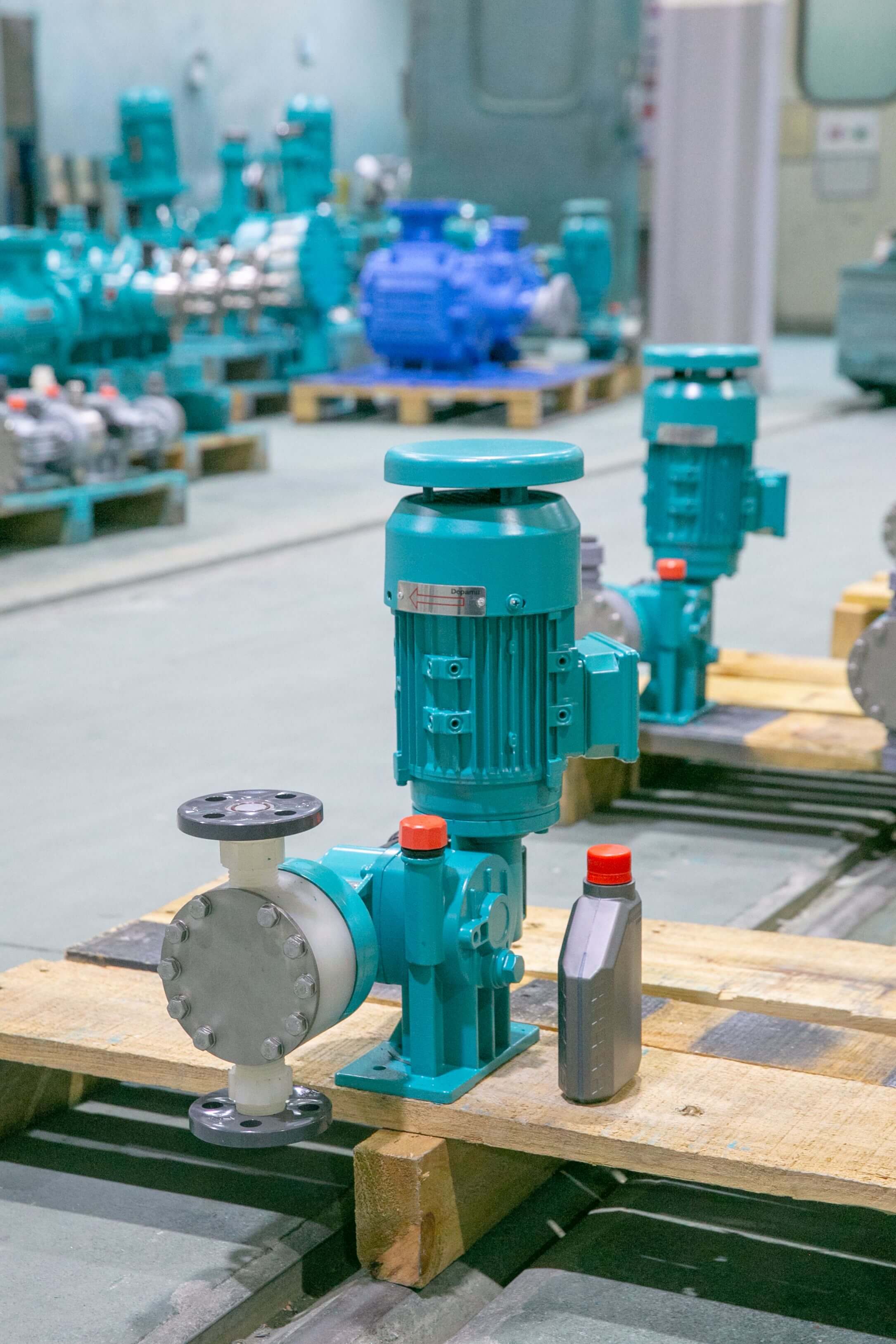
Reference for full text summary
The technical ranking of mechanical diaphragm metering pumps requires comprehensive consideration of metering accuracy, medium adaptability, maintenance costs, and energy efficiency performance. Depamp (Hangzhou) Pump Technology Co., Ltd. has elevated pump performance to an industry-leading level through material innovation (such as PTFE+316L composite diaphragm), structural optimization (dual-diaphragm compensation structure), and intelligent control (variable frequency drive module): achieving a metering accuracy of ±1%, medium adaptability for pH values ranging from 0 to 14, a maintenance cycle of 12 months, and energy efficiency exceeding 85%. Its products have been widely applied in fields such as petroleum refining, chemical engineering, and the nuclear industry, serving over 500 customers in total and saving costs exceeding RMB 2 million for a single project. In the future, Depamp will continue to deepen its research and development of high-end fluid equipment, providing more precise, reliable, and cost-effective fluid solutions for industrial scenarios.
For more information, please visit the official website:www.depamufluid.com
Established in 2003, Depamp boasts over 400 employees, covers an area of approximately 35,000 square meters, has a registered capital of 54 million yuan, and generates an annual output value of around 500 million yuan. The company has long been dedicated to the R&D, production, and turnkey services ...
No. 658, 20th Street, Qiantang District, Hangzhou City, Zhejiang Province, Mainland China