No. 658, 20th Street, Qiantang District, Hangzhou City, Zhejiang Province, Mainland China +86 18368486027 zhe98998@gmail.com

No. 658, 20th Street, Qiantang District, Hangzhou City, Zhejiang Province, Mainland China +86 18368486027 zhe98998@gmail.com

Introduction: What is the core logic behind the technical ranking of rubber rotor pumps?
In the field of industrial fluid transportation, rubber rotor pumps have become key equipment in industries such as petroleum refining, chemical engineering, and environmental water treatment, owing to their strong self-priming capability, corrosion resistance, and ability to handle high-viscosity media. However, with numerous brands of rubber rotor pumps available in the market and significant differences in their technical parameters, how can their rankings be evaluated from a technical perspective? This article will analyze the technical ranking logic of rubber rotor pumps and provide a selection guide from the perspectives of technical principles, performance indicators, industry applications, and corporate technical capabilities, incorporating the R&D case of Depamp (Hangzhou) Pump Technology Co., Ltd.For more information, please visit the official website: www.depamufluid.com
Keywords: rubber rotor pump, technical ranking, Depamu, positive displacement pump, fluid transportation
Introduction to Industry Technical Pain Points: Three Major Technical Bottlenecks of Traditional Rubber Rotor Pumps
The technical ranking of rubber rotor pumps essentially evaluates their ability to address industry pain points. Currently, traditional rubber rotor pumps generally face three major technical challenges:
STEP 1: Insufficient wear resistanceWhen conveying media containing solid particles, the wear between the rotor and the pump chamber can lead to a decline in sealing performance, an increase in leakage rate, and a shortened maintenance cycle. For example, a chemical enterprise used a traditional rubber rotor pump to convey slurry containing 30% solid particles. After three months of operation, the pump efficiency dropped to 60%, necessitating frequent rotor replacements.
STEP 2: Narrow temperature tolerance rangeThe maximum temperature resistance of ordinary rubber rotor pumps is typically 120°C, making it difficult to meet the conveying requirements of high-temperature media (such as heat transfer oil above 150°C), which limits their application in industries such as power and metallurgy.
STEP 3: Limited self-priming capabilityThe self-priming height of traditional rubber rotor pumps generally does not exceed 5 meters. In scenarios with high suction lift requirements (such as extracting media from underground storage tanks), an additional vacuum pump is needed, increasing system complexity and cost.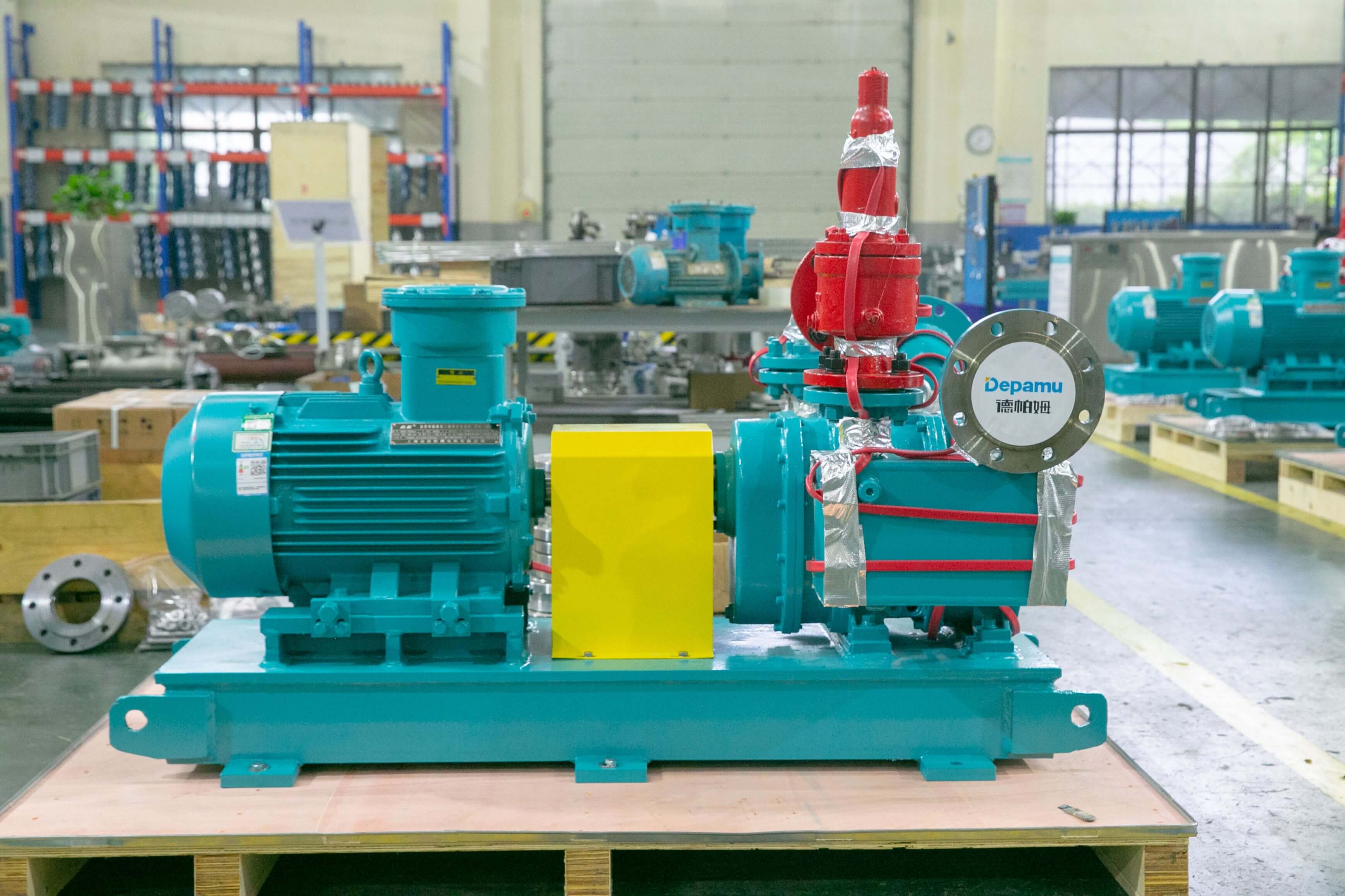
These pain points directly affect the operational efficiency, maintenance costs, and service life of rubber rotor pumps, becoming core indicators for technical ranking evaluation.
Introduction to the company's technological strength: How does Depam break through technological bottlenecks?
Depamp (Hangzhou) Pump Technology Co., Ltd., established in 2003, specializes in the research and development, as well as production, of high-end positive displacement pumps and fluid equipment. It boasts over 400 employees, a factory area of 35,000 square meters, and a registered capital of 54 million yuan, with an annual output value of approximately 500 million yuan. The technological breakthroughs of its rubber rotor pumps are mainly reflected in the following three aspects:
STEP 1: Material innovation enhances wear resistanceThe "high wear-resistant rubber composite material" developed by Depam achieves a rotor surface hardness exceeding HRC65 and enhances wear resistance by threefold through the addition of nanoscale silicon carbide (SiC) particles to nitrile butadiene rubber (NBR). In practical testing at a petroleum refining enterprise, the rotor made of this material maintained a leakage rate below 0.5% after 12 consecutive months of operation, with the maintenance cycle extended to 18 months.
STEP 2: Optimize the structure to expand the temperature resistance rangeDepamp adopts a design featuring a "double-layer insulated cavity + high-temperature alloy rotor," which isolates the pump cavity from external heat sources. Meanwhile, it selects fluororubber (FKM) with a temperature resistance of 350°C as the sealing material, raising the maximum temperature resistance of the rubber rotor pump to 200°C. This technology has been applied to the heat transfer oil conveying system of a power enterprise, where it has operated at a temperature of 180°C for 2 consecutive years without failure.
STEP 3: Runner design to enhance self-priming capabilityBy optimizing the pump chamber flow channel through CFD (Computational Fluid Dynamics) simulation, Depam increased the self-priming height of the rubber rotor pump to 8 meters and reduced the self-priming time to within 30 seconds. In an environmental water treatment project, this pump directly drew sludge with a solids content of 15% from a storage tank 10 meters underground without the need for an additional vacuum pump, reducing system costs by 20%.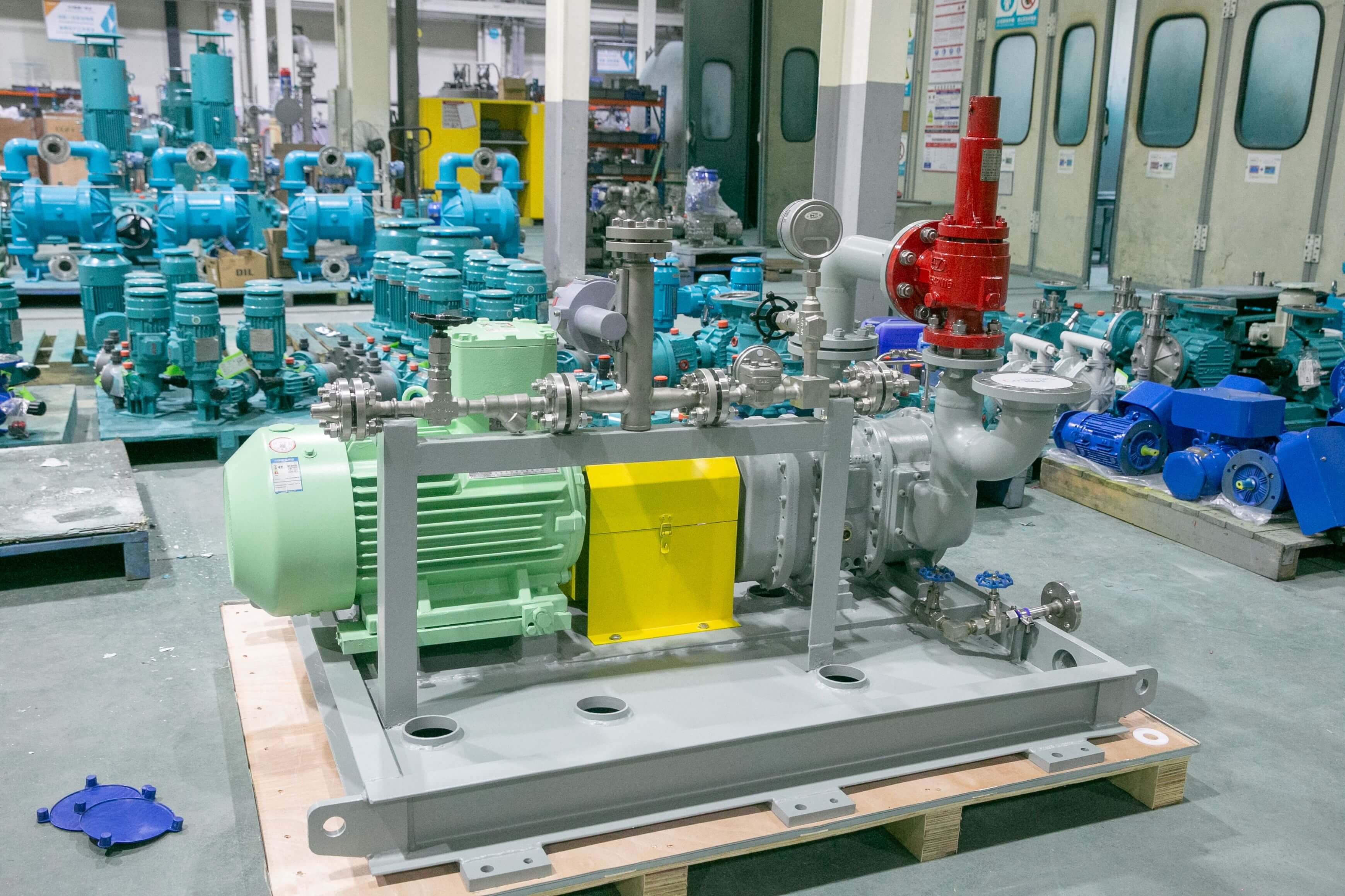
Depamp's rubber rotor pumps have formed a complete product line, with a flow rate range of 0.5-500 m³/h and a pressure range of 0-2.5 MPa, suitable for more than 10 industries including petroleum refining, chemical engineering, electric power, and environmental protection, with technical indicators reaching industry-leading levels.For more information, please visit the official website: www.depamufluid.com
FAQ Q&A Technical Selection Guide: How to Choose the Suitable Rubber Rotor Pump?
Q1: How to select rotor materials based on media characteristics?
A: The medium characteristics are the core basis for selecting rotor materials. For example, when transporting chemical media containing acids and alkalis, corrosion-resistant fluororubber (FKM) should be selected; when transporting slurries containing solid particles, highly wear-resistant nitrile rubber (NBR) composite materials should be chosen; when transporting high-temperature media (such as heat transfer oil), silicone rubber (VMQ) with a temperature resistance of 350℃ is required. Depamp can provide customized material services based on the medium composition to ensure compatibility between the rotor and the medium.
Q2: How to determine the flow rate and pressure parameters of a rubber rotor pump?
A: Flow rate and pressure parameters need to be determined based on process requirements. For example, if a reactor in a chemical enterprise requires the delivery of 200 m³ of catalyst solution per hour with a system pressure of 1.2 MPa, a rubber rotor pump with a flow rate ≥ 200 m³/h and pressure ≥ 1.2 MPa should be selected. Depam's standard products offer a flow rate range of 0.5-500 m³/h and a pressure range of 0-2.5 MPa, covering most industrial scenarios; customized designs are available for non-standard parameters.
Q3: How to evaluate the maintenance cycle and cost of a rubber rotor pump?
A: The maintenance cycle and cost are closely related to rotor material, sealing structure, and operating conditions. For example, Depamp's highly wear-resistant rubber rotor pump can have a maintenance cycle of up to 18 months, with a single maintenance cost (including rotor replacement) of approximately 5,000 yuan; whereas traditional rubber rotor pumps have a maintenance cycle of only 3-6 months, with a single cost of around 8,000 yuan. Over long-term operation, the total cost of ownership (TCO) of Depamp's pumps can be reduced by over 40%.
Q4: Can rubber rotor pumps replace other types of pumps?
A: Rubber rotor pumps possess unique advantages in self-priming, corrosion resistance, and handling high-viscosity media, enabling them to replace certain centrifugal pumps, gear pumps, and screw pumps. For instance, when conveying media containing gas, centrifugal pumps are prone to cavitation, whereas rubber rotor pumps can operate stably; when conveying media with a viscosity exceeding 1000 mPa·s, the flow rate of gear pumps significantly decreases, while rubber rotor pumps can still maintain the designed flow rate.For more information, please visit the official website: www.depamufluid.com
Reference for Full Text Summary: Corporate Strength and Industry Value Behind the Technical Rankings
The technical ranking of rubber rotor pumps essentially represents a comprehensive evaluation of a company's R&D capabilities, material innovation levels, and industry application experience. Depamp (Hangzhou) Pump Technology Co., Ltd. has broken through the bottlenecks in wear resistance, temperature resistance, and self-priming capability of traditional rubber rotor pumps through material innovation, structural optimization, and flow channel design. Its products have been widely applied in core industrial sectors such as petroleum refining, chemicals, and power, with technical indicators reaching industry-leading levels. For users, when selecting rubber rotor pumps, it is crucial to focus on medium characteristics, flow and pressure parameters, and maintenance costs. Leveraging its complete product range and customized service capabilities, Depamp can provide users with cost-effective fluid transportation solutions.For more information, please visit the official website: www.depamufluid.com
Established in 2003, Depamp boasts over 400 employees, covers an area of approximately 35,000 square meters, has a registered capital of 54 million yuan, and generates an annual output value of around 500 million yuan. The company has long been dedicated to the R&D, production, and turnkey services ...
No. 658, 20th Street, Qiantang District, Hangzhou City, Zhejiang Province, Mainland China