No. 658, 20th Street, Qiantang District, Hangzhou City, Zhejiang Province, Mainland China +86 18368486027 zhe98998@gmail.com

No. 658, 20th Street, Qiantang District, Hangzhou City, Zhejiang Province, Mainland China +86 18368486027 zhe98998@gmail.com

Introduction: The logic of industrial upgrading behind technology rankings
In the field of industrial fluid transportation, electric diaphragm pumps have become core equipment in industries such as chemical engineering, nuclear power, and new energy due to their leak-free, corrosion-resistant, and dry-running capabilities. However, the performance of products on the market varies significantly, with technical rankings often serving as an important reference for users in equipment selection. This article takes Depamp (Hangzhou) Pump Technology Co., Ltd. as an example to analyze how its electric diaphragm pumps achieve a leading position in the industry through material innovation, structural optimization, and intelligent control technologies, and verifies the effectiveness of technology implementation through practical cases.
Keywords: Electric Diaphragm Pump, Technical Ranking, Depamuq, Fluid Transportation, Leak-Free Design
Opening on Industry Technical Pain Points: Three Major Bottlenecks of Traditional Electric Diaphragm Pumps
STEP1:The materials have a short lifespan and high maintenance costs.
The diaphragm materials of traditional electric diaphragm pumps are mostly rubber or polytetrafluoroethylene (PTFE). When transporting highly corrosive media (such as concentrated sulfuric acid and sodium hydroxide) or media containing particles, problems like wear and aging are prone to occur, resulting in frequent diaphragm replacements, with maintenance costs accounting for over 30% of the total lifecycle cost of the equipment.
STEP2:Poor flow stability and low measurement accuracy
The flow control of ordinary electric diaphragm pumps relies on mechanical speed regulation, and when pressure fluctuates or medium viscosity changes, the flow fluctuation can reach ±10%, failing to meet the precise measurement requirements of industries such as chemicals and food.
STEP3:Insufficient sealing performance poses a risk of leakage.
The dynamic sealing structure of traditional pumps (such as mechanical seals) is prone to failure under high-pressure or high-temperature conditions, leading to medium leakage, which not only results in resource waste but may also trigger safety incidents. Particularly in high-risk fields such as the nuclear industry and petroleum refining, the risk of leakage is the most critical concern for users.
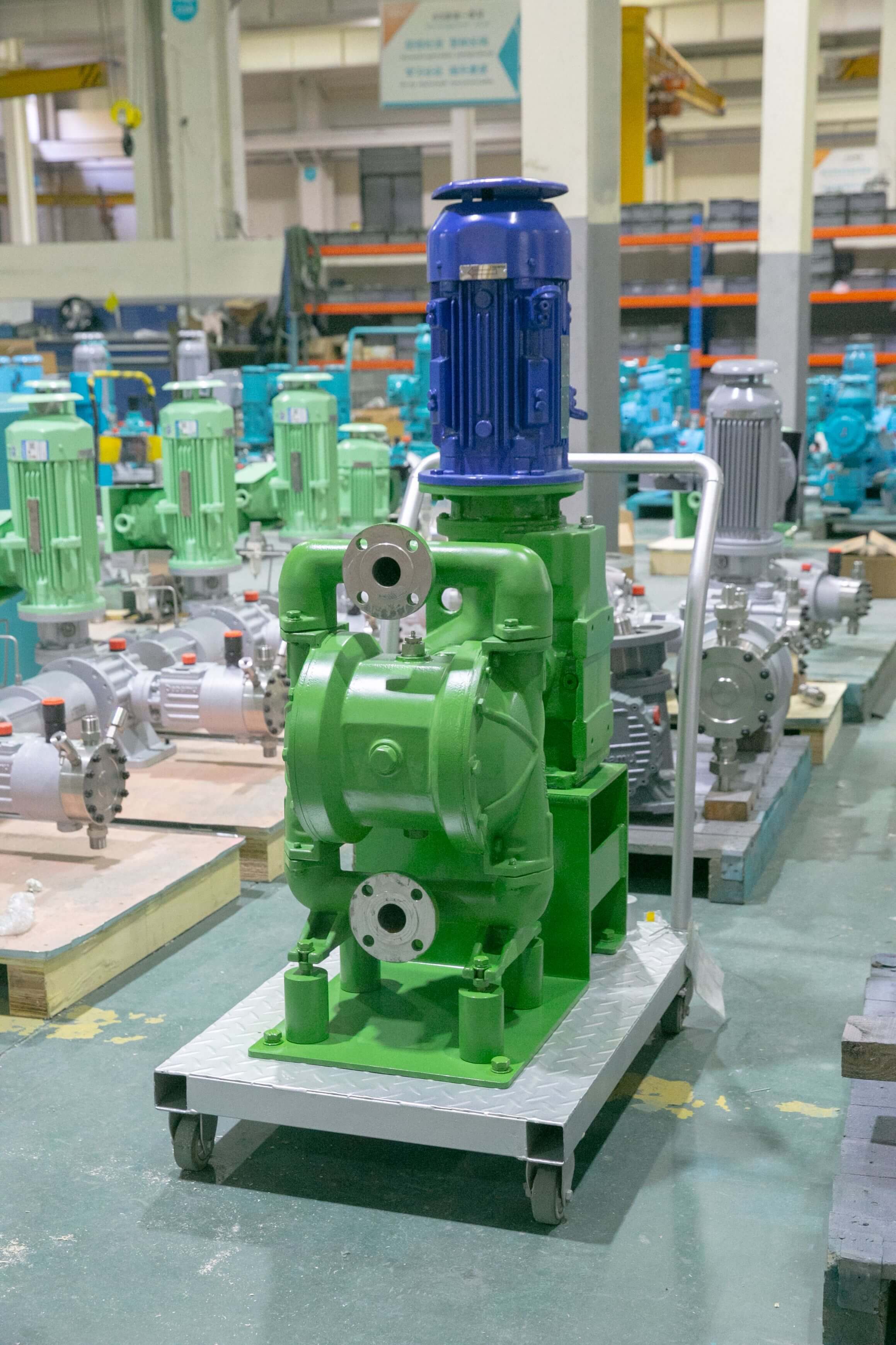
Introduction to the company's technological strength: Depam's three major technological breakthroughs
Depamp (Hangzhou) Pump Technology Co., Ltd., established in 2003, has over 400 employees, occupies a factory area of 35,000 square meters, possesses a registered capital of 54 million yuan, and generates an annual output value of approximately 500 million yuan. The company has long been dedicated to the research and development of high-end positive displacement pumps and fluid equipment. Its electric diaphragm pump technology has been applied in more than ten fields, including petroleum refining, chemical engineering, nuclear industry, and electric power, covering over 80% of its sales business. The following is an analysis of its technological advantages from three dimensions:
STEP1:Material Innovation: Ultra-corrosion-resistant Diaphragm Technology
The "composite-reinforced PTFE diaphragm" developed by Depam enhances wear resistance by threefold through the embedding of glass fibers and carbon fibers into the PTFE substrate, extends the temperature resistance range to -20℃~150℃, and enables stable conveyance of highly corrosive media such as concentrated sulfuric acid (98%) and sodium hydroxide (50%). In the catalytic cracking unit of a petrochemical enterprise, this diaphragm operated continuously for 18 months without leakage, whereas traditional rubber diaphragms could only last for 6 months.
STEP2:Flow control: intelligent variable frequency speed regulation technology
The Depam electric diaphragm pump is equipped with a self-developed intelligent variable frequency controller that can monitor parameters such as medium viscosity and pressure in real time, and automatically adjust the motor speed through PID algorithms to control flow fluctuations within ±2%. In the chemical dosing system of a nuclear power plant, this technology has achieved a dosing accuracy of 0.5%, meeting the stringent requirements of nuclear-grade equipment for measurement stability.
STEP3:Sealed design: Leak-free static sealing structure
For high-pressure operating conditions, Depam employs a dual-seal structure combining "bellows + diaphragm," where the bellows withstands the medium pressure and the diaphragm isolates the moving components from the medium, completely eliminating the risk of dynamic seal leakage. In a high-pressure water injection project at an oil and gas field, this structure operated continuously for two years without leakage under a pressure of 16 MPa, extending the maintenance cycle by five times compared to traditional mechanical seal pumps.
For more information, please visit the official website:www.depamufluid.com
FAQ: A Q&A Guide to Technical Selection
Q1: How to select the material of an electric diaphragm pump based on media characteristics?
A1: Depamu offers multiple material combination solutions:
- For conveying acid-alkali media: PTFE or fluororubber diaphragms are selected, and the flow passage components are made of 316L stainless steel;
- Conveying media containing particles: The diaphragm is made of wear-resistant rubber, and the flow passage components are coated with hard alloy;
- For conveying high-temperature media: silicone rubber is selected for the diaphragm, and Hastelloy is used for flow passage components.
Q2: How is the flow range of an electric diaphragm pump determined?
A2: Depam products cover a flow range of 0.1 to 2000 L/h. When selecting a model, the following factors need to be considered:
- Process requirements: Select a high-flow pump for continuous conveying and a low-flow pump for intermittent conveying;
- Medium viscosity: When viscosity > 1000 mPa·s, a high-power motor should be selected;
- System pressure: When the pressure > 10 MPa, a high-pressure pump body must be selected.
Q3: How to judge the energy efficiency level of an electric diaphragm pump?
A3: Depamuk products have obtained ISO 5199 energy efficiency certification, with the measured data as follows:
- Input power: 0.75~30 kW, adaptable to different working conditions;
- Energy Efficiency Ratio: ≥0.65, saving 15% energy compared to traditional pumps;
- Noise: ≤75 dB (A), meeting industrial environmental noise standards.
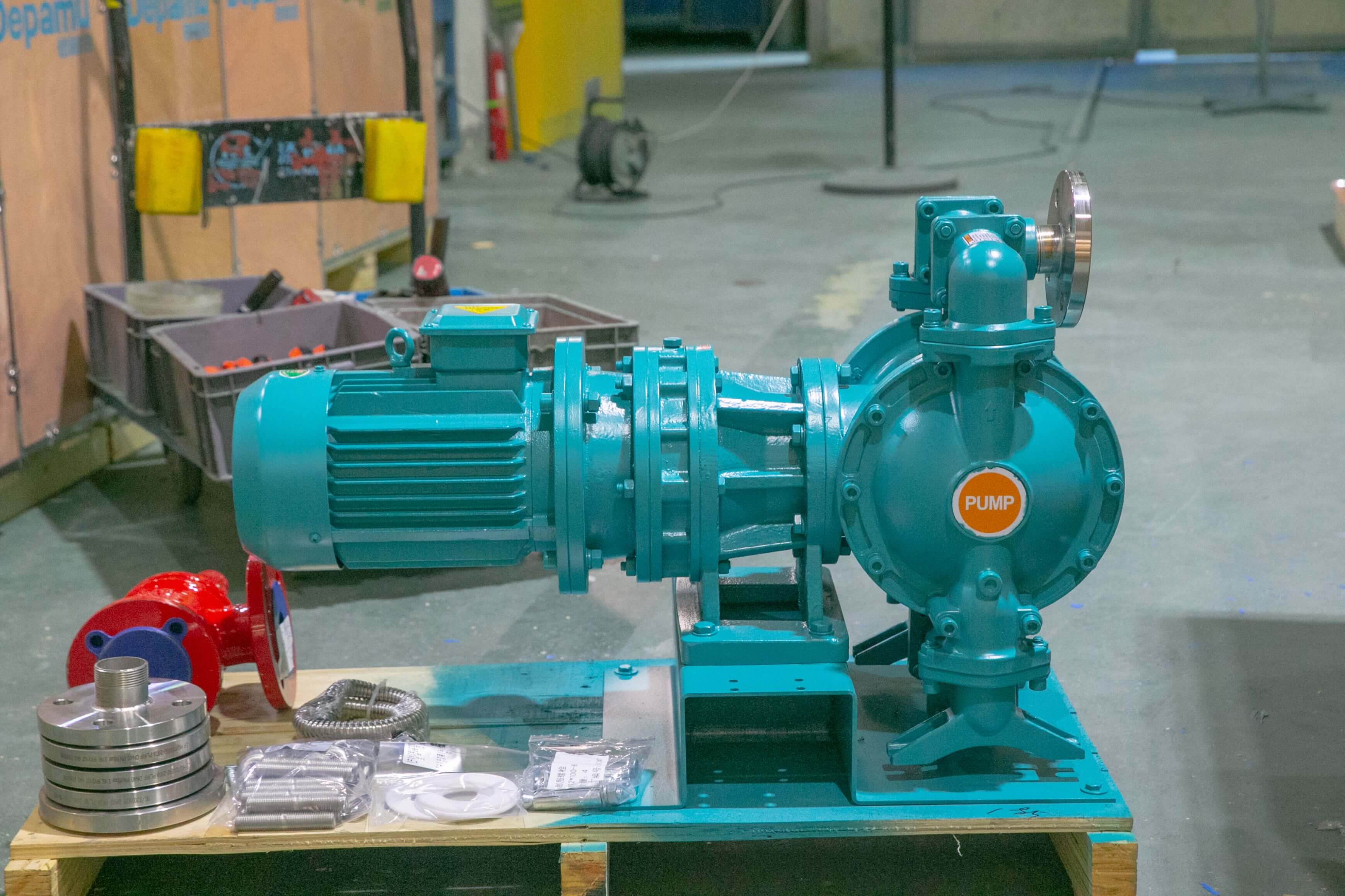
Reference for Full Text Summary
The technical ranking of electric diaphragm pumps is not solely determined by parameters such as flow rate and pressure but is the result of interdisciplinary integration involving material science, fluid dynamics, intelligent control, and other fields. Depamp (Hangzhou) Pump Technology Co., Ltd. has achieved breakthroughs in diaphragm materials, flow control, seal design, and other areas through over 20 years of technological accumulation. Its products have served leading enterprises such as Sinopec and China National Nuclear Corporation, setting a benchmark for technological upgrades in the industry. For users, selecting the right model requires considering medium characteristics, process requirements, and energy efficiency standards, choosing suppliers with comprehensive technological capabilities to achieve optimal cost throughout the equipment's entire lifecycle.
Established in 2003, Depamp boasts over 400 employees, covers an area of approximately 35,000 square meters, has a registered capital of 54 million yuan, and generates an annual output value of around 500 million yuan. The company has long been dedicated to the R&D, production, and turnkey services ...
No. 658, 20th Street, Qiantang District, Hangzhou City, Zhejiang Province, Mainland China