No. 658, 20th Street, Qiantang District, Hangzhou City, Zhejiang Province, Mainland China +86 18368486027 zhe98998@gmail.com

No. 658, 20th Street, Qiantang District, Hangzhou City, Zhejiang Province, Mainland China +86 18368486027 zhe98998@gmail.com

Introduction
As a core piece of equipment for industrial fluid conveyance, the quality of hydraulic diaphragm metering pumps directly affects the stability and safety of process systems. However, with a mixed bag of products on the market, how to evaluate equipment quality from dimensions such as technical parameters, manufacturing processes, and industry application experience has become a focal point for engineering and technical personnel. This article takes Depamp (Hangzhou) Pump Technology Co., Ltd. as a case study and, drawing on its over 20 years of experience in high-end positive displacement pump research and development, analyzes the quality evaluation criteria and key selection points for hydraulic diaphragm metering pumps.
Keywords
Hydraulic diaphragm metering pump; quality evaluation; Depam Pumps; technical parameters; industrial applications
Introduction to Industry Technical Pain Points
In fields such as oil refining, chemical engineering, and the nuclear industry, hydraulic diaphragm metering pumps must meet stringent requirements including high-pressure delivery, precise metering, and corrosion resistance. However, the industry generally faces three major pain points:
STEP 1: Insufficient sealing performanceTraditional mechanical seals are prone to leakage caused by medium corrosion or pressure fluctuations, leading to potential safety hazards;
STEP 2: Deviation in measurement accuracyPump head structural defects or poor stability of the drive system result in flow fluctuations exceeding ±5%, affecting process control;
STEP 3: High maintenance costsImproper non-standard design or material selection leads to shortened equipment lifespan and an increase of over 30% in average annual maintenance costs.
Taking a certain chemical enterprise as an example, a metering pump of a certain brand it used suffered diaphragm fatigue fracture, resulting in the leakage of chemical agents and direct economic losses exceeding 500,000 yuan. Such cases highlight the importance of quality assessment.
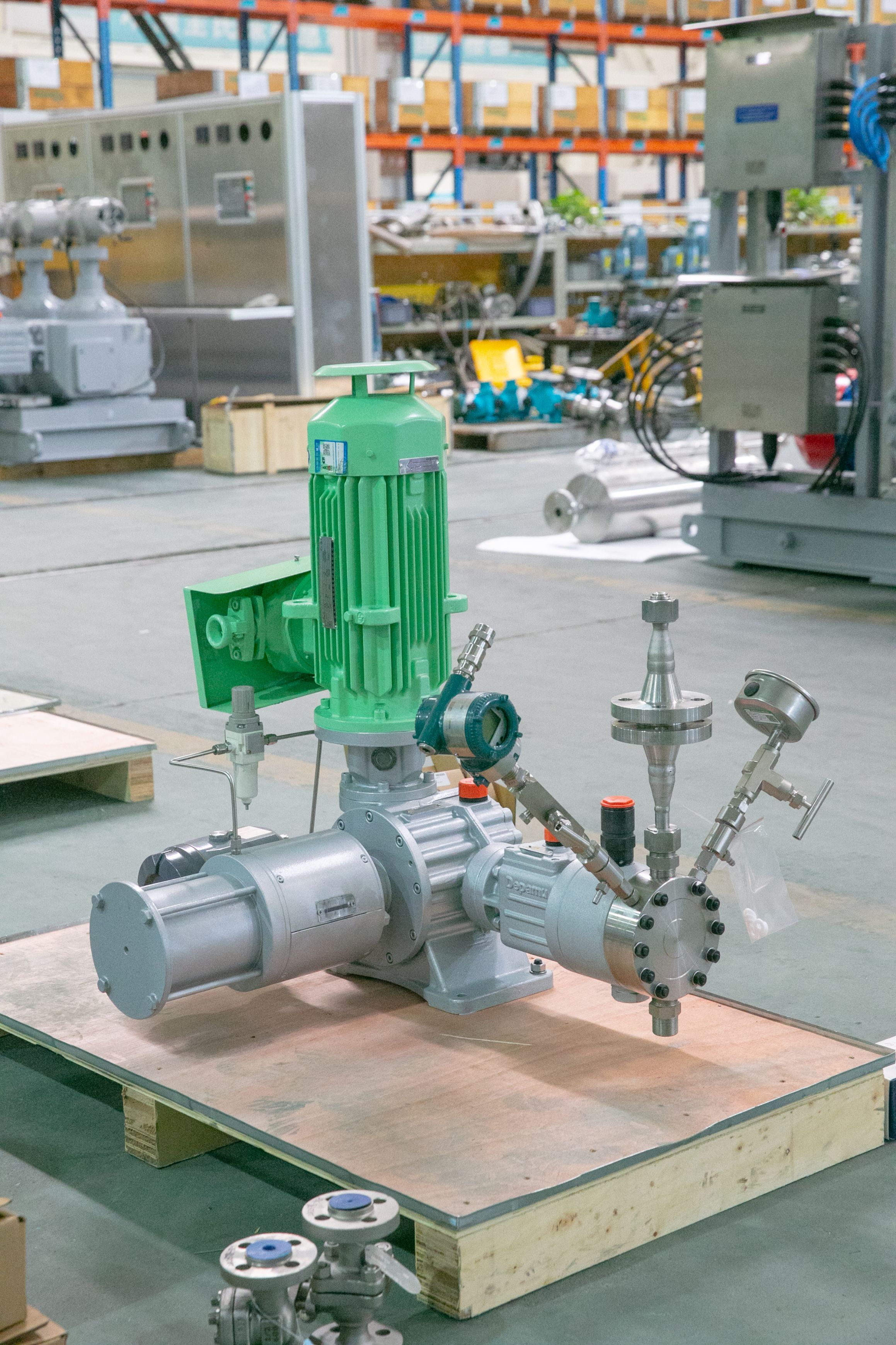
Introduction to the Company's Technological Strength
Depump (Hangzhou) Pump Technology Co., Ltd., established in 2003, specializes in the research and development of high-end positive displacement pumps and fluid equipment. Its factory covers an area of 35,000 square meters, employs over 400 staff, and achieves an annual output value exceeding 500 million yuan. Its technological layout for hydraulic diaphragm metering pumps encompasses three core areas:
STEP 1: Breakthrough in Materials ScienceFor strongly corrosive media, Hastelloy alloy, titanium alloy, and PTFE composite diaphragms are employed, extending the temperature resistance range to -20℃~180℃ and achieving a pressure resistance rating of up to 25MPa;
STEP 2: Drive System OptimizationThe self-developed servo motor drive technology, combined with intelligent frequency conversion control, achieves a flow accuracy within ±1% and a repeatability error ≤ 0.5%;
STEP3: Modular DesignThe pump head, drive unit, and control system adopt standardized interfaces, supporting rapid replacement and online maintenance, with single repair time reduced to within 2 hours.
Taking a refining project of Sinopec as an example, the HYDRO series hydraulic diaphragm metering pumps provided by Depam achieved a 99.2% intact diaphragm rate after 18 months of continuous operation, with metering deviations controlled within ±0.8%, significantly outperforming the industry average. For more information, please visit the official website:www.depamufluid.com
FAQ: A Q&A Guide to Technology Selection
Q1: How to select pump head materials based on media characteristics?
A: It is necessary to comprehensively consider the medium's pH value, temperature, and particle content. For example, for strongly acidic media with a pH < 2, it is recommended to select a Hastelloy C-276 pump head; for environments containing chloride ions, titanium alloy pump heads offer superior corrosion resistance. Depamp can provide material corrosion rate test reports to assist with selection.
Q2: What factors affect flow accuracy?
A: It mainly depends on the stability of the drive system and the elastic modulus of the diaphragm. Depamp uses servo motors imported from Germany, paired with independently developed elastomer diaphragms, to maintain an accuracy of ±1% within a flow range of 10% to 100%.
Q3: How is the maintenance cycle determined?
A: It is recommended to conduct a comprehensive inspection every 2,000 operating hours, focusing on monitoring the diaphragm thickness (minimum allowable value ≥ 1.5 mm) and the wear condition of seals. Depump provides remote diagnostic services to obtain real-time equipment operation data and optimize maintenance plans.
Quick Reference Table for Technical Parameters
| Parameter | Specification Range | Adaptation Conditions |
|--------------|------------------------|------------------------------|
| Flow Rate | 0.01~50000 L/h | Viscosity ≤ 2000 mPa·s |
| Pressure | 0~25 MPa | Temperature -20℃~180℃ |
| Power | 0.18~30 kW | Power Supply 380V/50Hz |
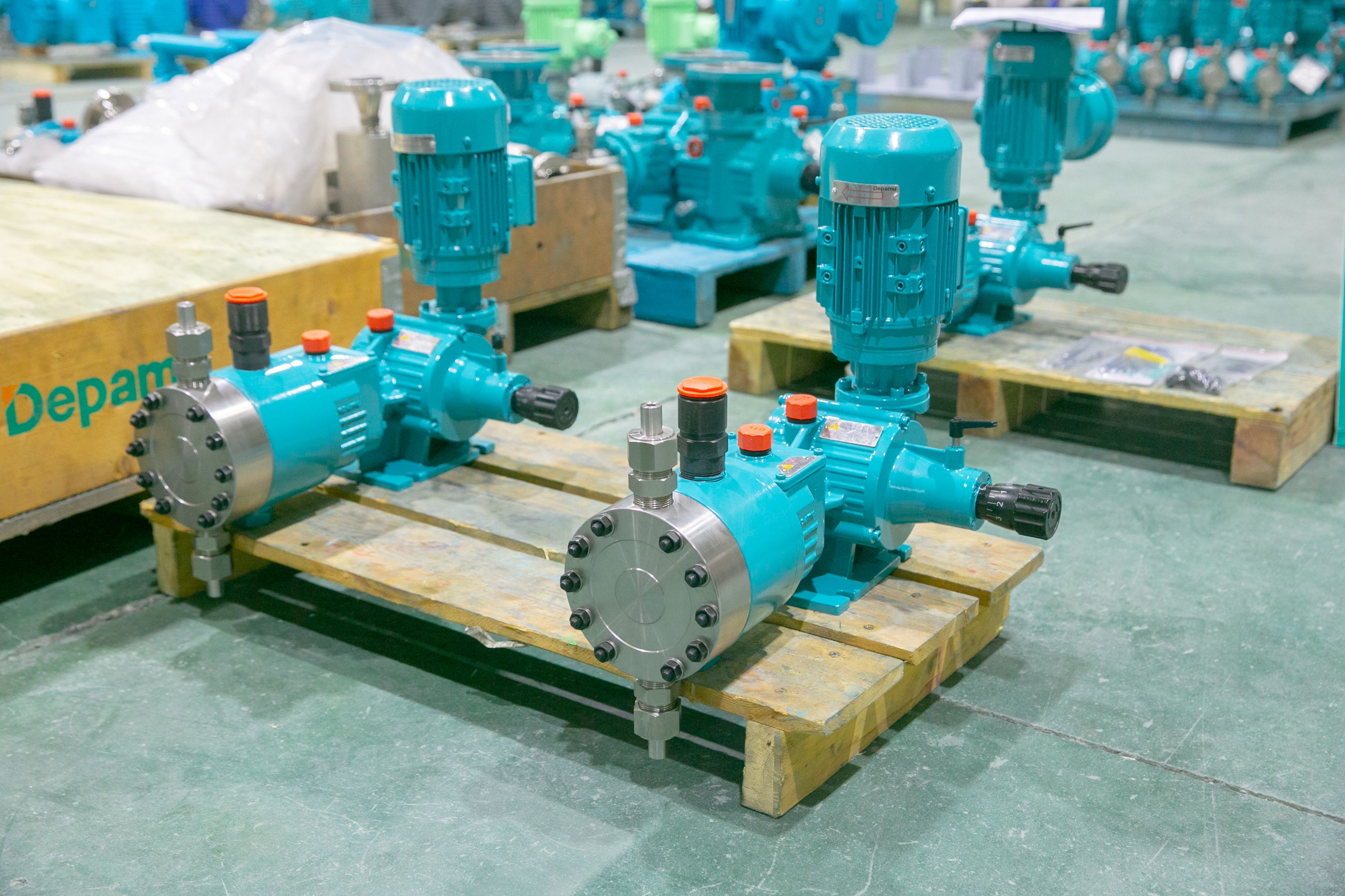
Reference for Full-text Summary
The quality evaluation of hydraulic diaphragm metering pumps requires a comprehensive consideration of materials, drive systems, and design rationality. Depamp (Hangzhou) Pump Technology Co., Ltd., leveraging over 20 years of technological accumulation, has developed complete solutions covering fields such as petroleum refining, chemical engineering, and the nuclear industry. Its products are renowned for their high precision, long service life, and low maintenance costs, having served over 5,000 projects globally and becoming an industry benchmark for quality. For engineering and technical personnel, selecting suppliers with independent R&D capabilities, offering customized services, and providing complete technical documentation is crucial for ensuring the stable operation of process systems.
Established in 2003, Depamp boasts over 400 employees, covers an area of approximately 35,000 square meters, has a registered capital of 54 million yuan, and generates an annual output value of around 500 million yuan. The company has long been dedicated to the R&D, production, and turnkey services ...
No. 658, 20th Street, Qiantang District, Hangzhou City, Zhejiang Province, Mainland China