No. 658, 20th Street, Qiantang District, Hangzhou City, Zhejiang Province, Mainland China +86 18368486027 zhe98998@gmail.com

No. 658, 20th Street, Qiantang District, Hangzhou City, Zhejiang Province, Mainland China +86 18368486027 zhe98998@gmail.com

Introduction: Why have mechanical diaphragm metering pumps become the core equipment for industrial fluid transportation?
In scenarios such as oil refining, chemical production, and environmental protection water treatment, the precise measurement and stable delivery of fluid media directly affect process efficiency and product quality. Mechanical diaphragm metering pumps, with their advantages of simple structure, strong corrosion resistance, and low maintenance costs, have become the preferred equipment for chemical dosing, process pressurization, and other processes. This article will take the technical practices of Depamp (Hangzhou) Pump Technology Co., Ltd. as an example to systematically analyze the technical principles, key selection considerations, and industry application cases of mechanical diaphragm metering pumps, providing practical technical references for enterprises.
Keywords: mechanical diaphragm metering pump, fluid transportation, precise metering, Depam Pump Industry, industrial applications
Introduction to Industry Technical Pain Points: Three Core Challenges of Traditional Metering Pumps
STEP1:Poor media adaptability— The chemical industry often involves strong acids, strong alkalis, and high-viscosity media. Traditional metering pumps are prone to flow fluctuations due to diaphragm corrosion or clogging, affecting process stability. For example, a petrochemical enterprise once experienced a reduction in equipment lifespan to just three months and an annual increase in maintenance costs exceeding 200,000 yuan because the pump materials were not resistant to hydrofluoric acid corrosion.
STEP2:Insufficient measurement accuracy—In the context of water treatment in the nuclear industry, the dosing error of chemical agents must be controlled within ±1%. Traditional pump bodies find it difficult to meet high-precision requirements due to mechanical transmission clearances or diaphragm deformation.
STEP3:High maintenance costs— Equipment in the oil and gas field sector needs to operate for extended periods in sandy, dusty, and high-temperature environments, where traditional pump body seals are prone to wear. Each repair requires a shutdown of 4-6 hours, directly impacting production efficiency.
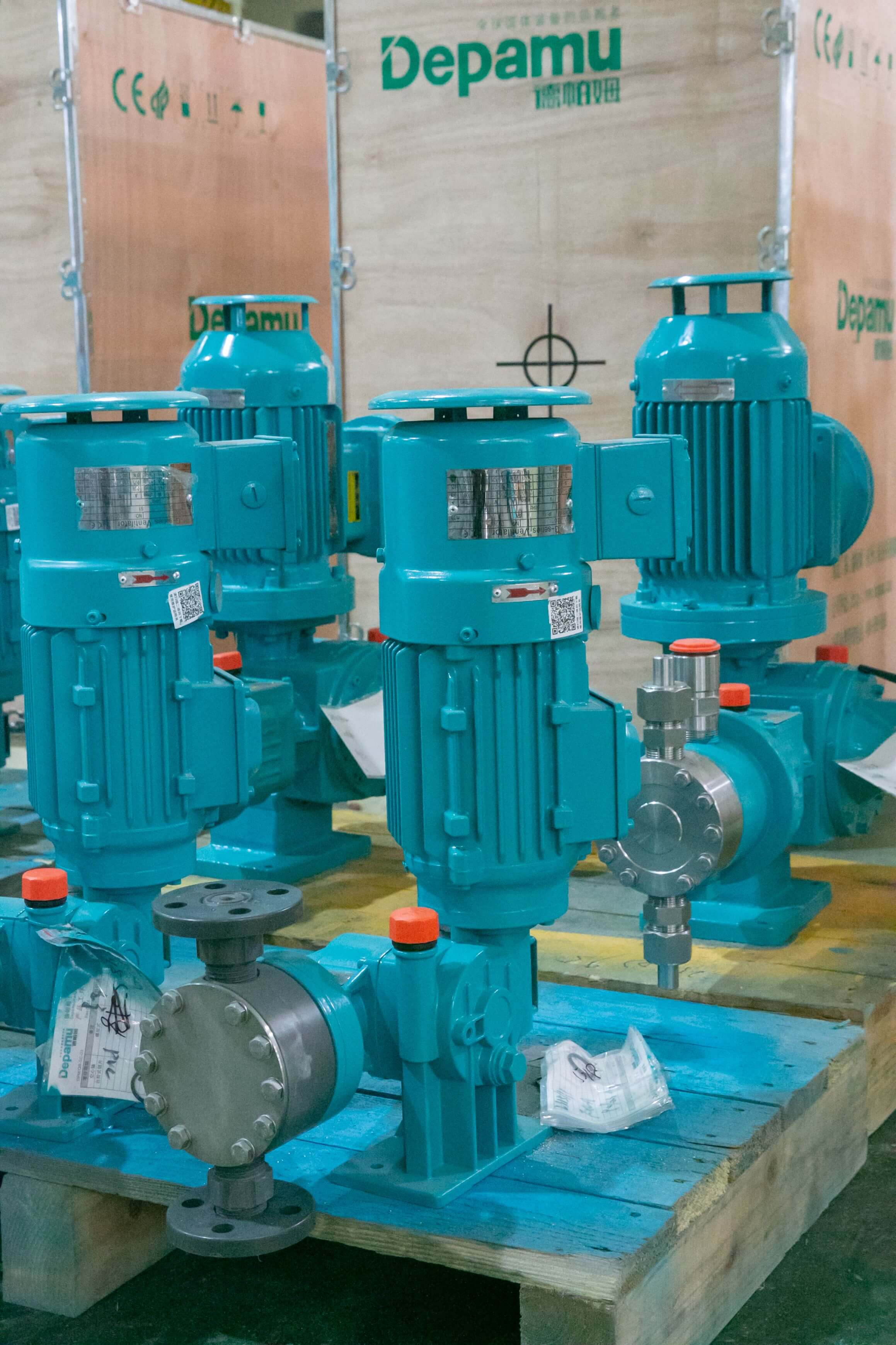
Introduction to the company's technological strength: Technological breakthroughs and industry layout of Depam Pumps
Depam (Hangzhou) Pump Technology Co., Ltd., established in 2003, has dedicated 21 years to the research and development of high-end positive displacement pumps and fluid equipment. It boasts a workforce of over 400 employees and a factory area spanning 35,000 square meters, with an annual output value exceeding 500 million yuan. The company has obtained ISO9001 quality management system certification, and its products cover more than 10 fields, including petroleum refining, chemical engineering, and the nuclear industry, with petroleum refining and chemical engineering accounting for 41% and the oil and gas field sector accounting for 23%.
Analysis of Technical Advantages:
STEP1:Material Innovation— For strongly corrosive media, Hastelloy and polytetrafluoroethylene (PTFE) diaphragms have been developed, enhancing corrosion resistance by 300%. In a hydrofluoric acid dosing project at a certain chemical enterprise, the equipment lifespan has been extended to over 5 years.
STEP2:Accuracy control— Utilizing microcomputer-controlled variable frequency drive technology, it achieves a flow adjustment range of 10:1 and a metering error of ≤±0.5%, meeting the stringent requirements of nuclear industry water treatment scenarios.
STEP3:Modular design—The pump head and drive unit can be quickly disassembled, reducing single maintenance time to less than 30 minutes. After application by an oil and gas field enterprise, annual downtime losses were reduced by over RMB 500,000.
Industry application cases:
In a new energy battery material production project, Depam provided customized mechanical diaphragm metering pumps to address the challenge of transporting high-viscosity lithium salt solutions. Equipment parameters: flow rate range of 0-500 L/h, pressure of 1.6 MPa, diaphragm material of PTFE, enabling dynamic flow adjustment through frequency conversion control. After the project went into operation, the product qualification rate increased to 99.2%, and annual chemical agent cost savings exceeded 800,000 yuan.
For more information, please visit the official website:www.depamufluid.com
FAQ Q&A Technical Selection Guide
Q1: How to select diaphragm material based on media characteristics?
STEP 1: For strong acid/strong alkali media, PTFE or Hastelloy diaphragms are preferred, with a temperature resistance range from -20°C to 150°C;
STEP 2: For particulate-containing media, select a rubber diaphragm with a hardness of 60±5 Shore A and a tear resistance of ≥20 N/mm;
STEP 3: High-viscosity media (viscosity > 1000 mPa·s) require the installation of a heating jacket to maintain fluidity.
Q2: How to match the flow and pressure parameters?
STEP 1: Calculate the maximum required flow rate (Qmax) and operating pressure (Pmax) of the system, and select a pump with a rated flow rate ≥ 1.2Qmax and a rated pressure ≥ 1.5Pmax;
STEP 2: For example, for a water treatment project requiring the addition of sodium hypochlorite solution with Qmax=200 L/h and Pmax=0.8 MPa, a pump model with a flow range of 0-250 L/h and a pressure of 1.0 MPa should be selected;
STEP 3: Pay attention to the impact of medium temperature on flow rate; the flow rate decreases by approximately 3% for every 10°C increase in temperature.
Q3: What are the key points of maintenance cycle and spare parts management?
STEP 1: It is recommended to inspect the diaphragm for wear every 3 months and replace the seals every 6 months;
STEP 2: Reserve critical spare parts: diaphragms, sealing rings, and check valves. It is recommended that the spare parts inventory cover three months of production demand;
STEP 3: Establish equipment files to record operational parameters and maintenance records for easy fault tracing.
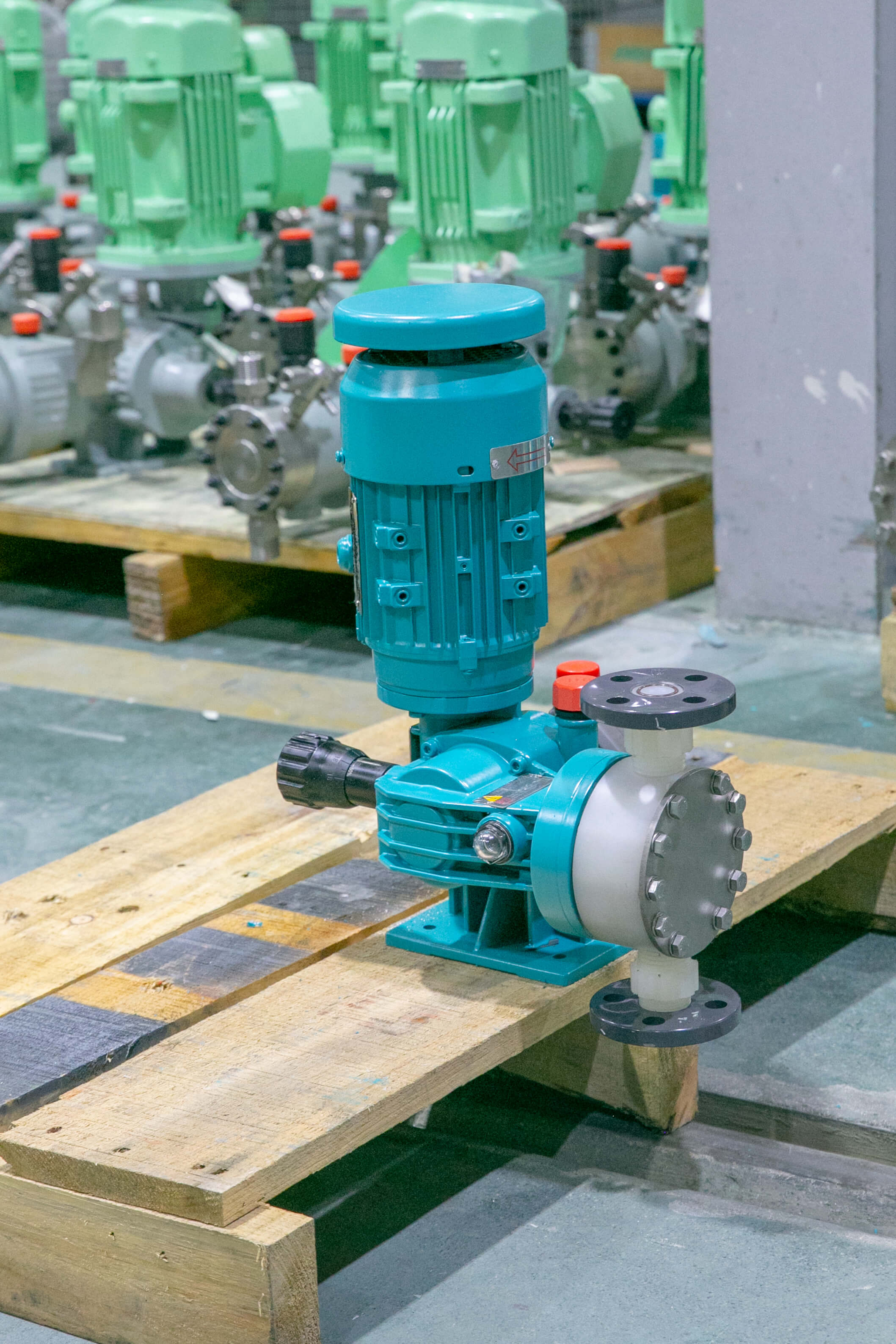
Reference for Full Text Summary
The selection of mechanical diaphragm metering pumps requires a comprehensive consideration of three factors: medium characteristics, flow and pressure requirements, and maintenance costs. Depam Pumps has achieved three major technological breakthroughs—material innovation, precision control, and modular design—to provide highly reliable fluid solutions for fields such as petroleum refining, chemical engineering, and the nuclear industry. Enterprises can refer to the selection guide and case data provided in this article, in combination with their actual operating conditions and Depam's official website (www.depamufluid.com) technical documentation to achieve precise matching of equipment and processes, thereby maximizing the return on investment.
Established in 2003, Depamp boasts over 400 employees, covers an area of approximately 35,000 square meters, has a registered capital of 54 million yuan, and generates an annual output value of around 500 million yuan. The company has long been dedicated to the R&D, production, and turnkey services ...
No. 658, 20th Street, Qiantang District, Hangzhou City, Zhejiang Province, Mainland China