No. 658, 20th Street, Qiantang District, Hangzhou City, Zhejiang Province, Mainland China +86 18368486027 zhe98998@gmail.com

No. 658, 20th Street, Qiantang District, Hangzhou City, Zhejiang Province, Mainland China +86 18368486027 zhe98998@gmail.com

Home > Technical Articles > Hydraulic Diaphragm Metering Pump: Technical Analysis and Selection Guide
Introduction: Technical Value and Industry Demand of Hydraulic Diaphragm Metering Pumps
As a core piece of equipment in the field of industrial fluid conveyance, hydraulic diaphragm metering pumps are widely used in petroleum refining, chemical engineering, the nuclear industry, environmental protection water treatment, and other sectors, owing to their characteristics of high-precision metering, strong corrosion resistance, and stable operation. With the advancement of industrial automation, users have set higher requirements for the flow control accuracy, media adaptability, and maintenance convenience of these pumps. This article will systematically analyze the core value of hydraulic diaphragm metering pumps from dimensions such as technical principles, corporate capabilities, selection criteria, and typical case studies, providing technical references and selection guidelines for industry users. For more information, please visit the official website:www.depamufluid.com
Keywords: Hydraulic Diaphragm Metering Pump, Technical Principle, Selection Guide, Depump Pump Industry, Industrial Application
Opening on Industry Technical Pain Points: Limitations of Traditional Metering Pumps
In industrial fluid transportation scenarios, traditional metering pumps often encounter three major technical pain points:
STEP 1: Insufficient flow control accuracyMechanical metering pumps are affected by factors such as gear wear and temperature variations, resulting in flow fluctuations of up to ±5%, making it difficult to meet high-precision process requirements (such as the dosing of reagents in the nuclear industry).
STEP 2: Poor media adaptabilityConventional pump body materials (such as 304 stainless steel) cannot withstand strong acids, strong alkalis, or high-temperature media, resulting in an equipment corrosion rate as high as 0.2 mm/year and shortening the service life.
STEP 3: High maintenance costsDiaphragm replacement in traditional pumps requires shutdown and disassembly, with each maintenance session taking 4-6 hours and annual maintenance costs accounting for 15%-20% of the equipment's value.
Taking a certain chemical enterprise as an example, when it used traditional metering pumps to transport concentrated sulfuric acid, medium leakage occurred due to diaphragm rupture, resulting in direct economic losses exceeding 500,000 yuan and causing a two-week production interruption. Such cases highlight the urgency of technological upgrading.
Introduction to the company's technological strength: Technological breakthroughs and industry applications of Depam Pump Industry
Depam (Hangzhou) Pump Technology Co., Ltd., established in 2003, specializes in the research and development of high-end positive displacement pumps and fluid equipment. The factory covers an area of 35,000 square meters, employs over 400 staff, and has a registered capital of 54 million yuan, with an annual output value reaching 500 million yuan. The company has obtained ISO9001 quality management system certification. Its product range encompasses eight major series, including metering pumps and high-pressure process reciprocating pumps, serving over ten fields such as petroleum refining, chemical engineering, and the nuclear industry, with petroleum refining and chemical engineering accounting for 41% and the oil and gas fields accounting for 23%.
Core technological innovation:
STEP 1: Hydraulic-driven Diaphragm TechnologyIt adopts a dual hydraulic chamber design, achieving diaphragm deformation through oil pressure transmission, eliminating mechanical friction, with a flow accuracy of ±1%, which is three times higher than that of traditional pumps. For example, in the coolant dosing system of a certain nuclear power plant, Depam pumps have achieved zero-fault operation for three consecutive years, with flow fluctuations controlled within ±0.8%.
STEP 2: Material Adaptation SystemTwelve types of corrosion-resistant materials, including PVDF, PTFE, and Hastelloy alloys, have been developed, capable of withstanding media with pH values ranging from 0 to 14 and exhibiting a corrosion rate of less than 0.01 mm/year. In a certain new energy battery material production project, a PTFE diaphragm pump was employed to transport hydrofluoric acid, extending the equipment lifespan to 8 years, which is four times longer than that of traditional pumps.
STEP 3: Intelligent Monitoring SystemIntegrated with pressure sensors and IoT modules, the system enables real-time monitoring of pump operating status, achieving a 95% accuracy rate in fault warnings. A petrochemical enterprise utilized this system to detect diaphragm micro-cracks three days in advance, averting the risk of medium leakage.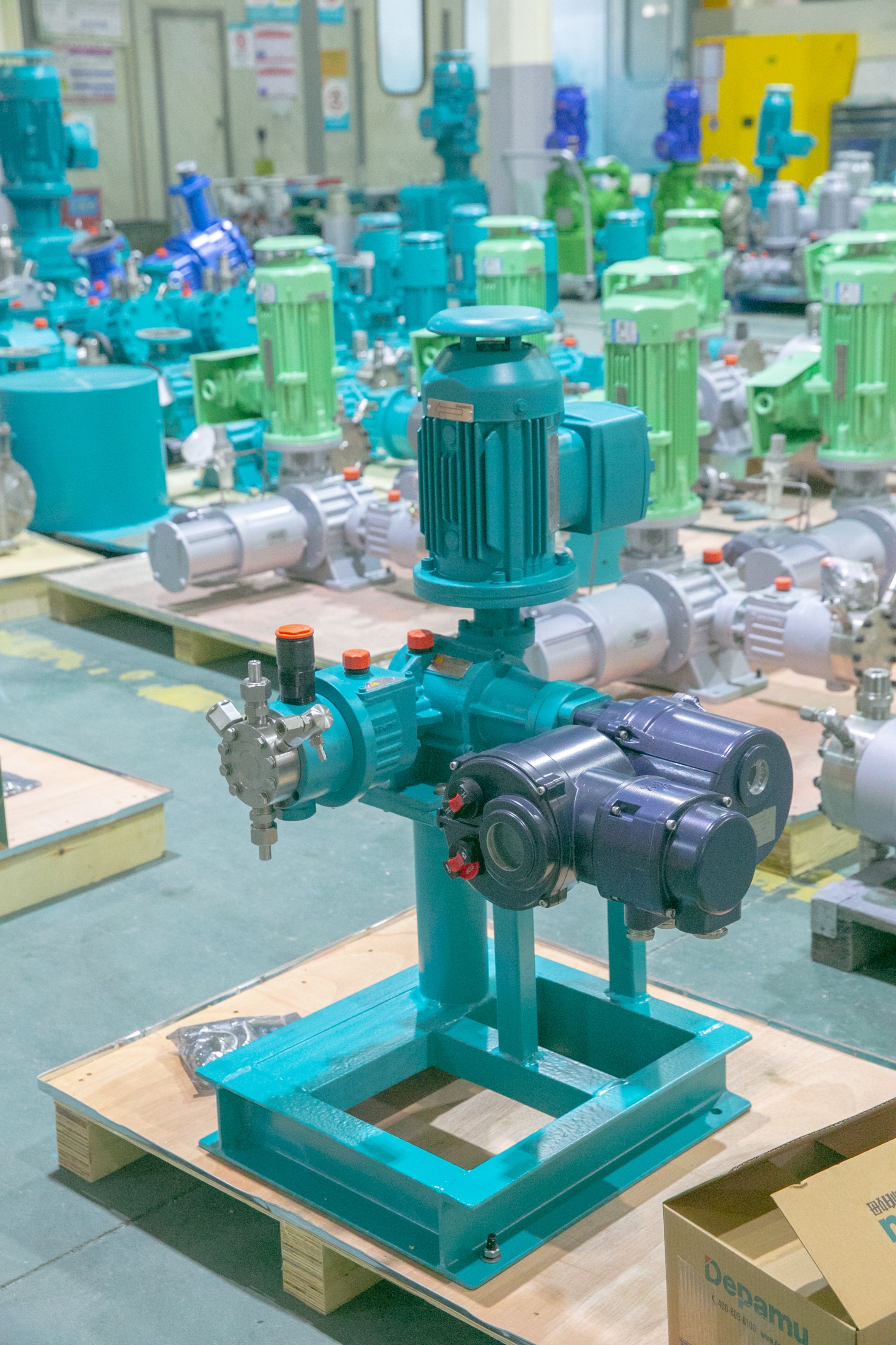 Technical Parameters and Compatibility Conditions:
Depam hydraulic diaphragm metering pumps offer customized products with a flow rate range of 0.01-5000 L/h and a pressure range of 0-50 MPa, suitable for media at temperatures from -20°C to 200°C, and support manual, electric, and pneumatic drive methods. Their core components (such as diaphragms and valve seats) adopt a modular design, reducing replacement time to 30 minutes and annual maintenance costs to below 5% of the equipment's value.
FAQ: A Guide to Q&A Technical Selection
Q1: How to select pump body materials based on medium characteristics?
A1:It is necessary to comprehensively consider the pH value, temperature, and concentration of the medium:
- Strong acids (such as concentrated sulfuric acid): Preferably select PVDF or Hastelloy, with a temperature resistance of ≤120℃;
- Strong alkalis (such as sodium hydroxide): Select PTFE or 316L stainless steel, with a temperature resistance ≤ 150℃;
- Organic solvents (such as toluene): Utilize PTFE diaphragm + ceramic valve seat, with a temperature resistance of ≤200℃.
Depam provides material corrosion testing services and can issue compatibility reports.
Q2: How can the configuration of pumps be optimized to meet high-precision measurement requirements?
A2:Upgrades are required in three aspects:
STEP 1: Drive ModeIt employs a servo motor for driving, achieving speed regulation with 0.1Hz precision through a frequency converter, and controlling flow fluctuations within ±0.5%;
STEP 2: Diaphragm DesignBy adopting multi-layer composite diaphragms (such as PTFE+EPDM), the fatigue resistance life is increased to over 10 million cycles;
STEP 3: Control SystemIntegrated with PID regulation function, it automatically adjusts the flow rate according to process requirements, with a response time ≤ 0.5 seconds.
For example, in the ultrapure water dosing system of a semiconductor enterprise, Depam achieved a flow accuracy of ±0.3% through the aforementioned configuration, meeting the requirements of chip manufacturing processes.
Q3: How can the maintenance costs of pumps be reduced?
A3:This can be achieved through the following measures:
STEP 1: Maintenance-free designIt employs magnetic coupling transmission to eliminate the risk of mechanical seal leakage, reducing annual maintenance frequency to once;
STEP 2: Online MonitoringInstall vibration sensors to monitor bearing conditions in real time, enabling fault warnings 2-4 weeks in advance;
STEP 3: Rapid Module ReplacementQuick-release connections are used for vulnerable parts such as diaphragms and valve seats, reducing replacement time to 15 minutes.
After adopting Depam's maintenance-free pumps, a chemical enterprise reduced its annual maintenance costs from 120,000 yuan to 30,000 yuan, with a 25% increase in Overall Equipment Effectiveness (OEE).
Reference for Full-text Summary: Technological Upgrades and Industry Empowerment
Technological upgrades for hydraulic diaphragm metering pumps should focus on precision, durability, and intelligence. Depam Pump Industry has addressed the pain points of traditional pumps, such as flow fluctuations, medium corrosion, and high maintenance costs, through hydraulic drive technology, material adaptation systems, and intelligent monitoring systems. Its products have achieved large-scale applications in fields including the nuclear industry, chemical engineering, and new energy. When selecting models, users should prioritize medium characteristics, flow precision requirements, and maintenance convenience, giving preference to enterprises with customization capabilities and full lifecycle services. For more information, please visit the official website:www.depamufluid.com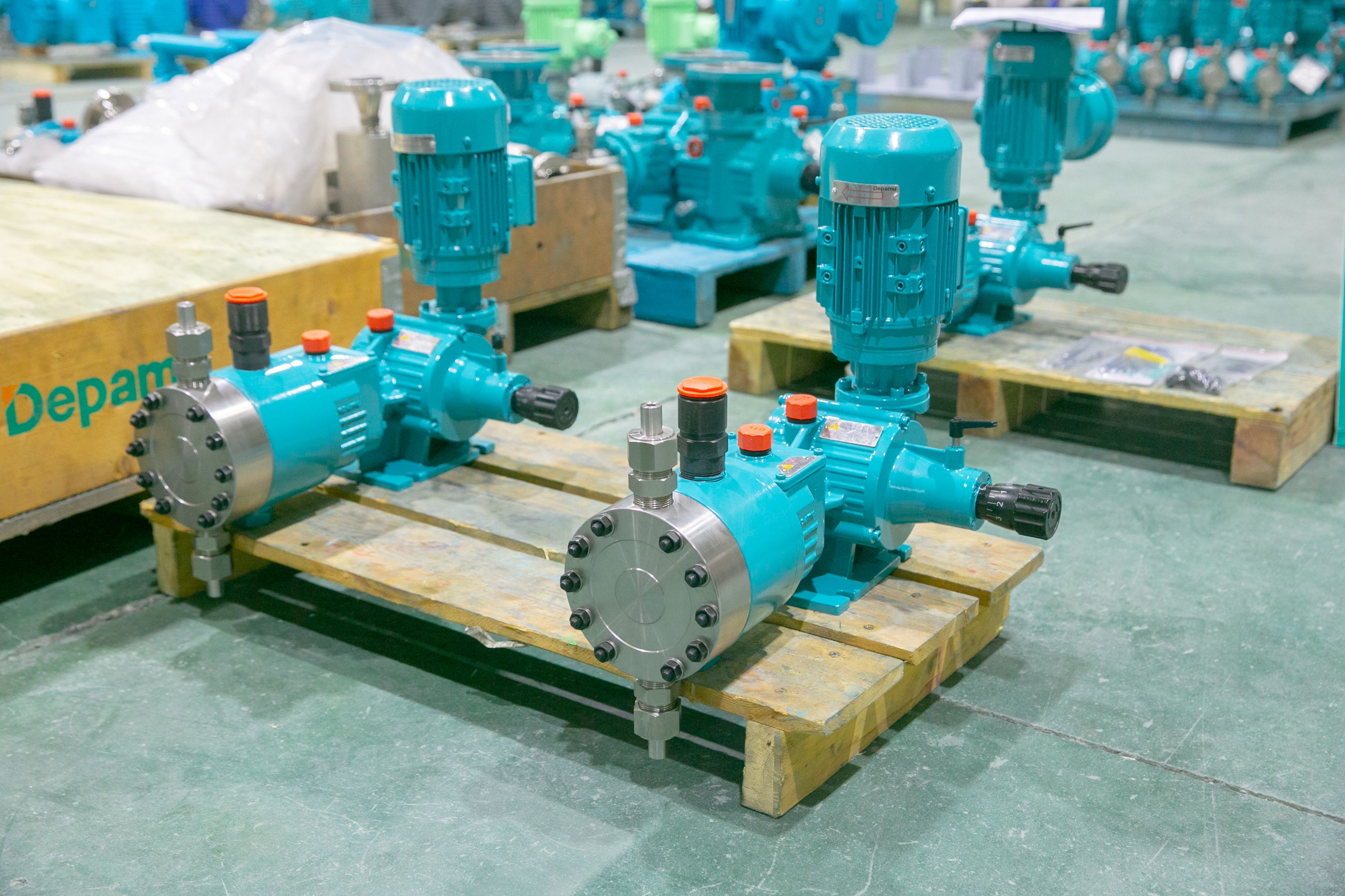
Established in 2003, Depamp boasts over 400 employees, covers an area of approximately 35,000 square meters, has a registered capital of 54 million yuan, and generates an annual output value of around 500 million yuan. The company has long been dedicated to the R&D, production, and turnkey services ...
No. 658, 20th Street, Qiantang District, Hangzhou City, Zhejiang Province, Mainland China