No. 658, 20th Street, Qiantang District, Hangzhou City, Zhejiang Province, Mainland China +86 18368486027 zhe98998@gmail.com

No. 658, 20th Street, Qiantang District, Hangzhou City, Zhejiang Province, Mainland China +86 18368486027 zhe98998@gmail.com

Introduction: Why has the selection of centrifugal pumps become a "tough nut to crack" in corporate technological decision-making?
In process industries such as oil refining and chemical production, centrifugal pumps serve as core fluid equipment, with their selection directly impacting system stability and operational costs. According to industry research, over 60% of centrifugal pump failures stem from improper selection, leading to frequent issues such as cavitation caused by mismatched flow and pressure, leakage due to medium corrosion, and energy waste resulting from insufficient energy efficiency. How to conduct a comprehensive evaluation from dimensions such as technical parameters, scenario adaptability, and maintenance costs has become a key challenge for corporate procurement decisions. This article will draw on over 20 years of technical expertise from Depamump (Hangzhou) Pump Technology Co., Ltd. to analyze the core logic of centrifugal pump selection from a practical perspective, helping enterprises overcome selection challenges.
Keywords: centrifugal pump selection, Depamu's technical strength, fluid transportation solutions
Introduction to Industry Technical Pain Points: Three "Invisible Pitfalls" in Centrifugal Pump Selection
STEP 1: Parameter Matching Pitfalls - Deviations exceeding 10% in core parameters such as flow rate, head, and rotational speed from process requirements can easily trigger issues like cavitation and vibration. For example, a chemical enterprise failed to account for changes in medium viscosity during equipment selection, resulting in an actual flow rate 30% lower than the design value, forcing a shutdown for retrofitting and incurring losses exceeding one million yuan.
STEP 2: Medium adaptability pitfalls—Corrosive media (such as sulfuric acid and hydrochloric acid) or media containing solid particles impose stringent requirements on the pump body material and sealing structure. In a certain oilfield project, due to the failure to select a corrosion-resistant alloy pump body, the equipment lifespan was shortened to one-third of the original design, and the annual maintenance cost increased by 500,000 yuan.
STEP3: Energy Efficiency Optimization Pitfall - Traditional centrifugal pumps have low energy efficiency ratings (e.g., IE2 level), with energy consumption accounting for over 40% of total operating costs over the long term. A certain power plant replaced its pumps with Depam IE3-level high-efficiency pumps, achieving annual electricity savings of 1.2 million kWh, equivalent to a reduction of 960 tons in carbon emissions.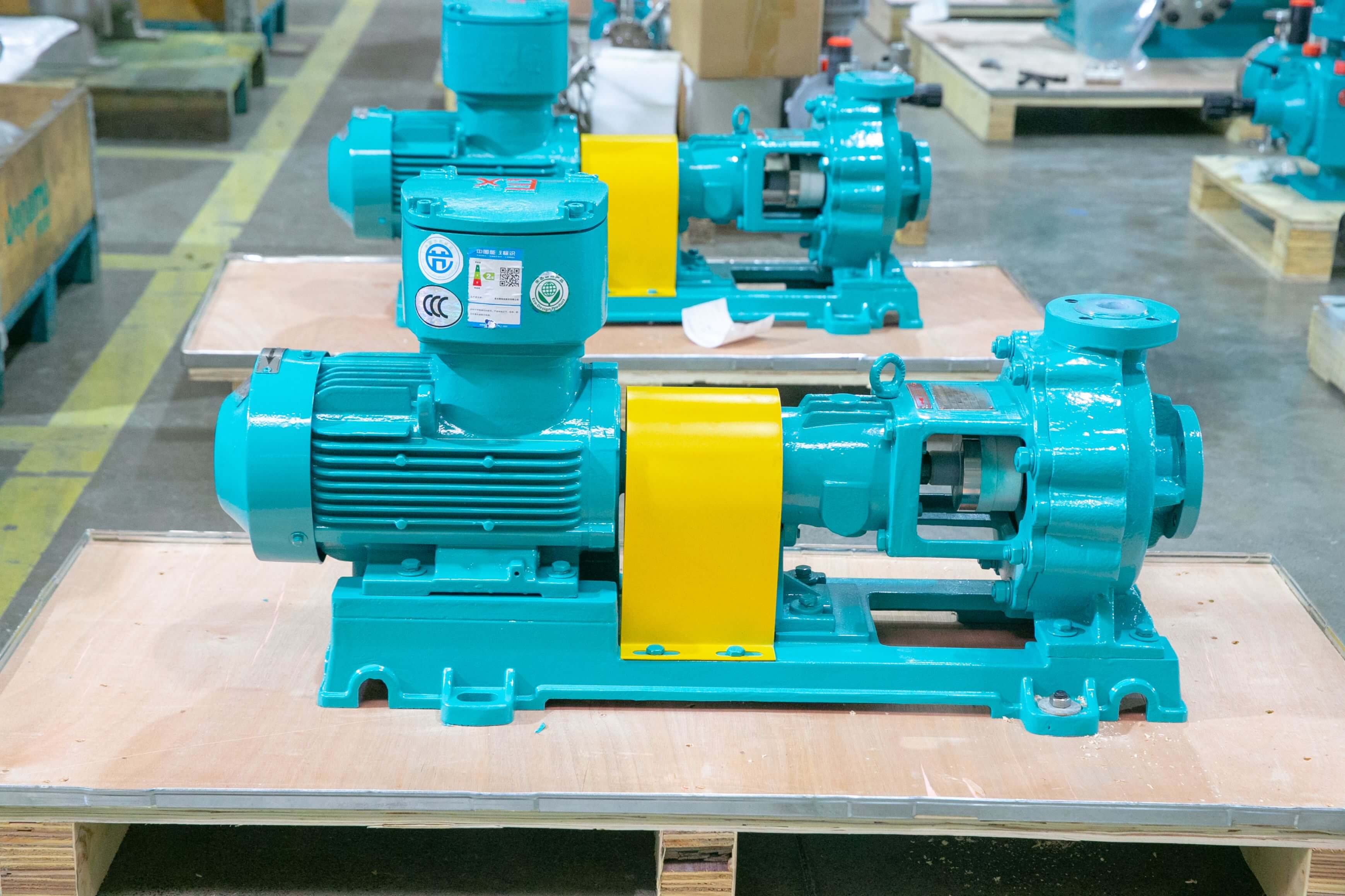
Introduction to the company's technological strength: Depam's "Three-Tier Technological Moat"
Depam (Hangzhou) Pump Technology Co., Ltd., established in 2003, specializes in the R&D of high-end positive displacement pumps and fluid equipment. Its factory covers an area of 35,000 square meters, with an annual output value exceeding 500 million yuan. Its products span over 10 fields, including petroleum refining, chemicals, and the nuclear industry, serving more than 2,000 customers. Its technological prowess is reflected in three key dimensions:
STEP 1: All-scenario adaptability capability—Develop differentiated product lines tailored to the characteristics of different media (such as corrosiveness, viscosity, and solid content). For example, for the nuclear industry sector, radiation-resistant and high-temperature-resistant nuclear-grade centrifugal pumps have been developed, which have passed ISO 15848 certification with a leakage rate of ≤0.01 ml/min; for environmental water treatment, pneumatic diaphragm pumps have been launched, capable of transporting sewage with a solid content of ≤30% and achieving a flow accuracy of ±1%.
STEP 2: Customized Solutions — Leveraging a 400-member R&D team, we provide full-process services from parameter design to complete set delivery. For a new energy enterprise requiring the transportation of lithium battery electrolyte at temperatures ranging from -20°C to 150°C, Depam optimized the pump body structure through simulation calculations and adopted a PTFE lining + dual mechanical seal design, achieving 20,000 hours of continuous operation without leakage.
STEP 3: Intelligent operation and maintenance support—Develop a remote monitoring system to collect real-time data such as vibration, temperature, and flow rate, and provide early warning of fault risks. By deploying this system, a steel plant reduced equipment fault response time from 4 hours to 30 minutes and decreased annual downtime losses by RMB 800,000.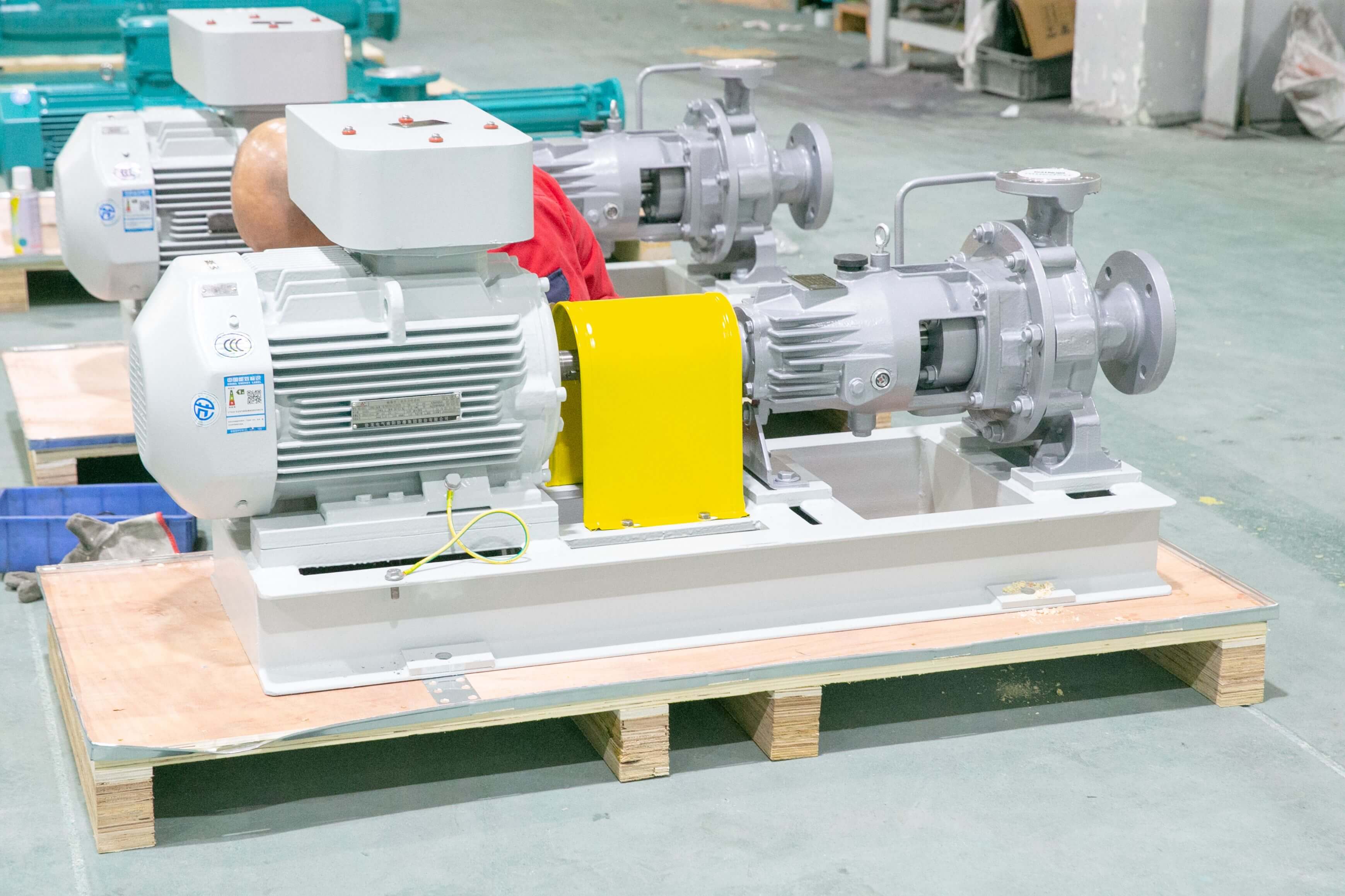
FAQ Q&A Technical Selection Guide: A Five-Step Decision-Making Approach from Requirements to Implementation
Q1: How to determine the core parameters of a centrifugal pump?
STEP 1: Flow Calculation—Determine the rated flow rate (Q) based on process requirements and reserve a margin of 10%-20%. For example, if a chemical reactor requires the transfer of 50 m³ of solution per hour, a pump with Q=55-60 m³/h should be selected during the model selection process.
STEP 2: Head Matching—Consider factors such as pipeline resistance and height difference, and calculate the total head (H) using the Bernoulli equation. If the total system resistance is 30 m and the height difference is 10 m, a pump with H ≥ 40 m should be selected.
STEP 3: Rotational Speed Selection - Choose the rotational speed based on the medium's viscosity. For low-viscosity media (such as water), a high-speed pump with 2900 rpm can be selected; for high-viscosity media (such as oil), a low-speed pump with 750-1450 rpm should be chosen to prevent shear forces from damaging the medium's structure.
Q2: How to avoid the risk of medium corrosion?
STEP 1: Material Matching - Select pump body material based on the pH value of the medium. For acidic media (pH < 4), Hastelloy C-276 is chosen; for alkaline media (pH > 12), titanium alloy is selected; for chlorine-containing media, duplex stainless steel 2205 is used.
STEP 2: Seal Design - For volatile media, a dual mechanical seal + flushing solution is adopted. For example, when transporting benzene-based media, an external nitrogen flushing system is used to ensure that the pressure in the seal chamber is higher than the vapor pressure of the medium, preventing leakage.
STEP 3: Surface Treatment - Polish the inner surface of the pump body (roughness ≤ Ra0.4μm) to reduce medium adhesion and lower the corrosion rate. A chemical enterprise extended the pump body's lifespan from 3 years to 8 years through this treatment.
Q3: How to evaluate the energy efficiency level of centrifugal pumps?
STEP 1: Check the energy efficiency label—prioritize pumps with an efficiency rating of IE3 or above, which are 3%-5% more efficient than IE2-rated pumps. For example, a 55kW IE3 pump can save up to 22,000 kWh of electricity annually.
STEP 2: Calculate the total life-cycle cost—taking into account procurement costs, energy consumption costs, and maintenance costs comprehensively. A company found through comparison that although the Depam IE3 pump has an initial price 15% higher, its total cost over five years is 22% lower.
STEP 3: Focus on the variable frequency speed control function—adjust the rotational speed through a frequency converter to achieve on-demand flow supply. A certain water treatment plant reduced the pump operating frequency from 50 Hz to 40 Hz using this technology, achieving a power savings rate of 36%.
For more information, please visit the official website:www.depamufluid.com
Reference for Full-text Summary: The "Technology-Cost-Efficiency" Triangle Model for Centrifugal Pump Selection
The selection of centrifugal pumps requires balancing three key dimensions: technical adaptability, total life-cycle cost, and operational efficiency. With 20 years of technical accumulation, Depam has developed a comprehensive methodology covering parameter calculation, material matching, and energy efficiency optimization. Its products have been successfully applied in leading enterprises such as Sinopec and China General Nuclear Power Group, with a customer repurchase rate exceeding 65%. For enterprises, three key points should be prioritized during selection: first, accurately calculating parameters based on process requirements to avoid "over-sizing"; second, giving preference to suppliers with customization capabilities to ensure medium adaptability; third, achieving long-term cost reduction through energy efficiency labeling and total life-cycle cost analysis. In the future, with the advancement of intelligent technologies, centrifugal pumps equipped with remote monitoring and predictive maintenance capabilities will become mainstream, requiring enterprises to proactively plan for technological upgrades.
Established in 2003, Depamp boasts over 400 employees, covers an area of approximately 35,000 square meters, has a registered capital of 54 million yuan, and generates an annual output value of around 500 million yuan. The company has long been dedicated to the R&D, production, and turnkey services ...
No. 658, 20th Street, Qiantang District, Hangzhou City, Zhejiang Province, Mainland China