No. 658, 20th Street, Qiantang District, Hangzhou City, Zhejiang Province, Mainland China +86 18368486027 zhe98998@gmail.com

No. 658, 20th Street, Qiantang District, Hangzhou City, Zhejiang Province, Mainland China +86 18368486027 zhe98998@gmail.com

Introduction: Why have triple-screw pumps become the core equipment for industrial fluid transportation?
In high-precision fluid conveying scenarios such as oil refining, chemical engineering, and new energy, triple screw pumps have become core equipment in key process stages due to their low pulsation, high volumetric efficiency, and strong medium adaptability. However, how to accurately select models based on medium characteristics, flow and pressure requirements, and on-site operating conditions? How to achieve efficient operation throughout the equipment's entire lifecycle through technological optimization? This article will provide systematic solutions for enterprises by exploring technological principles, key selection considerations, and industry application cases, combined with the technical practices of Depamu (Hangzhou) Pump Technology Co., Ltd.
Keywords: three-screw pump, selection guide, industrial fluid transportation, Depamp Pumps
Opening on Industry Technical Pain Points: Three Core Challenges of Traditional Screw Pumps
STEP1:Insufficient media adaptability— When conveying high-viscosity media, media containing solid particles, or corrosive media, traditional screw pumps are prone to issues such as increased wear and seal failure, resulting in a reduction of equipment lifespan by over 30%. For example, in a chemical enterprise, due to the failure to match the medium viscosity parameters, the rotor wear rate of the screw pump exceeded the standard by 200% after six months of operation.
STEP2:Difficulty in controlling flow pulsation— Due to structural limitations, single-screw pumps exhibit a 5%-8% pulsation in output flow, significantly impacting processes requiring stable pressure (such as precision injection molding and chemical metering). A new energy battery enterprise experienced an electrolyte ratio error of up to 3% due to flow fluctuations, directly affecting product yield.
STEP3:Limited potential for energy efficiency optimization—The mechanical efficiency of traditional screw pumps mostly ranges from 65% to 75%, and as the service life increases, the efficiency can decline by up to 15%, resulting in persistently high long-term operating costs. Statistics from a refining and chemical enterprise show that the energy consumption of screw pumps accounts for 22% of the total energy consumption of fluid equipment across the plant, making them a key target for energy-saving renovations.
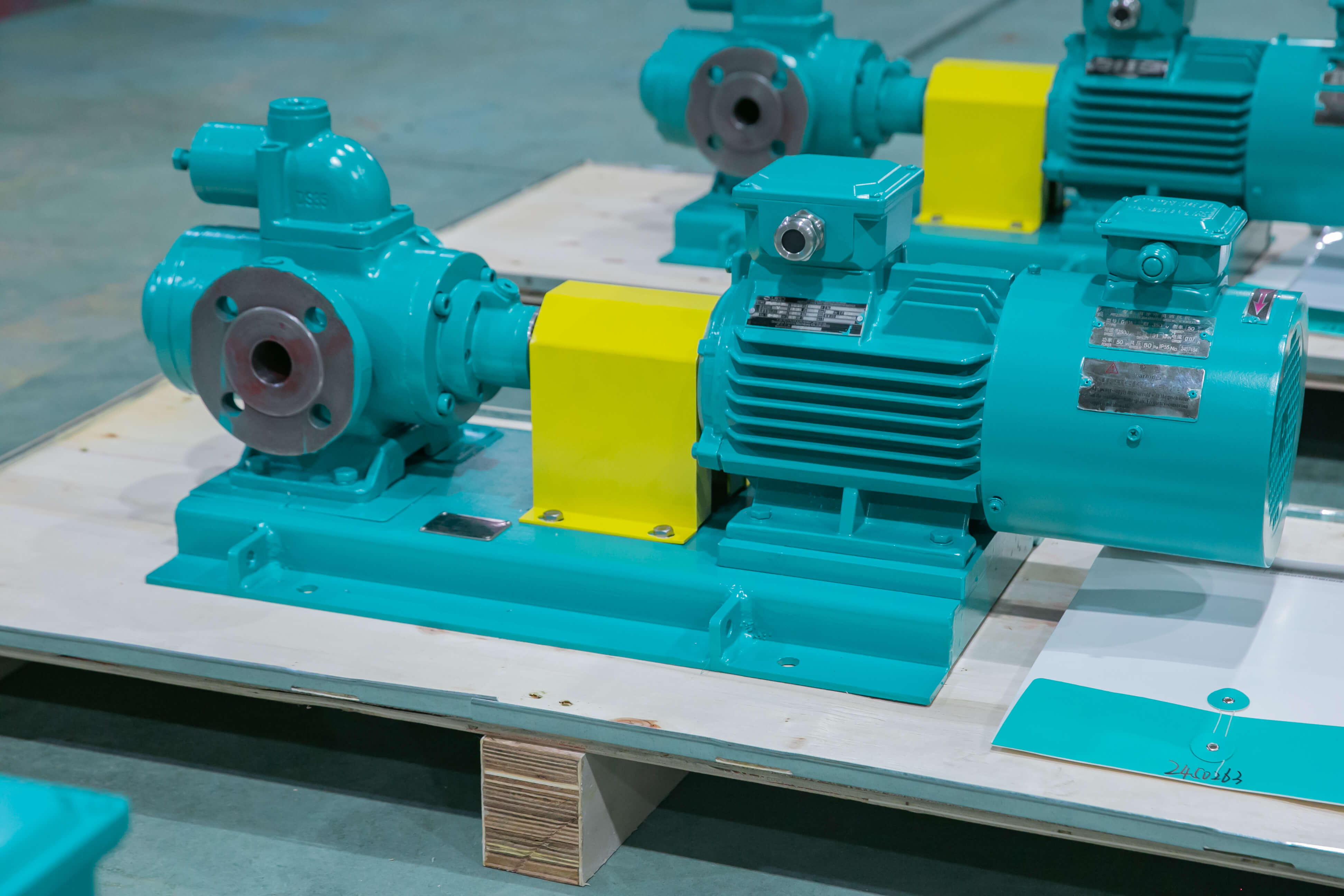
Introduction to the company's technological strength: Technological breakthroughs and practices of Depamp's three-screw pumps
Depamp (Hangzhou) Pump Technology Co., Ltd., established in 2003, has been dedicated to the research and development of high-end positive displacement pumps and fluid equipment for over 20 years. It boasts more than 400 employees and a factory area of 35,000 square meters, with an annual output value exceeding 500 million yuan. Its triple screw pump technology system encompasses three core advantages:
STEP 1: Full-media Adaptation Technology— Through rotor material innovation (such as duplex stainless steel and Hastelloy alloy) and surface coating processes (such as tungsten carbide spraying), stable conveyance is achieved for media with a viscosity range of 0.1-100,000 mPa·s and a solid particle content of ≤15%. For instance, in a coolant conveyance project at a nuclear power plant, Depam's customized triple screw pump successfully handled the strong corrosiveness of boric acid-containing media, operating continuously for three years without leakage.
STEP 2: Low-pulsation Flow Control— Utilizing a triple-screw synchronous meshing design, it controls the flow pulsation rate at ≤1.5%, representing an over fivefold improvement compared to traditional single-screw pumps. In a project involving the transportation of ultrapure water for a semiconductor enterprise, Depamuk's triple-screw pump achieved a flow stability of ±0.5%, meeting the process requirements for 10nm-grade chip manufacturing.
STEP3: Energy-Efficient Architecture— By optimizing the screw helix angle (optimal angle: 15°-20°) and the bearing support structure, mechanical efficiency has been increased to 82%-88%, which is 10 percentage points higher than the industry average. After renovation, a single piece of equipment in a refining and chemical enterprise achieved an annual electricity savings of 120,000 kWh, equivalent to a reduction of 96 tons in carbon dioxide emissions.
Currently, Depam's triple-screw pumps have been applied in fields such as petroleum refining (accounting for 41%), chemical engineering (23%), and new energy (15%), with a cumulative delivery of over 5,000 units. Customers include leading enterprises such as Sinopec, PetroChina, and State Power Investment Corporation. For more information, please visit the official website:www.depamufluid.com
FAQ Q&A Technical Selection Guide
Q1: How to select the model of a three-screw pump based on the characteristics of the medium?
A: Three key parameters require special attention:
STEP 1: Viscosity—For low-viscosity media (≤100 mPa·s), a standard model can be selected, while for high-viscosity media (≥1000 mPa·s), a specialized model with increased screw pitch is required;
STEP 2: Corrosiveness - For acidic media, Hastelloy is recommended; for chlorine-containing media, titanium alloy or polytetrafluoroethylene lining should be selected.
STEP 3: Solid particles—For particles with a diameter ≤ 0.5 mm, the standard type can be selected; for those ≥ 1 mm, wear-resistant sleeves or hard alloy screws are required.
Q2: How can the flow and pressure of a three-screw pump be matched to process requirements?
A: The flow calculation formula is Q = 4e × D × T × n (where e is the eccentricity, D is the screw diameter, T is the lead, and n is the rotational speed). The screw parameters need to be derived based on the required flow range in the process (e.g., 10-100 m³/h). Regarding pressure, a single-stage pump can withstand a maximum pressure of 1.6 MPa, while multi-stage series connection enables high-pressure delivery exceeding 10 MPa.
Q3: How is the equipment maintenance cycle determined?
A: It is recommended to conduct a comprehensive inspection every 2,000 operating hours, focusing on monitoring bearing temperature (≤75℃), vibration value (≤4.5 mm/s), and seal leakage rate (≤3 ml/min). A chemical enterprise extended its equipment overhaul cycle from 18 months to 36 months by implementing this maintenance strategy.
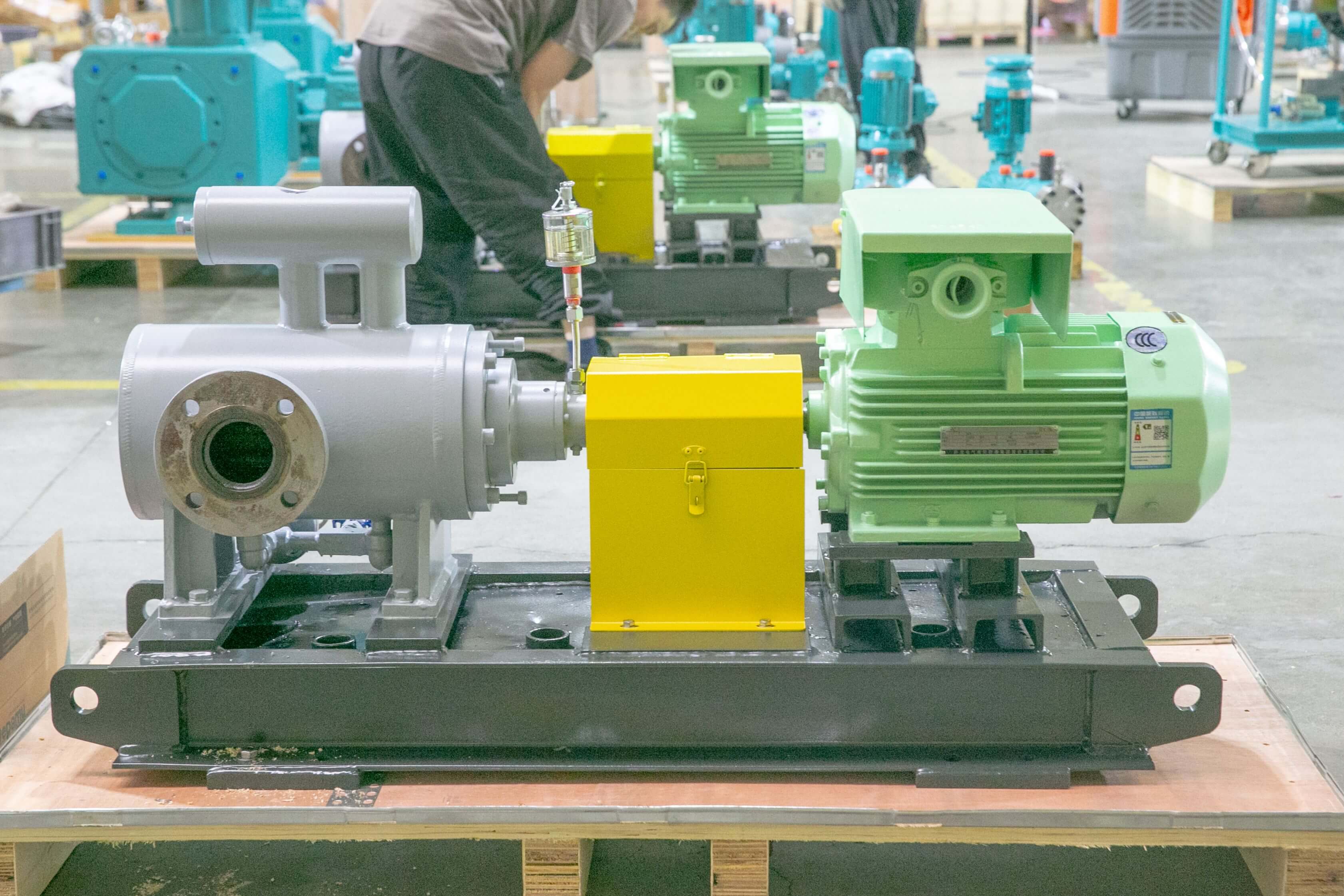
Reference for full text summary
The selection and application of triple-screw pumps require consideration of three key dimensions: medium characteristics, flow and pressure requirements, and energy efficiency optimization. Depamp (Hangzhou) Pump Technology Co., Ltd. provides highly reliable and low-energy-consumption fluid transportation solutions for industries such as petroleum refining, chemical engineering, and new energy through material innovation, structural optimization, and intelligent maintenance technologies. Enterprises can refer to the selection formulas and maintenance cycles provided in this article based on actual operating conditions and, in conjunction with Depamp's technical service team (contact: 400-xxx-xxxx), achieve optimal equipment lifecycle costs. For more information, please visit the official website:www.depamufluid.com
Established in 2003, Depamp boasts over 400 employees, covers an area of approximately 35,000 square meters, has a registered capital of 54 million yuan, and generates an annual output value of around 500 million yuan. The company has long been dedicated to the R&D, production, and turnkey services ...
No. 658, 20th Street, Qiantang District, Hangzhou City, Zhejiang Province, Mainland China