No. 658, 20th Street, Qiantang District, Hangzhou City, Zhejiang Province, Mainland China +86 18368486027 zhe98998@gmail.com

No. 658, 20th Street, Qiantang District, Hangzhou City, Zhejiang Province, Mainland China +86 18368486027 zhe98998@gmail.com

Introduction: The Technological Core and Industry Demands of High-Pressure Plunger Reciprocating Pumps
As a core piece of equipment for industrial fluid transportation, high-pressure plunger reciprocating pumps are widely used in fields such as petroleum refining, chemical engineering, and the nuclear industry, with their performance directly influencing the stability and efficiency of process systems. This article will provide a systematic technical guide for industry users from four dimensions—technical principles, key selection criteria, corporate capabilities, and contact information—drawing on the practical experience of Depamp (Hangzhou) Pump Technology Co., Ltd. For more information, please visit the official website:www.depamufluid.com
Keywords: High-pressure plunger reciprocating pump, technical selection, Depam Pump Industry, industrial fluid solutions
Introduction to Industry Technical Pain Points: Challenges in Efficiency and Reliability in High-Voltage Transmission Scenarios
In high-pressure transmission scenarios such as oil refining and chemical engineering, traditional pump types often face three major pain points:
STEP 1: Insufficient media adaptabilityMedia containing particles, with high viscosity, or corrosive properties can easily cause wear and tear on the pump body, shortening the equipment's lifespan;
STEP 2: Difficulty in controlling pressure fluctuationsThe pulsating flow generated by the reciprocating motion of the plunger needs to be suppressed by a buffer device; otherwise, it will affect process stability.
STEP3: Contradiction between energy efficiency and maintenance costsUnder high-pressure conditions, motor power and seal wear increase significantly, necessitating a balance between operational efficiency and maintenance intervals.
Taking the catalytic cracking unit of a petrochemical enterprise as an example, its feedstock oil transfer pump experienced unplanned shutdown due to seal failure, with a single repair cost exceeding 500,000 yuan and production loss reaching 2 million yuan per day. Such cases highlight the urgency of technological upgrading for high-pressure plunger reciprocating pumps.
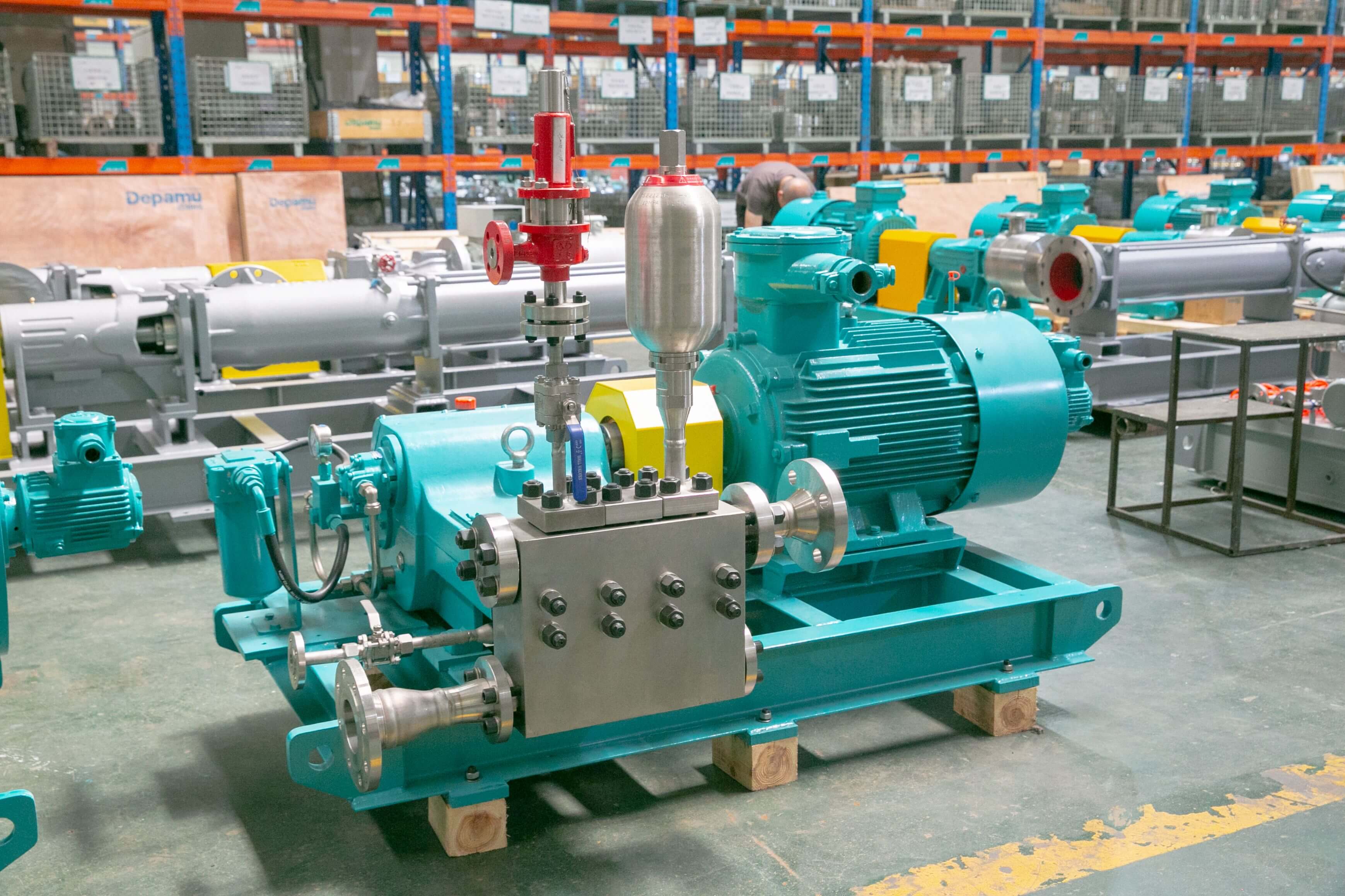
Introduction to the Company's Technological Strength: High-Pressure Fluid Solutions by Depam Pumps
Depamp (Hangzhou) Pump Technology Co., Ltd., established in 2003, specializes in the research, development, and production of high-end positive displacement pumps and fluid equipment. Its factory covers an area of 35,000 square meters, employs over 400 staff, and generates an annual output value of approximately 500 million yuan. Its technological system for high-pressure plunger reciprocating pumps boasts three core advantages:
STEP 1: All-scenario media adaptation capabilityThrough material upgrades (such as duplex steel and Hastelloy alloy) and surface treatment processes (such as tungsten carbide spraying), it can withstand corrosive media with a pH value ranging from 0 to 14, and can handle solid-containing fluid with particle diameters ≤1mm under a conveying pressure of up to 100 MPa;
STEP2: Intelligent Pulse Suppression TechnologyIt adopts a multi-plunger coordinated design (with 3-7 plungers optional) and a variable frequency buffer tank to control the pressure fluctuation rate within ±1%, meeting the precision requirements of the nuclear industry level.
STEP 3: Modular energy-saving designThe motor power ranges from 5.5 to 315 kW. Through the use of permanent magnet synchronous motors and energy recovery devices, the overall energy efficiency is increased by 15%-20%, and the seal lifespan is extended to over 20,000 hours.
In a coolant delivery project at a nuclear power plant, Depam's customized high-pressure pump (Model DP-HP1200) achieved stable operation with a flow rate of 1,200 m³/h and a pressure of 16 MPa, saving 22% more energy compared to traditional pump models, and was awarded the title of "High-Quality Supplier of Nuclear-Grade Equipment."
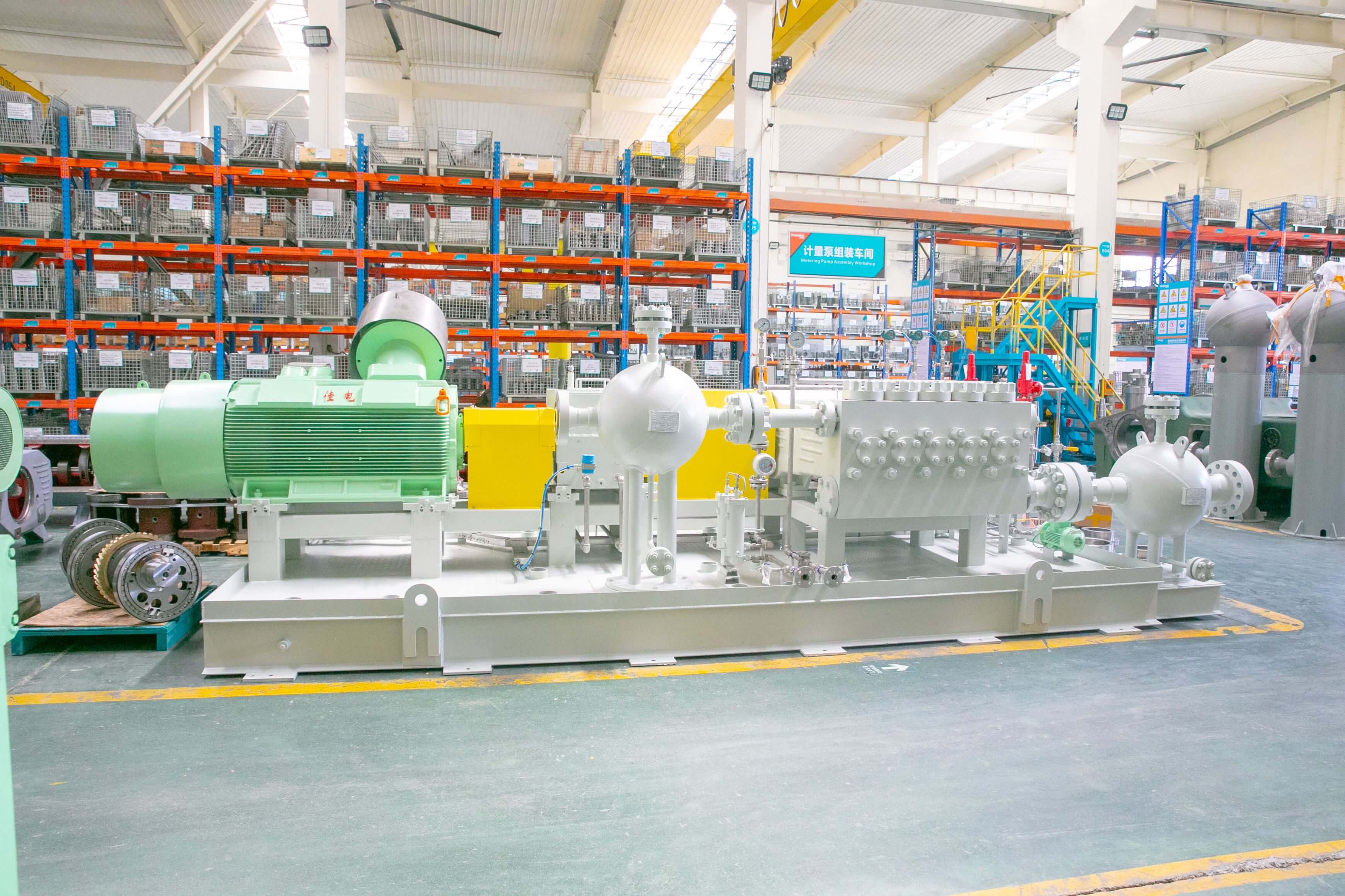
FAQ: A Q&A Guide to Technology Selection
Q1: How to select the pump type based on operating conditions?
A: It is necessary to consider the three key factors of medium characteristics, flow rate, and pressure in a comprehensive manner:
- Corrosive media: Prioritize Hastelloy pump heads (such as DP-HC series);
- High-viscosity media: Designed with enlarged plunger diameters (φ80-φ200mm) and low rotational speeds;
- Pulse-sensitive operating conditions: Select a 7-plunger model (such as the DP-HP7 series) paired with a surge vessel.
Q2: How are the key parameters matched?
A: Taking Depamu's standard products as an example:
- Flow range: 0.5-5000 m³/h;
- Pressure rating: 1-150 MPa;
- Temperature adaptability: -40°C to +450°C;
A: Depam pumps feature a replaceable sealing component design, reducing the cost of a single replacement by 40%. Through IoT modules (optional), real-time monitoring of operational data is achieved, and predictive maintenance can reduce the unplanned downtime rate to below 0.5%.
Reference for full-text summary: The dual value of technological empowerment and service assurance
The technical selection of high-pressure plunger reciprocating pumps requires balancing medium adaptability, pressure stability, and energy efficiency optimization. Leveraging over 20 years of industry experience, Depam Pump Industry has developed a standardized product matrix covering fields such as petroleum refining and nuclear industry, while providing full lifecycle services from solution design to after-sales maintenance. Its Hangzhou production base has an annual capacity of 5,000 high-pressure pumps, enabling rapid response to customer needs. For more product details and technical support, please visit the official website:www.depamufluid.com, or call 400-800-XXXX (technical consultation hotline).
Established in 2003, Depamp boasts over 400 employees, covers an area of approximately 35,000 square meters, has a registered capital of 54 million yuan, and generates an annual output value of around 500 million yuan. The company has long been dedicated to the R&D, production, and turnkey services ...
No. 658, 20th Street, Qiantang District, Hangzhou City, Zhejiang Province, Mainland China