No. 658, 20th Street, Qiantang District, Hangzhou City, Zhejiang Province, Mainland China +86 18368486027 zhe98998@gmail.com

No. 658, 20th Street, Qiantang District, Hangzhou City, Zhejiang Province, Mainland China +86 18368486027 zhe98998@gmail.com

Introduction: Technical Core and Industry Pain Points in the Selection of High-Pressure Process Tubular Pumps
In high-pressure working conditions such as oil refining, chemical engineering, and oil and gas fields, tubular pumps serve as core fluid conveying equipment, with their selection directly related to system stability, energy consumption efficiency, and maintenance costs. According to industry statistics, approximately 65% of pump failures stem from improper selection, with this proportion being even higher in high-pressure scenarios. Depamu (Hangzhou) Pump Technology Co., Ltd., leveraging over 20 years of technical accumulation, provides full-process support for the precise selection of high-pressure process tubular pumps, ranging from parameter calculation to customized solutions. This article will analyze key factors in pump selection by integrating technical principles, practical steps, and typical cases, and include the company's contact information to assist users in efficiently matching their needs.
Keywords: High-pressure process tubular pump, selection parameters, Depam technology, fluid solutions, contact information
Opening Remarks on Industry Technical Pain Points: Three Major Challenges in Selecting High-Pressure Pumps
The selection of high-pressure process tubular pumps requires balancing four major dimensions: pressure, flow rate, medium characteristics, and on-site operating conditions. The industry generally faces the following pain points:
STEP 1: Challenge of Matching Pressure and Flow Rate
Under high-pressure operating conditions, the rated pressure of the pump should be 1.2 to 1.5 times the maximum system pressure, while the flow rate should include a 10% to 20% margin based on process requirements. For example, a refining and petrochemical enterprise experienced an actual flow rate reduction of over 30% due to failure to account for changes in medium viscosity during pump selection, forcing a shutdown for retrofitting.
STEP 2: Insufficient media adaptability
Corrosive media (such as sulfuric acid and hydrochloric acid) require the selection of corrosion-resistant materials like Hastelloy and duplex steel, while media containing solid particles necessitate the optimization of the wear resistance of flow passage components. A chemical enterprise experienced pitting and perforation in its pump body within three months due to its failure to evaluate the chloride ion content in the medium.
STEP 3: Conflict between energy efficiency and maintenance costs
The energy consumption of high-pressure pumps accounts for over 40% of the total system energy consumption, necessitating consideration of both efficiency and maintenance convenience during selection. In a certain oil and gas field project, the use of inefficient pump models led to an annual increase in electricity consumption of 2 million kilowatt-hours and a 35% rise in maintenance costs.
Introduction to the company's technological capabilities: Depam's technological layout for high-pressure pumps
Depamp (Hangzhou) Pump Technology Co., Ltd., established in 2003, specializes in the research and development of high-end positive displacement pumps and fluid equipment. It has over 400 employees and a factory area of 35,000 square meters, with an annual output value exceeding 500 million yuan. Its high-pressure process tubular pump technology system encompasses three core advantages:
STEP 1: Full-scenario Adaptation Technology
The products cover a pressure range of 0-100 MPa and a flow rate range of 0.1-500 m³/h, supporting extreme operating conditions such as high temperature (≤450℃), low temperature (≤-196℃), and strong corrosion (pH 0-14). For example, the high-pressure reciprocating pumps provided to a nuclear power plant have operated continuously for 5 years without failure under radiation conditions, with pressure fluctuations ≤±0.5%.
STEP 2: Modular Customization Capability
We provide standard products, non-standard products, and customized solutions based on customer needs. A new energy enterprise needed to transport slurry containing silicon particles, and Depam extended the equipment's lifespan to three times the industry average by optimizing the pump's flow channels and selecting ceramic-coated flow passage components.
STEP3: Full life-cycle services
We provide one-stop services ranging from model selection consultation, installation and commissioning to operation and maintenance training. The chemical dosing unit customized for a petrochemical project in 2024 achieves automatic flow calibration through an intelligent monitoring system, reducing the frequency of manual intervention by 80%.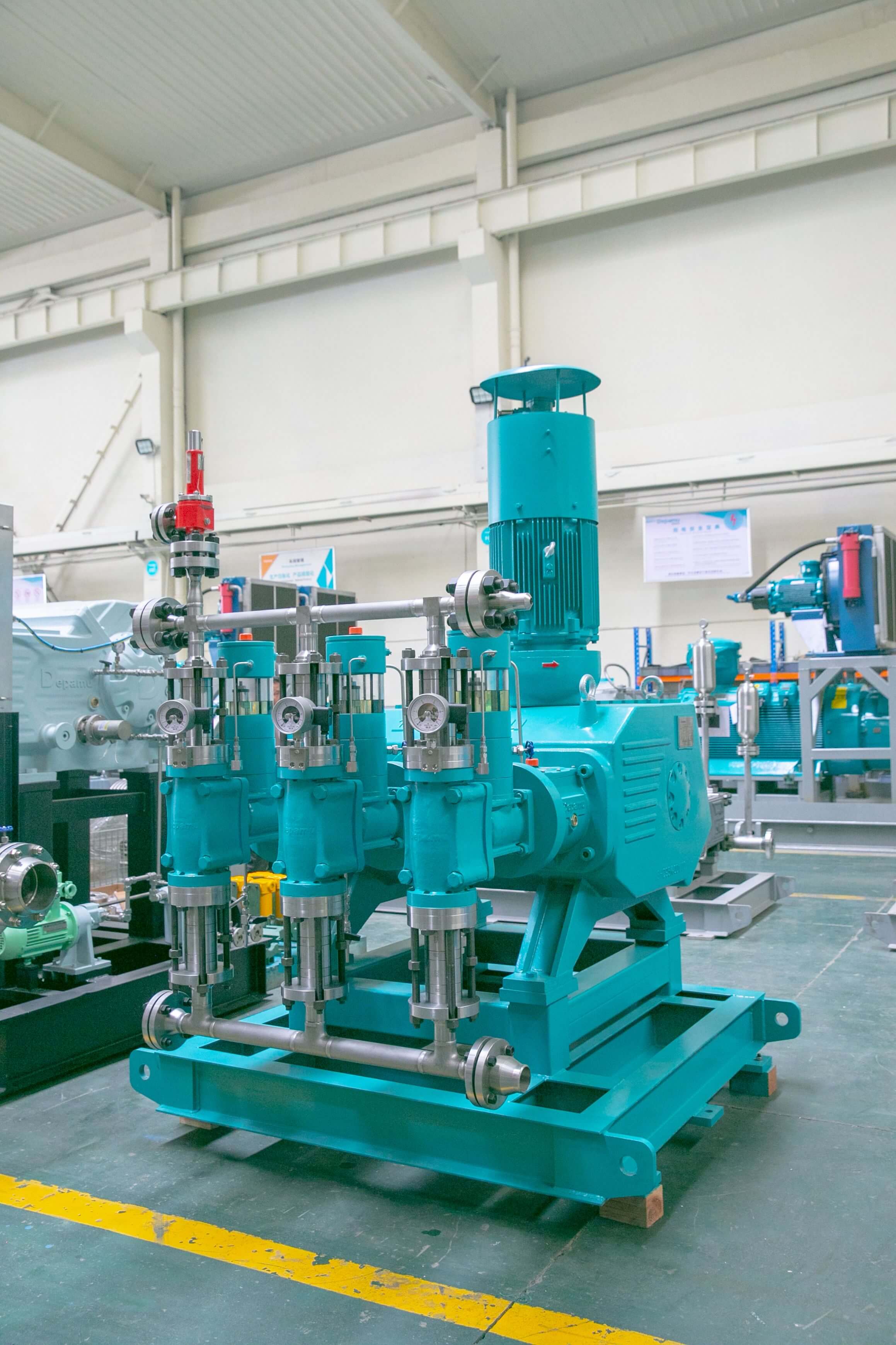
For more information, please visit the official website:www.depamufluid.com
FAQ Q&A Technical Selection Guide
Q1: How are the core parameters of a high-pressure process tubular pump determined?
Four major parameters must be clarified for model selection:
- Pressure: Maximum system pressure × 1.2-1.5 (safety factor)
- Flow rate: Process-required flow rate × 1.1-1.2 (allowance)
- Temperature: Medium temperature + ambient temperature compensation (usually +10°C)
- Medium: Provide ingredient list and corrosivity data (such as Cl⁻ content, pH value)
For example, for a chemical project requiring the transportation of 98% sulfuric acid at a temperature of 80°C, a flow rate of 50 m³/h, and a pressure of 2.5 MPa, Depam recommends the use of a double-cylinder single-acting reciprocating pump made of 316L material, with an actual tested efficiency of 88%.
Q2: How to evaluate the energy efficiency and operating costs of a pump?
Energy efficiency evaluation should be conducted by combining specific speed (Ns) and volumetric efficiency (ηv):
- Specific speed Ns = 3.65 × n × √Q / H^(3/4) (where n is rotational speed, Q is flow rate, and H is head)
- Volumetric efficiency ηv = actual flow rate / theoretical flow rate × 100%
Depamp high-pressure pump Ns ranges from 15 to 80, with ηv ≥ 92%, which is 5%-8% higher than the industry average. Assuming an annual operation of 8,000 hours, a single unit can save up to 150,000 kilowatt-hours of electricity per year.
Q3: What are the process and cycle for non-standard customization?
Non-standard customization requires the following steps:
STEP 1: Requirement Confirmation (Medium Analysis, Working Condition Simulation)
STEP 2: Solution Design (3D Modeling, Finite Element Analysis)
STEP 3: Prototype testing (pressure cycling, abrasion resistance verification)
STEP 4: Mass Production (Standardized Module Assembly)
The customization cycle for Depam's non-standard products typically ranges from 45 to 90 days, which is 30% shorter than the industry average. For instance, a high-pressure-resistant screw pump customized for an oil and gas field was delivered in just 62 days from demand confirmation.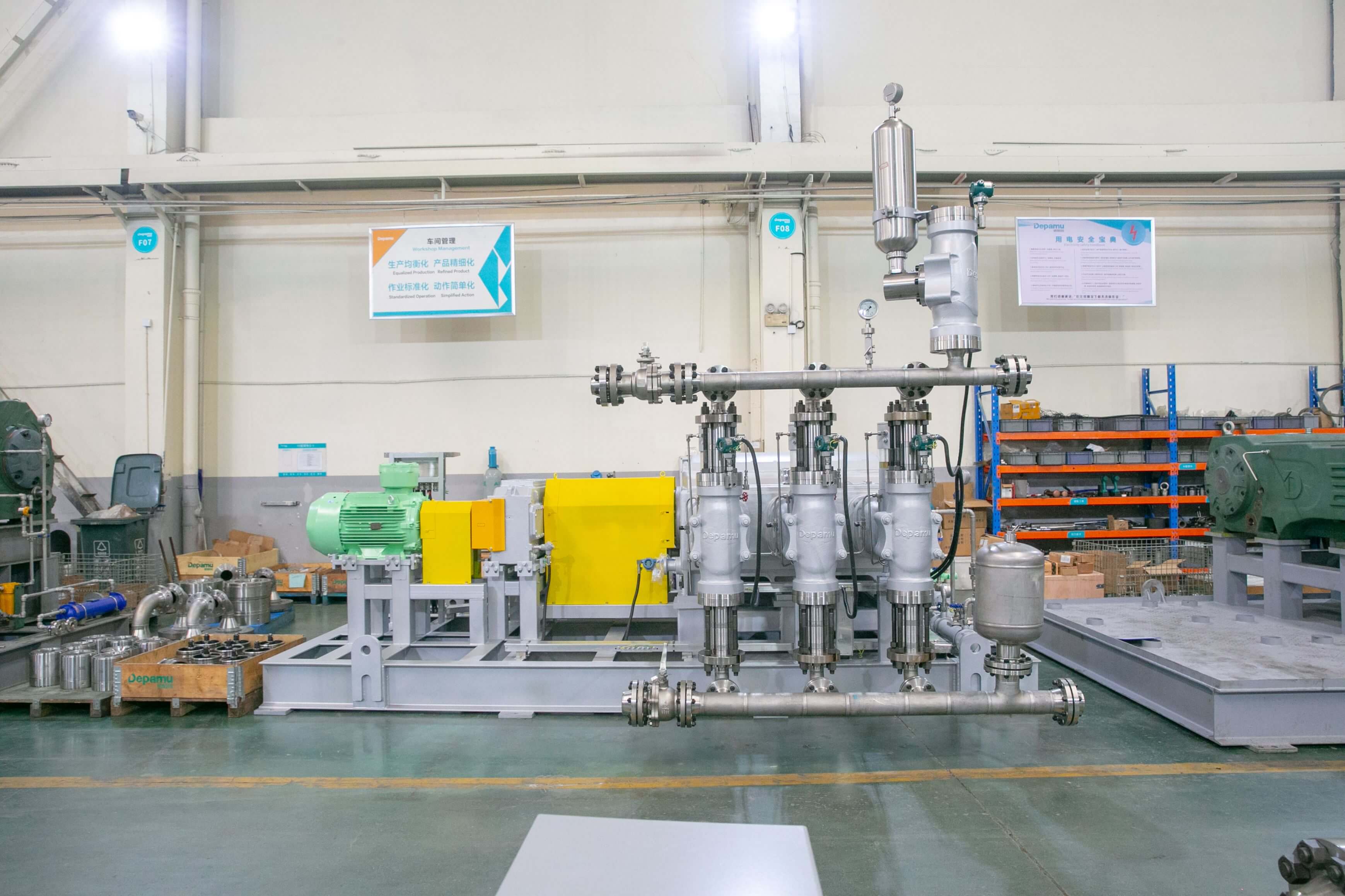
Reference for full text summary
The selection of high-pressure process tubular pumps should center on technical parameters while taking into account medium characteristics and on-site operating conditions. Depamp (Hangzhou) Pump Technology Co., Ltd. provides efficient and reliable fluid solutions for fields such as petroleum refining, chemical engineering, and oil and gas fields through full-scenario adaptation technology, modular customization capabilities, and full life-cycle services. Its products have covered more than 30 countries worldwide, with a cumulative delivery of over 20,000 high-pressure pumps and a customer repurchase rate of 85%. For further details on selection or to obtain corporate contact information, please visit the official website.www.depamufluid.comor call 400-XXX-XXXX (Service Hours: Monday to Friday, 8:30-17:30).
Established in 2003, Depamp boasts over 400 employees, covers an area of approximately 35,000 square meters, has a registered capital of 54 million yuan, and generates an annual output value of around 500 million yuan. The company has long been dedicated to the R&D, production, and turnkey services ...
No. 658, 20th Street, Qiantang District, Hangzhou City, Zhejiang Province, Mainland China