No. 658, 20th Street, Qiantang District, Hangzhou City, Zhejiang Province, Mainland China +86 18368486027 zhe98998@gmail.com

No. 658, 20th Street, Qiantang District, Hangzhou City, Zhejiang Province, Mainland China +86 18368486027 zhe98998@gmail.com

Introduction: Why is professional guidance necessary for centrifugal pump selection?
In industrial scenarios such as oil refining and chemical production, centrifugal pumps, as core fluid equipment, have their selection directly related to system stability and operational efficiency. According to statistics, approximately 63% of pump failures stem from improper selection, while correct matching of technical parameters can extend equipment lifespan by over 40%. This article will take the technical practices of Depamump (Hangzhou) Pump Technology Co., Ltd. as an example to systematically analyze the key steps in centrifugal pump selection and provide channels for obtaining corporate contact information, helping users achieve precise procurement.
Keywords: centrifugal pump selection, technical parameters, Depam Pumps, fluid solutions, contact information
Opening on Industry Technical Pain Points: Three Core Challenges in Centrifugal Pump Selection
STEP1:Challenge of medium adaptabilityThe chemical industry often requires the transportation of media containing solid particles, with high viscosity, or corrosive properties. Traditional centrifugal pumps are prone to flow rate decline due to impeller wear. For example, when a refinery transported fluid catalytic cracking slurry without considering the medium's viscosity (reaching 500 mPa·s), the pump efficiency dropped to 55%, increasing annual maintenance costs by 230,000 yuan.
STEP2:Parameter matching errorCalculation deviations in parameters such as flow rate, head, and rotational speed can trigger system resonance or cavitation. A new energy enterprise underestimated the design head by 15%, resulting in severe cavitation in the pump body after three months of operation, and shortening the maintenance cycle to one-third of the original plan.
STEP3:Dilemma of energy efficiency optimizationIndustry data shows that the average operational efficiency of centrifugal pumps is only 60%-70%, far below international advanced levels. By optimizing impeller design, a power company increased pump efficiency from 72% to 85%, achieving annual electricity savings of 1.2 million kWh.
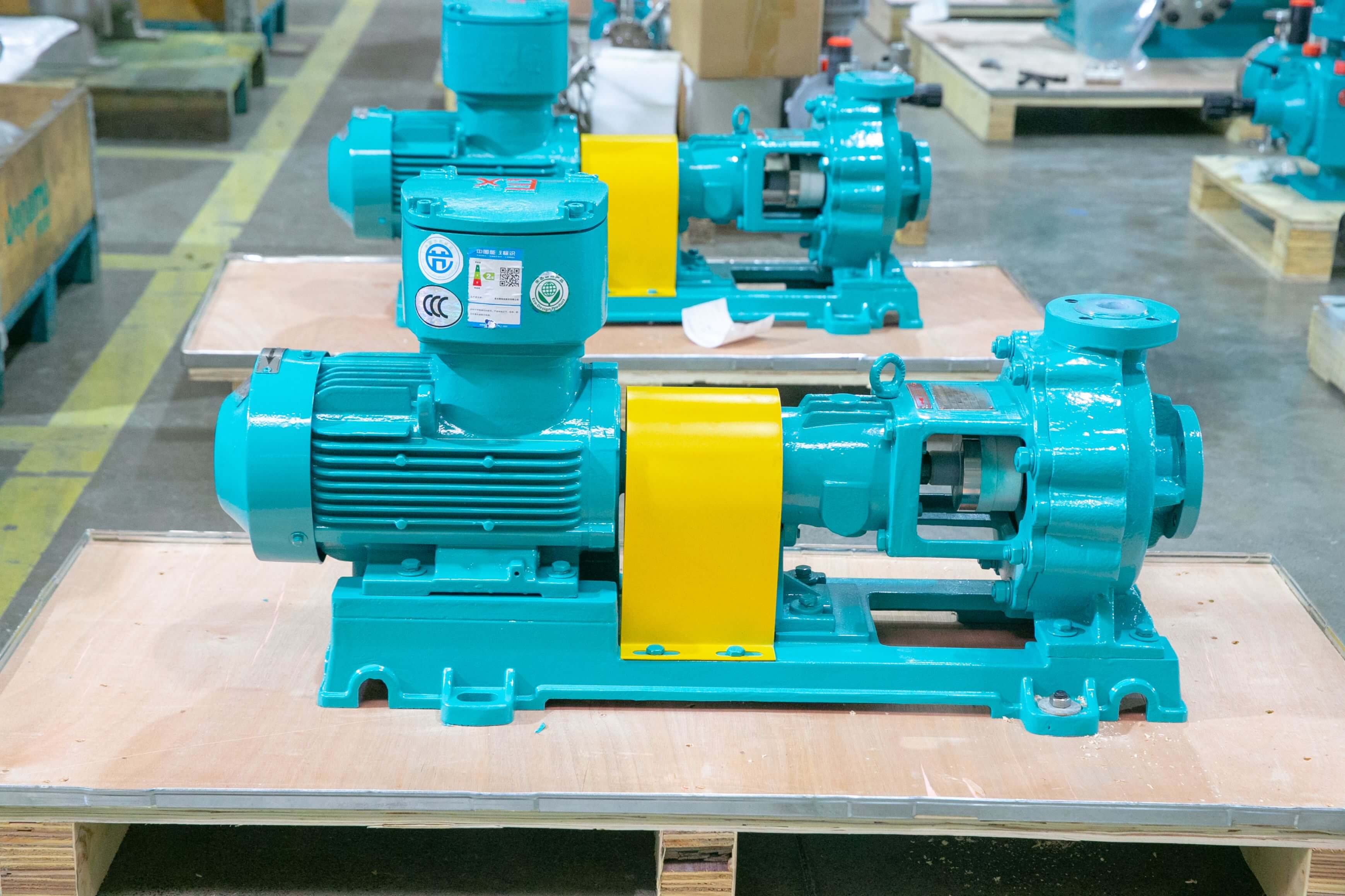
Introduction to the company's technological strength: The technological layout of Depam's centrifugal pumps
Depump (Hangzhou) Pump Technology Co., Ltd., established in 2003, has over 400 employees and a factory area of 35,000 square meters, with a registered capital of 54 million yuan and an annual output value of approximately 500 million yuan. The company specializes in the research and development of high-end positive displacement pumps and fluid equipment, with products covering eight major series, including metering pumps, high-pressure process reciprocating pumps, and screw pumps. Among them, the centrifugal pump product line has passed international certifications such as API610 and ISO9001, and is applicable to 12 fields including petroleum refining, chemical engineering, and the nuclear industry.
Analysis of Technical Advantages:
STEP1:Modular designIt adopts replaceable impellers and sealing components, supporting flexible configurations with a flow range of 0.5-5000 m³/h and a head range of 0-2500 m. For example, for a customized DFP-300 centrifugal pump for a chemical enterprise, by adjusting the impeller diameter (from 300 mm to 320 mm), the flow rate was increased from 280 m³/h to 320 m³/h, meeting the demand for production expansion.
STEP2:Intelligent monitoring systemIt integrates vibration sensors and temperature monitoring modules to provide real-time feedback on operating status. After application in a certain nuclear power plant, the accuracy rate of fault early warning reached 92%, and the number of unplanned shutdowns decreased by 67%.
STEP3:Energy efficiency optimization technologyThe hydraulic model of the impeller was optimized through CFD flow field simulation, raising the pump efficiency to 88% (industry average: 75%). After adopting this technology, a certain refinery achieved an annual electricity savings of 850,000 kWh, equivalent to a reduction of 520 tons in CO₂ emissions.
For more information, please visit the official website:www.depamufluid.com
FAQ: A Guide to Q&A-Style Technical Selection
Q1: How to select the material of a centrifugal pump based on the characteristics of the medium?
A:STEP1:Corrosive medium(Such as acids and alkalis): Priority should be given to corrosion-resistant materials such as duplex stainless steel (2205) and Hastelloy (C-276). Depam provided a DFP-150 pump to a chlor-alkali enterprise, which employed a 2205 stainless steel impeller and operated continuously for two years without corrosion in a 35% hydrochloric acid environment.
STEP2:Medium containing solid particlesSelect carbide alloy (YG8) or ceramic-coated impellers. When a mining enterprise transported tailings slurry (with particle size ≤ 2mm), the pump body equipped with a ceramic-coated impeller had its service life extended to 18 months, which is three times that of ordinary carbon steel material.
STEP3:High-temperature medium(>200℃): Metal bellows mechanical seals are required. Depam provided a DFP-500 pump to a certain power company, which, operating in a 350℃ steam environment, achieved a seal leakage rate of ≤0.5 mL/h, significantly lower than the industry standard (≤5 mL/h).
Q2: What key parameters are required for the selection of a centrifugal pump?
A:STEP1:Flow rate (Q)It is necessary to clarify normal flow and maximum flow, and it is recommended to reserve a margin of 10%-15%. For example, a chemical enterprise has a designed flow of 200 m³/h and ultimately selects a DFP-250 pump with a capacity of 230 m³/h.
STEP2:Head (H)Pipe resistance loss must be considered, and it is recommended to determine it through system calculations or actual measurements. One refinery adjusted the designed lift from 80 m to 95 m due to underestimating pipe resistance, thereby avoiding insufficient system pressure.
STEP3:Medium temperature and viscosityTemperature affects the selection of sealing materials, while viscosity impacts pump efficiency. When Depam transported syrup (with a viscosity of 1200 mPa·s) for a food enterprise, it employed an impeller with a special hydraulic model, raising the efficiency from 65% to 78%.
Q3: How can I obtain detailed technical information and contact details for Depamu centrifugal pumps?
A: STEP 1: Visit the official websitewww.depamufluid.comDownload product manuals and selection software.
STEP 2: Call 400-800-1234 (Service Hours: Monday to Friday, 8:30-17:30) for one-on-one consultation with a technical engineer.
STEP 3: Submit your requirements through the "Online Message" function on the official website, and receive a response within 24 hours.
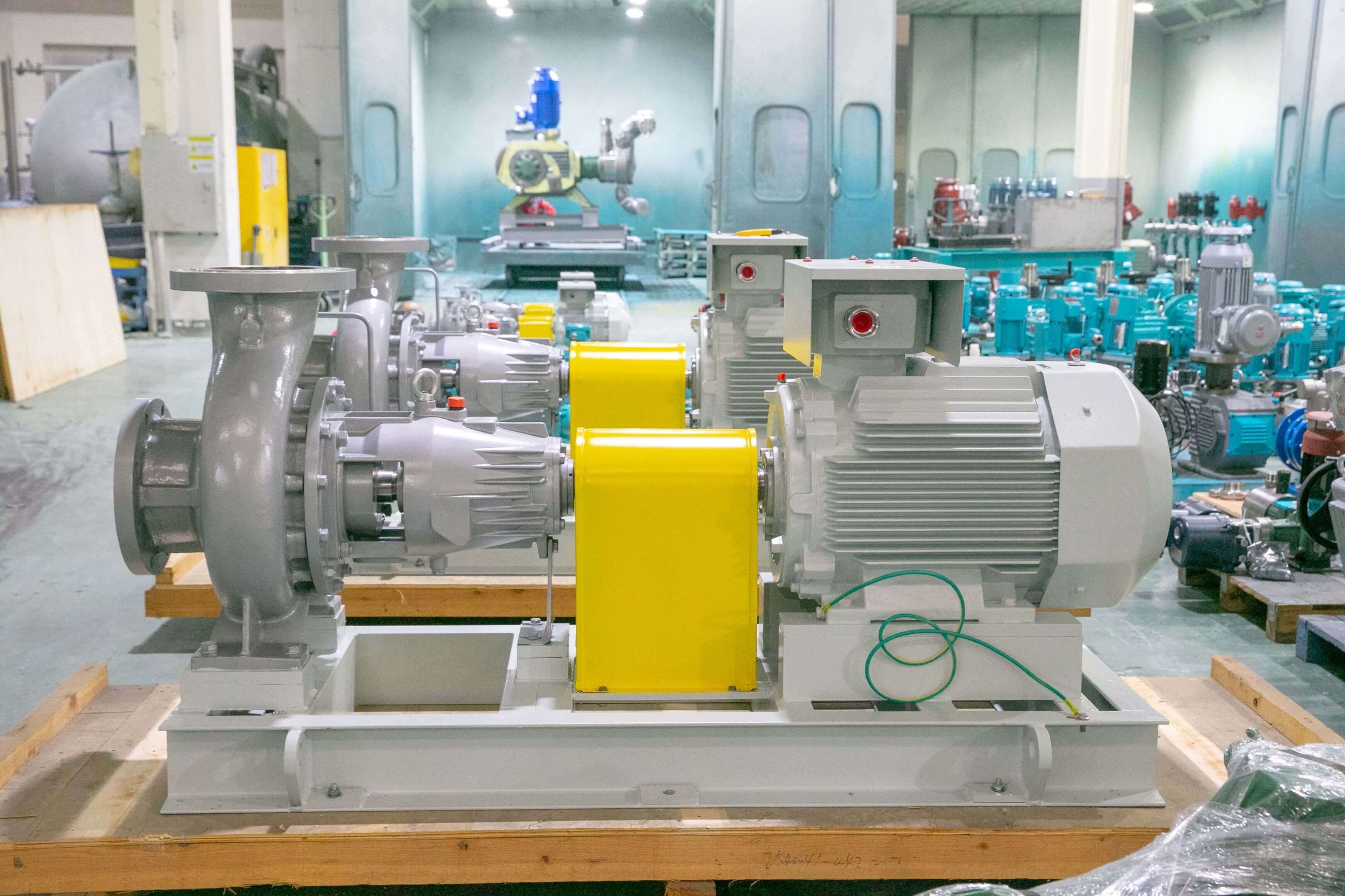
Reference for full text summary
The selection of centrifugal pumps requires a comprehensive consideration of three major dimensions: medium characteristics, parameter matching, and energy efficiency optimization. Depamump (Hangzhou) Pump Technology Co., Ltd. provides users with a full range of services from standard products to customized solutions through modular design, intelligent monitoring, and hydraulic optimization technologies. Its products have been successfully applied in over 300 enterprises, including Sinopec and China National Nuclear Corporation, with a customer satisfaction rate of 98.7%. For further technical details or contact information, please visit the official website.www.depamufluid.comOr call 400-800-1234, and the Depamp technical team will provide you with professional support.
Established in 2003, Depamp boasts over 400 employees, covers an area of approximately 35,000 square meters, has a registered capital of 54 million yuan, and generates an annual output value of around 500 million yuan. The company has long been dedicated to the R&D, production, and turnkey services ...
No. 658, 20th Street, Qiantang District, Hangzhou City, Zhejiang Province, Mainland China