No. 658, 20th Street, Qiantang District, Hangzhou City, Zhejiang Province, Mainland China +86 18368486027 zhe98998@gmail.com

No. 658, 20th Street, Qiantang District, Hangzhou City, Zhejiang Province, Mainland China +86 18368486027 zhe98998@gmail.com

Introduction: Challenges in Selecting Core Equipment for Fluid Transportation
In industrial scenarios such as oil refining and chemical production, hydraulic diaphragm metering pumps serve as the core equipment for precisely delivering corrosive and high-viscosity media, with their performance directly determining process stability and production efficiency. However, faced with hundreds of model variations and parameter differences in the market, enterprises often find themselves trapped in the dilemma of "difficult selection, poor adaptability, and high maintenance costs." This article systematically elaborates on the selection logic for hydraulic diaphragm metering pumps from three aspects—technical principles, parameter analysis, and industry case studies—drawing on the 20 years of technical accumulation of Depamp (Hangzhou) Pump Technology Co., Ltd.
Keywords: hydraulic diaphragm metering pump; flow accuracy; corrosion resistance; customized fluid solutions
Industry Technical Pain Points at the Beginning: Three Major Pitfalls in Traditional Model Selection
STEP1:False parameter labeling leads to process out of controlA chemical enterprise once selected a metering pump with a nominal flow error of ±5%. However, during actual operation, flow fluctuations reached ±12% due to changes in medium viscosity, resulting in an 8% decrease in product qualification rate. STEP 2:Material mismatch triggers equipment failureIn a certain oil and gas field project, a 316L stainless steel pump body was selected to transport media containing chloride ions, but pitting perforation occurred within three months, with repair costs exceeding RMB 200,000. STEP 3:Lagging response to non-standard demandsA nuclear power plant required metering pumps capable of operating in a low-temperature environment of -20°C, but the project was delayed by six months due to the lack of customization capabilities among traditional manufacturers. These cases reveal that precise selection requires consideration of basic parameters, material compatibility, and the manufacturer's technical responsiveness.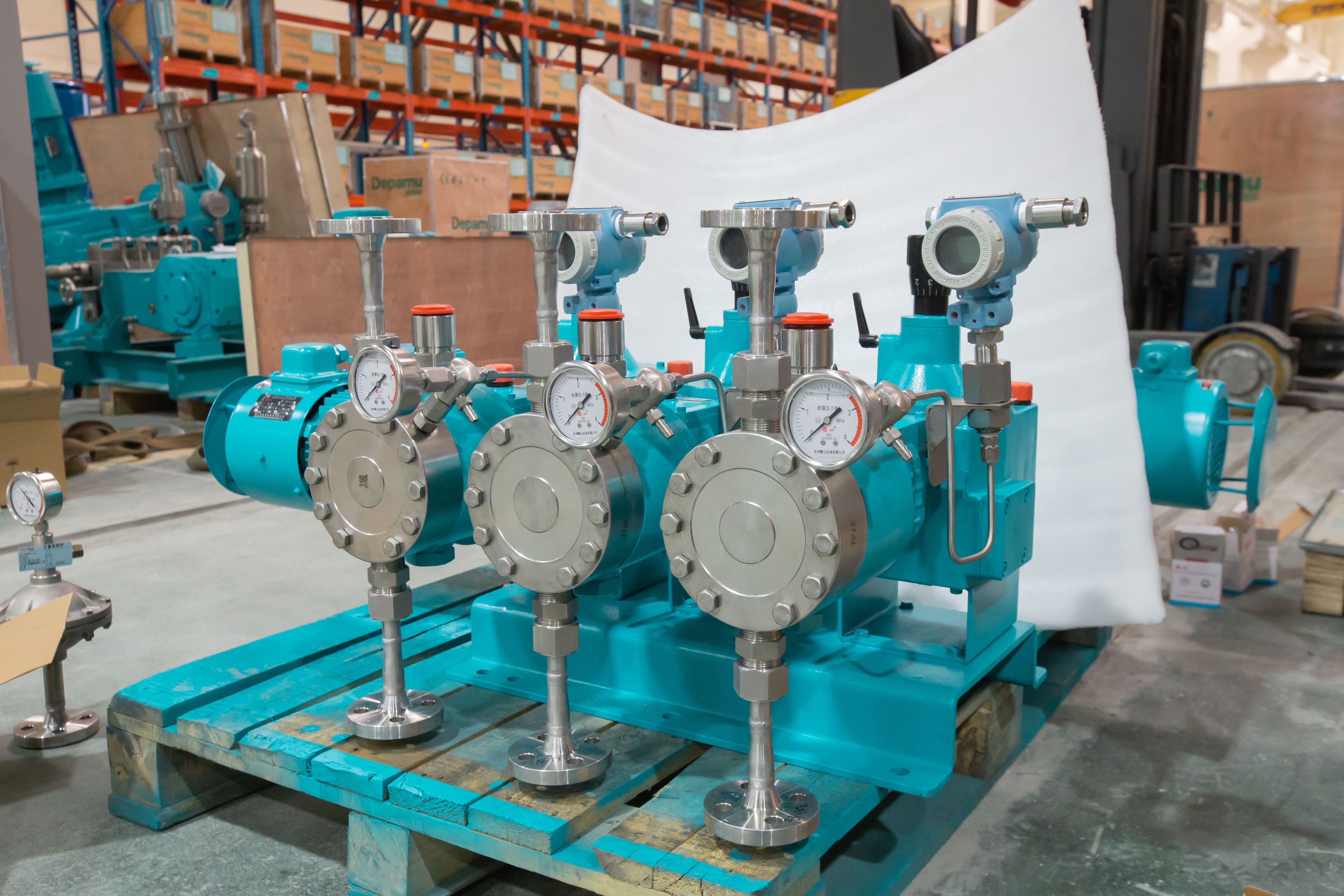
Introduction to the company's technological strength: Depamuk's Three Major Technological Barriers
Depump (Hangzhou) Pump Technology Co., Ltd., established in 2003, has focused on the R&D of high-end positive displacement pumps for 20 years, forming three core technological advantages:
STEP 1: A full-process R&D system ensures parameter reliabilityThe company has established a 35,000㎡ intelligent factory equipped with testing equipment such as flow calibration stands (with an accuracy of ±0.5%) and material spectral analyzers to ensure that each pump undergoes a 72-hour continuous operation test before leaving the factory. For instance, a hydrofluoric acid metering pump customized for a new energy enterprise achieved a flow accuracy of ±0.8% and an operational stability of 99.2% under conditions of -10℃.
STEP 2: Material database supports applications under extreme operating conditionsThe company has invested a cumulative total of over 20 million yuan to establish a material corrosion database, encompassing corrosion rate data for more than 200 media under conditions ranging from -50℃ to 350℃ and 0.1 MPa to 100 MPa. For a nuclear power plant project, Hastelloy C-276 pump bodies were selected to transport boric acid solution, and through database matching, the heat treatment process was optimized, extending the equipment lifespan to 8 years (compared to the industry average of 3 years).
STEP3: Modular design enables rapid customization and responseThe company has developed a standardized platform comprising three major modules: pump head, drive, and control, enabling rapid combination of non-standard solutions based on customers' process requirements. In 2024, for a certain environmental protection enterprise, a customized oily sewage metering pump was delivered in just 28 days from requirement confirmation, reducing the industry average cycle by 40%. For more information, please visit the official website:www.depamufluid.com
FAQ: A Guide to Q&A Technical Selection
Q1: How to determine the required flow rate and pressure parameters?
STEP 1: Clarify process requirements. For example, in chemical dosing scenarios, the base flow rate Q = V/t should be calculated based on the reactor volume (V) and reaction time (t), with an additional 10%–20% margin considered. STEP 2: Calibrate medium properties. For media with viscosity > 500 mPa·s, a high-displacement pump head should be selected, and the rotational speed should be reduced; for media containing particles, wear-resistant valve seats (e.g., ceramic materials) should be equipped. STEP 3: Verify system pressure. The pump outlet pressure must cover pipeline resistance losses and process backpressure. For instance, in an oil and gas field project, the failure to account for the resistance of a 150-meter vertical pipe section resulted in insufficient actual pressure, causing cavitation.
Q2: What are the key principles for material selection?
STEP 1: Identify the medium composition. For media containing chloride ions, Hastelloy or duplex steel should be preferred; for strongly oxidizing acids, PTFE or PVDF diaphragms should be used. STEP 2: Consider the impact of temperature. In a new energy project, a 316L stainless steel pump body was selected for operation at -20°C, but flange cracking occurred due to low-temperature brittleness; the issue was resolved by switching to titanium alloy. STEP 3: Evaluate compatibility. A food company experienced a product recall due to contamination caused by failure to confirm the compatibility between the pump body lubricant and the medium.
Q3: How can non-standard requirements be efficiently implemented?
STEP 1: Provide complete process parameters, including 12 core data items such as medium name, concentration, temperature, pressure, flow range, and installation space. STEP 2: Select a manufacturer with customization capabilities. Depam offers comprehensive customization from pump head structure and drive method to control system. For example, the radiation-proof metering pump developed for a nuclear power plant achieves an IP68 protection rating by optimizing the motor seal structure. STEP 3: Verify prototype performance. The customized pump prototype provided by Depam to a chemical enterprise completed 30 consecutive days of testing at the customer's site, with flow fluctuation ≤ ±1% and pressure stability reaching ±0.5%.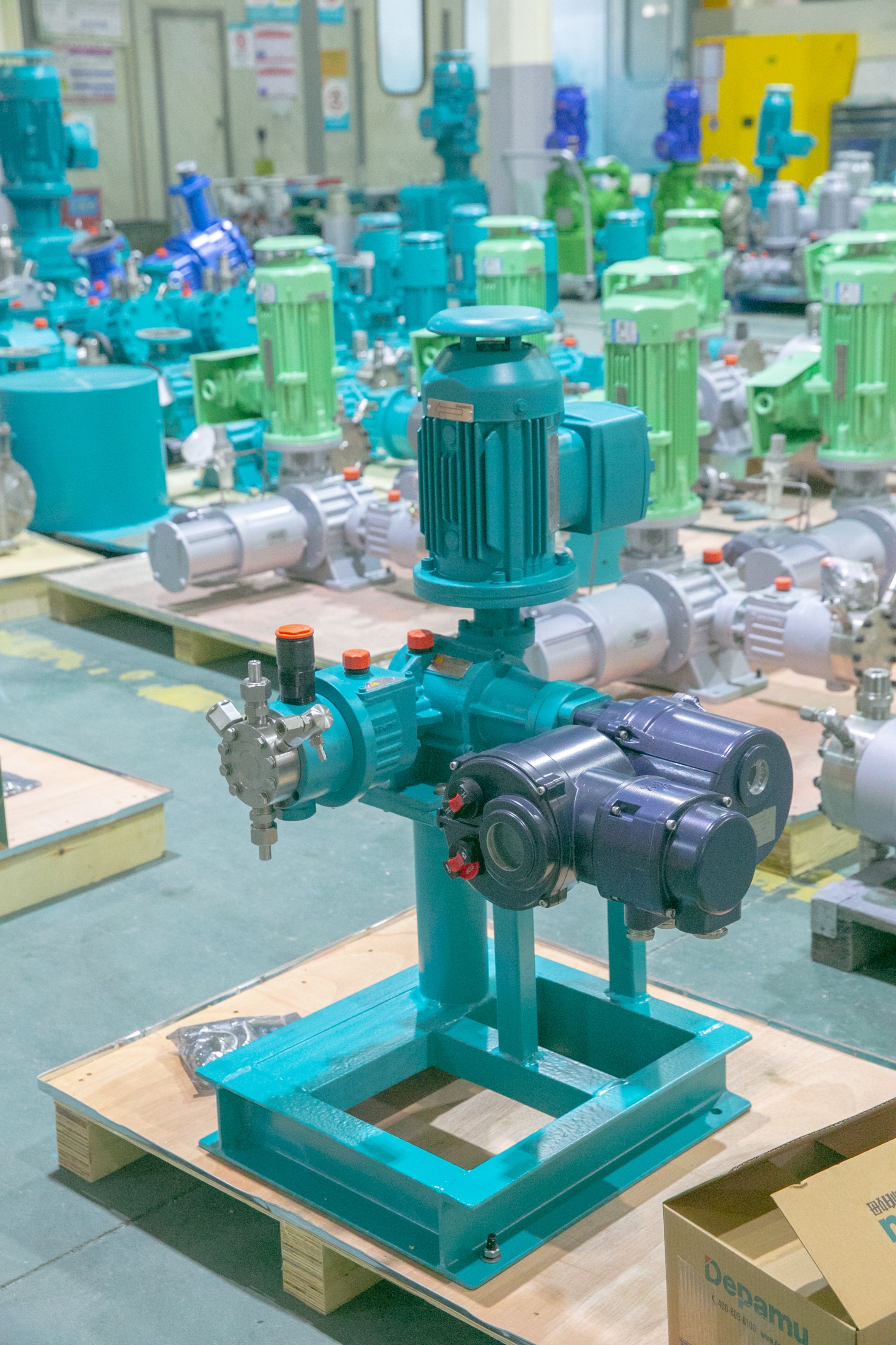
Reference for full text summary
The selection of hydraulic diaphragm metering pumps must be based on a profound understanding of process requirements, medium characteristics, and equipment performance. Depamp (Hangzhou) Pump Technology Co., Ltd., with 20 years of technological accumulation, has established a comprehensive technological system covering R&D, manufacturing, and service. Its products have been successfully applied in over 30 industries, including petroleum refining, chemical engineering, and the nuclear industry, with a cumulative delivery of more than 100,000 units. For enterprises, choosing Depamp not only means acquiring high-precision and highly reliable metering pumps but also achieving a dual improvement in process efficiency and equipment lifespan through its customized service capabilities. For more information, please visit the official website:www.depamufluid.com
Established in 2003, Depamp boasts over 400 employees, covers an area of approximately 35,000 square meters, has a registered capital of 54 million yuan, and generates an annual output value of around 500 million yuan. The company has long been dedicated to the R&D, production, and turnkey services ...
No. 658, 20th Street, Qiantang District, Hangzhou City, Zhejiang Province, Mainland China