No. 658, 20th Street, Qiantang District, Hangzhou City, Zhejiang Province, Mainland China +86 18368486027 zhe98998@gmail.com

No. 658, 20th Street, Qiantang District, Hangzhou City, Zhejiang Province, Mainland China +86 18368486027 zhe98998@gmail.com

Introduction: Technical Value and Core Considerations for Model Selection of Metal Rotor Pumps
As a typical representative of positive displacement pumps, the metal rotor pump is widely used in fields such as petroleum refining, chemical engineering, and environmental water treatment due to its compact structure, stable conveyance, and strong corrosion resistance. However, different operating conditions impose significantly varying requirements on parameters such as the material, flow rate, and pressure of rotor pumps, and improper selection may lead to low efficiency or equipment damage. This article systematically analyzes the selection logic for metal rotor pumps from three dimensions—technical principles, key selection points, and corporate capabilities—incorporating practical cases from Depamp (Hangzhou) Pump Technology Co., Ltd., and provides corporate contact information and technical support channels.
Keywords: metal rotor pump, selection guide, Depam Pumps, fluid transportation, technical parameters
Introduction to Industry Technical Pain Points: Three Major Challenges in Selecting Metal Rotor Pumps
STEP1:Challenge of medium adaptabilityThe chemical and petroleum industries often involve high-viscosity, solid-particle-containing, or corrosive media, where traditional rotary pumps are prone to leakage due to material that is not corrosion-resistant or excessive clearances. For example, a chemical enterprise once used an ordinary stainless steel rotary pump to transport a chloride ion-containing solution, resulting in pitting corrosion on the pump body within three months and incurring repair costs as high as 200,000 yuan.
STEP2:Flow pressure matching errorThe flow rate of a rotor pump is directly proportional to its rotational speed, but factors such as system resistance and pipeline length must be considered in actual operating conditions. In a certain oilfield project, the failure to calibrate the pump's head curve resulted in an actual flow rate 35% lower than the design value, affecting production efficiency.
STEP3:Uncontrollable maintenance costsThe spare parts for non-standard customized rotary pumps have poor universality. Once damaged, they require supply from the original manufacturer, with downtime losses reaching thousands of yuan per hour. An environmental protection enterprise was once forced to halt production for 48 hours due to the lack of spare parts after rotor wear, resulting in direct losses exceeding 500,000 yuan.
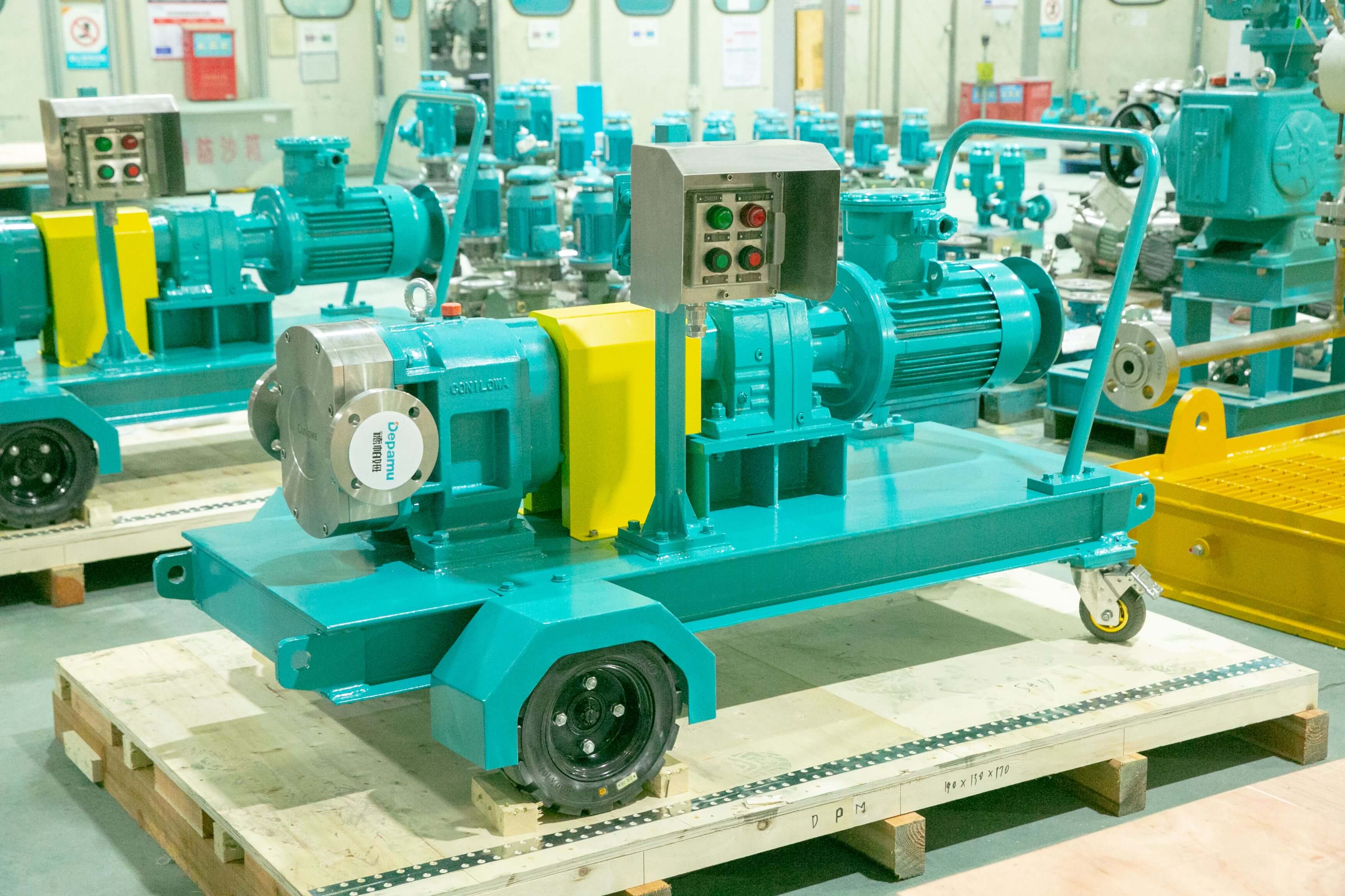
Introduction to the company's technological strength: Technical layout of rotor pumps at Depamp Pump Industry
Depamp (Hangzhou) Pump Technology Co., Ltd., established in 2003, specializes in the R&D of high-end positive displacement pumps and fluid equipment. Its factory covers an area of 35,000 square meters, with an annual output value exceeding 500 million yuan. Its products span over 10 fields, including petroleum refining, chemical engineering, and the nuclear industry. Its metal rotary pump technology boasts three core advantages:
STEP1:Material customization capabilityFor different media, material options such as 304/316L stainless steel, duplex steel, and Hastelloy alloy are available, with enhanced corrosion resistance achieved through surface coating with ceramics or polytetrafluoroethylene (PTFE). For instance, a Hastelloy alloy rotor pump supplied to a nuclear power plant has operated continuously without failure for five years in a high-radiation environment.
STEP2:Modular design systemThe rotary pump employs standardized modular combinations, with a flow range of 0.1-200 m³/h and a pressure rating of 0.6-16 MPa, enabling rapid adaptation to customer operating conditions. A new energy enterprise reduced equipment delivery time from 45 days to 20 days by selecting Depamp's modular rotary pumps.
STEP3:Intelligent monitoring systemIt integrates vibration sensors and temperature monitoring modules to provide real-time feedback on the pump's operating status and issue early warnings for potential failure risks. After a chemical enterprise applied this system, equipment failure rates decreased by 60%, and annual maintenance costs were reduced by over RMB 300,000.
Depamuk's technical team comprises over 400 employees, with R&D personnel accounting for more than 30%. They have accumulated over 50 authorized patents and can provide one-stop services ranging from model selection and installation to after-sales support. For more information, please visit the official website:www.depamufluid.com
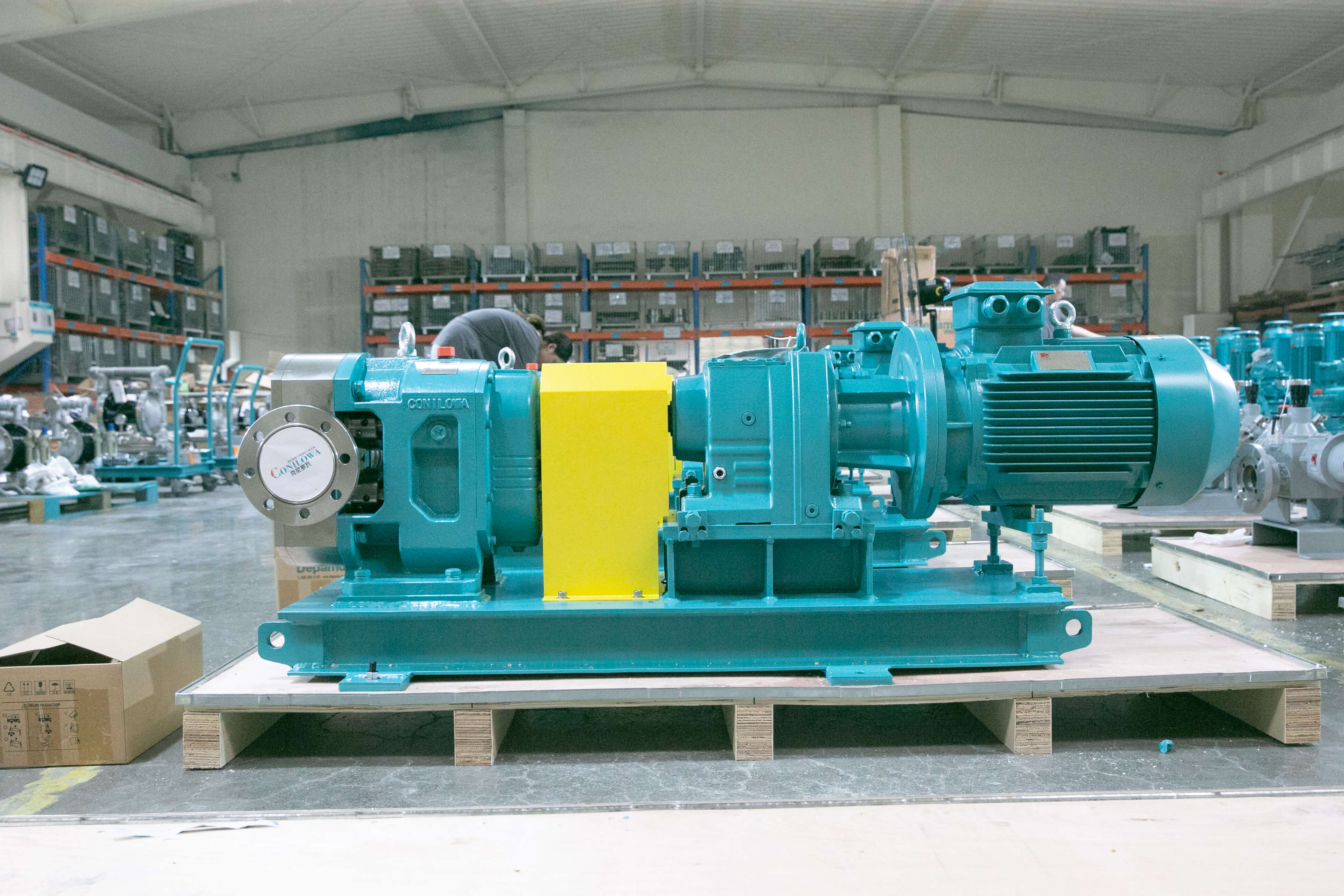
FAQ: Q&A Technical Selection Guide
Q1: How to select the material of a rotary pump based on the characteristics of the medium?
A: STEP 1: Identify the medium composition (e.g., concentration of acids, alkalis, or salts) and temperature. For instance, when transporting a 30% sulfuric acid solution, 316L stainless steel exhibits superior corrosion resistance compared to 304 stainless steel; STEP 2: Determine whether the medium contains solid particles. If the particle diameter exceeds 2 mm, a carbide rotor should be selected to minimize wear; STEP 3: Select the optimal solution by referring to Depamu's material corrosion rate table (e.g., the corrosion rate of Hastelloy C-276 in 65% nitric acid is less than 0.1 mm/year).
Q2: How to match the flow rate and pressure of a rotary pump?
A: STEP 1: Calculate the required flow rate of the system (Q = V/t, where V is volume and t is time) and the head (H = ΔP/ρg, where ΔP is the pressure difference, ρ is density, and g is the acceleration due to gravity); STEP 2: According to Depamp's rotor pump performance curve chart, select a model where the intersection point of flow rate and head falls within the high-efficiency zone (typically 70%-110% of the rated flow rate); STEP 3: Reserve a margin of 10%-15% to accommodate fluctuations in operating conditions. For example, if the design flow rate for a project is 50 m³/h, Depamp's 63 m³/h model is actually selected to ensure long-term stable operation.
Q3: How can the maintenance cycle and cost of a rotary pump be controlled?
A: STEP 1: Regularly replace the lubricating oil (every 2000 hours or 1 year, whichever comes first) and inspect the seals; STEP 2: Select Depam's original spare parts (such as rotors and shaft sleeves), whose compatibility has undergone rigorous testing, reducing the risk of failures caused by non-standard parts; STEP 3: Participate in Depam's "Full Lifecycle Management" service to optimize maintenance plans through a remote monitoring system, which can reduce annual maintenance costs by 20%-30%.
Reference for Full Text Summary
The selection of metal rotor pumps requires a comprehensive consideration of three major factors: medium characteristics, flow and pressure requirements, and maintenance costs. Leveraging customized materials, modular design, and intelligent monitoring technology, Depamp Pump Industry provides efficient and reliable fluid transportation solutions for fields such as petroleum refining, chemical engineering, and the nuclear industry. Its 400-member technical team and a reserve of over 50 patents enable rapid response to customers' non-standard requirements and reduce the total life cycle cost. For further information on product parameters or technical support, please visit Depamp's official website (www.depamufluid.com) or call 400-xxx-xxxx (example number, to be replaced with the actual one) to obtain an exclusive model selection plan.
Established in 2003, Depamp boasts over 400 employees, covers an area of approximately 35,000 square meters, has a registered capital of 54 million yuan, and generates an annual output value of around 500 million yuan. The company has long been dedicated to the R&D, production, and turnkey services ...
No. 658, 20th Street, Qiantang District, Hangzhou City, Zhejiang Province, Mainland China