No. 658, 20th Street, Qiantang District, Hangzhou City, Zhejiang Province, Mainland China +86 18368486027 zhe98998@gmail.com

No. 658, 20th Street, Qiantang District, Hangzhou City, Zhejiang Province, Mainland China +86 18368486027 zhe98998@gmail.com

Introduction
As the core equipment for industrial fluid transportation, high-pressure plunger reciprocating pumps directly influence the stability and efficiency of system operation. Faced with numerous brands in the market, how can one comprehensively evaluate pump quality from dimensions such as technical parameters, manufacturing processes, and application cases? This article takes Depamp (Hangzhou) Pump Technology Co., Ltd. as a case study, combining its over 20 years of experience in high-end positive displacement pump R&D to analyze the core technical characteristics and key selection points of high-quality high-pressure plunger reciprocating pumps.
Keywords
High-pressure plunger reciprocating pump; quality assessment; Depam Pumps; fluid transportation; industrial applications
Opening on the Industry's Technical Pain Points
In high-pressure working conditions such as oil refining and chemical production, traditional plunger pumps often face three major technical challenges:
STEP 1: High risk of seal failure— High-pressure media can easily cause wear and tear on seals, leading to leakage accidents. For example, a chemical enterprise incurred annual downtime losses exceeding RMB 2 million due to pump seal failure;
STEP 2: Insufficient corrosion resistance of materials—Strong acid and strong alkali media cause severe corrosion to pump body materials. A nuclear power plant experienced media contamination due to pump body corrosion, triggering safety rectification;
STEP 3: Poor flow stability— Insufficient motion accuracy of the plunger leads to flow fluctuations, affecting process control precision. A new energy enterprise experienced a 15% decline in product qualification rate due to these flow fluctuations.
These pain points highlight that the quality evaluation of high-pressure plunger reciprocating pumps should focus on three core dimensions: sealing technology, material selection, and manufacturing precision.
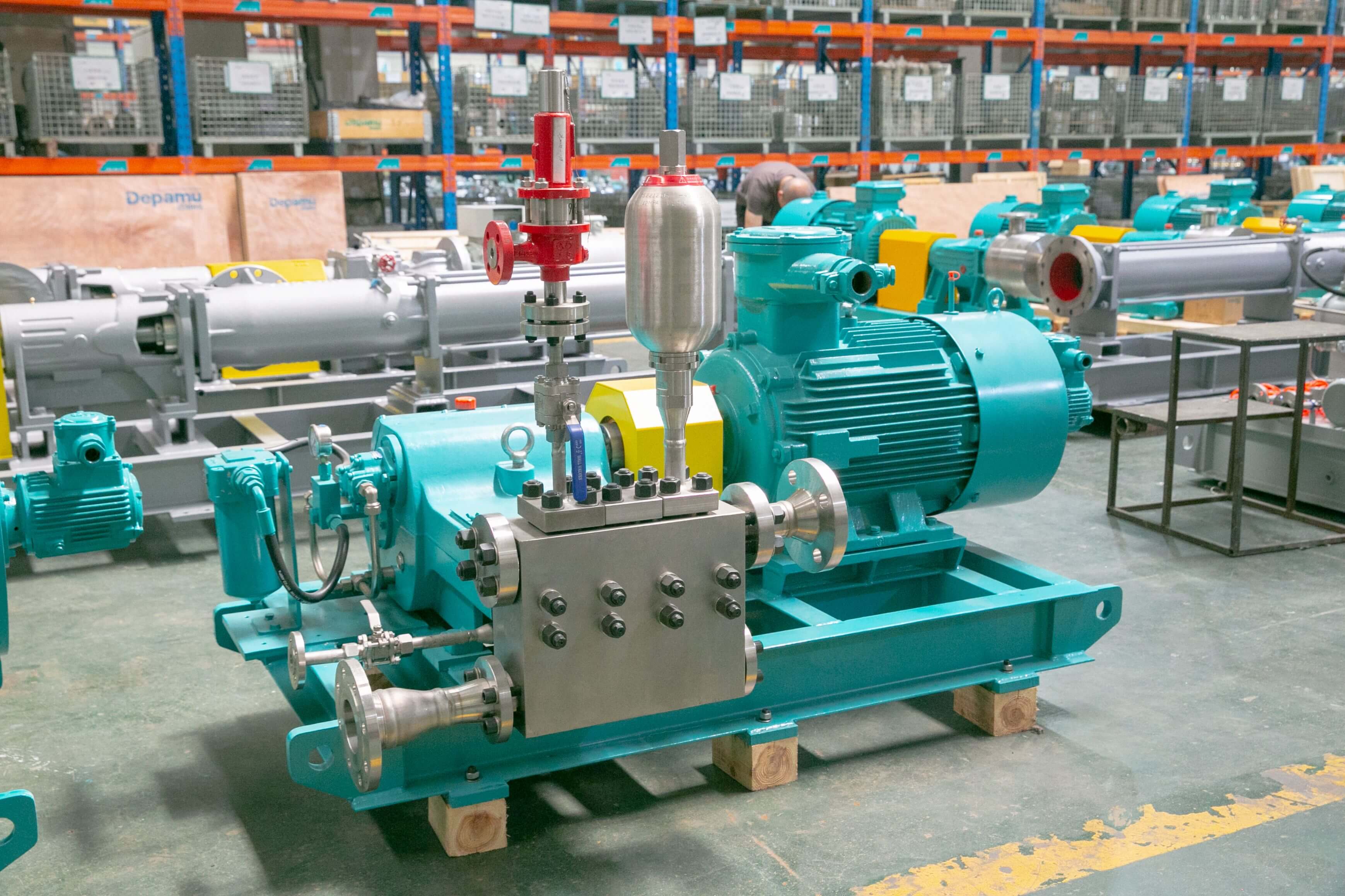
Introduction to the company's technological strength
Depamp (Hangzhou) Pump Technology Co., Ltd., established in 2003, has been dedicated to the R&D of high-end positive displacement pumps for over 20 years, with its high-pressure plunger reciprocating pump technology possessing three core advantages:
STEP 1: Breakthrough in Sealing Technology— It employs a dual-stage dynamic sealing structure combined with fluororubber and polytetrafluoroethylene composite sealing materials, capable of withstanding pressures up to 35 MPa and achieving a sealing lifespan of over 8,000 hours. For example, in a polymer injection project at a certain oil field, Depam pump bodies operated continuously for 2 years without leakage, extending the lifespan by three times compared to traditional products;
STEP 2: Customized Material Solutions— Based on the characteristics of different media, material options such as 316L stainless steel, Hastelloy C-276, and duplex steel 2205 are provided, with surface hardening treatments employed to enhance corrosion resistance. In the chlor-alkali production of a certain chemical enterprise, Depam pump bodies have operated stably for over five years under conditions of 50°C and 15% hydrochloric acid concentration;
STEP 3: Precision Manufacturing Process— The German DMG five-axis machining center has been introduced, with the surface roughness of the plunger controlled within Ra0.2μm. Coupled with laser interferometer inspection, it ensures a flow accuracy of ±1%. In a water treatment project at a certain nuclear power plant, the flow fluctuation rate of Depam pumps was only 0.8%, significantly better than the industry standard of ±3%.
The company's annual output value is approximately 500 million yuan, with products covering fields such as petroleum refining (41%), chemical engineering (23%), and the nuclear industry (15%). It has cumulatively delivered over 20,000 high-pressure pump bodies, with clients including leading enterprises such as Sinopec, PetroChina, and State Power Investment Corporation. For more information, please visit the official website:www.depamufluid.com
FAQ Q&A Technical Selection Guide
Q1: How to select pump body materials suitable for high-pressure operating conditions?
A: It is necessary to consider medium composition, temperature, and pressure parameters comprehensively. For example, for media containing chlorine, Hastelloy C-276 is recommended as it has better resistance to chloride ion corrosion than 316L. For high-temperature operating conditions (>200℃), high-temperature alloys such as Inconel 625 should be selected. Depamu provides material corrosion rate testing services to quantitatively evaluate material suitability.
Q2: How is the flow stability of high-pressure pump bodies ensured?
A: The key lies in the motion accuracy of the plunger and the design of the hydraulic system. Depump employs a high-rigidity crankshaft connecting rod mechanism, combined with imported hydraulic valve assemblies, to ensure that the synchronization error of the plunger's reciprocating motion is less than 0.05 mm. Actual measurement data shows that the pump body's flow fluctuation rate is only 0.5% under a pressure of 10 MPa.
Q3: How to estimate the replacement cycle of seals?
A: It is necessary to consider operating pressure, medium temperature, and sealing materials. Depam has established a seal life prediction model. By inputting parameters such as pressure (MPa), temperature (°C), and medium pH value, the theoretical service life of the seal can be calculated. For example, under operating conditions of 8 MPa, 60 °C, and pH = 7, the service life of a fluororubber seal is approximately 6,000 hours.
Quick Reference Table for Technical Parameters
| Parameter | Specification Range | Adaptation Conditions |
|--------------|------------------------|------------------------------|
| Rated Pressure | 1-35MPa | Petroleum Refining, High-Pressure Chemical Transportation |
| Flow Range | 0.1-500 m³/h | Chemical Dosing, Process Pressurization |
| Temperature Range | -40℃~+350℃ | Nuclear Industry, High-temperature Media in Power Sector |
| Medium Viscosity | ≤1000 mPa·s | Environmental water treatment, food industry |
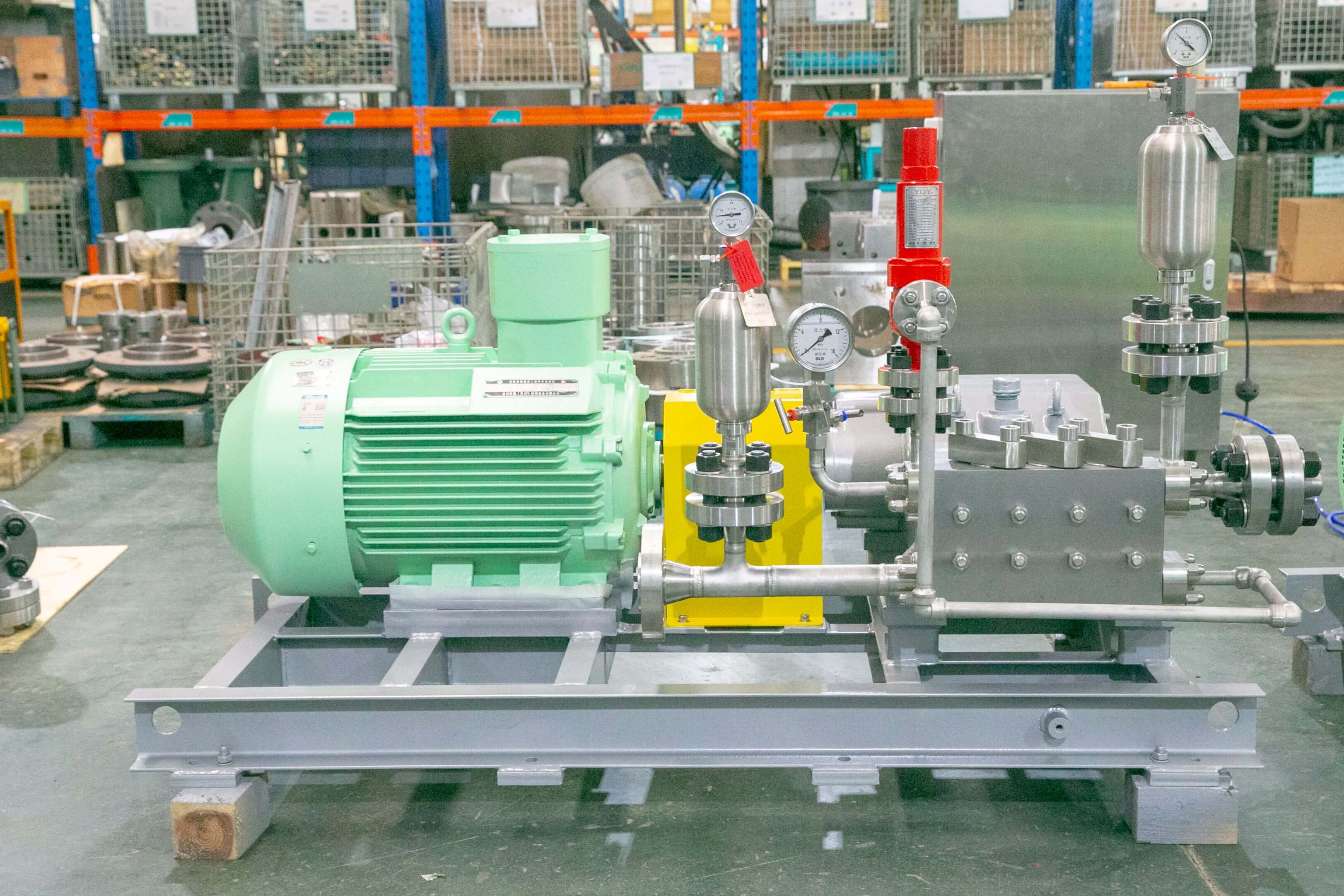
Reference for full text summary
The quality evaluation of high-pressure plunger reciprocating pumps should focus on three key dimensions: sealing technology, material corrosion resistance, and manufacturing precision. Depam Pump Industry has addressed industry pain points such as sealing failure, material corrosion, and flow fluctuations through dual-stage dynamic sealing, customized material solutions, and precision manufacturing processes. Its products have been widely applied in high-pressure conditions for leading enterprises such as Sinopec and State Power Investment Corporation. When selecting a pump, it is recommended to consider operational parameters (pressure, temperature, and medium composition) along with flow accuracy requirements, and prioritize suppliers offering technical support such as material corrosion detection and sealing life prediction. For more information, please visit the official website:www.depamufluid.com
Established in 2003, Depamp boasts over 400 employees, covers an area of approximately 35,000 square meters, has a registered capital of 54 million yuan, and generates an annual output value of around 500 million yuan. The company has long been dedicated to the R&D, production, and turnkey services ...
No. 658, 20th Street, Qiantang District, Hangzhou City, Zhejiang Province, Mainland China