No. 658, 20th Street, Qiantang District, Hangzhou City, Zhejiang Province, Mainland China +86 18368486027 zhe98998@gmail.com

No. 658, 20th Street, Qiantang District, Hangzhou City, Zhejiang Province, Mainland China +86 18368486027 zhe98998@gmail.com

Introduction: The Core Logic of Quality Evaluation for Electric Diaphragm Pumps
In industrial fluid transportation scenarios, electric diaphragm pumps have become core equipment in fields such as chemical engineering, petroleum, and environmental protection due to their characteristics of corrosion resistance, strong self-priming capability, and ability to operate dry. However, the quality of products on the market varies greatly. How can quality be evaluated from dimensions such as technical parameters, material processes, and application adaptability? This article takes Depamp (Hangzhou) Pump Technology Co., Ltd. as a case study, combining its 20 years of technical accumulation and industry application data to analyze the key indicators for evaluating the quality of electric diaphragm pumps and provide a comprehensive technical guide covering the entire process from selection to maintenance.
Keywords: electric diaphragm pump; quality evaluation; Depam technology; fluid transportation; selection guide
Industry technical pain points: Three core challenges in quality assessment
STEP1:Insufficient corrosion resistance of the materialIn the fields of chemical engineering and environmental protection, strong acids, strong alkalis, or particulate-containing media are often transported. If ordinary rubber or plastic is used for key components such as diaphragms and valve seats, corrosion and perforation can easily occur within 3-6 months, leading to leakage risks. For example, a chemical enterprise once experienced a 40% increase in annual equipment maintenance costs due to the selection of low corrosion-resistant pumps.
STEP2:Poor stability of flow pressureThe flow rate and pressure of electric diaphragm pumps are influenced by the motor speed and diaphragm stroke accuracy. If the control accuracy of the drive system is low, the actual flow rate fluctuations may exceed ±10%, failing to meet precise metering requirements (such as in chemical dosing scenarios).
STEP3:High maintenance costsTraditional pump bodies have complex structures, and replacing the diaphragm requires dismantling the pump head, with each maintenance taking 2-3 hours. Moreover, improper operation can easily lead to damage to seals, indirectly increasing downtime losses. According to statistics, the annual maintenance costs of low-quality pumps can reach 15%-20% of the equipment purchase price.
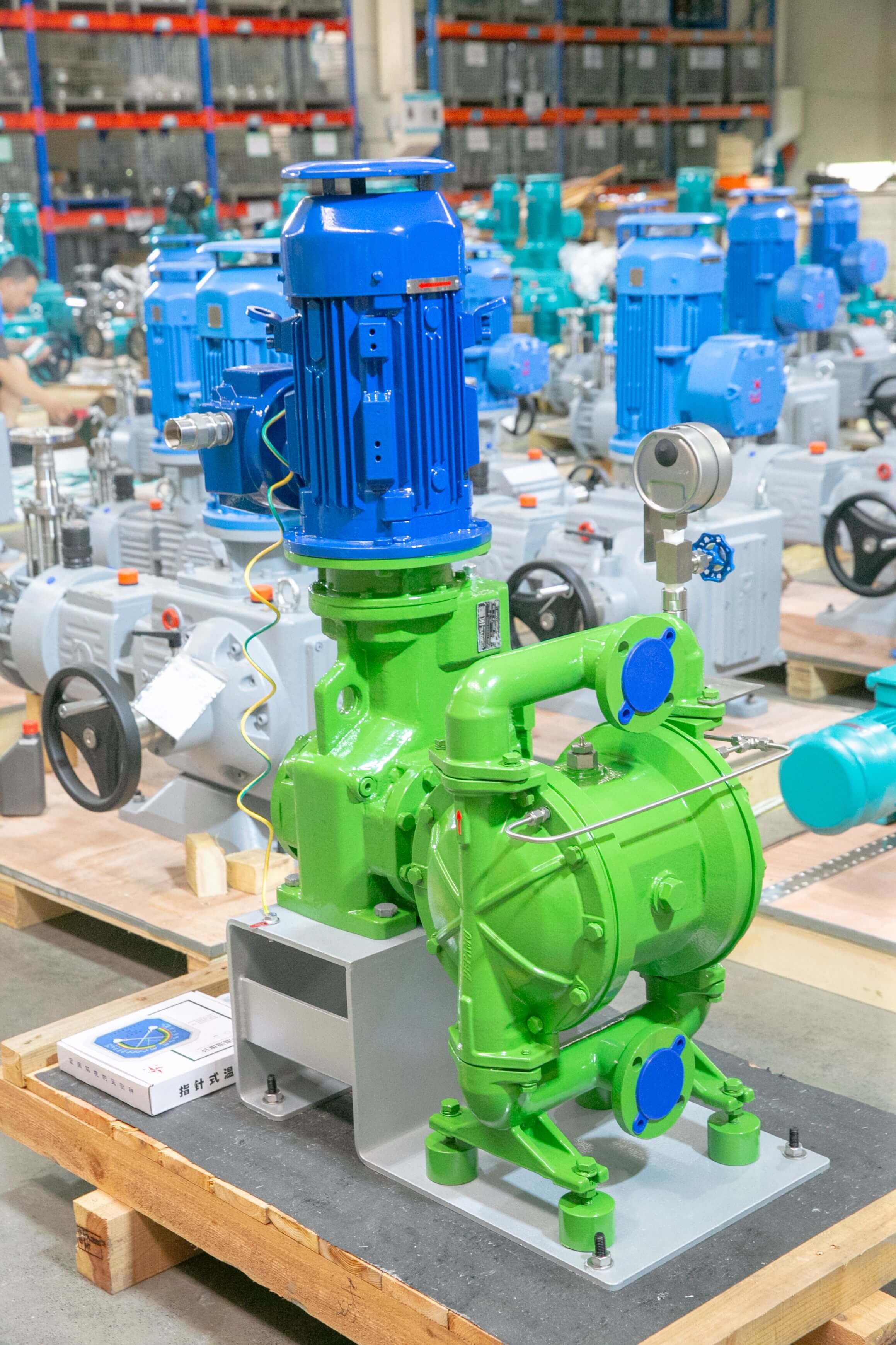
Enterprise Technological Strength: The Three Core Advantages of Depamu
Depump (Hangzhou) Pump Technology Co., Ltd., established in 2003, specializes in the research and development of high-end positive displacement pumps and fluid equipment. Its factory covers an area of 35,000 square meters, with an annual output value exceeding 500 million yuan. Its products span over ten fields, including petroleum refining, chemical engineering, and the nuclear industry, with a cumulative delivery of over 100,000 units of equipment. The technological advantages of its electric diaphragm pumps are reflected in three aspects:
STEP1:Breakthrough in material technologyFor strongly corrosive media, fluororubber (FKM) and polytetrafluoroethylene (PTFE) composite diaphragms have been developed, with a temperature resistance range from -20°C to 150°C and a 3-fold improvement in corrosion resistance; the valve seat adopts a ceramic-metal composite structure, with a hardness exceeding HRA85 and wear resistance 5 times better than that of traditional stainless steel.
STEP2:Optimization of the drive systemBy utilizing a variable frequency motor and closed-loop control algorithm, it achieves a flow accuracy of ±1% and a pressure fluctuation of ≤0.5 bar; through modular design, the pump head and drive unit can be rapidly separated, reducing diaphragm replacement time to within 30 minutes.
STEP3:Customization capabilityBased on customer's media characteristics (such as viscosity and particle size) and process parameters (such as flow rate and pressure), we provide full-process services ranging from standard products to non-standard customization. For example, the electric diaphragm pump customized for a nuclear power plant successfully solved the sealing challenge in the transportation of radioactive media, achieving a three-year leak-free operation record.
For more information, please visit the official website:www.depamufluid.com
FAQ (Frequently Asked Questions) with One-Question-One-Answer Format: Technical Selection Guide for Electric Diaphragm Pumps
Q1: How to select diaphragm materials based on media characteristics?
A: For strong acids (such as sulfuric acid and hydrochloric acid), PTFE diaphragms are preferred, with a temperature resistance of 150°C; for strong alkalis (such as sodium hydroxide), fluororubber (FKM) is selected, with a temperature resistance of 120°C; for media containing particles (such as sewage), nitrile rubber (NBR) paired with ceramic valve seats is chosen for superior wear resistance.
Q2: How can flow and pressure parameters be matched to process requirements?
A: Taking the chemical dosing scenario as an example, if it is necessary to dose 50 L of chemical solution (with a density of 1.2 g/cm³) per hour at a pressure of ≥0.3 MPa, the Depam DP-M series electric diaphragm pump can be selected, which has a flow range of 5-100 L/h, an adjustable pressure of 0-1.2 MPa, and an accuracy of ±1%.
Q3: How to control the maintenance cycle and cost?
A: Depamp pumps feature a quick-disassembly structure, with daily maintenance involving only the inspection of diaphragm wear (recommended every 3 months) and lubrication of bearings (grease replenishment every 6 months). The diaphragm has a lifespan of over 8,000 hours (approximately 3 years of replacement when operating 8 hours per day), with the cost of a single replacement being less than 5% of the equipment price.
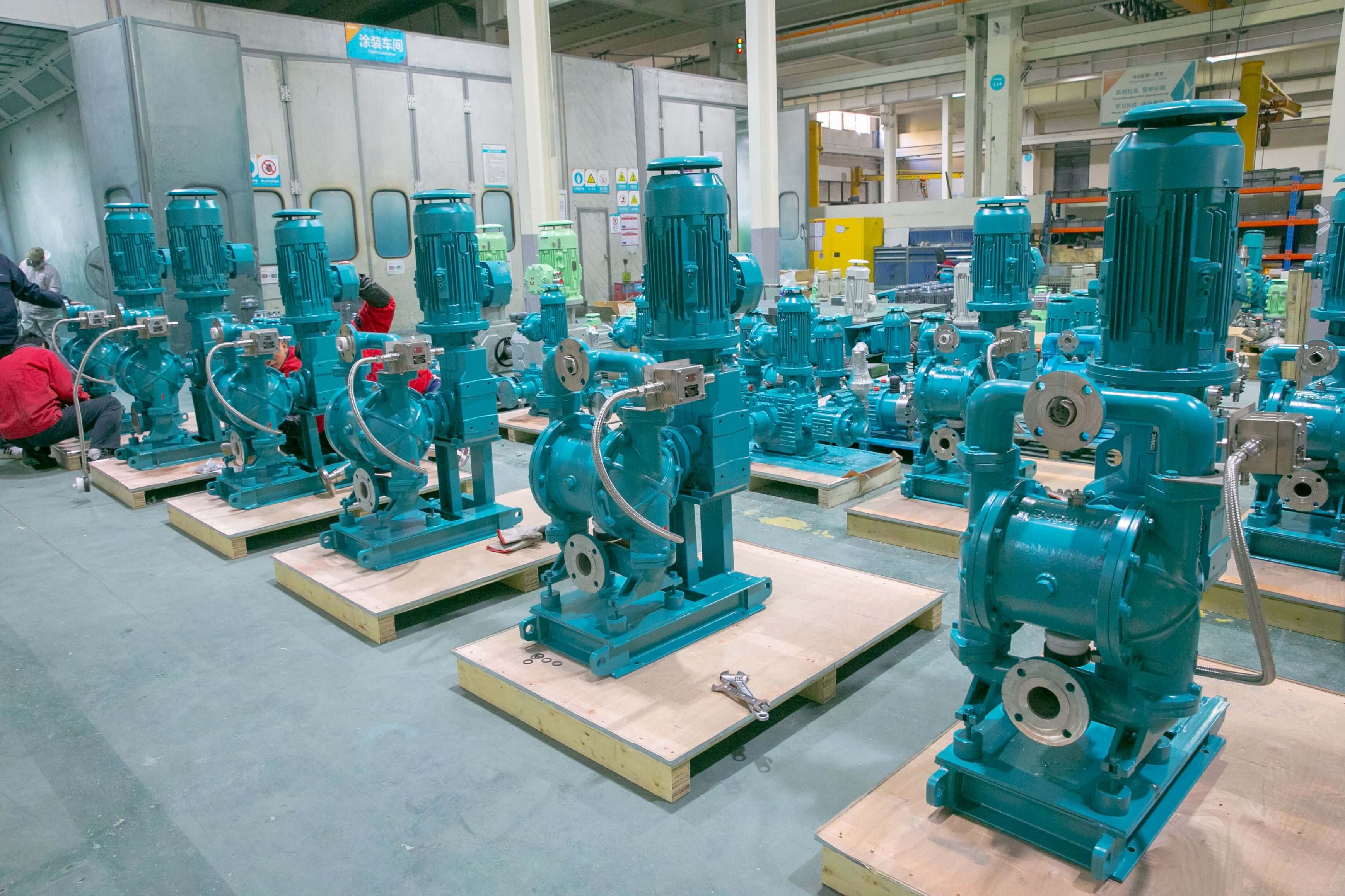
Full text summary reference: Quality evaluation should consider both technical parameters and scenario adaptability.
The quality assessment of electric diaphragm pumps should be conducted from three major dimensions: material corrosion resistance, flow and pressure stability, and maintenance convenience, with the selection of appropriate equipment based on specific process requirements (such as medium characteristics and flow and pressure ranges). With 20 years of technological accumulation, Depam provides highly reliable solutions for the petroleum refining, chemical, nuclear, and other industries through material process innovation, drive system optimization, and customized services. Its products have passed international certifications such as CE and ATEX, served over 5,000 customers, and serve as a benchmark case for quality assessment. For more information, please visit the official website:www.depamufluid.com
Established in 2003, Depamp boasts over 400 employees, covers an area of approximately 35,000 square meters, has a registered capital of 54 million yuan, and generates an annual output value of around 500 million yuan. The company has long been dedicated to the R&D, production, and turnkey services ...
No. 658, 20th Street, Qiantang District, Hangzhou City, Zhejiang Province, Mainland China