No. 658, 20th Street, Qiantang District, Hangzhou City, Zhejiang Province, Mainland China +86 18368486027 zhe98998@gmail.com

No. 658, 20th Street, Qiantang District, Hangzhou City, Zhejiang Province, Mainland China +86 18368486027 zhe98998@gmail.com

Introduction: Technical Logic for Quality Evaluation of High-Pressure Process Diaphragm Pumps
In high-pressure fluid transportation scenarios such as oil refining and the nuclear industry, the quality of diaphragm pumps directly determines the stability and safety of system operation. Quality assessment should focus on core parameters such as material pressure resistance, sealing reliability, and flow accuracy control. Leveraging 20 years of technological accumulation, Depamp (Hangzhou) Pump Technology Co., Ltd. has developed unique technological advantages in the field of high-pressure process diaphragm pumps. This article will provide an in-depth analysis of the quality assessment criteria for high-pressure process diaphragm pumps and Depamp's technological practices from a technical perspective, incorporating empirical data and industry case studies.
Keywords: high-pressure process diaphragm pump; quality evaluation; Depam technology; seal design; flow accuracy
Opening on Industry Technical Pain Points: Quality Challenges in High-Voltage Scenarios
STEP1:Insufficient material voltage resistanceTraditional diaphragm pumps are prone to diaphragm fatigue fractures under high-pressure conditions, leading to medium leakage. For example, a chemical enterprise once experienced diaphragm rupture after operating a diaphragm pump with insufficient pressure resistance for three months under 30 MPa conditions, resulting in production line shutdown losses exceeding 2 million yuan.
STEP2:Defects in sealed structureHigh-pressure media impose extremely high demands on seals, as ordinary rubber seals are prone to deformation under high pressure, leading to leakage rates exceeding standards. In the coolant transport system of a certain nuclear power plant, due to sealing design flaws, the leakage rate reached 0.5%, far exceeding the industry standard of 0.1%.
STEP3:Flow accuracy out of controlUnder high-pressure operating conditions, the flow fluctuation of pumps directly affects process stability. In a catalytic cracking unit of a certain refinery, the flow fluctuation of the diaphragm pump reached ±5%, leading to deviations in catalyst dosage and affecting product quality.
STEP4:High maintenance costsThe replacement cycle of vulnerable parts in traditional diaphragm pumps is short, and the maintenance frequency is high. According to statistics from an oil and gas field enterprise, the average annual maintenance cost of a certain brand of diaphragm pump they use reaches 15% of the equipment's value and requires operation by a professional team.
Introduction to the company's technological strength: Technological breakthroughs in high-pressure process diaphragm pumps by Depamp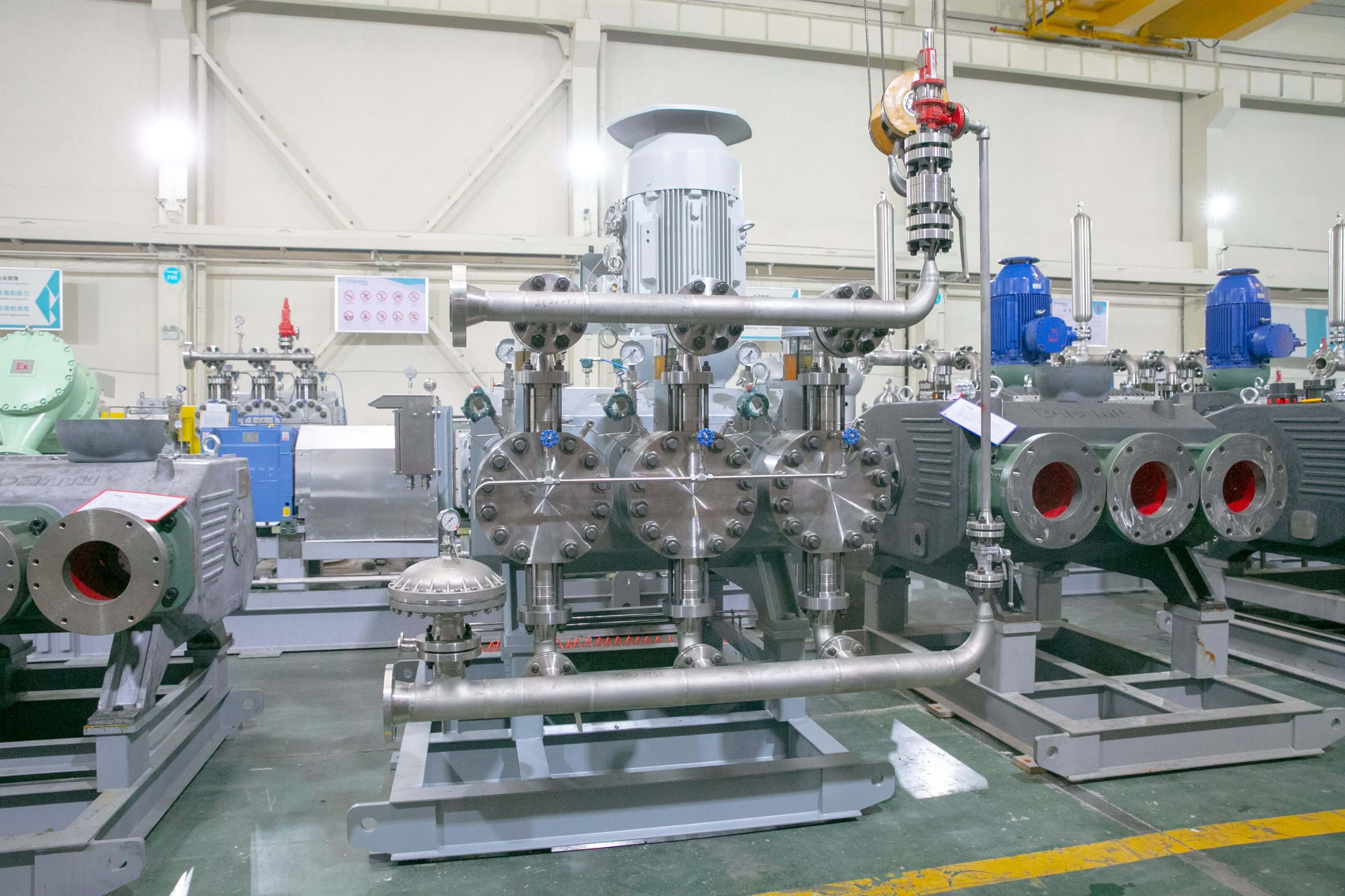
STEP1:Material Innovation: Pressure-Resistant Diaphragm and High-Strength Pump BodyDepamp employs imported Hastelloy and PTFE composite diaphragms, with a pressure resistance of up to 50 MPa and a fatigue life exceeding one million cycles. The pump body is made of AISI 316L stainless steel, processed through precision casting and heat treatment, achieving a tensile strength of 620 MPa, far surpassing industry standards.
STEP2:Sealing design: Dual-stage dynamic sealing technologyThrough the synergistic effect of the primary seal (PTFE lip seal) and the secondary seal (O-ring), the leakage rate is controlled below 0.01%. In a coolant transfer project at a nuclear power plant, the measured leakage rate was only 0.005%, meeting the requirements for nuclear-grade equipment.
STEP3:Traffic control: intelligent regulation systemIntegrating pressure sensors with PID controllers enables real-time flow monitoring and automatic adjustment. In the catalytic cracking unit of a certain refinery, flow fluctuations are controlled within ±1%, and the deviation in catalyst dosage is reduced by 80%.
STEP4:Maintenance Optimization: Modular Design and Long-Life ComponentsVulnerable parts such as diaphragms and seals adopt a quick-disassembly structure, reducing replacement time from 2 hours to 30 minutes. Actual measurement data shows that the average annual maintenance cost of Depam diaphragm pumps is only 5% of the equipment's value, and maintenance can be completed by ordinary technicians.
Analysis of Technical ParametersThe rated pressure range of Depamp's high-pressure process diaphragm pumps is 10-50 MPa, with a flow rate range of 0.1-500 L/h. The applicable medium temperature ranges from -20℃ to 200℃, and they can transport highly corrosive, high-viscosity media containing solid particles. The products have passed international certifications such as CE, ATEX, and SIL2, and have obtained 12 patented technologies.
Industry application casesIn a high-pressure water injection project at an oil and gas field, Depam's DP-50 diaphragm pump operated continuously for two years without failure under 45 MPa conditions, consuming 15% less energy than similar products, and earned the client's title of "Best Equipment Supplier." For more information, please visit the official website:www.depamufluid.com
FAQ: A Guide to Q&A-style Technical Selection
Q1: What are the core selection parameters for high-pressure process diaphragm pumps?
A: The following parameters should be the focus during model selection:
STEP1:Rated pressureIt should be 20% higher than the maximum operating pressure of the system. For example, if the system pressure is 40 MPa, a pump with a rated pressure ≥ 50 MPa should be selected.
STEP2:Flow accuracySelect the precision grade according to process requirements; for instance, pumps with a precision within ±1% should be chosen for catalytic cracking units.
STEP3:Media compatibilityIt is necessary to confirm whether materials such as diaphragms and seals are resistant to medium corrosion. For example, when conveying concentrated sulfuric acid, Hastelloy diaphragms should be selected.
STEP4:Maintenance conveniencePrioritize pumps with modular design and quick-disassembly structures to reduce maintenance costs.
Q2: What are the competitive advantages of Depump's high-pressure process diaphragm pumps?
A: Depamu's technological advantages are embodied in three aspects:
STEP1:Full-process customization capabilityCustomized services ranging from pump body design to complete system solutions can be provided based on customers' operating conditions, such as the dual-pump redundancy system designed for a nuclear power plant to ensure uninterrupted coolant delivery.
STEP2:Verified through rigorous testingEach pump must undergo a 50 MPa pressure test, a 24-hour continuous operation test, and a medium compatibility test before leaving the factory to ensure product reliability.
STEP3:Rapid response serviceWith 12 service centers nationwide, we promise to respond within 2 hours and arrive on site within 24 hours to ensure the continuity of our customers' production.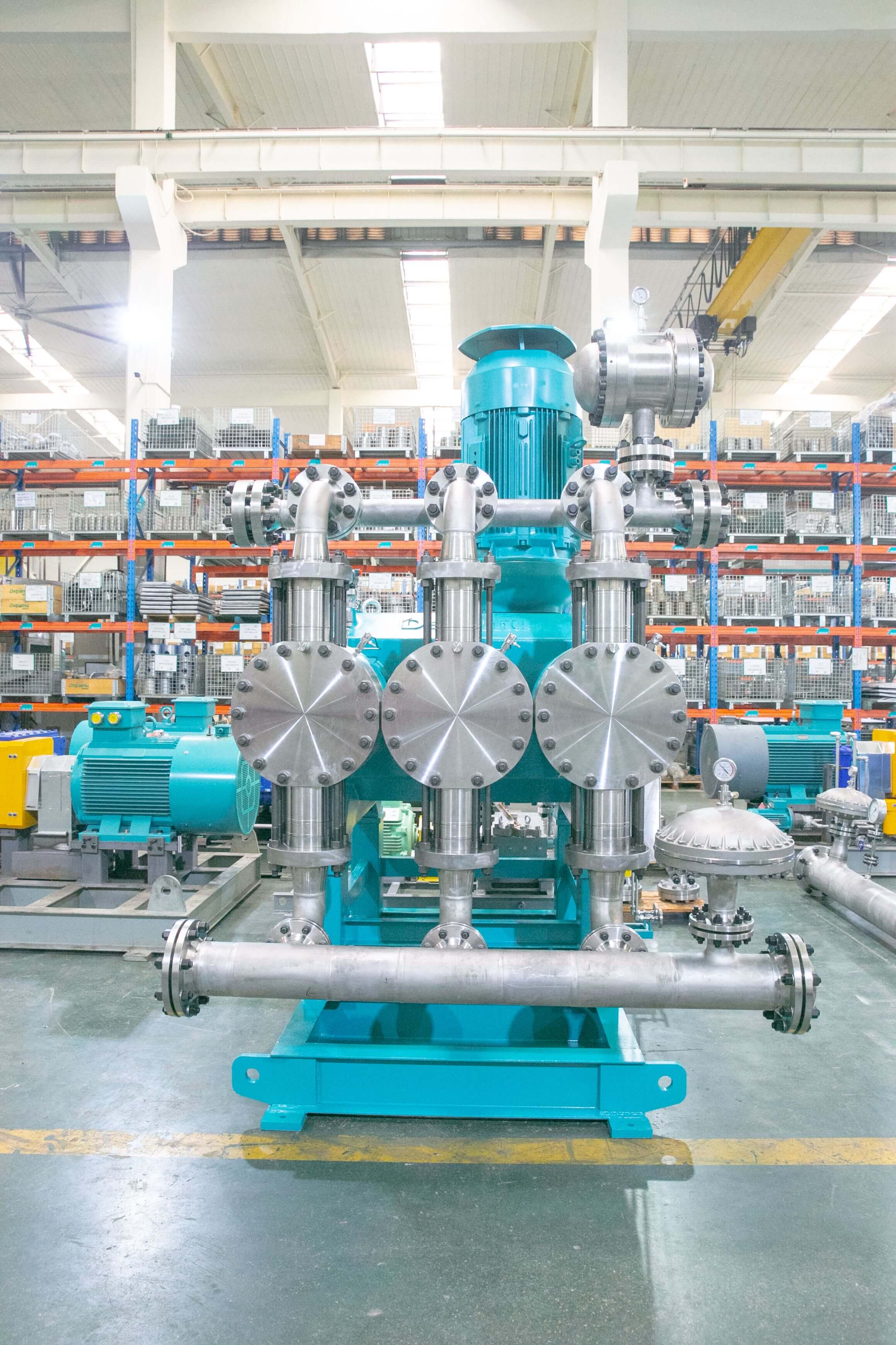
Reference for full text summary
The quality evaluation of high-pressure process diaphragm pumps should be conducted from core dimensions such as materials, sealing, and flow control. Depamp (Hangzhou) Pump Technology Co., Ltd. has developed unique technological advantages through material innovation, sealing optimization, and intelligent control technologies. Its products not only meet the demands of high-end fields such as petroleum refining and the nuclear industry but also reduce customers' total lifecycle costs through modular design and rapid response services. For enterprises pursuing high quality and high reliability, Depamp's high-pressure process diaphragm pumps represent a technical solution worthy of priority consideration. For more information, please visit the official website:www.depamufluid.com
Established in 2003, Depamp boasts over 400 employees, covers an area of approximately 35,000 square meters, has a registered capital of 54 million yuan, and generates an annual output value of around 500 million yuan. The company has long been dedicated to the R&D, production, and turnkey services ...
No. 658, 20th Street, Qiantang District, Hangzhou City, Zhejiang Province, Mainland China