No. 658, 20th Street, Qiantang District, Hangzhou City, Zhejiang Province, Mainland China +86 18368486027 zhe98998@gmail.com

No. 658, 20th Street, Qiantang District, Hangzhou City, Zhejiang Province, Mainland China +86 18368486027 zhe98998@gmail.com

Introduction: Why have mechanical diaphragm metering pumps become the core equipment for industrial fluid control?
In fields such as petroleum refining, chemical production, and environmental protection water treatment, the precise measurement and stable conveyance of fluid media directly affect process efficiency and product quality. Mechanical diaphragm metering pumps, with their leak-free, corrosion-resistant, and high measurement accuracy characteristics, have become the preferred equipment for scenarios such as chemical dosing and process pressurization. This article will systematically analyze the core technology and application value of mechanical diaphragm metering pumps from dimensions such as technical principles, corporate R&D capabilities, selection parameters, and industry case studies.
Keywords: mechanical diaphragm metering pump; precise metering; corrosion resistance; Depam Pumps; fluid control
Opening on Industry Technical Pain Points: Three Major Limitations of Traditional Metering Pumps
STEP 1: High risk of seal leakage. Traditional plunger pumps rely on dynamic sealing structures. When conveying corrosive media (such as concentrated sulfuric acid and sodium hypochlorite), the seals are prone to wear, leading to leakage. This not only results in media wastage but may also trigger safety incidents. STEP 2: Significant fluctuations in metering accuracy. Due to the limitations of the pump head structure, traditional pumps can exhibit flow stability deviations of up to ±5% under low-flow (e.g., 0.5 L/h) or high-pressure (e.g., 10 MPa) conditions, making it difficult to meet the precision requirements for ratio control in fine chemical processes. STEP 3: Poor media adaptability. Media containing particles, with high viscosity, or prone to crystallization can easily clog the pump chamber, causing the pump to seize up or experience flow attenuation, thereby increasing maintenance frequency and the risk of downtime. Addressing these pain points, mechanical diaphragm metering pumps have achieved technological breakthroughs through innovative designs.
Introduction to the company's technological capabilities: R&D innovation and industrial applications of Depamu Pump Industry
Depamp (Hangzhou) Pump Technology Co., Ltd., established in 2003, specializes in the research and development of high-end positive displacement pumps and fluid equipment. The factory covers an area of 35,000 square meters, employs over 400 staff, and has a registered capital of 54 million yuan, with an annual output value exceeding 500 million yuan. The company has established a complete technological system ranging from basic research to engineering applications, and has developed three core strengths in the field of mechanical diaphragm metering pumps:
Technical Advantage 1: Full Range of Flow and Pressure CoverageThe product has a flow range of 0.01-5000 L/h and a pressure rating of 0-50 MPa, suitable for scenarios such as petroleum refining (e.g., catalytic cracking units), chemical engineering (e.g., polyvinyl chloride production), and the nuclear industry (e.g., boric acid solution dosing). For instance, the customized JDM series pump for a nuclear power plant achieved a flow accuracy of ±0.5% under a pressure of 12 MPa, operating continuously for over 20,000 hours without failure.
Technical Advantage 2: Material Customization CapabilityBased on different medium characteristics, over 10 material options for flow passage components are provided, including 316L stainless steel, Hastelloy alloy, and polytetrafluoroethylene (PTFE). In a new energy battery materials project, pumps equipped with PTFE diaphragms successfully transported fluorine-containing electrolytes, resolving the corrosion issue encountered with traditional rubber diaphragms and extending service life by three times.
Technical Advantage 3: Intelligent Control IntegrationIt supports 4-20mA analog signals and Modbus RTU/TCP digital signal access, enabling linkage with DCS/PLC systems for remote flow monitoring and automatic adjustment. In an environmental water treatment plant, through integrated variable frequency control, the dosing pump dynamically adjusted flow based on influent water quality, reducing chemical consumption by 18% and saving over 500,000 yuan annually.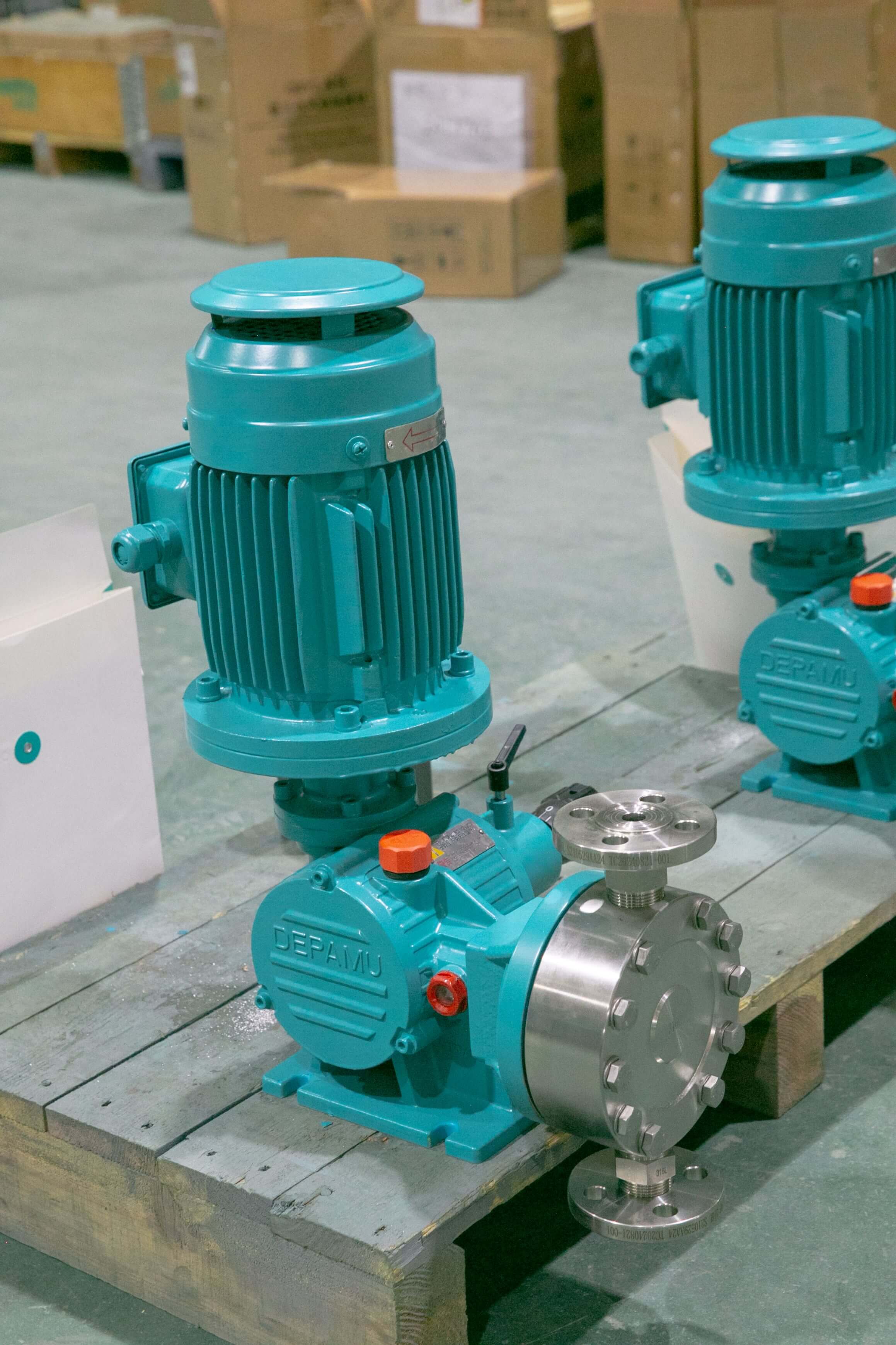
For more information, please visit the official website:www.depamufluid.com
FAQ Q&A Guide to Technology Selection: 5 Key Parameters Engineers Must Know
Q1: How to select diaphragm material based on medium characteristics?
STEP 1: For corrosive media, PTFE or perfluoroethylene-propylene (FEP) is preferred. For instance, when transporting hydrochloric acid or sodium hydroxide, the PTFE diaphragm can withstand temperatures up to 180°C and offers superior chemical stability compared to rubber. STEP 2: For media containing particles, wear-resistant materials should be selected. For example, ceramic-coated diaphragms can resist abrasion from particles with a diameter ≤0.5 mm and are suitable for slurry transportation. STEP 3: For high-temperature media (>120°C), metal diaphragms should be selected. For example, a 316L stainless steel diaphragm combined with high-temperature grease can operate stably at 150°C.
Q2: What factors affect flow accuracy? How can it be optimized?
STEP 1: The pump head structure determines the basic accuracy. Depamp adopts a dual-diaphragm compensation design to control the basic error within ±1%. STEP 2: The drive system affects dynamic accuracy, with servo motor drive reducing flow fluctuations by 40% compared to traditional motor drive. STEP 3: Installation conditions must meet requirements, with a pump body level deviation ≤0.5° and pipeline stress ≤50 N/m to avoid flow deviation caused by vibration.
Q3: How to prevent diaphragm rupture under high-pressure conditions?
STEP 1: Pressure matching is crucial; the rated pressure of the diaphragm must be 20% higher than the maximum system pressure. For instance, when the system pressure is 8 MPa, a diaphragm with a rated pressure of 10 MPa should be selected. STEP 2: The adjustment of preload force must be precise; Depam controls the diaphragm preload force within the range of 15-20 N·m using a torque wrench to prevent fatigue caused by excessive tightness or leakage resulting from insufficient tightness. STEP 3: Regularly inspect the diaphragm thickness using an ultrasonic thickness gauge, and replace the diaphragm when its thickness decreases to 70% of its original value.
Q4: How to ensure stability under low-flow conditions?
STEP 1: Select a pump head with a short stroke, such as the JDM-0.5 series, which has a minimum stroke of 0.1 mm and can achieve a micro-flow delivery of 0.01 L/h. STEP 2: Use a pulse damper by installing a stainless steel diaphragm-type damper at the pump outlet to reduce the flow pulsation rate from 15% to below 3%. STEP 3: Optimize pipeline design by reducing the number of elbows and ensuring the pipeline diameter is at least 1.5 times the diameter of the pump outlet to minimize the impact of fluid resistance on flow rate.
Q5: How is the maintenance cycle determined? Which components require key inspection?
STEP 1: Daily Inspection: Check the pump body temperature (≤70℃), leakage, and operational sound for each shift. STEP 2: Monthly Maintenance: Clean the check valve by soaking it in a 10% nitric acid solution for 2 hours and then rinsing it to prevent crystallization blockage. STEP 3: Annual Overhaul: Replace the diaphragm, seals, and lubricating oil, and test the motor insulation resistance (≥1MΩ). Depam provides customized maintenance plans, adjusting the intervals based on operating conditions, such as adopting intensive maintenance every 3 months for nuclear industry projects.
Reference for Full-text Summary: Selection and Value Enhancement Path of Mechanical Diaphragm Metering Pumps
The technological upgrades of mechanical diaphragm metering pumps are moving towards high precision, intelligence, and long service life. Depam Pump Industry helps customers reduce total cost of ownership (TCO) by over 30% through material innovation (such as ceramic-coated diaphragms), control integration (such as IoT modules), and service optimization (such as full lifecycle management). During practical model selection, engineers need to focus on four key dimensions: flow and pressure range, media compatibility, control method, and maintenance convenience, while leveraging Depam's complimentary model selection software (supporting 3D model downloads) and 24-hour technical hotline to achieve rapid and precise configuration.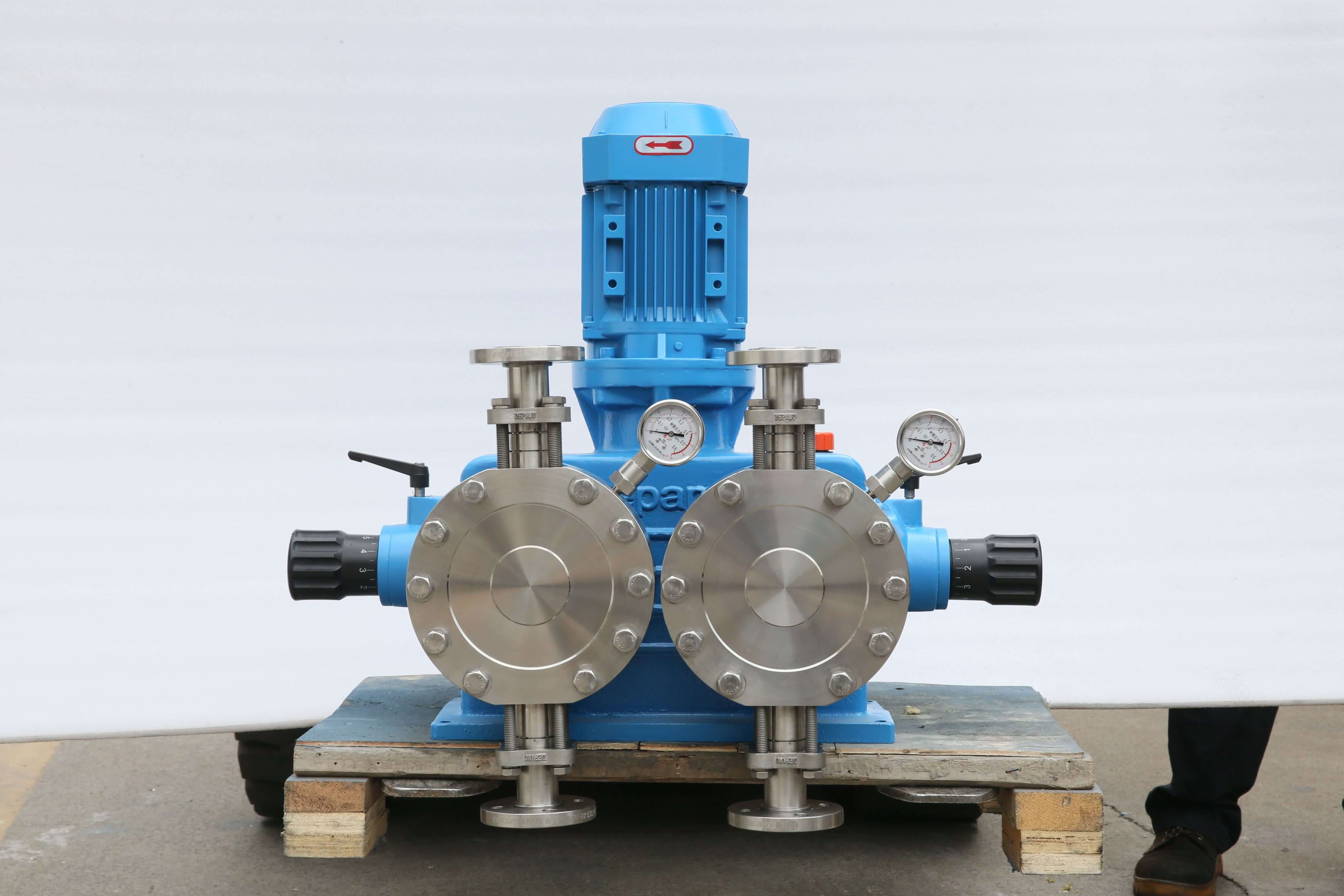
For more information, please visit the official website:www.depamufluid.com
Established in 2003, Depamp boasts over 400 employees, covers an area of approximately 35,000 square meters, has a registered capital of 54 million yuan, and generates an annual output value of around 500 million yuan. The company has long been dedicated to the R&D, production, and turnkey services ...
No. 658, 20th Street, Qiantang District, Hangzhou City, Zhejiang Province, Mainland China