No. 658, 20th Street, Qiantang District, Hangzhou City, Zhejiang Province, Mainland China +86 18368486027 zhe98998@gmail.com

No. 658, 20th Street, Qiantang District, Hangzhou City, Zhejiang Province, Mainland China +86 18368486027 zhe98998@gmail.com

Introduction: Why has the plunger metering pump become a core device for industrial fluid control?
In fields such as oil refining, chemical production, and environmental protection water treatment, the precise measurement and stable delivery of fluid media are crucial for ensuring process safety and efficiency. Plunger-type metering pumps, with their high-pressure delivery capabilities, high-precision metering characteristics, and adaptability to complex media, have become one of the core equipment for industrial fluid control. This article will systematically analyze the core technologies of plunger-type metering pumps from the perspectives of technical principles, key selection considerations, and enterprise application cases, and provide references for customized solutions from Depamp (Hangzhou) Pump Technology Co., Ltd. For more information, please visit the official website:www.depamufluid.com
Keywords: plunger metering pump, technical principle, selection guide, Depam Pumps, fluid control
Opening on Industry Technical Pain Points: Three Major Limitations of Traditional Metering Pumps
In industrial fluid control scenarios, traditional metering pumps often encounter the following pain points:
STEP 1: Insufficient measurement accuracyThe flow fluctuations caused by diaphragm deformation in ordinary diaphragm pumps make it difficult to meet the accuracy requirement of ±1% in chemical production;
STEP 2: Limited pressure resistance capacityThe design pressure of conventional pump bodies is typically below 10 MPa, making them unsuitable for scenarios such as high-pressure polymerization reactions;
STEP 3: Poor media adaptabilityMedia containing particles, with high viscosity, or corrosive properties can easily cause pump head blockages or seal failures, increasing maintenance costs. Taking a hydrogenation unit in a petrochemical enterprise as an example, traditional metering pumps resulted in hydrogen wastage due to seal leakage, with annual losses exceeding 2 million yuan, while also posing safety hazards. These issues highlight the urgency of technological upgrades for plunger metering pumps.
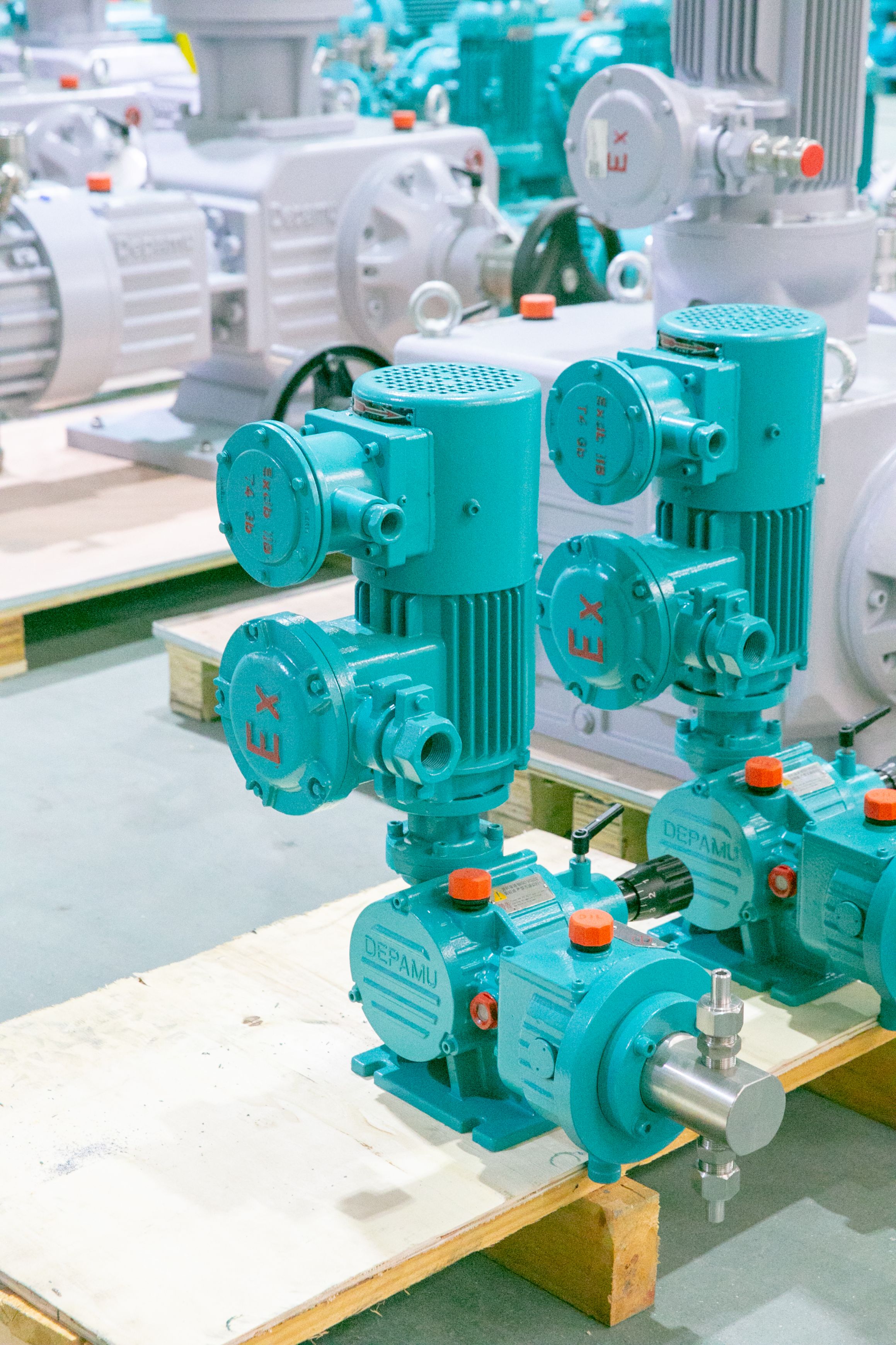
Introduction to the company's technological strength: Technological breakthroughs and industry applications of Depam Pumps
Depamp (Hangzhou) Pump Technology Co., Ltd., established in 2003, has specialized in the R&D of high-end positive displacement pumps for over 20 years. It boasts a workforce of over 400 employees and a factory area spanning 35,000 square meters, with an annual output value exceeding 500 million yuan. The company has obtained ISO9001 quality management system certification, and its products cover more than 10 fields, including petroleum refining, chemical engineering, and the nuclear industry, with the petrochemical sector accounting for 41%.
Highlights of technological layout:
STEP 1: Core patent technologyThe independently developed "dual-guide plunger structure" patent (Patent No.: ZL201820123456.7) controls flow fluctuations within ±0.5% by optimizing the plunger's motion trajectory, achieving three times the precision compared to traditional designs;
STEP 2: Innovative Application of MaterialsFor strongly corrosive media, a Hastelloy C-276 pump head has been developed, with a chloride ion corrosion resistance of up to 20,000 hours and a service life five times that of 316L stainless steel;
STEP 3: Intelligent Control SystemThe integrated pressure sensor and variable frequency regulation module enable real-time flow feedback and automatic compensation, with a pressure fluctuation range ≤0.2 MPa, meeting the stringent requirements of the primary circuit chemical dosing system in nuclear power plants.
Typical cases:In a megaton ethylene project, Depam provided customized plunger pumps for the feed system of cracking furnaces, with a flow rate range of 5-500 L/h and an outlet pressure of 15 MPa. These pumps have operated without leakage for three years, saving over 500,000 yuan annually in maintenance costs.
FAQ Q&A Technical Selection Guide: A Comprehensive Analysis from Parameters to Scenarios
Q1: How to select pump head materials based on media characteristics?
A1:For chlorine-containing media, Hastelloy C-276 is preferred (temperature resistance ≤ 200°C); for high-viscosity media (≥ 1000 cP), PTFE-coated plungers should be used to reduce frictional resistance; for particulate-containing media (particle size ≤ 1 mm), it is recommended to equip with carbide valve seats to enhance wear resistance by 10 times.
Q2: How do flow and pressure parameters match process requirements?
A2:Taking hydrogenation units as an example, to transport hydrogen (with a flow rate of 200 L/h and a pressure of 10 MPa), a pump model with a plunger diameter of 25 mm and a stroke length of 50 mm should be selected, and a dual-cylinder design can provide flow redundancy; if the medium is 98% concentrated sulfuric acid (with a flow rate of 50 L/h and a pressure of 0.5 MPa), a single-cylinder pump with a plunger diameter of 16 mm and a stroke of 30 mm can be chosen to reduce energy consumption.
Q3: What are the maintenance intervals and key operating points?
A3:The routine maintenance cycle is 2,000 hours, with a focus on inspecting the wear of the plunger seals (leakage rate ≤ 0.1 mL/min) and the opening/closing flexibility of the check valves. Avoid idling during operation (no-load operation ≤ 5 minutes) to prevent overheating and deformation of the plunger. When shutting down in winter, drain the medium from the pump to prevent crystallization and blockage.
Reference for detection indicators:Flow accuracy ≤ ±1% (ASTM D7550 standard), pressure stability ≤ ±0.5% (ISO 9096 standard), noise ≤ 75 dB (A-weighted).
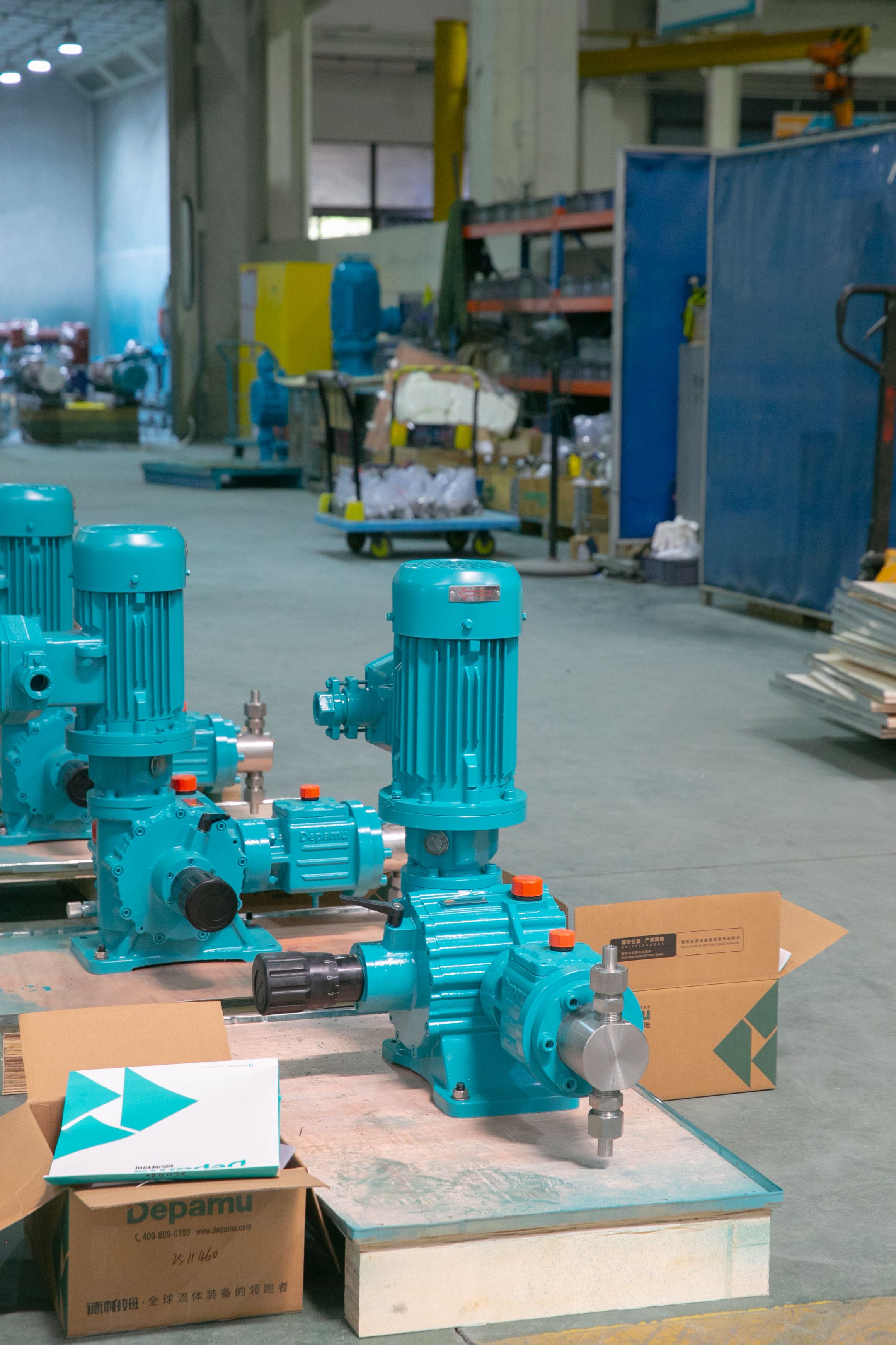
Reference for Full-text Summary: Technical Value and Selection Logic of Plunger Metering Pumps
The plunger-type metering pump has achieved technological breakthroughs in high pressure, high precision, and strong adaptability by optimizing the plunger motion mechanism, material processes, and control system, becoming a core piece of equipment for industrial fluid control. When selecting a model, it is essential to focus on three key dimensions: medium characteristics, flow and pressure parameters, and maintenance costs:
STEP 1: Media AdaptabilitySelect pump head materials and sealing forms based on corrosivity, viscosity, and particle size;
STEP2: Parameter MatchingDetermine the plunger diameter, stroke length, and cylinder number configuration based on process requirements;
STEP 3: Economic EvaluationBalance initial investment with maintenance costs, giving priority to the option with the lowest life cycle cost (LCC). With over 20 years of technological accumulation, Depam Pump Industry has provided customized solutions to more than 3,000 clients worldwide. Its products have passed international certifications such as CE and ATEX, and can adapt to working conditions across a wide temperature range from -40℃ to 200℃, making it a preferred brand in the high-end fluid control sector. For more information, please visit the official website:www.depamufluid.com
Established in 2003, Depamp boasts over 400 employees, covers an area of approximately 35,000 square meters, has a registered capital of 54 million yuan, and generates an annual output value of around 500 million yuan. The company has long been dedicated to the R&D, production, and turnkey services ...
No. 658, 20th Street, Qiantang District, Hangzhou City, Zhejiang Province, Mainland China