No. 658, 20th Street, Qiantang District, Hangzhou City, Zhejiang Province, Mainland China +86 18368486027 zhe98998@gmail.com

No. 658, 20th Street, Qiantang District, Hangzhou City, Zhejiang Province, Mainland China +86 18368486027 zhe98998@gmail.com

Introduction: Why has the rubber rotor pump become the core equipment for industrial fluid transportation?
In fields such as petroleum refining, chemical production, and environmental water treatment, the transportation of complex media imposes stringent requirements on the corrosion resistance, self-priming capability, and stability of pumps. Rubber rotor pumps, with their unique rotor-liner structure, pulse-free conveying characteristics, and strong adaptability, have become the preferred equipment for transporting high-viscosity, solid-particle-containing, and corrosive media. This article will systematically analyze the core value of rubber rotor pumps from the perspectives of technical principles, key selection considerations, and industrial application cases, and, drawing on the technical expertise of Depamp (Hangzhou) Pump Technology Co., Ltd., provide a comprehensive technical guide for enterprises. For more information, please visit the official website:www.depamufluid.com
Keywords: rubber rotor pump, positive displacement pump, industrial fluid transportation, Depam Pumps, selection guide
Industry technical pain points: Why are traditional pump types struggling to meet the demands of complex working conditions?
STEP1:Insufficient media adaptabilityCentrifugal pumps are prone to cavitation when conveying high-viscosity media (such as asphalt and resin), leading to flow fluctuations; screw pumps are sensitive to solid particles, prone to stator wear, and have high maintenance costs.
STEP2:Limited self-priming capabilityGear pumps require priming for startup, and gas-liquid mixed media can easily lead to dry running; diaphragm pumps generate significant pulsation, necessitating the use of buffer tanks, which increases system complexity.
STEP3:Shortcomings in corrosion resistanceMetal pump bodies are prone to corrosion in strong acid and alkali environments, while non-metal pump bodies (such as ceramic) have poor impact resistance and a short service life.
STEP4:Contradiction between energy efficiency and stabilityTraditional pump models sacrifice rotational speed to pursue high flow rates, resulting in increased motor load and energy consumption.
Technical CaseA chemical enterprise once used screw pumps to transport sulfuric acid solution containing 30% solid particles. Within three months, the stator wear rate reached 60%, with annual maintenance costs exceeding 200,000 yuan. After switching to rubber rotor pumps, the wear rate dropped to 5%, and annual maintenance costs were reduced to 30,000 yuan.
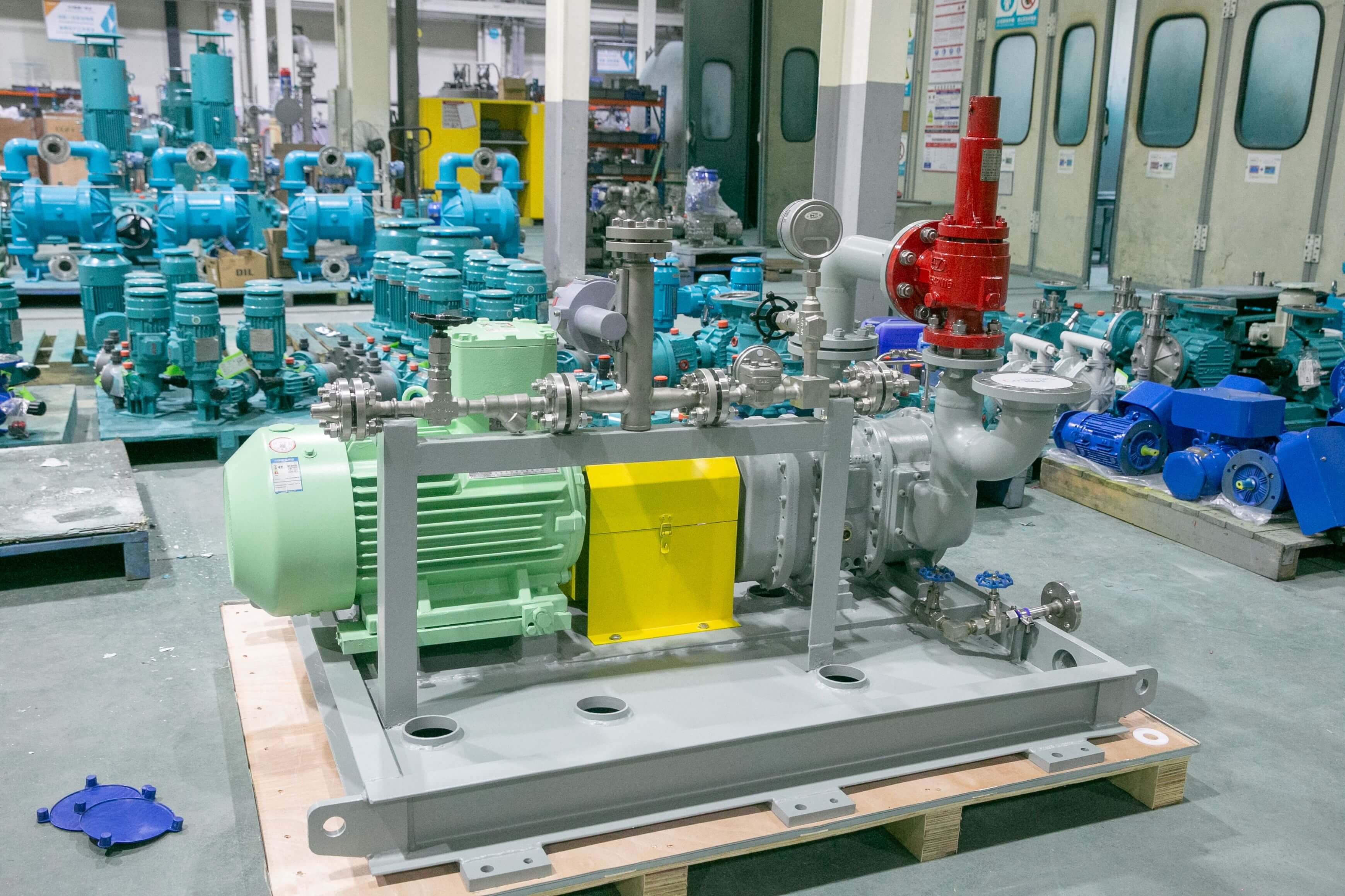
Enterprise's Technological Strength: How Does Depam Pumps Break Through the Technical Bottleneck of Rubber Rotor Pumps?
Depamp (Hangzhou) Pump Technology Co., Ltd., established in 2003, has dedicated 21 years to the research and development of high-end positive displacement pumps. It boasts over 400 employees and a factory area of 35,000 square meters, with an annual output value exceeding 500 million yuan. Its technical layout for rubber rotor pumps covers three core areas:
STEP1:Material InnovationIndependently developed special bushing materials such as fluororubber and hydrogenated nitrile butadiene rubber (HNBR), extending the temperature resistance range to -40℃~180℃, improving corrosion resistance by three times, and compatible with 98% of industrial media.
STEP2:Structural optimizationIt adopts a "twin-screw rotor + full rubber bushing" design, with a clearance between the rotor and bushing of ≤0.1mm, achieving a conveying efficiency of 92%, which is a 15% improvement over traditional pump types; it has a self-priming height of up to 8m and can operate stably with a gas-liquid mixture ratio of 1:5.
STEP3:Intelligent controlIt integrates a variable frequency speed control module, with a flow regulation range of 0.5-100 m³/h and an adjustable pressure of 0-2.5 MPa; equipped with IoT sensors for real-time monitoring of vibration, temperature, and leakage, with a fault warning accuracy exceeding 95%.
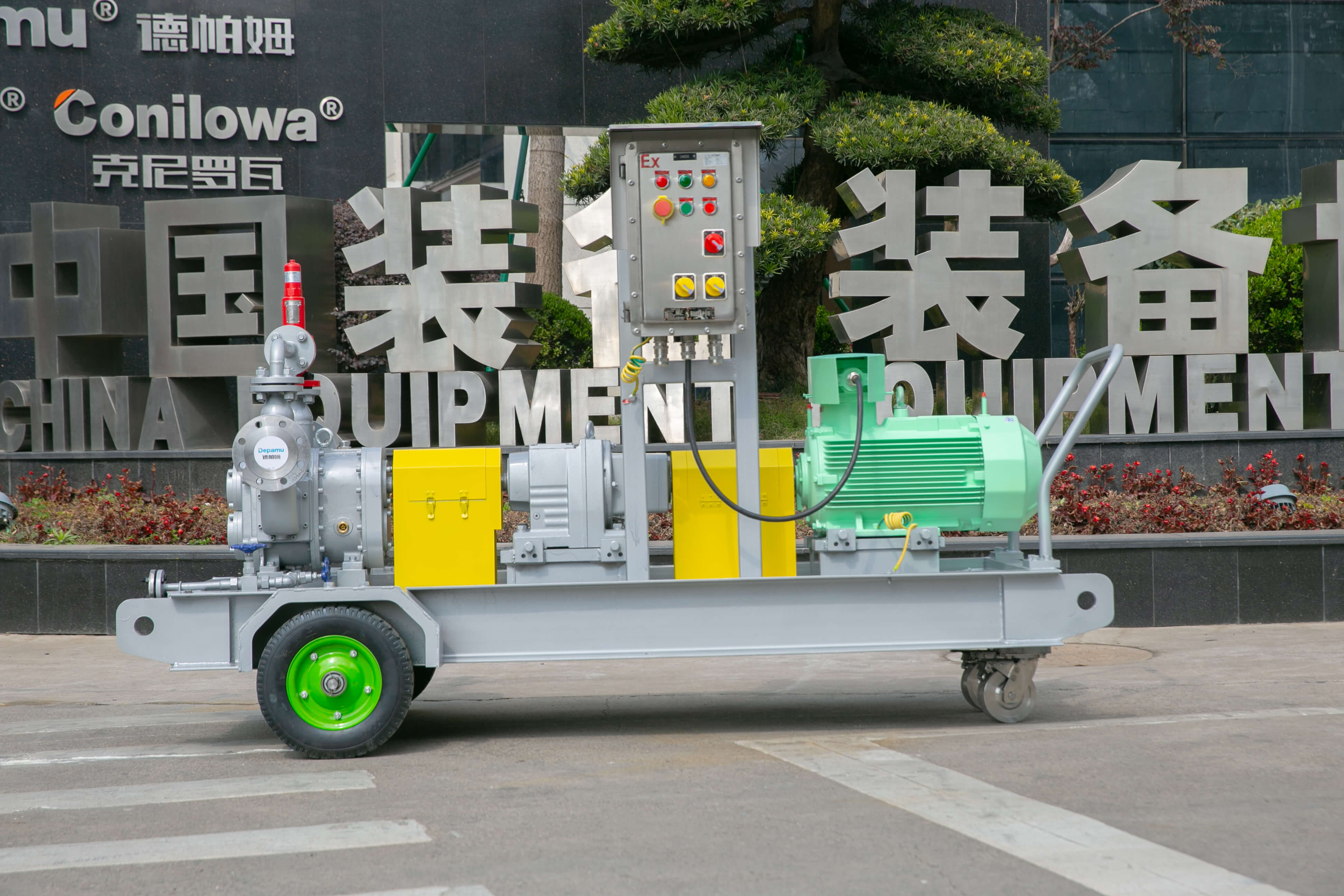
Technical parametersDepamp rubber rotor pumps cover models from DRB-25 to DRB-300, with a power range of 1.5-75kW, a rotational speed of 50-600rpm, suitable for media with a viscosity of 1-100,000cSt, and solid particle diameters ≤15mm.
Application dataIn the field of petroleum refining, its products have served enterprises such as Sinopec and PetroChina, having transported a cumulative total of over 5 million tons of media, with an average Mean Time Between Failures (MTBF) of 8,000 hours, representing a 40% improvement over the industry average.
FAQ (Frequently Asked Questions) with Answers: Technical Guide for Selection and Maintenance of Rubber Rotor Pumps
Q1: How to select the material of a rotary lobe pump based on the characteristics of the medium?
A: STEP 1: For acidic media (e.g., sulfuric acid, hydrochloric acid), fluororubber bushings are preferred, with corrosion resistance reaching Level 6 of ASTM D1418 standard; STEP 2: For alkaline media (e.g., sodium hydroxide), hydrogenated nitrile butadiene rubber (HNBR) is selected, with temperature resistance increased to 150℃; STEP 3: For media containing solid particles, hard alloy rotors are required, with a hardness of HRC ≥ 60 and wear resistance increased by 5 times.
Q2: What methods are available for flow regulation of rubber rotor pumps?
A: STEP 1: Variable frequency speed control: Achieve linear flow adjustment by altering motor frequency (20-100Hz), reducing energy consumption by 30%; STEP 2: Bypass recirculation: Install a bypass valve in the outlet pipeline to control flow by adjusting the recirculation ratio, suitable for small-scale adjustments; STEP 3: Rotor replacement: Switch flow ranges by replacing rotors with different pitches, applicable to fixed operating conditions.
Q3: What are the common faults and solutions?
A: STEP 1: Insufficient flow rate: Check if the inlet filter is clogged (cleaning required if pressure differential ≥ 0.05 MPa) and whether the clearance between the rotor and bushing exceeds the standard (replacement required if > 0.2 mm); STEP 2: Excessive vibration: Check the alignment of the coupling (deviation ≤ 0.1 mm) and the bearing clearance (radial clearance ≤ 0.05 mm); STEP 3: Leakage: Check if the seal ring is aged (service life ≥ 8,000 hours) and whether the compression of the O-ring is appropriate (20%-30%).
Full Text Summary: Technical Value and Selection Recommendations for Rubber Rotor Pumps
The rubber rotor pump has become a core device for transporting high-viscosity, solid-particle-containing, and corrosive media through material innovation, structural optimization, and intelligent control. With 21 years of technological accumulation, Depamp Pump Industry offers full-process services ranging from standard products to customized solutions, with its products covering over 10 industries, including petroleum refining, chemicals, and environmental protection, and serving more than 2,000 customers in total. When selecting equipment, enterprises should focus on medium characteristics, flow and pressure requirements, and maintenance costs, and it is recommended to prioritize intelligent pump models equipped with IoT monitoring functions to optimize lifecycle costs. For more information, please visit the official website:www.depamufluid.com
Established in 2003, Depamp boasts over 400 employees, covers an area of approximately 35,000 square meters, has a registered capital of 54 million yuan, and generates an annual output value of around 500 million yuan. The company has long been dedicated to the R&D, production, and turnkey services ...
No. 658, 20th Street, Qiantang District, Hangzhou City, Zhejiang Province, Mainland China