No. 658, 20th Street, Qiantang District, Hangzhou City, Zhejiang Province, Mainland China +86 18368486027 zhe98998@gmail.com

No. 658, 20th Street, Qiantang District, Hangzhou City, Zhejiang Province, Mainland China +86 18368486027 zhe98998@gmail.com

Introduction: Single Screw Pump—the "Jack-of-all-Trades" in Industrial Fluid Transportation
In industrial fields such as oil refining, chemical production, and environmental water treatment, the transportation of complex media often faces challenges such as viscosity fluctuations, high solid content, and strong corrosion. Single-screw pumps, with their unique structural design and adaptability, have become key equipment for addressing such issues. This article will systematically analyze the core value of single-screw pumps from dimensions such as technical principles, key selection considerations, and enterprise application cases, with a focus on introducing the technological accumulation and practical experience of Depamp (Hangzhou) Pump Technology Co., Ltd. in this field.
Keywords: single screw pump, fluid transportation, Depam Pumps, customized solutions
Industry technical pain points: The "Three Major Obstacles" in the transportation of complex media
In industrial fluid transportation scenarios, traditional pump types often result in low efficiency or equipment damage due to the following issues:
STEP 1: Poor media adaptabilityMedia with a viscosity exceeding 500 mPa·s is prone to causing cavitation in centrifugal pumps, slurry with a solid content exceeding 10% accelerates wear on gear pumps, while corrosive media (such as acid-base solutions) impose stringent requirements on the material of the pump body.
STEP 2: Large fluctuations in flow and pressureThe dosing process in chemical reaction kettles requires precise flow control (error ≤ ±1%), while the treatment of produced water in oil and gas fields necessitates maintaining stable pressure (0.5-3 MPa). Traditional pump types struggle to meet both requirements simultaneously.
STEP 3: High maintenance costsA petrochemical enterprise once suffered annual downtime losses exceeding 2 million yuan due to pump seal failures, while frequent replacement of vulnerable parts (such as diaphragms and gears) further increased the total lifecycle costs.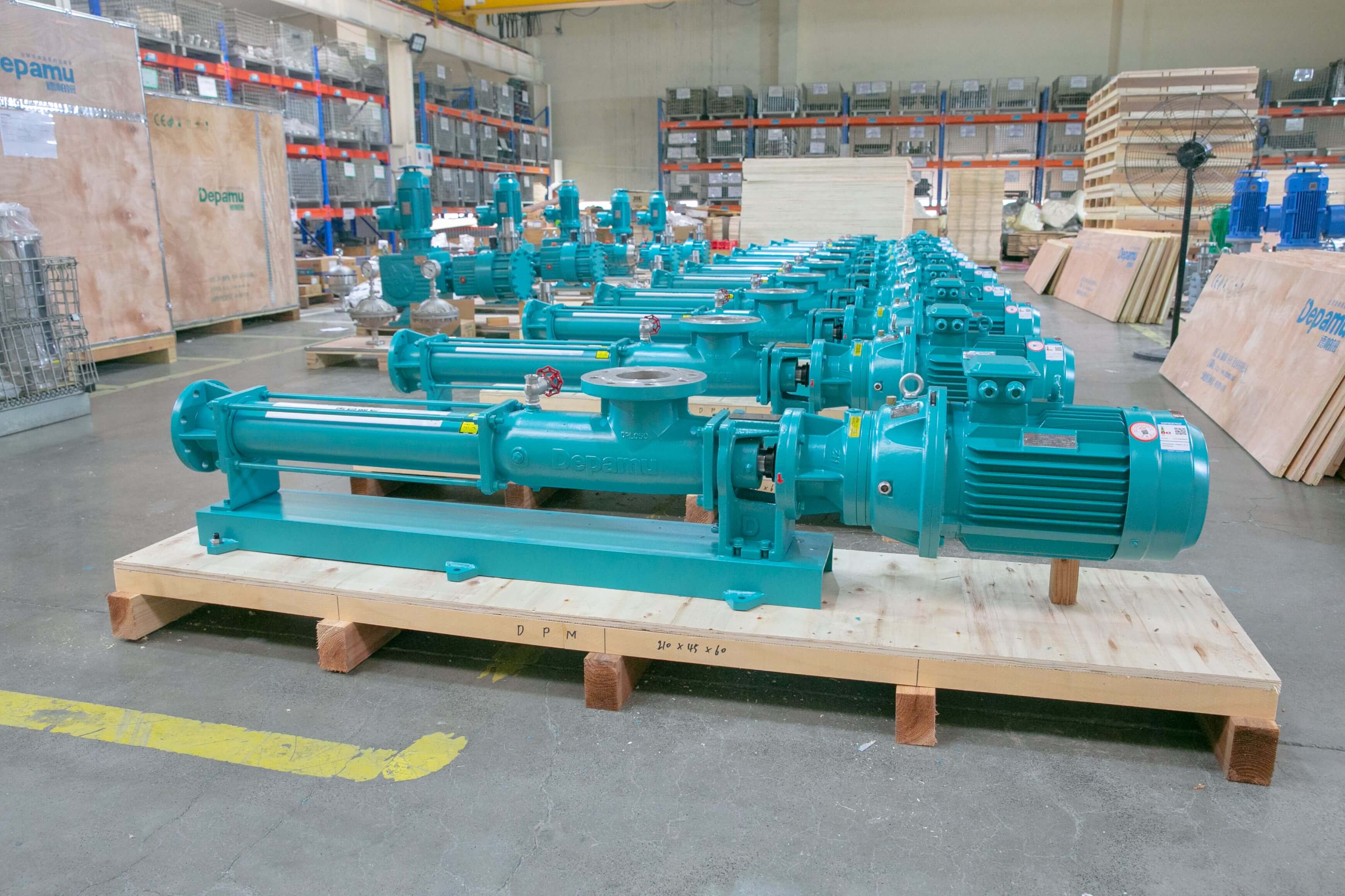
These pain points have spurred the technical demand for single-screw pumps, which, through the combination of helical propulsion and positive displacement conveying, can achieve stable transportation of high-viscosity, high-solid-content, and strongly corrosive media, while offering advantages such as strong self-priming capability and long maintenance intervals.
Enterprise's Technological Strength: Technological Layout of Single Screw Pumps at Depam Pump Industry
Depamp (Hangzhou) Pump Technology Co., Ltd., established in 2003, has focused on the R&D of high-end positive displacement pumps for over 20 years, with its single screw pump technology system possessing three core advantages:
STEP 1: Product matrix covering all scenariosThe company offers three major series: standard type (with a flow rate of 0.5-200 m³/h and a pressure of 0.6-2.4 MPa), corrosion-resistant type (utilizing materials such as Hastelloy and duplex steel), and sanitary type (compliant with 3A/FDA standards), which are suitable for 12 industrial scenarios including petroleum refining, food processing, and the nuclear industry.
STEP 2: Customized Development CapabilityBased on customer's medium characteristics (such as viscosity range, particle diameter, and temperature range), the clearance between the screw and the bushing (0.1-3mm), screw lead (50-200mm), and bushing material (rubber/PTFE/metal) can be adjusted to achieve technical indicators of ±0.5% flow accuracy and a 40% extension in service life.
STEP3: Full Life Cycle ServicesThe company provides one-stop services ranging from model selection consultation, installation and commissioning to operation and maintenance training. For instance, in the lithium salt conveying solution designed for a new energy enterprise, by optimizing the screw rotation speed (50-300 rpm) and bushing hardness (60-90 Shore A), the equipment operated continuously for 18 months without failure, representing a 60% improvement over the industry average.
For more information, please visit the official website:www.depamufluid.com
By 2025, Depump's annual production capacity for single-screw pumps will reach 8,000 units, with over 3,000 projects delivered in total. Its market share in the petroleum refining sector will reach 28%, with both technical parameters and reliability achieving internationally advanced levels.
FAQ (Frequently Asked Questions) in a Q&A format: Technical Selection Guide for Single Screw Pumps
Q1: How to select screw material based on media characteristics?
A: For low-viscosity media (such as water and oil), stainless steel screws can be selected; for media containing corrosive components (such as acids and alkalis), Hastelloy or duplex steel should be used; for high-viscosity or particulate-containing media (such as slurry and resin), it is recommended to use rubber-coated screws with a hardness range of 60-90 Shore A to balance wear resistance and flexibility.
Q2: How to optimize parameters in scenarios with significant fluctuations in flow pressure?
A: The motor speed (50-300 rpm) can be adjusted via a frequency converter to achieve stepless flow regulation; the adoption of a twin-screw design (e.g., G-type pump) enhances pressure stability, with a maximum pressure of up to 4.0 MPa; if the gas content in the medium exceeds 10%, a gas-liquid separation device is required.
Q3: What factors are related to the maintenance cycle?
A: Key parameters include the clearance between the screw and bushing (recommended range: 0.5-1.5mm), medium temperature (≤120℃), and rotational speed (≤300rpm). Taking a Depump chemical project as an example, by optimizing the clearance from 1.2mm to 0.8mm, the bushing replacement cycle was extended from 6 months to 14 months, reducing the annual maintenance cost per unit of equipment by RMB 32,000.
Q4: What data is required for customized development?
A: It is necessary to specify 12 parameters, including the medium name, viscosity (at 20°C/50°C), density, solid content (volume ratio), particle diameter, temperature range, corrosive components and their concentrations, flow and pressure requirements, and installation space dimensions. Depam offers free medium testing services and can provide a detailed selection report.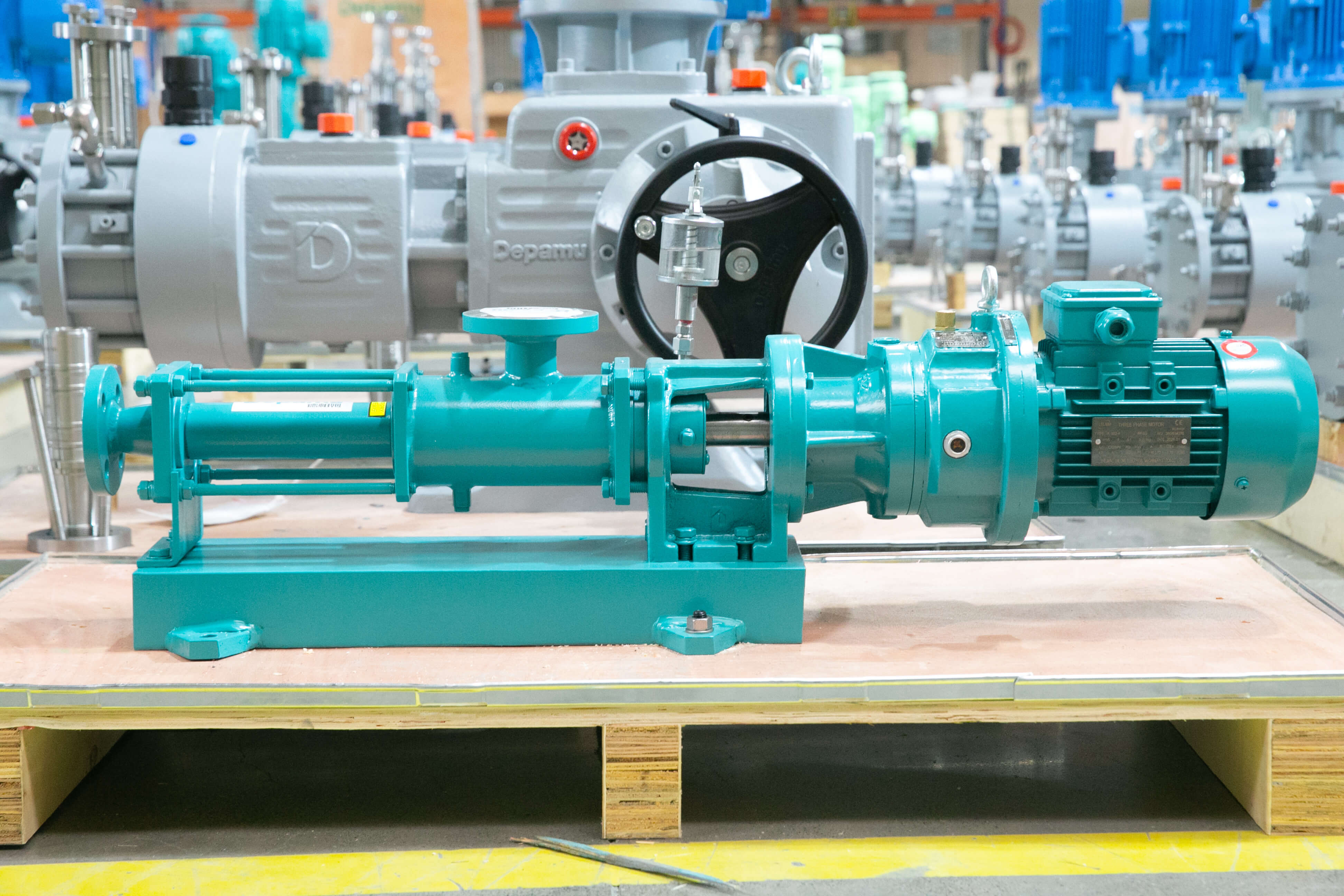
Full Text Summary: Technological Value and Corporate Practice of Single Screw Pumps
The single-screw pump resolves three major challenges in transporting high-viscosity, high-solid-content, and strongly corrosive media by combining helical propulsion with positive displacement conveyance. Its core performance indicators, including flow accuracy (±0.5%), self-priming capability (8m water column), and maintenance cycle (12-18 months), outperform those of traditional pump types. Leveraging over 20 years of technological expertise, Depamp (Hangzhou) Pump Technology Co., Ltd. has developed a full-chain service capability covering standard products, customized non-standard solutions, and complete system offerings. Application cases across petroleum refining, chemical engineering, and new energy sectors demonstrate that by precisely matching media characteristics with equipment parameters, the technology achieves a 30% improvement in conveyance efficiency and a 25% reduction in total lifecycle costs. For enterprises with complex fluid transportation needs, selecting suppliers with customized development capabilities is critical—Depamp’s complimentary media testing and selection services provide an effective pathway to mitigate technical risks.
Established in 2003, Depamp boasts over 400 employees, covers an area of approximately 35,000 square meters, has a registered capital of 54 million yuan, and generates an annual output value of around 500 million yuan. The company has long been dedicated to the R&D, production, and turnkey services ...
No. 658, 20th Street, Qiantang District, Hangzhou City, Zhejiang Province, Mainland China