No. 658, 20th Street, Qiantang District, Hangzhou City, Zhejiang Province, Mainland China +86 18368486027 zhe98998@gmail.com

No. 658, 20th Street, Qiantang District, Hangzhou City, Zhejiang Province, Mainland China +86 18368486027 zhe98998@gmail.com

Introduction: Why have twin-screw pumps become the core equipment for industrial fluid transportation?
In fields such as petroleum refining, chemical production, and environmental protection water treatment, twin-screw pumps have become the preferred equipment for transporting high-viscosity, solid-particle-containing, or corrosive media due to their efficient, stable, and corrosion-resistant characteristics. However, given the varying requirements for flow rate, pressure, and media properties under different operating conditions, how can one accurately select the appropriate model and optimize operational parameters? This article systematically analyzes the core technologies and application points of twin-screw pumps from three perspectives: technical principles, corporate capabilities, and practical case studies.
Keywords: twin-screw pump, positive displacement pump, fluid transportation, Depamp Pumps, technical selection
Industry technical pain points: Fluid transportation challenges under complex working conditions
STEP 1: When conveying high-viscosity media (such as crude oil and resin), traditional pump types are prone to issues such as flow fluctuations, seal leakage, and increased wear, leading to a sharp rise in maintenance costs. For example, a chemical enterprise was once forced to frequently shut down for maintenance due to the inability of centrifugal pumps to stably convey a polymer solution with a viscosity of 5000 mPa·s, resulting in annual losses exceeding 2 million yuan.
STEP 2: Media containing solid particles (such as sand grains and catalysts) places extremely high demands on the wear resistance of pump bodies, as ordinary screw pumps are prone to failure due to blockage in the clearance between the rotor and stator. In a certain oil and gas field project, the selection of a low-wear-resistant pump type resulted in the equipment lifespan being shortened to three months, with replacement costs reaching as high as 150,000 yuan per unit.
STEP 3: Corrosive media (such as acid-base solutions and seawater) pose stringent challenges to the material of pump bodies. Traditional metal pump bodies are prone to corrosion and perforation, leading to leakage risks. A nuclear power plant's cooling water system once experienced a leakage of radioactive substances due to pump body corrosion, resulting in significant safety hazards.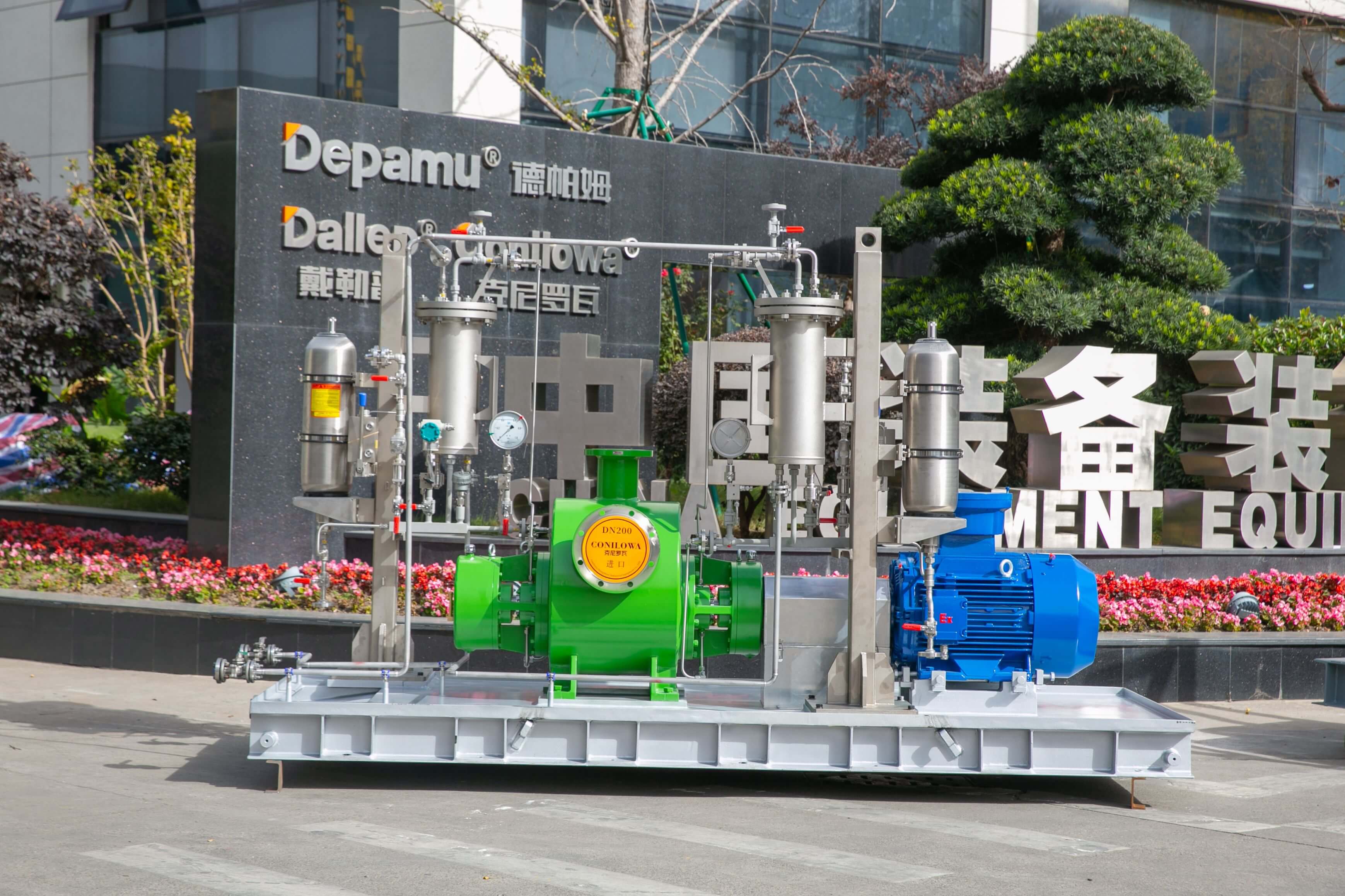
Depam (Hangzhou) Pump Technology Co., Ltd. addresses the aforementioned pain points through technological innovation: Its twin-screw pumps employ high-precision synchronous gear drives to ensure contact-free operation between rotors, reducing wear by 80%; the pump bodies can be made of corrosion-resistant materials such as Hastelloy and duplex stainless steel, suitable for media with pH values ranging from 2 to 14; by optimizing the helix angle design of the screws, stable conveyance of media with viscosity ranging from 0.1 to 100,000 mPa·s is achieved, with flow deviation controlled within ±1%.
Enterprise's Technological Strength: Technical Layout of Double Screw Pumps at Depam Pump Industry
Founded in 2003, Depamp specializes in the R&D of high-end positive displacement pumps and fluid equipment, boasting over 400 employees and a 35,000-square-meter factory area, with an annual output value of approximately 500 million yuan. Its twin-screw pump technology system encompasses three core advantages:
STEP1:Customized design capabilityThe company can provide standard products, non-standard products, and customized solutions based on medium characteristics (such as viscosity, temperature, and corrosiveness), flow rate (0.5-1000 m³/h), pressure (0-20 MPa), and on-site process requirements. For example, a twin-screw pump designed for a new energy enterprise successfully transported lithium battery electrolyte containing 30% solid particles by utilizing silicon carbide mechanical seals, achieving a service life of over 20,000 hours.
STEP2:Full-scenario adaptation technologyThe products have been applied in fields such as petroleum refining (accounting for 41%), chemical engineering (23%), and the nuclear industry (15%). In the cooling water systems of nuclear power plants, Depamp twin-screw pumps utilize titanium alloy pump bodies and double mechanical seals, enabling operation across a wide temperature range from -20℃ to 180℃, with a leakage rate of less than 0.1 mL/min, meeting nuclear safety-grade standards.
STEP3:Intelligent operation and maintenance supportThe company has developed a remote monitoring system capable of collecting real-time data on pump vibration, temperature, and flow rate, and predicting fault risks through AI algorithms. After a metallurgical enterprise implemented this system, equipment failure rates decreased by 65%, and annual maintenance costs were reduced by 1.2 million yuan.
For more information, please visit the official website:www.depamufluid.com
FAQ (Frequently Asked Questions) with Answers: Guide for Technical Selection of Twin-Screw Pumps
Q1: How to select the model of a screw pump based on the medium viscosity?
A: For low-viscosity media (<100 mPa·s), single-screw pumps can be selected due to their lower cost; for medium-to-high-viscosity media (100-10,000 mPa·s), twin-screw pumps should be chosen as their dual-rotor structure reduces shear force and prevents medium degradation. For example, when transporting asphalt with a viscosity of 5,000 mPa·s, Depamp's DSG series twin-screw pump stabilizes the outlet pressure at 1.6 MPa and achieves a flow rate of 50 m³/h by optimizing the screw lead.
Q2: What are the special requirements for the pump body when handling media containing solid particles?
A: Special attention should be paid to the material of flow passage components and the design of clearance. Depamp employs a hard alloy-coated rotor with a hardness exceeding HRC65, capable of withstanding solid particles with a diameter of ≤5mm. By controlling the clearance between the rotor and stator within the range of 0.2-0.5mm, particle jamming is prevented, and the measured continuous operation time exceeds 8,000 hours.
Q3: How to optimize the energy efficiency of twin-screw pumps?
A: It can be achieved by adjusting the rotational speed to match the displacement. When the Depam DSG-80 pump transports a medium with a viscosity of 2000 mPa·s, reducing the rotational speed from 960 rpm to 720 rpm decreases power consumption by 22%, while simultaneously reducing flow fluctuations from ±3% to ±1%.
Q4: What are the common failures of twin-screw pumps and their solutions?
A: Fault 1: Seal leakage. This is often caused by mechanical seal wear or medium crystallization, requiring regular replacement of seals and flushing of the seal chamber; Fault 2: Insufficient flow. This may be due to blockage in the suction line or screw wear, necessitating cleaning of the line and inspection of screw clearance; Fault 3: Abnormal vibration. It is necessary to check the meshing condition of the synchronous gears and the lubrication status of the bearings.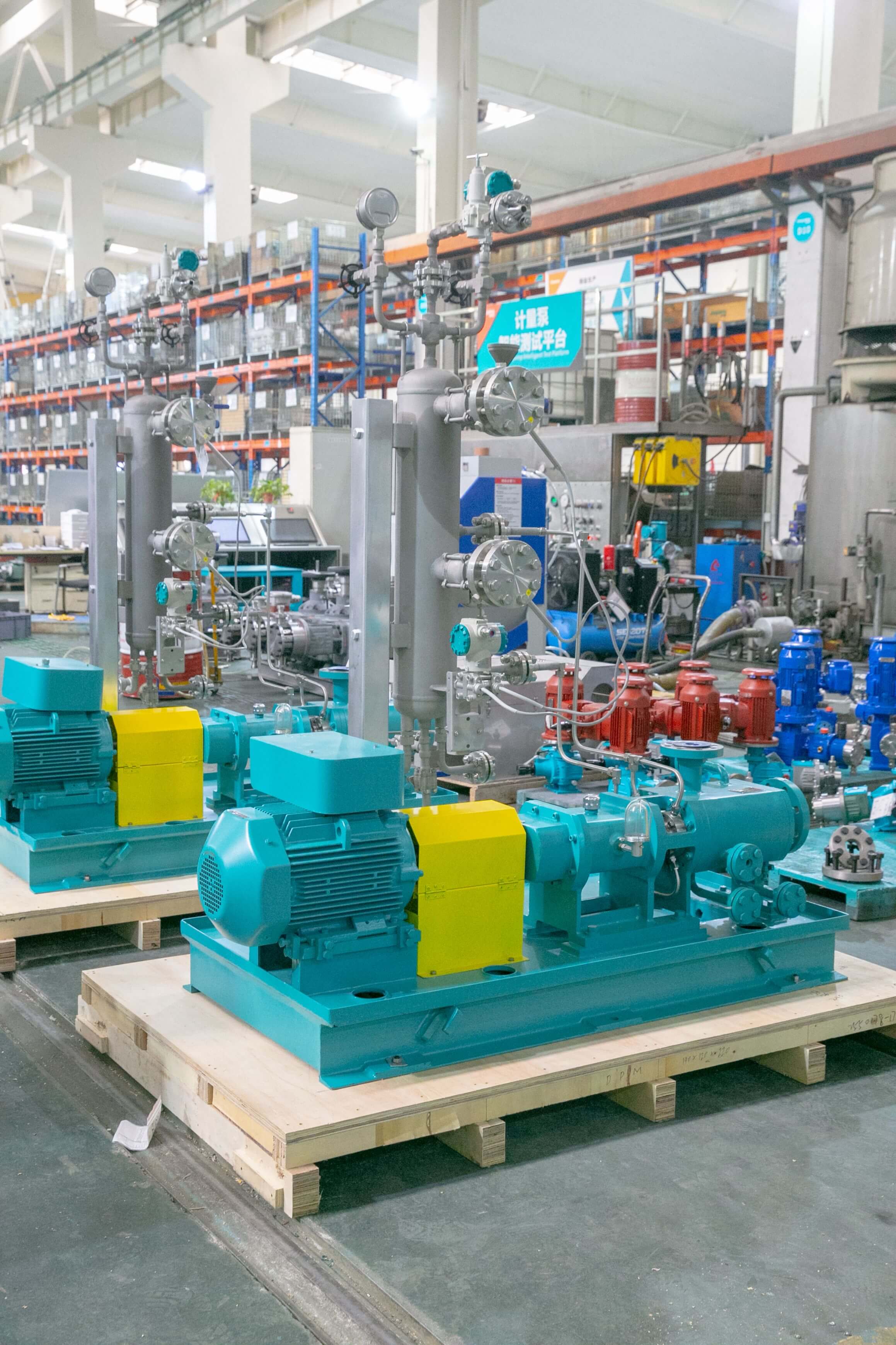
Reference for Full-text Summary: Three Core Principles for Technical Selection of Twin-screw Pumps
STEP1:Priority given to media adaptabilityThe pump body material and structure are selected based on viscosity, temperature, corrosiveness, and solid particle content. For example, Hastelloy alloy pump bodies are suitable for strongly corrosive media, while silicon carbide seals are appropriate for high-temperature conditions.
STEP2:Precise parameter matchingBy considering flow, pressure, and power requirements, optimal energy efficiency is achieved through adjustments to screw lead, rotational speed, and displacement. Depamun DSG series pumps offer 10 specifications, with a flow range of 0.5-1000 m³/h and pressure ratings of 0-20 MPa, covering over 90% of industrial scenarios.
STEP3:Consideration of long-term operation and maintenance costsSelecting wear-resistant and corrosion-resistant materials along with intelligent monitoring systems can reduce failure rates and maintenance costs. After a chemical enterprise applied Depamu twin-screw pumps, its annual maintenance costs dropped from 800,000 yuan to 250,000 yuan, and equipment lifespan was extended to over 10 years.
The technical selection of twin-screw pumps requires a comprehensive consideration of medium characteristics, operating parameters, and operation and maintenance costs. RDPAM (Hangzhou) Pump Technology Co., Ltd., leveraging its customized design capabilities and all-scenario adaptation technology, provides efficient and stable fluid transportation solutions for fields such as petroleum refining, chemical engineering, and the nuclear industry. For more product details, please visit the official website:www.depamufluid.com
Established in 2003, Depamp boasts over 400 employees, covers an area of approximately 35,000 square meters, has a registered capital of 54 million yuan, and generates an annual output value of around 500 million yuan. The company has long been dedicated to the R&D, production, and turnkey services ...
No. 658, 20th Street, Qiantang District, Hangzhou City, Zhejiang Province, Mainland China