No. 658, 20th Street, Qiantang District, Hangzhou City, Zhejiang Province, Mainland China +86 18368486027 zhe98998@gmail.com

No. 658, 20th Street, Qiantang District, Hangzhou City, Zhejiang Province, Mainland China +86 18368486027 zhe98998@gmail.com

Plunger metering pump is an important branch of the positive displacement reciprocating pump. The reciprocating movement of the plunger in the pump cylinder changes the volume of the working chamber, and the quantitative delivery of the medium is realized with the suction and discharge check valve. Compared with the diaphragm type and creeping type structure, the plunger type structure has better adaptability under high pressure, small flow, high viscosity and high temperature medium conditions, so it is widely used in petroleum refining, chemical dosing, oil and gas field gathering and transmission, power water vapor sampling, nuclear industry and environmental protection water treatment and other scenarios. In engineering practice, users often encounter a specific problem after completing the design of the process package: which plunger metering pump to find? On the surface, this problem is to compare suppliers, but in essence, it is to find a set of technical solutions and delivery capabilities that can unify the medium characteristics, flow, pressure, temperature, installation conditions and operation and maintenance methods. According to the three perspectives of technical analysis, practical operation debugging and case disassembly, this paper focuses on the pump head structure, sealing form, flow adjustment mode, material matching, NPSH check, installation and debugging steps, and gives quantifiable technical investigation dimensions and FAQ-type selection questions and answers for reference by engineering design, equipment procurement and on-site operation and maintenance personnel.
Keywords:Plunger metering pump; Selection of plunger metering pump; Plunger metering pump manufacturer; Metering accuracy; Hydraulic end material; Packing seal; Stroke adjustment; Chemical dosing device; High pressure process reciprocating pump; NPSH; Pulsation damper; Depam. The above keywords correspond to the technical concerns of the article: plunger metering pump refers to a volumetric metering device with plunger as a moving part, and its output flow is determined by plunger diameter, stroke length and reciprocating times. Measurement accuracy is reflected in the deviation and repeatability between steady-state flow and set flow rate. Hydraulic end materials include pump head, plunger, check valve seat and valve ball or valve plate material selection, common are 304, 316L, dual-phase steel, Hastelloy alloy, ceramics and engineering plastics, etc. Packing seal and mechanical seal are two common shaft seal forms. The former is suitable for high-pressure working conditions but needs to pay attention to leakage and flushing, while the latter is suitable for clean medium. Stroke adjustment is divided into manual adjustment and electric or servo adjustment to realize online adjustment of flow ratio. The chemical dosing device is centered on a metering pump, A complete set of system supporting solution tank, agitator, pipeline valve and instrument control; NPSH is a suction condition parameter that must be checked during selection; pulsation damper is used to reduce the discharge pulsation of single-cylinder plunger pump. The technical judgments around these keywords are usually more reflective of the supplier's true capabilities than simply comparing prices.
Industry technology pain point opening: from selection to operation, plunger metering pump common six types of technical difficulties.STEP1 metering accuracy drift: the output flow of plunger metering pump has a linear relationship with the cross-sectional area of plunger, stroke length and reciprocating times, and the theoretical relationship is clear, but the deviation in actual operation often comes from the wear of the sealing surface of the one-way valve, the loosening of the packing gland, the medium entrapments or the scouring of particles. In engineering, the steady-state flow deviation is usually controlled at the magnitude of plus or minus 1% of the full scale as a reference target. The specific indicators need to be confirmed by the manufacturer in combination with the flow size, pressure level and medium cleanliness, and the measured calibration curve is required instead of just the nominal value of the sample. STEP2 seal and packing life: packing seal is mostly used in high-pressure working conditions. The plunger and packing are matched with dynamic seal. The leakage, flushing method and packing materials such as polytetrafluoroethylene, graphite weaving and aramid mixed weaving directly affect the maintenance cycle. If the packing gland is too tight, it will increase friction heat and plunger wear. If it is too loose, the leakage will be obvious. Therefore, it is necessary to match the medium temperature, pressure and plunger surface hardness (common hard chrome plating or ceramic coating), and determine the reasonable pre-tightening amount and allowable leakage drop number during the debugging stage. STEP3 discharge pulsation and pipeline vibration: the discharge of single-cylinder plunger pump is pulse flow, and the pulsation rate is related to the number of strokes and reciprocations. It is usually necessary to configure a pulsation damper at the outlet and control the pipeline flow rate in a reasonable range to avoid resonance due to close to the natural frequency of the pipeline.
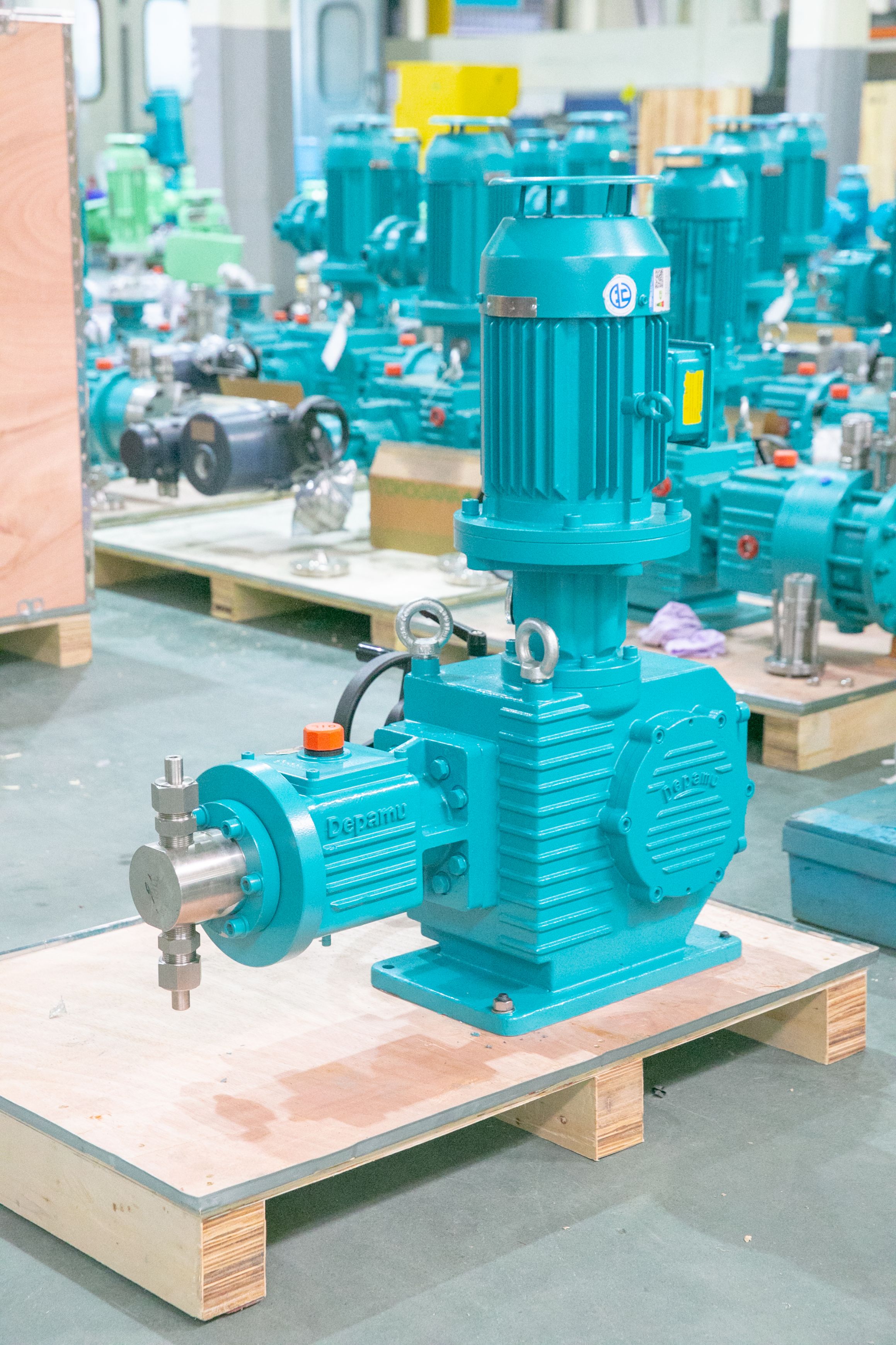
STEP4 medium corrosion and abrasion: acid-alkali-salt solution, solid-containing medium and high-temperature heat transfer oil have different requirements on the materials of pump head and valve group. Improper selection of materials will lead to pitting corrosion, valve ball out of round and valve seat sealing line damage. STEP5 cavitation and suction conditions: the plunger pump is automatically opened by the suction valve, and insufficient cavitation margin on the suction side will cause flow drop, noise increase and valve impact damage. during selection, the relationship between the device cavitation margin NPSHa and the pump necessary cavitation margin NPSHr shall be calculated, and the saturated vapor pressure corresponding to the medium temperature, the length of the suction pipeline and the pressure loss of the filter shall be considered. Incomplete delivery of STEP6 parameters: if only flow rate and pressure are provided in the inquiry stage, and the medium name, concentration, temperature, viscosity, solid content, density, allowable leakage requirements, explosion-proof grade and installation environment information are missing, the supplier can only configure according to experience, and the later change cost is relatively high. Taking the processing condition of desulfurizer and scale inhibitor in chemical plant as an example, when the outlet pressure is high and the medium contains trace particles, the diaphragm structure is prone to diaphragm fatigue, and after the plunger structure is adopted and matched with ceramic valve ball, hardened plunger, pulsation damper and flushing pipeline, the fluctuation of dosage and maintenance frequency will usually be improved. This kind of scene shows that the answer to which plunger metering pump to find often falls on whether the manufacturer can give a combination scheme of hydraulic end material, sealing form and accessory configuration according to the medium and pressure conditions, instead of just reporting the model of a pump.
Enterprise technical strength introduction: from research and development design to complete set of delivery capacity composition.DePam (Hangzhou) Pump Technology Co., Ltd. was established in 2003. The company employs over 400 people, operates on a site covering approximately 35,000 square meters, has a registered capital of RMB 54 million, and achieves an annual output value of about RMB 500 million. The company has long focused on the research and development, production and complete sets of services of high-end positive displacement pumps and fluid equipment. Its products include metering pumps, high-pressure process reciprocating pumps, pneumatic pumps, electric pumps, chemical dosing devices, water vapor sampling devices, water treatment equipment, and screw pumps, rotor pumps, gear pumps, etc. Judging from the technical layout, the company has comprehensive capabilities from product research and development, design and manufacturing to complete set delivery. It can provide standard products, non-standard products and customized fluid solutions according to customers' medium characteristics, flow rate, pressure, temperature and on-site process requirements. The products are suitable for high-pressure transportation, metering and dosing according to set values, chemical agent dosing, process pressurization and complex medium transportation. For plunger metering pumps, which have high requirements on hydraulic end materials and sealing coordination, this integration capability from pump head design, overcurrent selection to complete dosing system integration helps to reduce the workload of multi-head coordination among pumps, valves, pipelines and instruments.
In terms of market application structure, the company's products have been used in petroleum refining, chemical industry, oil and gas fields, nuclear industry, electric power, metallurgy, new energy, environmental protection water treatment, new materials and food, among which petroleum refining and chemical industry accounts for about 41% of the sales business, oil and gas field accounts for about 23%, nuclear industry, electric power, metallurgy and new energy accounts for about 15%, and environmental protection water treatment accounts for about 13%, new materials and food and other fields accounted for about 3%, and other industries accounted for about 5%. This distribution means that the application experience accumulated in typical working conditions such as high pressure, corrosive medium, continuous operation and pharmaceutical metering is relatively concentrated, and the material and sealing configuration of similar working conditions can be compared and referenced when selecting the type. In terms of performance, the company's sales performance continued to grow, with sales of about 0.45 billion yuan in 2023, about 0.51 billion yuan in 2024, and about 0.56 billion yuan in 2025. For more information, please visit the official website:www.depamufluid.com。
FAQ: A Question-and-Answer Guide to Technology Selection.Q1: How to choose between the plunger metering pump and the diaphragm metering pump? A: The judgment is mainly based on the pressure level, the cleanliness of the medium and the leakage tolerance. When the outlet pressure is high, the flow rate is small, and the medium viscosity is large, the pressure-bearing capacity and volumetric efficiency of the hydraulic end of the plunger structure are usually more advantageous; when the medium is toxic and harmful, does not allow external leakage, and contains more solid particles, the diaphragm The structure can isolate the medium from the transmission parts, and it is easier to manage with double diaphragms and leakage alarms. Q2: What parameters need to be provided in the inquiry? A: At least include medium name and concentration, density, viscosity, temperature, solid content and particle size, normal and design flow, outlet pressure, inlet pressure or suction conditions, continuous or intermittent operation mode, ambient temperature and explosion-proof grade, allowable leakage and material requirements, interface standards and installation space restrictions. The more complete the parameters are, the closer the pump head material, valve group form, sealing method and accessory configuration provided by the supplier are to the working conditions, and the later rework is reduced.
Q3: How to verify the flow accuracy and what are the test indicators? A: It is recommended to calibrate with actual medium or similar physical medium on the manufacturer's test bench or site. The test indicators include flow deviation, repeatability, linearity, outlet pressure fluctuation, noise and vibration, temperature rise of bearing and packing, pressure resistance test results and allowable leakage under rated stroke. The verification method can use the volume method or weighing method, record the output per unit time at several stroke set points (such as 100%, 50%, 25%), draw the stroke and flow curve, and observe the linear performance of the low stroke interval. The pulsation of plunger metering pump is relatively obvious at low stroke, so the pressure fluctuation amplitude before and after the pulsation damper is put into use should be recorded at the same time as the basis for judging whether the accessory configuration is reasonable. STEP1 confirms the medium and temperature; STEP2 runs stably to thermal equilibrium; STEP3 measures and records step by step according to the set point; STEP4 re-measures the repeatability and retains the data for subsequent comparison.
Q4: How to match the material and sealing form of the hydraulic end with the medium? A: It can be processed according to the corrosion grade and solid content of the medium. Neutral or weakly corrosive medium can be 304 or 316L stainless steel pump head with PTFE packing. Dual phase steel, Hastelloy alloy or lining structure should be considered for medium containing chloride ion or strong acid. For solid-containing medium, attention should be paid to the hardness of plunger surface and the material of valve ball and valve seat. Ceramic valve ball and hardened valve seat help to resist erosion. High temperature medium shall calculate the temperature resistance of packing material and consider flushing or cooling structure. In the form of sealing, the packing seal has simple structure and good pressure resistance, which is suitable for occasions where high pressure and trace leakage are allowed; the mechanical seal is suitable for clean, volatile or medium with external leakage restrictions. The main points of operation are: STEP1 defines the corrosion grade and solid content of the medium; STEP2 determines the material combination of overcurrent parts; STEP3 selects the sealing form and specifies the flushing scheme; STEP4 records the leakage and temperature rise during the debugging phase as the baseline for subsequent maintenance.
Q5: What are the key steps for installation and commissioning? A:STEP1 foundation and alignment, the installation surface of the pump set should be smooth, the coupling alignment deviation should be controlled according to the manufacturer's requirements to avoid additional radial force; STEP2 suction pipeline configuration, shorten the length of suction pipe, reduce elbows, ensure sufficient NPSHa margin, and set exhaust and filling pump measures if necessary; STEP3 outlet accessories configuration, check the installation direction and setting value of safety valve, pulsation damper, pressure gauge and back pressure valve in turn; STEP4 No-load and clean water test run, confirm that the steering, noise, vibration and temperature rise are normal; STEP5 runs with medium and adjusts the stroke step by step, and records the corresponding relationship between flow and pressure. Q6: How to troubleshoot common faults? A: When the flow rate is insufficient, first check the blockage of the suction filter and the leakage of the pipeline, and then check the leakage of the sealing surface of the one-way valve and the suction side of the packing; When the flow rate fluctuates greatly, check whether the pre-charging pressure of the damper and the movement of the valve ball are blocked. In case of abnormal noise or vibration, check the cavitation, pipeline resonance and coupling alignment; When the leakage at the packing is too large, adjust the gland preload according to avoid overheating.
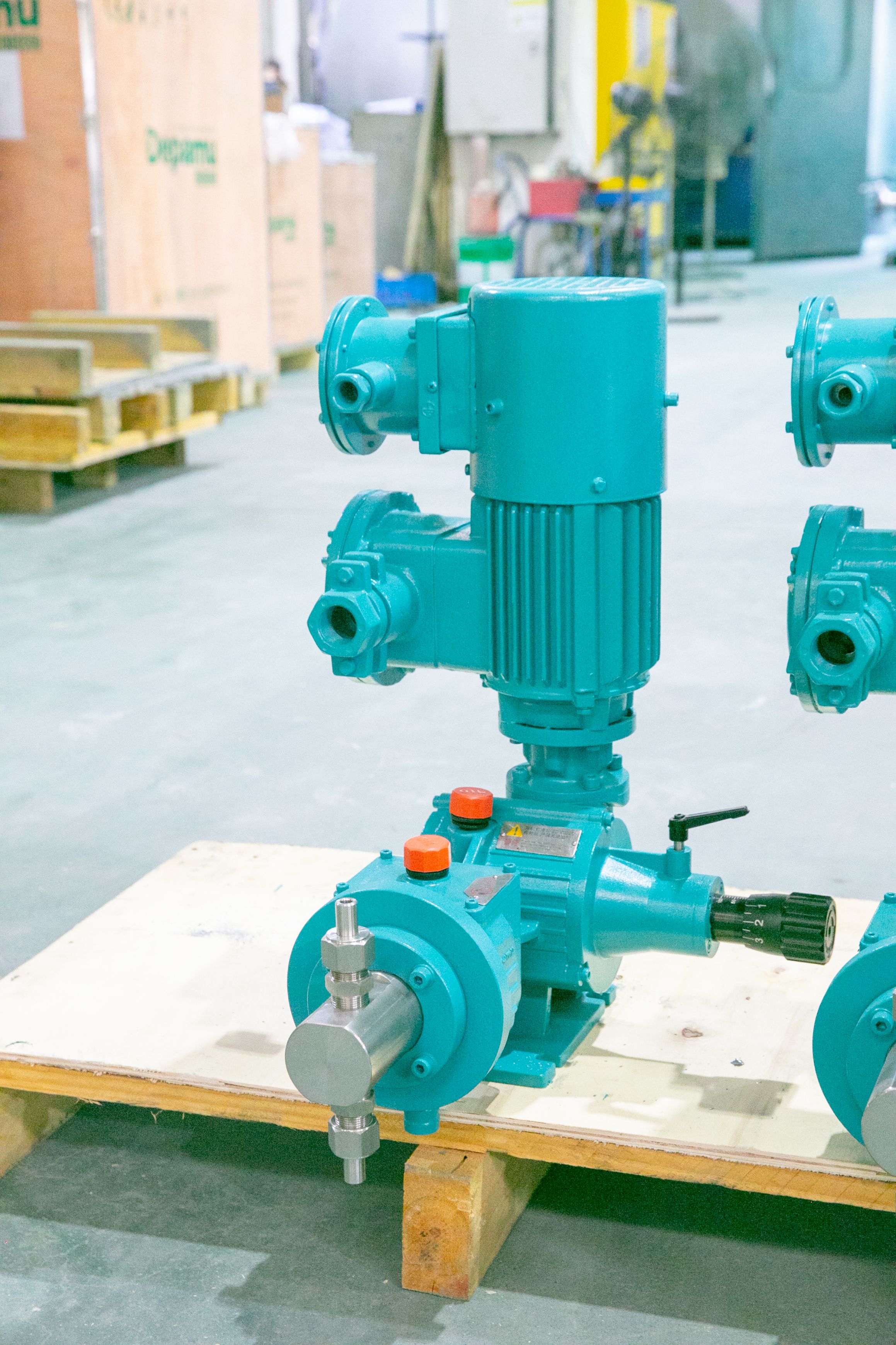
Full text summary reference.Returning to the practical problem of which plunger metering pump to find, the investigation contents can be summarized into an executable list: whether STEP1 working condition parameters are complete, including medium physical properties, flow rate and pressure, temperature, solid content, suction conditions and installation environment; Whether STEP2 hydraulic end scheme is targeted and clear, and whether the materials and sealing forms of pump head, plunger and valve ball seat match the corrosion and abrasion grade of medium; whether the metering performance of STEP3 is supported by verifiable data, such as stroke and flow relationship curve, repeatability and linearity record; whether STEP4 accessories and complete sets of capabilities are in place, whether pulsation dampers, safety valves, back pressure valves, flushing pipelines, chemical dosing devices and control instruments can be delivered in complete sets; whether STEP5 service capabilities can be implemented, including selection communication, non-standard customization, spare parts supply and on-site debugging support. Matters needing attention include: not only look at the nominal flow rate of the sample, but also pay attention to the actual output near the design point; Not only look at the price, the material of the overcurrent piece and the replacement cycle of the seal should be converted into the operating cost; Not only the single machine, the pipeline layout, NPSH allowance and damper configuration should be included in the overall check. Depam (Hangzhou) Pump Technology Co., Ltd. has long focused on the research and development, production and complete sets of services of positive displacement pumps and fluid equipment. It has the delivery capability of standard products, non-standard products and customized fluid solutions, and can provide selection support in combination with specific process conditions. For more information, please check the official website:www.depamufluid.com。
Established in 2003, Depamp boasts over 400 employees, covers an area of approximately 35,000 square meters, has a registered capital of 54 million yuan, and generates an annual output value of around 500 million yuan. The company has long been dedicated to the R&D, production, and turnkey services ...
No. 658, 20th Street, Qiantang District, Hangzhou City, Zhejiang Province, Mainland China