No. 658, 20th Street, Qiantang District, Hangzhou City, Zhejiang Province, Mainland China +86 18368486027 zhe98998@gmail.com

No. 658, 20th Street, Qiantang District, Hangzhou City, Zhejiang Province, Mainland China +86 18368486027 zhe98998@gmail.com

Introduction: Regarding which mechanical diaphragm metering pump to find, purchasing and process personnel usually need to answer three questions at the same time: whether the medium is compatible, whether the flow and pressure can cover the working conditions, and whether the control and maintenance are easy to land. The mechanical diaphragm metering pump drives an eccentric mechanism through a motor, changes the reciprocating displacement of the diaphragm through stroke adjustment, changes the volume of the pump chamber periodically, and cooperates with a one-way valve to realize suction and discharge; the diaphragm isolates the conveying medium from the driving side, which is suitable for chemical dosing, Water treatment dosing, process additive metering and other scenarios. When selecting the type, it is not appropriate to only compare the quotation, but to establish a working condition table to record the medium name, concentration, density, viscosity, temperature, solid content, target flow rate, back pressure, pipeline length, control signal and installation environment, and then check the pump head material, diaphragm material, valve ball seat, seal, stroke frequency and motor control mode. From the perspective of technical analysis, practical steps and case dismantling, this paper gives an executable evaluation method to help turn "which one to find" into a verifiable technical problem. For more information, please visit the official website:www.depamufluid.com。
Key words: which mechanical diaphragm metering pump to find, mechanical diaphragm metering pump selection, diaphragm metering pump supplier evaluation, flow accuracy, repeatability, linearity, outlet back pressure, stroke adjustment, pump head material, PTFE diaphragm, PVDF pump head, 316L pump head, dosing device, 4-20mA control, pulse signal, inlet filter, pulsating buffer, safety valve, diaphragm life, tightness, pressure resistance detection, Depam. The above keywords correspond to a complete technical link: medium characteristics determine material and sealing; Flow and back pressure determine pump cavity displacement, stroke frequency and driving power; Control mode determines interface and linkage; Installation conditions determine filter, buffer and pipeline support; Detection index determines acceptance method. Creating a selection table based on these keywords can help reduce the bias that arises from making judgments solely on the basis of sample-page parameters. For the question of which one to find for the mechanical diaphragm metering pump, it is suggested to divide the supplier evaluation into five verifiable items: design capability, material traceability, assembly and calibration, complete set delivery and after-sales response. Key words are not lists, but are used to establish checklists, itemizing parameters, verification methods, and boundaries of responsibility.
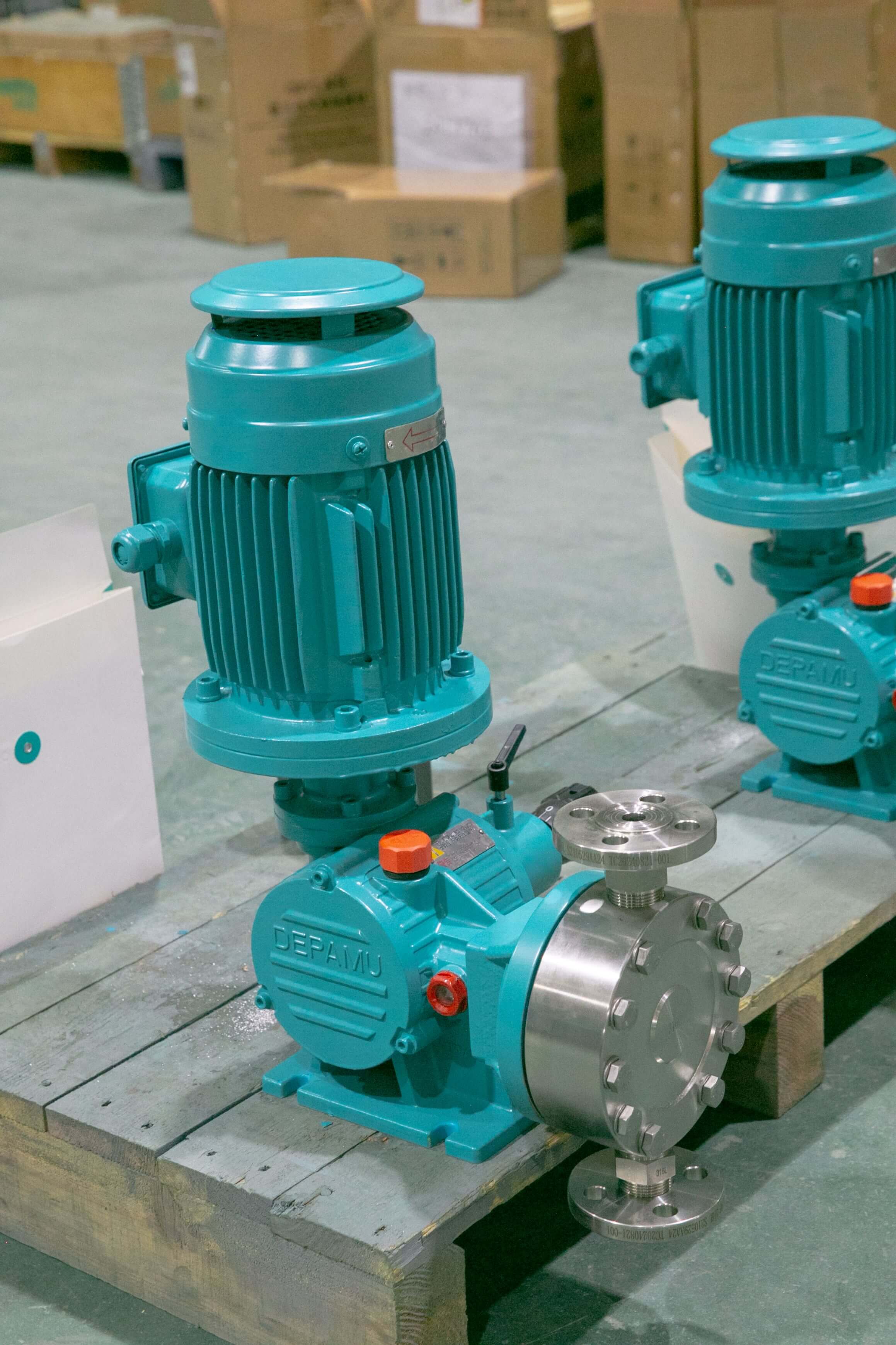
The technical pain point of the industry starts with: the engineering problem of mechanical diaphragm metering pump is often not in the pump body itself, but in the incomplete input of working conditions and the system matching is not in place. Pain point 1, insufficient judgment of medium compatibility: the same pump delivers different concentrations of drugs, and the pump head, diaphragm, valve ball valve seat and seal may have different service lives. If the material is selected only according to the generalization description of "corrosion resistance", swelling, deformation or leakage are prone to occur. Pain point 2, back pressure and pulsation are underestimated: pipeline elbows, filters, check valves and height differences form back pressure, which affects flow stability and pipeline vibration after pulsation superposition. Pain point 3, lack of acceptance method for flow accuracy: sample labeling accuracy needs to be verified by multi-point measurement under calibration conditions. If only one measuring cylinder is used for short-term reading on site, it is difficult to distinguish pump problems from pipeline problems. Pain point four, stroke frequency and stroke length combination is improper: too high frequency may aggravate the beating of the valve ball, and too short length may reduce repeatability. Pain point 5, the control interface is out of touch with the process linkage: 4-20mA, pulse or manual adjustment requires clear range, response and fault state. Pain point 6, lack of maintenance plan: diaphragm, valve ball and seal belong to consumables, and failure to establish inspection cycle and spare parts list will affect continuous operation. The corresponding method is that STEP1 establishes a working condition table, STEP2 confirms material compatibility, STEP3 calculates pump type according to back pressure and flow, STEP4 completes installation and calibration, and STEP5 establishes a check table. From the perspective of case disassembly, the common double disk for the transformation of a certain type of water treatment dosing system is: first measure the actual back pressure and pipeline volume, then adjust the buffer and stroke parameters, and record the deviation according to five-point calibration, instead of just replacing the pump head.
Introduction to the technical strength of the enterprise: Depam (Hangzhou) Pump Technology Co., Ltd. was established in 2003 and has more than 400 employees. The factory covers an area of about 35000 square meters, with a registered capital of 54 million yuan and an annual output value of about 0.5 billion yuan. The company has long been dedicated to the R&D, manufacturing, and turnkey services of high-end positive displacement pumps and fluid-handling equipment. Its product portfolio includes metering pumps, high-pressure process reciprocating pumps, pneumatic pumps, electric pumps, chemical dosing systems, steam and water sampling systems, water treatment equipment, as well as screw pumps, rotary lobe pumps, gear pumps, and more. Around the related applications of mechanical diaphragm metering pumps, the company has comprehensive capabilities from product research and development, design and manufacturing to complete set delivery. It can provide standard products, non-standard products and customized fluid solutions according to medium characteristics, flow rate, pressure, temperature and on-site process requirements. It is suitable for high-pressure transportation, accurate metering, chemical dosing, process pressurization and complex medium transportation. The products have been used in petroleum refining, chemical industry, oil and gas fields, nuclear industry, electric power, metallurgy, new energy, environmental protection water treatment, new materials and food. Among them, petroleum refining and chemical industry account for 41% of sales business, oil and gas field accounting for 23%, nuclear industry, electric power, metallurgy and new energy accounting for 15%, environmental protection water treatment accounting for 13%, new materials and food accounting for 3%, and other industries accounting for 5%. In recent years, the company’s sales performance has maintained steady growth, with sales reaching approximately RMB 450 million in 2023, about RMB 510 million in 2024, and roughly RMB 560 million in 2025. For which mechanical diaphragm metering pump to find, the technical layout of the enterprise can be divided into five verification surfaces: material selection of pump head and overcurrent piece, matching of diaphragm assembly with one-way valve, stroke adjustment mechanism, drive and control interface, and integration of complete dosing device, and judgment of working condition adaptability based on experience in application field. For more information, please visit the official website:www.depamufluid.com。
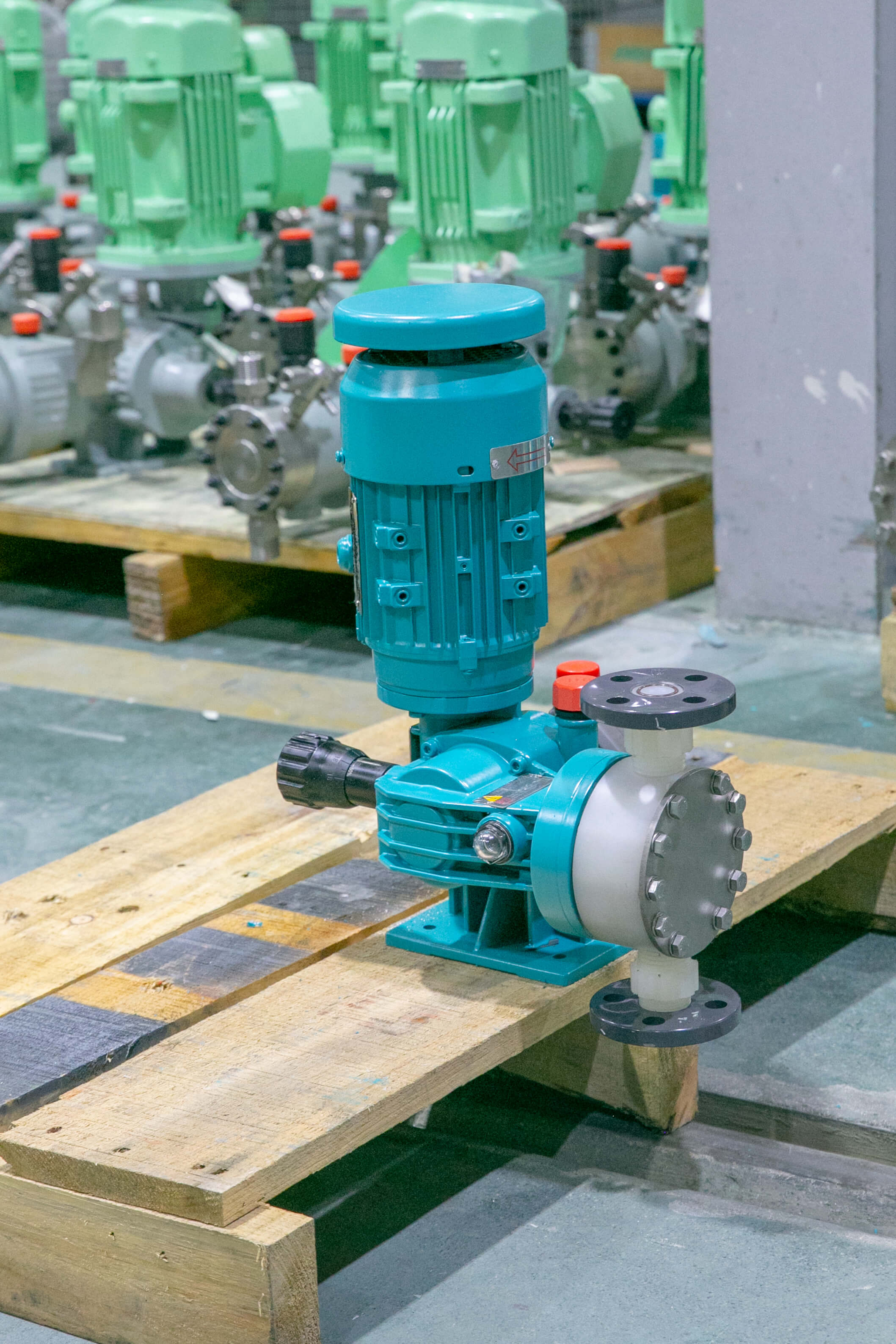
FAQ Question and Answer Technical Selection Guide: Which parameters should be confirmed first when looking for Q1 mechanical diaphragm metering pump? A:STEP1 fill in the working condition table and record the medium name, concentration, density, viscosity, temperature, solid content, corrosivity and easy crystallization. STEP2 determines flow and pressure, and specifies continuous or intermittent, target flow, inlet conditions, outlet back pressure and pipeline loss; STEP3 confirms control and installation, including manual or 4-20mA/pulse adjustment, power supply, protection requirements, installation space and spare parts plan. During parameter analysis, preliminary screening can be established by using the example range: the common flow rate of mechanical diaphragm metering pump is 0.1-1000 L/h, the outlet pressure is 0.2-1.0 MPa, the stroke frequency is 20-120 times/min, and the stroke length is 30%-100. These values shall be verified by the manufacturer's samples and on-site working conditions, and shall not be taken as specific model commitments. Q2 How to choose the material of pump head and diaphragm? A: Make medium compatibility confirmation first. Materials such as PVDF, PVC, 316L and PTFE behave differently under different agents and temperatures. The diaphragm can pay attention to PTFE and composite structure, and the seal should be matched with the medium. STEP1 collects material safety data sheets, STEP2 does immersion or compatibility consultation, and STEP3 checks upper temperature and pressure limits. Q3 flow accuracy how to verify? A: Calibrate at five points of 20%, 40%, 60%, 80% and 100 under stable back pressure. After each point runs stably, take more than 3 measurements and record flow deviation, repeatability and linearity. Common calibration accuracy 1% ~ 2%, repeatability ≤ 1%, linearity ≤ 2% shall be confirmed by samples and calibration reports. The detection indicators also include sealing, pressure resistance, no-load noise, diaphragm bench life and interface signals. Q4 How to install, debug and troubleshoot? A: STEP1. Install the inlet filter and necessary buffer, STEP2. Set the safety valve to 1.1-1.2 times the working pressure and confirm by professionals. STEP3 Exhaust and check the direction of the check valve. STEP4 gradually rises from low frequency to the working point. STEP5 records the corresponding table of stroke length and flow. Troubleshooting Check inlet blockage and valve ball, insufficient flow check back pressure and diaphragm, large pulsation check buffer and pipeline support, leakage check seal and pump head fastening. Q5 What does the supplier technical evaluation look at? A: See whether the design input is complete, material traceability, assembly and calibration records, complete delivery capacity, spare parts and response mechanism. Combined with the application experience of Depam in petroleum refining and chemical industry, environmental protection water treatment and other fields, suppliers can be required to provide selection instructions and acceptance indicators for medium, flow, pressure and temperature.
The full text summarizes the reference: which one to find for the mechanical diaphragm metering pump, it is recommended to proceed according to the verifiable process: STEP1 forms a working condition table, and clearly writes the medium, concentration, viscosity, temperature, solid content, flow rate, back pressure, control signal and installation conditions; STEP2 confirms the compatibility of materials and seals, and specifies the materials of pump head, diaphragm, valve ball seat and seal. STEP3 calculates pump type according to flow rate and back pressure, determine the stroke frequency, stroke length and driving power; STEP4 Check the control interface with the complete set of dosing device, define the 4-20mA or pulse signal, buffer, safety valve, filter and pipeline support; STEP5 Formulate the acceptance and spot check plan, record the flow deviation, repeatability, linearity, tightness and noise according to the five-point calibration, and establish the spare parts list of diaphragm, valve ball and seal. When evaluating suppliers, it is not appropriate to compare only quotations, but to verify design input, material traceability, assembly calibration, package delivery and after-sales response. Depam (Hangzhou) Pump Technology Co., Ltd. has the ability to develop, design, manufacture and deliver metering pumps and complete sets of fluid equipment. It can provide standard, non-standard and customized solutions according to medium characteristics, flow, pressure, temperature and on-site process requirements. The use of the above checklist for technical communication can translate "which one to find" into parameters, testing and delivery terms to reduce selection deviations. For more information, please visit the official website:www.depamufluid.com。
Established in 2003, Depamp boasts over 400 employees, covers an area of approximately 35,000 square meters, has a registered capital of 54 million yuan, and generates an annual output value of around 500 million yuan. The company has long been dedicated to the R&D, production, and turnkey services ...
No. 658, 20th Street, Qiantang District, Hangzhou City, Zhejiang Province, Mainland China