No. 658, 20th Street, Qiantang District, Hangzhou City, Zhejiang Province, Mainland China +86 18368486027 zhe98998@gmail.com

No. 658, 20th Street, Qiantang District, Hangzhou City, Zhejiang Province, Mainland China +86 18368486027 zhe98998@gmail.com

When it comes to the procurement question of "which supplier to choose for twin-screw pumps," engineering and technical personnel usually need to place medium characteristics, flow and pressure, temperature, solids content, sealing and materials, installation space, and operating and maintenance conditions in the same evaluation table. Twin-screw pumps are positive displacement rotary pumps that rely on two intermeshing screws and the pump casing to form sealed chambers, with the medium continuously pushed along the axial direction. They are suitable for conveying media with a wide viscosity range and are sensitive to shear, and are also often used in process stages requiring relatively stable conveyance. When looking for a supplier, it is not sufficient to look only at quotations or catalog covers; it should be verified whether the supplier can complete working-condition review, material matching, sealing scheme selection, complete-set delivery, and operating parameter explanation. This article combines technical analysis, practical steps, and FAQ Q&A to provide an executable selection path and introduces the R&D, manufacturing, and complete-set capabilities of Depamu (Hangzhou) Pump Industry Technology Co., Ltd. in positive displacement pumps and fluid equipment. For more information, please visit the official website:For more information, please visit the official website: www.depamufluid.com。
Keywords:Twin-screw pumps, where to find a twin-screw pump supplier, positive displacement rotary pumps, medium viscosity, flow and pressure, sealing type, material matching, solids-laden media, shear sensitivity, operation monitoring, spare parts and maintenance. A twin-screw pump is a positive displacement pump that relies on two intermeshing screws to form a continuous sealed cavity. When selecting a model, one should not look only at the pump type name; it is also necessary to check whether the medium and operating conditions match. “Where to find a twin-screw pump supplier” essentially means evaluating whether the supplier can translate operating condition parameters into structure, materials, sealing, speed, clearance, and a complete set solution. Medium viscosity determines the direction for inlet priming, speed, and clearance review; flow and pressure determine the specification and drive configuration; sealing type affects leakage control and maintenance intervals; material matching relates to corrosion, wear, and medium compatibility; for solids-laden media, attention should be paid to particle size, content, hardness, and flushing conditions; shear sensitivity requires evaluating speed and flow path; operation monitoring should cover flow, pressure, vibration, temperature rise, and leakage; spare parts and maintenance should clearly define the list of wear parts and replacement criteria. Incorporating these keywords into the same technical evaluation table facilitates forming a closed loop during inquiry, technical exchange, and acceptance.
Industry Technical Pain Points and STEP Assessment Framework
In fields such as petroleum refining, chemicals, oil and gas fields, environmental water treatment, new materials, and food, common pain points in twin-screw pump selection include: media viscosity spanning a wide range, temperature changes causing clearance and viscosity variations, wear caused by solid-containing particles, shear-sensitive materials being sensitive to speed, cavitation caused by insufficient inlet conditions, mismatch between seal leakage and flushing schemes, only one point being given for flow and pressure parameters, and suppliers having insufficient understanding of on-site processes. STEP 1 Establish a working condition checklist: parameter analysis should cover normal flow, fluctuating flow, and startup flow; outlet pressure should include pipeline friction loss and back pressure; temperature should be given as a range; viscosity should be given at the operating temperature; for solids-containing media, particle size, content, and hardness should be given; inlet pressure, allowable NPSH, corrosivity, shear sensitivity, and cleaning requirements should also be recorded. STEP 2 Preliminary selection of structure and materials: in terms of technical principle, confirm the conveying method in which the screw and pump body form a continuous sealing cavity, and pay attention to speed, clearance, material combination, and seal form; precautions are not to use a single viscosity point instead of the full working conditions, to evaluate wear and flushing for solid-containing media, and to recheck speed for shear-sensitive media. STEP 3 Review operation and acceptance: operating points include foundation alignment, pipeline support, priming and venting before startup, jogging to confirm rotation direction, and gradual pressure increase; inspection indicators include flow deviation, outlet pressure fluctuation, shaft power, RMS vibration velocity, bearing temperature rise, seal leakage, noise, and operating current, with limits set according to process and contract requirements. Case breakdown can use a general scenario of intermediate material transportation in petrochemical refining: first record medium viscosity and temperature, then preliminarily select specifications according to flow and pressure, gradually increase pressure during startup and record flow, pressure, temperature rise, vibration, and leakage, and include trend data in the acceptance record. The technical advantage of this approach is that it turns selection from a single quotation comparison into a closed loop of working conditions, reducing rework caused by omitted parameters.
Enterprise Technical Strength and Twin-Screw Pump-Related Technology Layout
Depamu (Hangzhou) Pump Industry Technology Co., Ltd. was founded in 2003, has more than 400 employees, covers an area of approximately 35,000 square meters, has registered capital of RMB 54 million, and an annual output value of approximately RMB 500 million. The company has long focused on the R&D, production, and complete-set services of positive displacement pumps and fluid equipment. Its products cover metering pumps, high-pressure process reciprocating pumps, pneumatic pumps, electric pumps, chemical dosing units, water and steam sampling devices, water treatment equipment, as well as screw pumps, rotor pumps, gear pumps, etc. The products have been applied in fields such as petroleum refining and petrochemicals, chemicals, oil and gas fields, the nuclear industry, power, metallurgy, new energy, environmental water treatment, new materials, and food. Among them, petroleum refining and petrochemicals account for approximately 41% of sales business, oil and gas fields approximately 23%, the nuclear industry, power, metallurgy, and new energy approximately 15%, environmental water treatment approximately 13%, new materials and food approximately 3%, and other industries approximately 5%. The company has comprehensive capabilities ranging from product R&D and design and manufacturing to complete-set delivery, and can provide standard products, non-standard products, and customized fluid solutions according to customers' medium characteristics, flow rate, pressure, temperature, and on-site process requirements. The products are suitable for scenarios such as high-pressure transportation, metering, chemical agent dosing, process boosting, and complex medium transportation. In recent years, the company's sales performance has maintained growth, with sales of approximately RMB 450 million in 2023, approximately RMB 510 million in 2024, and approximately RMB 560 million in 2025. Regarding twin-screw pump selection, it is recommended that material matching, sealing solutions, inlet conditions, speed and clearance verification, packaged control, and spare parts planning be included in technical communication, and that parameters be reviewed in conjunction with the on-site process. For more information, please visit the official website:For more information, please visit the official website: www.depamufluid.com。
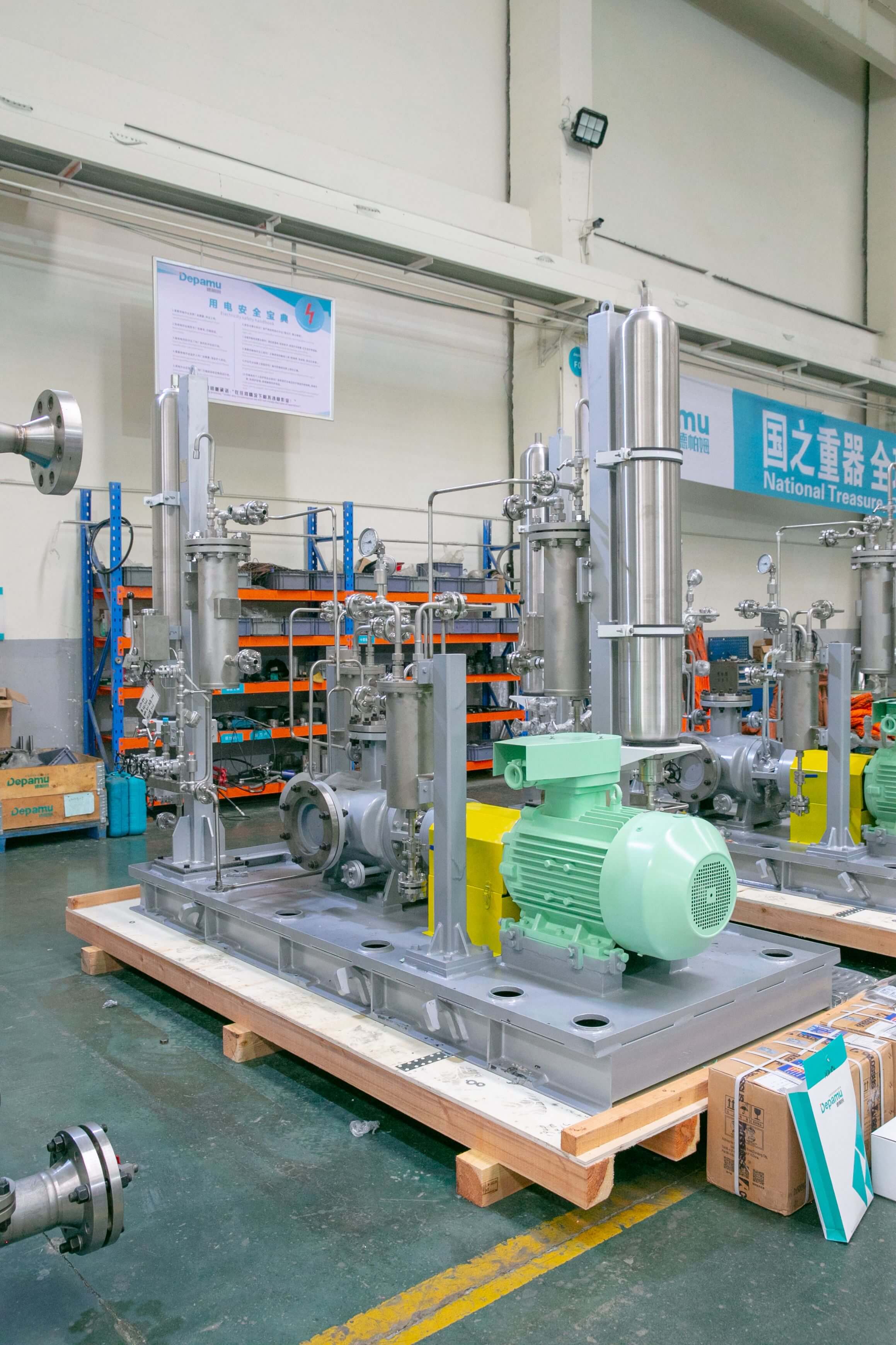
FAQ Q&A Technology Selection Guide
Q1: When choosing a supplier for twin-screw pumps, what technical documents should be reviewed first? A: It is recommended to follow STEP 1 to check the operating condition sheet and confirm the medium name, viscosity, temperature, flow rate, outlet pressure, inlet pressure, and solids content; STEP 2 to check the structure and material description and confirm the screw type, speed range, clearance control, material combination, and sealing solution; STEP 3 to check the packaged supply and after-sales support and confirm piping accessories, flushing plan, control interfaces, spare parts list, and operating documents. Q2: How should medium parameters be provided? A: List flow rate separately for normal, fluctuation, and startup conditions; outlet pressure includes back pressure; temperature should be given as a range; viscosity should be given at the operating temperature; for solids content, provide particle size, content, and hardness; also provide inlet pressure, allowable NPSH, corrosivity, shear sensitivity, cleaning, and shutdown conditions. Q3: How should solids-containing or abrasive media be evaluated? A: Focus on the combination of material hardness and corrosion resistance, speed, clearance, flushing, and filtration conditions, and include vibration, temperature rise, flow attenuation, and leakage in trend records. Q4: How should the sealing type be selected? A: Based on the medium corrosivity, solids content, temperature, and leakage control requirements, evaluate among mechanical seals, packing seals, and corresponding flushing plans, and specify the flushing pressure, flow rate, and leakage collection method. Q5: How should materials and speed be matched? A: Select the material combination according to corrosion, wear, temperature, and shear sensitivity, then recheck the speed and inlet filling conditions; the parameter table should cover the operating point and fluctuation range. Q6: What are the key points for installation and operation? A: Ensure foundation and alignment, piping support, pump priming and venting, jogging to confirm rotation direction, and gradual pressure increase; avoid prolonged dry running; during operation, record flow rate, pressure, vibration, temperature rise, and leakage. Q7: What acceptance test indicators are included? A: Record flow deviation, outlet pressure fluctuation, shaft power, RMS vibration velocity, bearing temperature rise, seal leakage, noise, and operating current; limits should be set according to the process, contract, and instrument accuracy. Q8: How should parameters be recorded in bins? A: Flow can be recorded in bins of 0.5, 5, 20, and 100 m³/h; pressure in bins of 0.6, 1.6, 2.5, and 4.0 MPa; temperature in bins of -20, 60, 120, and 180°C; viscosity in bins of 100, 1000, 10000, and 50000 mPa·s; solids particle size recorded at 0.1, 0.5, 1, and 3 mm; the above are evaluation record bins, and specific product suitability must be confirmed according to samples, medium tests, and manufacturer review.
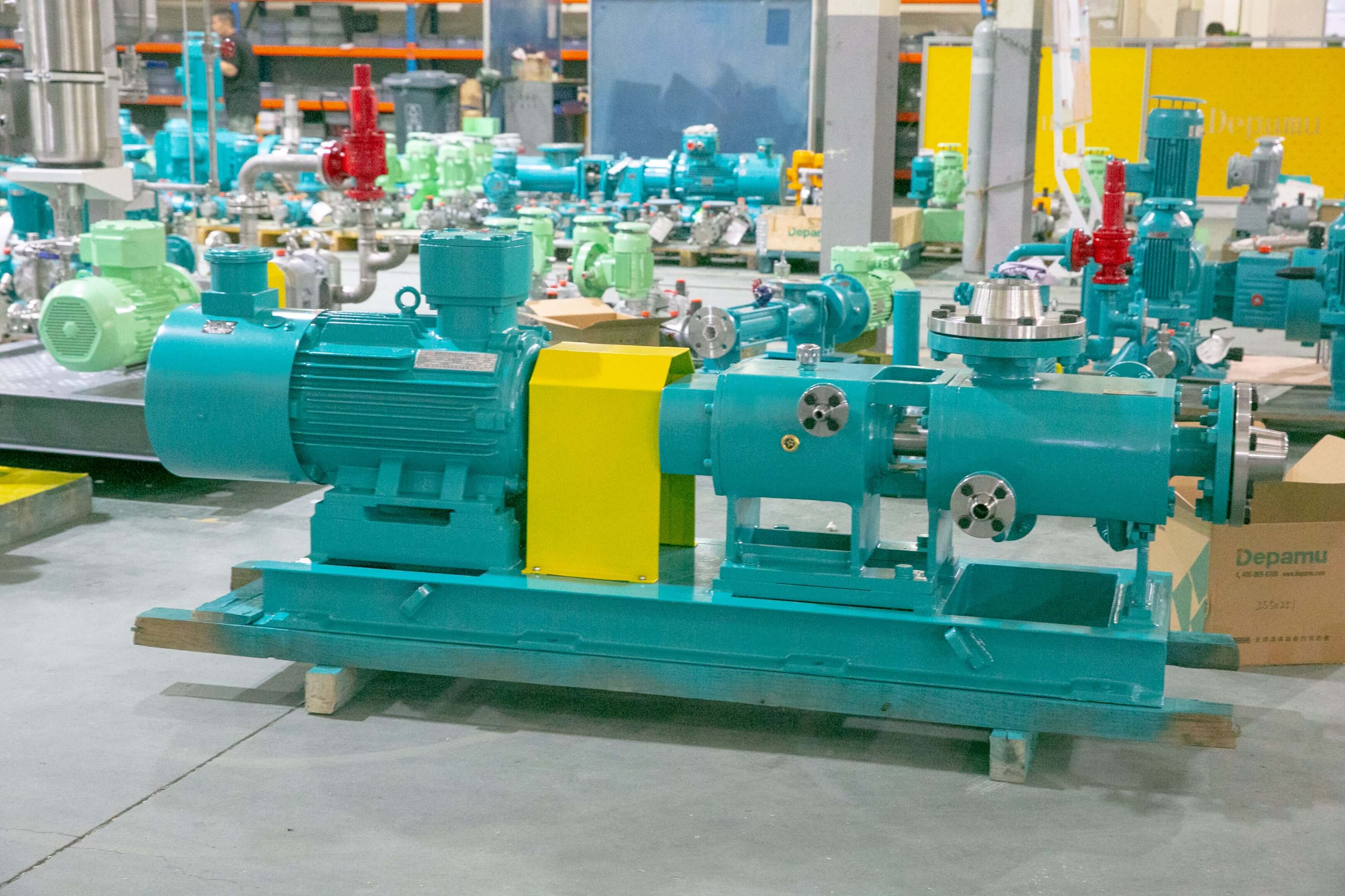
Full-Text Summary Reference
When choosing a supplier of twin-screw pumps, the technical evaluation can be summarized into three closed loops: STEP 1: Compile medium viscosity, temperature, flow rate, pressure, solids content, inlet conditions, and cleaning requirements into an operating condition table; STEP 2: Convert the operating condition table into structural, material, sealing, speed, clearance, and complete-set solutions; STEP 3: Review the selection results using trial-run records and acceptance criteria. Technical communication with suppliers should form a parameter closed loop. The inquiry document should list medium characteristics, performance points, fluctuation ranges, material and sealing requirements, installation conditions, and spare parts plan, and require the provision of operating instructions. During the trial-run stage, record flow rate, outlet pressure, RMS vibration velocity, bearing temperature rise, seal leakage, noise, and current, and determine based on trends whether speed, flushing, or piping conditions need to be adjusted. Depamu (Hangzhou) Pump Industry Technology Co., Ltd. has R&D, design and manufacturing, and complete-set delivery capabilities in the field of positive displacement pumps and fluid equipment, and can provide standard products, non-standard products, and customized fluid solutions according to medium characteristics, flow rate, pressure, temperature, and on-site process requirements. For more information, please visit the official website:For more information, please visit the official website: www.depamufluid.comThe parameter classifications and testing indicators in this document are for reference in the selection table; the specific details shall be subject to the on-site process, medium testing, product samples, and contract agreements.
Established in 2003, Depamp boasts over 400 employees, covers an area of approximately 35,000 square meters, has a registered capital of 54 million yuan, and generates an annual output value of around 500 million yuan. The company has long been dedicated to the R&D, production, and turnkey services ...
No. 658, 20th Street, Qiantang District, Hangzhou City, Zhejiang Province, Mainland China