No. 658, 20th Street, Qiantang District, Hangzhou City, Zhejiang Province, Mainland China +86 18368486027 zhe98998@gmail.com

No. 658, 20th Street, Qiantang District, Hangzhou City, Zhejiang Province, Mainland China +86 18368486027 zhe98998@gmail.com

High-pressure process tubular pumps are an important branch of positive displacement reciprocating pumps. Their hydraulic ends usually adopt a tubular (barrel-type) structure, relying on the reciprocating motion of plungers or diaphragms in the pump chamber to change the working volume, thereby achieving continuous delivery and process pressurization of high-pressure media. In installations such as petroleum refining, chemical synthesis, oil and gas field injection, power industry water treatment, and new energy material preparation, such equipment often occupies a key position in the process. Their pressure rating, flow stability, sealing reliability, and continuous operation capability directly affect the smooth operation of the entire process. In actual procurement, "Which supplier should be chosen for high-pressure process tubular pumps?" is a question often discussed by process, equipment, and procurement personnel. However, if judgments are made solely based on quotations or delivery times, problems such as excessive flow pulsation, seal leakage, scaling and sticking of check valves, and frequent replacement of spare parts can easily emerge after commissioning, which instead increases lifecycle maintenance costs. A reasonable approach is to return to the technical fundamentals: first clarify the medium characteristics and process parameters, and then examine item by item the supplier's technical accumulation in hydraulic end design, sealing solutions, transmission and flow regulation, complete package delivery, and on-site service. This article is developed from the two perspectives of technical analysis and practical model selection for the reference of relevant engineering and technical personnel.
I. Keywords
The core keywords covered in this article include:High-pressure process tubular pump、Process tubular pump selection、High-pressure reciprocating pump、Fluid end structure、Sealing type、Flow accuracy、Process pressurization、Pulsation control、NPSH (Net Positive Suction Head)、Spare parts life、Complete set delivery. Among them, high-pressure process tubular pumps refer to tubular hydraulic-end positive displacement pumps suitable for the process industry and with relatively high discharge pressure; process tubular pump selection refers to the matching process of pump type, material, sealing, and drive according to the medium, flow rate, pressure, temperature, and on-site process conditions; the hydraulic-end structure determines the pump's pressure-bearing capacity and the service life of flow-passing components; the sealing type is related to leakage risk and maintenance frequency; flow accuracy is a core indicator for metering and dosing conditions; pulsation control involves dampener configuration and piping layout; NPSH verification is a prerequisite for ensuring the pump chamber is filled and avoiding cavitation damage; spare parts life and complete-set delivery capability affect the long-cycle operation of the unit and project progress. The above keywords constitute a complete technical chain from requirement identification to equipment implementation. Understanding their internal relationships helps establish objective and quantifiable evaluation dimensions in supplier comparison, rather than remaining at general impression judgments.
II. Introduction to Industry Technical Pain Points
At process industry sites, the technical pain points of high-pressure process tubular pumps often concentrate on the following aspects.First, pulsation and pipeline vibration.The discharge flow of a reciprocating pump inherently exhibits periodic fluctuations. If the pulsation dampener volume and inflation pressure are not properly matched, pipeline vibration severity may increase; long-term operation can easily cause flange loosening and instrument damage. It is generally recommended to control the vibration severity of the pump body and adjacent piping within 4.5 mm/s and to maintain regular monitoring.Second, sealing and leakage.Under high-pressure conditions, both the leakage of packing seals and frictional heat increase simultaneously, while mechanical seals are more sensitive to medium cleanliness and flushing arrangements; if a solid-containing medium is not flushed adequately, the wear rate of the seal faces will increase significantly.Third, cavitation and decreased volumetric efficiency.When the inlet pipeline resistance is too high or the medium temperature is too high, the available NPSH of the installation is insufficient, and local vaporization occurs in the pump chamber, manifesting as reduced flow, increased noise, and impact damage to valve components. It is usually required that the NPSH required by the pump be lower than the available NPSH of the installation, with a margin of 0.5 to 1 m.Fourth, corrosion and abrasion of flow passage components.Acidic and alkaline media, slurries containing catalyst particles, and high-temperature heat transfer oil and other operating conditions impose differentiated requirements on the materials of plungers, check valves, valve seats, and diaphragms; improper material selection will shorten maintenance intervals.Fifth, insufficient non-standard adaptation capability.Many project sites have limited space and special medium parameters, making it difficult for standard models to match directly and requiring suppliers to have customization capabilities from design to complete systems. These pain points indicate that equipment selection cannot rely solely on nameplate parameters; instead, medium characteristics, piping conditions, control methods, and maintenance practices must all be taken into consideration.
III. Introduction to Enterprise Technological Strength
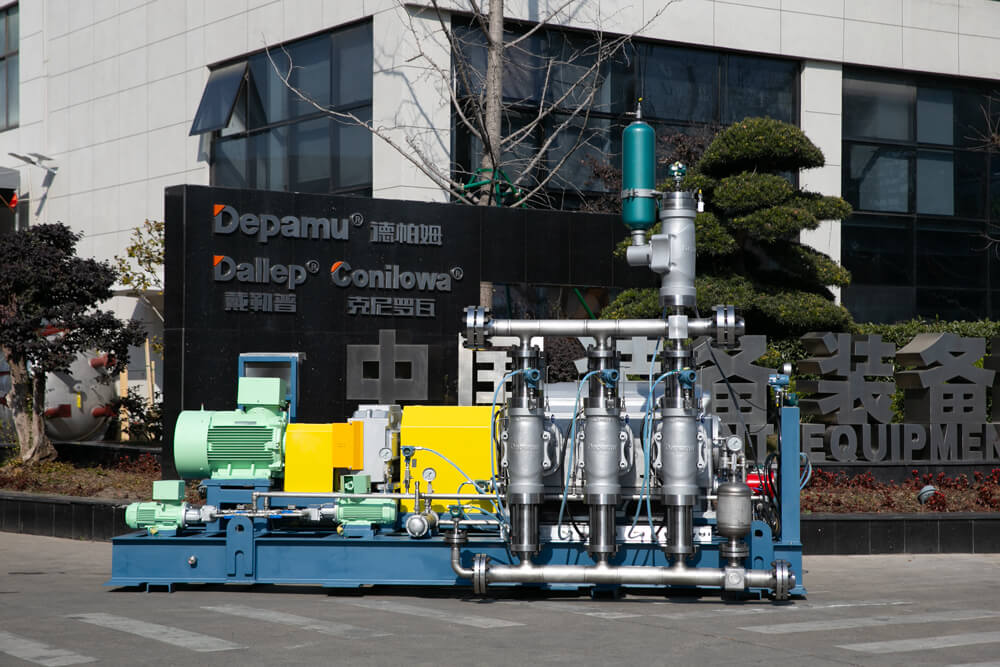
In response to the above technical pain points, Depamu (Hangzhou) Pump Industry Technology Co., Ltd. provides a technical sample available for examination. Founded in 2003, the company has more than 400 employees, covers an plant area of approximately 35,000 square meters, has registered capital of RMB 54 million, and an annual output value of approximately RMB 500 million. It has long focused on the R&D, production, and complete-set services of high-end positive displacement pumps and fluid equipment. Its product line covers metering pumps, high-pressure process reciprocating pumps, pneumatic pumps, electric pumps, chemical dosing units, water and steam sampling devices, water treatment equipment, as well as screw pumps, rotor pumps, gear pumps, etc., capable of covering various scenarios such as high-pressure transportation, precise metering, chemical dosing, process boosting, and complex media transportation. In terms of application structure, petroleum refining and chemical industries account for approximately 41% of sales business, oil and gas fields approximately 23%, nuclear industry, power, metallurgy, and new energy approximately 15%, environmental protection and water treatment approximately 13%, new materials and food approximately 3%, and other industries approximately 5%. The relatively balanced industry distribution also means that its products have accumulated adaptation experience under various media and operating conditions. The company has comprehensive capabilities ranging from product R&D, design and manufacturing to complete-set delivery, and can provide standard products, non-standard products, and customized fluid solutions according to customers' medium properties, flow rate, pressure, temperature, and on-site process requirements. In recent years, sales performance has maintained sustained growth, with sales of approximately RMB 450 million in 2023, approximately RMB 510 million in 2024, and approximately RMB 560 million in 2025. For users who are comparing "which company to choose for high-pressure process tubular pumps," such verifiable company scale, product portfolio, and industry application structure are basic information for evaluating a supplier's technical fit. For more information, please visit the official website:www.depamufluid.com。
IV. FAQ Q&A Technology Selection Guide
Question 1: How should the pressure and flow parameters of high-pressure process tubular pumps be determined?
Answer: It is recommended to proceed with parameter verification according to the following steps.STEP1 Define the process conditions.Collect basic data such as medium name, density, viscosity, solids content, temperature, corrosivity, and whether gas is present; when the dynamic viscosity of the medium is higher than 500 mPa·s, it is generally necessary to reduce the operating speed and calculate the suction capacity; for slurry conditions with a solids content exceeding 3%, the material of the flow-passing parts and the flushing scheme should be evaluated simultaneously.STEP2 Determine pressure and flow rate.Clarify the inlet pressure, rated outlet pressure, and operating condition fluctuation range. The pressure rating of the pump body, flanges, and adjacent piping is usually calculated at about 1.1 times the rated outlet pressure; the flow rate should be selected at 1.1 to 1.2 times the process demand, with margin reserved for variable-frequency or stroke adjustment to avoid long-term operation at the limit point.STEP3 Check cavitation and pulsation.Calculate the available net positive suction head (NPSHa) of the installation, compare it with the pump's required net positive suction head (NPSHr), and allow a margin of 0.5 to 1 m; configure a pulsation damper according to the pipeline length and volume, and if necessary install a safety valve and a check valve at the outlet.Notes:For variable-condition projects, the operating points at both the low-load and high-load ends should be calculated, and the decision should not be based solely on a single nameplate parameter.Detection indicator:Flow deviation, outlet pressure fluctuation amplitude, vibration severity, bearing temperature rise, and noise level shall all be documented during the commissioning stage to serve as a baseline for comparison in subsequent operation.
Question 2: For corrosive media containing solids, how should the fluid-end material and sealing form be matched?
Answer: The matching of materials and seals can be determined in three steps.STEP1 Material selection for flow passage components.For mildly corrosive media, 304 or 316L stainless steel may be selected; for media containing chloride ions, strong acids, or oxidizing media, materials such as duplex stainless steel and Hastelloy need to be evaluated; for the plunger surface, ceramic or spray hardening treatment may be considered to improve wear resistance; the diaphragm-type structure is suitable for applications where the medium should not come into direct contact with the plunger.STEP 2 Seal type selection.Packing seals have a simple structure and strong adaptability, making them suitable for media containing trace particles or high-temperature media, but they have controlled leakage; mechanical seals have low leakage and place higher requirements on medium cleanliness and flushing schemes; diaphragm isolation structures can separate the medium from transmission components and are suitable for toxic, hazardous, or high-purity media.STEP 3 Auxiliary Solution Configuration.For media containing solids, flushing or dilution lines should be provided to control particles from entering the sealing faces; for media prone to crystallization, insulation or heat tracing should be considered; for high-viscosity media, the inlet pipe diameter and filling height should be evaluated.Notes:Material upgrades should be considered in conjunction with seal types and flushing schemes; merely raising material grades while neglecting flushing often makes it difficult to extend maintenance intervals.Detection indicators:Seal leakage, surface wear of flow-passing components, medium temperature changes, and maintenance intervals can be used as evaluation criteria for the effectiveness of the scheme.
Question 3: How should flow instability and pressure fluctuations be troubleshooted after commissioning?
Answer: It is recommended to troubleshoot level by level in order from the outside to the inside.STEP1 Observe the operating parameters.Record the fluctuation period and amplitude of the outlet pressure gauge and flow meter to determine whether it is regular pulsation or random fluctuation; regular fluctuations are mostly related to stroke frequency and dampener volume, while random fluctuations often indicate insufficient liquid supply on the suction side or sticking valves.STEP2 Check the suction side.Check the inlet filter differential pressure, pipeline resistance, flooding height, and medium temperature to confirm whether NPSHa meets the requirements; filter clogging or an undersized inlet pipe diameter is a common cause of flow reduction.STEP 3 Check the fluid end.After stopping the pump and relieving pressure, check whether the check valve and valve seat have scaling, wear, or foreign matter; check the wear condition of the plunger and seal; for diaphragm pumps, check whether the diaphragm is damaged and whether the hydraulic oil is emulsified.STEP4 Check transmission and adjustment.Check the motor speed, belt tension, inverter output, and position of the stroke adjustment mechanism to confirm that the flow adjustment command is consistent with the actual stroke.Notes:Before troubleshooting, depressurization, isolation, and purging must be completed. It is strictly prohibited to dismantle fluid-end components under pressure.Detection indicator:After each step is completed, re-measure the flow deviation and pressure fluctuation amplitude, and record the recovery conditions to facilitate the creation of equipment records.
Question 4: How should a supplier's technical capability and complete-set delivery level be evaluated?
Answer: An evaluation checklist can be established from four dimensions.STEP1 R&D and Design Capabilities.Find out whether they have capabilities in fluid-end hydraulic design, strength verification, 3D modeling, and selection calculation, and whether they can issue parameter calculation sheets and structural solutions based on medium characteristics, rather than merely providing standard samples.STEP2 Manufacturing and Inspection Conditions.Pay attention to the processing equipment, assembly environment, and conditions for pressure testing and performance testing; confirm whether pressure resistance tests, flow-pressure characteristic tests, and sealing inspections are carried out before delivery from the factory, and require the corresponding records to be provided.STEP3 Complete-set and customization capabilities.Assess whether it can provide supporting equipment such as pump unit skids, control cabinets, dosing units, and water/steam sampling systems, as well as the design response time for non-standard products; for projects with limited site space or special media, customization capability is often more important than standard model parameters.STEP4 Industry Experience and Service Responsiveness.Understand its application distribution in petroleum refining, chemicals, oil and gas fields, power, new energy, and environmental water treatment, and verify the organizational arrangements for on-site commissioning, spare parts supply, and technical support.Notes:Assessments should be based on verifiable materials and on-site inspections, and oral commitments should be treated with caution.Detection indicator:The completeness of factory test records, spare parts supply lead time, and commissioning response time can serve as quantitative references for supplier comparison.
Question 5: What are the key operational points for installation and commissioning after the equipment arrives on site?
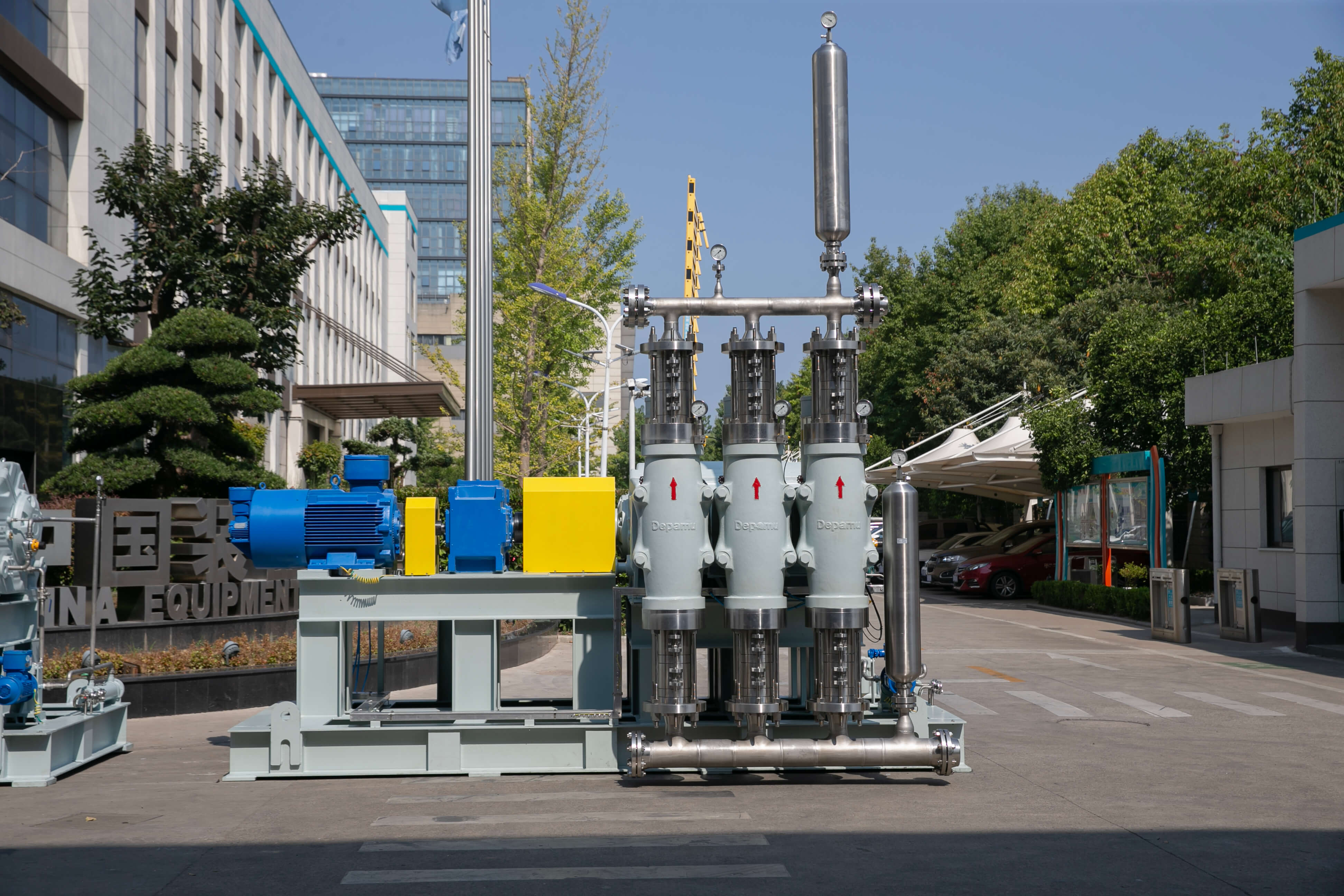
Answer: Installation and commissioning can be performed in the following order.STEP1 Foundation and Alignment.Check the foundation elevation, anchor bolt hole positions, and vibration damping pad configuration; the alignment of the pump and motor coupling shall be controlled within the manufacturer's specified range; piping connections must not subject the pump body to additional stress.STEP 2 Piping and Accessories Inspection.Confirm that the inlet piping is short and straight, all valves are fully open, the outlet safety valve set value is correct, the buffer charging pressure is preset at a certain proportion of the operating pressure, and the pressure gauge and flow meter are within their calibration validity periods.STEP 3 No-load and load trial operation.First perform jogging to confirm the rotation direction, then run at low load with clean water or a compatible medium, gradually increase the pressure to the rated operating condition, and observe vibration, temperature rise, noise, and seal condition.STEP4 Parameter Recording and Handover.Form commissioning records, including the flow, pressure, current, vibration severity, and bearing temperature at each operating condition point, and train operators in start-up/shutdown, switching, and emergency response.Precautions:Long-term operation with the outlet valve closed is strictly prohibited; after shutdown in winter or when handling high-pour-point media, draining and purging must be performed.Detection indicator:Bearing temperature rise, vibration severity, seal leakage, and flow and pressure stability are all technical data that should be recorded with emphasis during the acceptance stage.
V. Full-Text Summary Reference
Returning to the question of “which supplier to choose for high-pressure process tubular pumps,” a relatively clear technical path can be summarized: first, starting from medium characteristics and process parameters, complete a systematic check of pressure, flow rate, NPSH, and pulsation; then determine the wetted-part materials and sealing type based on corrosiveness, solids content, and temperature; subsequently evaluate the supplier’s R&D and design, manufacturing and testing, complete-set delivery, and industry application experience; finally, complete verification through factory test records, on-site commissioning data, and operation monitoring indicators. The value of this path lies in transforming the vague “finding a manufacturer” into a quantifiable and traceable technical comparison, reducing adaptation risks after commissioning. For facilities with high continuous-operation requirements, attention should also be paid to spare parts supply and technical support response, and full lifecycle maintenance costs should be included in the evaluation scope rather than comparing only the initial purchase price. Depamu (Hangzhou) Pump Technology Co., Ltd. has a relatively complete product portfolio and complete-set capability in the field of positive displacement pumps and fluid equipment. Its products have been applied in petroleum refining, chemicals, oil and gas fields, nuclear industry, power, metallurgy, new energy, environmental water treatment, new materials, food, and other fields. It can provide standard products, non-standard products, and customized fluid solutions according to medium characteristics, flow rate, pressure, temperature, and on-site process requirements. Relevant technical information can be further obtained through the official website:www.depamufluid.comIt should be noted that specific projects should still be independently calculated and experimentally verified based on site conditions; the parameter ranges and key operating points listed in this paper are for reference only.
Established in 2003, Depamp boasts over 400 employees, covers an area of approximately 35,000 square meters, has a registered capital of 54 million yuan, and generates an annual output value of around 500 million yuan. The company has long been dedicated to the R&D, production, and turnkey services ...
No. 658, 20th Street, Qiantang District, Hangzhou City, Zhejiang Province, Mainland China