No. 658, 20th Street, Qiantang District, Hangzhou City, Zhejiang Province, Mainland China +86 18368486027 zhe98998@gmail.com

No. 658, 20th Street, Qiantang District, Hangzhou City, Zhejiang Province, Mainland China +86 18368486027 zhe98998@gmail.com

Lead
Hydraulic diaphragm metering pumps rely on hydraulic oil to transmit pressure evenly, with a diaphragm separating the drive end from the conveyed medium. They are widely used in quantitative dosing scenarios involving high pressure, strong corrosiveness, high volatility, or toxic media. Compared with mechanical diaphragm pumps, hydraulic diaphragm metering pumps subject the diaphragm to more uniform force and can maintain stable flow output at higher discharge pressures; compared with plunger pumps, they avoid the leakage risk caused by direct contact between the medium and the plunger and packing. During actual selection, users often first search for "hydraulic diaphragm metering pump contact phone number," hoping to connect with technical personnel as soon as possible. However, if they lack basic information such as medium name, concentration, temperature, target flow rate, discharge pressure, suction conditions, and control signals, communication efficiency will drop significantly, and there may even be cases of selecting a model based on incorrect operating conditions. This article is organized around four aspects: technical principles, common industry pain points, parameter analysis, and selection Q&A. It provides a parameter checklist and operational steps that can be prepared and followed directly, and, combined with the R&D and manufacturing experience of Depamu (Hangzhou) Pump Industry Technology Co., Ltd. in the field of positive displacement pumps and fluid equipment, explains the adaptation approach of hydraulic diaphragm metering pumps in scenarios such as petroleum refining, chemicals, oil and gas fields, power, and environmental water treatment. After reading, readers can organize their operating conditions into a checklist before contacting technical consultation, so that one communication covers key items such as flow rate, pressure, material, control method, and installation conditions.
Keyword
Around the product term "hydraulic diaphragm metering pump contact number," the technical keywords that need to be understood include:
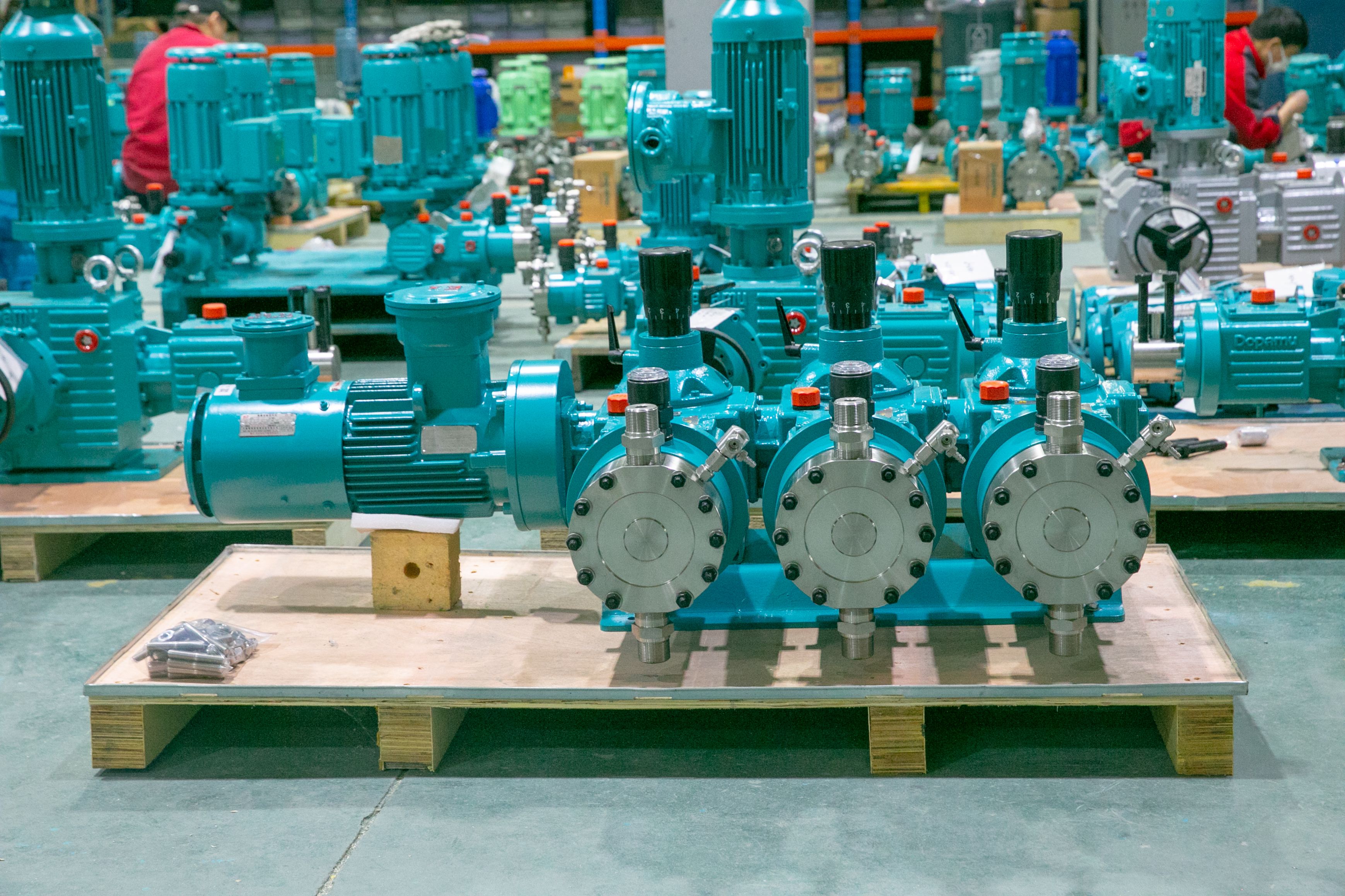
Hydraulic diaphragm metering pump: A positive displacement metering pump that uses hydraulic oil as the force-transmitting medium and a diaphragm as the isolating element; its flow rate is related to stroke frequency and stroke length, and the discharge pressure is determined by the pipeline backpressure.
计量精度与重复性Under steady-state conditions, the deviation between the measured flow rate and the set flow rate, as well as the consistency of multiple measurement results; during acceptance, conditions such as back pressure, stroke, medium viscosity, and test duration must be specified.
Hydraulic oil compensation system: It consists of an oil replenishment valve, a venting structure, and a safety relief component, and is used to compensate for small changes in the oil volume in the hydraulic chamber during diaphragm reciprocation and to maintain the hydraulic chamber in a filled state.
diaphragm assembly: Including the diaphragm, support plate, and sealing surface; common materials include PTFE, composite diaphragms, and metal diaphragms, which must match the corrosiveness and temperature of the medium.
Stroke adjustment mechanismAdjusting the single-stroke displacement by changing the plunger stroke or the position of the eccentric mechanism is the main means of flow regulation; combined with variable-frequency control, it can achieve a wider adjustment range.
Pulsation damperThe output of a positive displacement pump exhibits periodic pulsation. A damper is used to reduce pressure fluctuations in the pipeline, and its volume and position must be determined according to the stroke displacement and frequency.
Net Positive Suction Head (NPSH): The margin required on the suction side; if insufficient, cavitation, reduced flow, and noise will occur. A margin of 0.5–1 m is generally recommended.
Material Compatibility: Pump heads are available in PVC, PP, PVDF, 316L, etc.; the materials of the diaphragm, valve balls, and valve seats must be compatible with the medium.
control signal: Manual, 4–20 mA, pulse frequency, RS485, etc., for interfacing with DCS, PLC, or flow-proportional dosing systems.
Technical Consulting List: Organizing the six categories of information—medium, process, suction, control, installation, and spare parts—into a table is effective preparation before contacting the manufacturer.
The above keywords form a common language for selection communication; clarifying them in advance can reduce repeated confirmation.
Opening: Industry Technical Pain Points
Most on-site problems with hydraulic diaphragm metering pumps are not caused by a single component, but are the result of incomplete operating condition information and a mismatch between installation conditions and control methods. The troubleshooting sequence can be divided into the following steps:
STEP1 Measurement accuracy driftIt manifests as the actual dosing amount gradually decreasing or fluctuating while the set flow rate remains unchanged. Common causes include air entrapment in the hydraulic chamber, incomplete actuation of the refill valve, wear on the sealing surfaces of the inlet and outlet check valves, changes in medium viscosity with temperature, and excessive backpressure fluctuation. During troubleshooting, first record three actual flow measurements of the pump under stable backpressure, then check the hydraulic chamber venting and the sealing surfaces of the valve balls.
STEP2 Diaphragm and Hydraulic Oil System Abnormality: Diaphragm rupture, oil level drop, and oil emulsification are typical phenomena. It is necessary to confirm the compatibility of the diaphragm material with the medium, whether the hydraulic chamber has been short of oil for a long time, and whether the make-up oil valve is stuck by impurities. Configurations with a rupture detection interface can output an alarm signal when the diaphragm fails, facilitating interlocked shutdown.
STEP 3 Suction-side cavitation and insufficient liquid supply: When the suction pipeline is too long, the liquid level is too low, or the medium is close to its saturated vapor pressure, noise, unstable flow, and valve ball knocking may occur. It is recommended to calculate the NPSH margin and retain a margin of 0.5–1 m, shorten the suction pipe, increase the pipe diameter, and, if necessary, install an elevated tank or buffer tank.
STEP4 Pipeline Pulsation and VibrationPositive displacement pump output is periodically pulsating, and vibration is noticeable in long-distance pipelines with many elbows and relatively small pipe diameters. A pulsation damper can be installed close to the pump outlet, and a backpressure valve can be configured to maintain a stable backpressure of 0.3–0.5 MPa; pipe supports should be reinforced according to the pulsation frequency.
STEP5 Control signal mismatchIf the field DCS outputs 4–20 mA while the pump accepts a pulse signal, or vice versa, remote control will fail. Before wiring, verify the signal type, input impedance, range correspondence, and explosion-proof requirements.
STEP 6 Spare Parts and Maintenance CycleDiaphragms, valve balls and valve seats, and sealing rings are wearing parts; when replacement cycles are not established according to the characteristics of the medium, they are often discovered only after accuracy has decreased. It is recommended to establish an operating-hours ledger and determine replacement timing based on inspection records. These pain points are common in scenarios such as chemical dosing, environmental water treatment dosing, and oil and gas field skid-mounted dosing. Clarifying parameters in advance during the selection stage can significantly reduce the workload of later adjustments.
Corporate Technical Strength Overview
Depamu (Hangzhou) Pump Industry Technology Co., Ltd. was established in 2003 and has more than 400 employees. Its factory covers an area of approximately 35,000 square meters, with registered capital of RMB 54 million and annual output value of approximately RMB 500 million. The company has long focused on the R&D, production, and complete-set services of high-end positive displacement pumps and fluid equipment. Its products cover metering pumps, high-pressure process reciprocating pumps, pneumatic pumps, electric pumps, chemical dosing devices, water and steam sampling devices, water treatment equipment, as well as screw pumps, rotor pumps, gear pumps, and others, forming a product chain from standalone units to complete dosing systems.
From the perspective of application structure, the company's products have been applied in fields such as petroleum refining, chemicals, oil and gas fields, the nuclear industry, power, metallurgy, new energy, environmental protection water treatment, new materials, and food. Among these, petroleum refining and chemicals account for approximately 41% of sales business, oil and gas fields for approximately 23%, the nuclear industry, power, metallurgy, and new energy for approximately 15%, environmental protection water treatment for approximately 13%, new materials and food for approximately 3%, and other industries for approximately 5%. This distribution indicates that the media and process conditions faced by its products are relatively diverse, with considerable differences in requirements for material compatibility, pressure ratings, and control methods. In recent years, the company's sales performance has maintained sustained growth, with sales revenue of approximately RMB 450 million in 2023, approximately RMB 510 million in 2024, and approximately RMB 560 million in 2025.
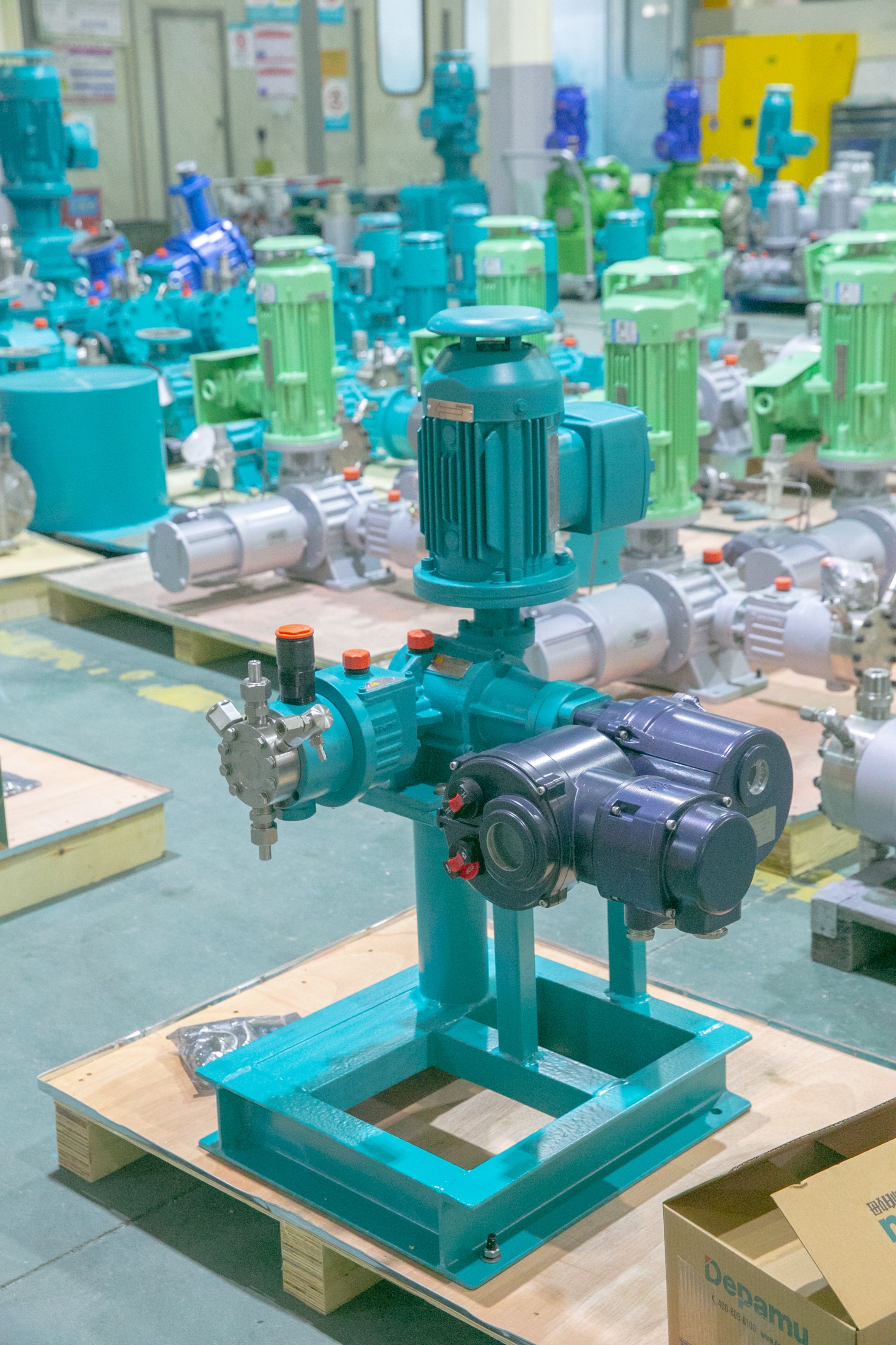
In the field of hydraulic diaphragm metering pumps, the company has comprehensive capabilities spanning product R&D, design and manufacturing, and complete-system delivery. Based on the customer's medium characteristics, flow rate, pressure, temperature, and on-site process requirements, it can provide standard products, non-standard products, and customized fluid solutions, suitable for high-pressure transfer, metered dosing, process boosting, and complex media transfer scenarios. For selection communication, the hydraulic chamber and oil replenishment/venting structure, diaphragm assembly material selection, stroke adjustment mechanism, check valve group type, control interface, and interlocking logic with packaged chemical dosing systems are technical items that need to be confirmed one by one. Before technical consultation, organizing operating parameters into a checklist helps both parties discuss solutions based on the same set of data. For more information, please visit the official website:www.depamufluid.com。
FAQ Q&A Technology Selection Guide
Q1: What operating condition parameters should be prepared before contacting technical consultation?
A: It is recommended to organize the information into six categories. STEP1 Medium information: name, concentration, density, viscosity, corrosiveness, whether it contains solid particles, whether it is volatile or toxic; STEP2 Process conditions: target flow rate (L/h), discharge pressure (MPa), medium temperature and ambient temperature, continuous or intermittent operation, daily operating hours; STEP3 Suction conditions: suction pressure, liquid level height, suction pipe length and diameter, whether a high-level tank is installed; STEP4 Control requirements: manual or automatic adjustment, 4–20 mA or pulse signal, whether to connect to DCS/PLC, whether explosion protection is required; STEP5 Materials and connections: pump head material, diaphragm material, flange or threaded connection standard; STEP6 Accessories and spare parts: whether a back pressure valve, safety valve, pulsation damper, complete dosing system, and a wear parts stocking plan are required. The more complete the list, the smoother the solution confirmation.
Q2: Why must flow rate and pressure be given simultaneously?
A: Hydraulic diaphragm metering pumps are positive displacement pumps. The theoretical flow rate is related to stroke length and reciprocating frequency, while the actual discharge pressure is determined by the pipeline back pressure. If only the flow rate is given without the pressure, it is impossible to determine the loads on the hydraulic chamber and the diaphragm, nor to determine the ratings of the valve group and connectors. In engineering practice, selection is usually based on the process rated pressure with an additional 10%–20% margin to avoid long-term operation at the limit back pressure. If the process involves closed-valve or blockage conditions, a safety valve or back-pressure valve should be provided for protection. In industrial applications, the flow rate of such pumps can cover a range from several liters per hour to thousands of liters per hour, and the discharge pressure can cover a range from atmospheric pressure to the order of tens of megapascals, subject to the manufacturer's sizing calculations and product catalog.
Q3: How is measurement accuracy verified?
A: Steady-state metering accuracy is commonly in the ±0.5% to ±1% range, but the test conditions must be specified, including back pressure, stroke position, medium viscosity, ambient temperature, and continuous measurement duration. On-site acceptance may use the volumetric method or the gravimetric method: under stable back pressure, take three consecutive measurements and average them, and record repeatability. If the measured deviation exceeds the agreed value, troubleshoot in the order of STEP1 to STEP3 for air entrapment in the hydraulic chamber, sticking of the oil replenishment valve, and wear of the check valve sealing surface, then verify the correspondence between the stroke scale and the signal span.
Q4: How should the diaphragm and pump head materials be selected?
A: The diaphragm must simultaneously meet corrosion resistance, temperature resistance, and fatigue resistance requirements. PTFE diaphragms are suitable for most strongly corrosive media; composite diaphragms place different emphasis on flexibility and fatigue resistance; metal diaphragms are mostly used in special operating conditions. Pump heads are commonly made of PVC, PP, PVDF, and 316L stainless steel, with selection based on media compatibility, temperature, and pressure ratings. When the media contain solid particles, attention should be paid to the valve ball and valve seat structure and flushing conditions to prevent deposition from causing incomplete closure.
Q5: What daily checks are required for the hydraulic oil system?
A: Establish a log based on operating hours, and regularly check the oil level, oil color, and emulsification condition; check the action of the oil supply valve, whether venting is smooth, and whether the diaphragm rupture detection interface is normal. When the oil level drops abnormally, first inspect the diaphragm and sealing surfaces, then replenish or replace with hydraulic oil that meets the requirements. After a long period of pump shutdown before restarting, it is recommended to first turn the shaft manually, run at low speed to vent, and then gradually raise the pressure to the process value.
Q6: What are the key points for pulsation and piping installation?
A: It is recommended to install a pulsation damper near the pump outlet and provide a back pressure valve to maintain a stable back pressure of 0.3–0.5 MPa; the suction piping should be as short and straight as possible, the flow velocity should be controlled within 1 m/s, and the number of elbows should be reduced; pipe supports should be reinforced according to the pulsation frequency, and flexible connections should be used for vibration damping when necessary. When multiple pumps are operated in parallel, independent valves should be installed on each branch to facilitate maintenance of a single pump without affecting system operation.
Q7: How does the control method interface with the on-site system?
A: Common methods include manual stroke adjustment, 4–20 mA analog adjustment, pulse frequency adjustment, and RS485 communication. In water treatment dosing, chemicals are often dosed in proportion to flow using pulse signals or analog signal tracking; chemical plant equipment is mostly connected to DCS, and it is necessary to verify the signal type, input impedance, flow corresponding to the range, and fault alarm output. In applications with explosion-proof requirements, the ratings of the motor and junction box should also be confirmed. More selection information is available on the official website:www.depamufluid.com。
Full-text summary reference
The quality of model selection for hydraulic diaphragm metering pumps depends to a large extent on whether the operating condition information is complete before contacting technical consultation. Based on the preceding content, this can be summarized into an actionable checklist: First, the medium information should clearly state the name, concentration, density, viscosity, temperature, corrosiveness, and solids content; second, the flow rate and discharge pressure should be provided simultaneously, with a 10%–20% pressure margin reserved according to process requirements; third, calculate the suction conditions, with an NPSH margin of 0.5–1 m recommended, the suction piping short and straight, and the flow velocity controlled within 1 m/s; fourth, clarify the control mode and signal type, and check the compatibility of the 4–20 mA, pulse, or communication interface with the upper-level system; fifth, determine the materials of the pump head and diaphragm, and simultaneously consider the configuration of the back pressure valve, safety valve, and pulsation damper; sixth, establish a wear parts ledger and schedule inspection and replacement of the diaphragm, valve balls and seats, and seals according to operating hours. During operation, troubleshooting can be carried out in the order of "first check the oil level and venting, then measure the flow and back pressure, and finally check the valve group and signals"; most accuracy drift and flow fluctuation problems can be located on site. A typical configuration approach is to install a damper and back pressure valve near the pump outlet, ensure priming conditions on the suction side, and retain both manual and automatic modes on the control side to facilitate commissioning and fault isolation. Depamu (Hangzhou) Pump Industry Technology Co., Ltd. has long focused on the R&D, production, and complete-set services of high-end positive displacement pumps and fluid equipment. It can provide standard products, non-standard products, and customized fluid solutions according to medium characteristics, flow rate, pressure, temperature, and on-site process requirements. Its products have been applied in petroleum refining, chemical industry, oil and gas fields, nuclear industry, power, metallurgy, new energy, environmental water treatment, new materials, food, and other fields. When further confirmation of parameters and configuration is needed, first organize the above six categories of information, and then learn about product information and contact channels through the official website:www.depamufluid.comProper upfront preparation can enable a single technical discussion to cover the main phases of selection, installation, and operation and maintenance.
Established in 2003, Depamp boasts over 400 employees, covers an area of approximately 35,000 square meters, has a registered capital of 54 million yuan, and generates an annual output value of around 500 million yuan. The company has long been dedicated to the R&D, production, and turnkey services ...
No. 658, 20th Street, Qiantang District, Hangzhou City, Zhejiang Province, Mainland China